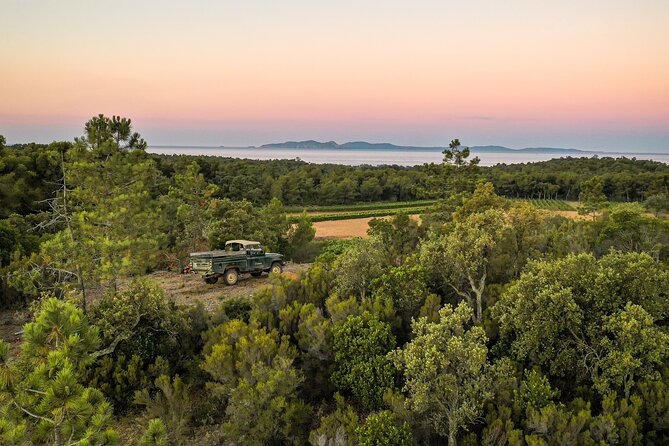
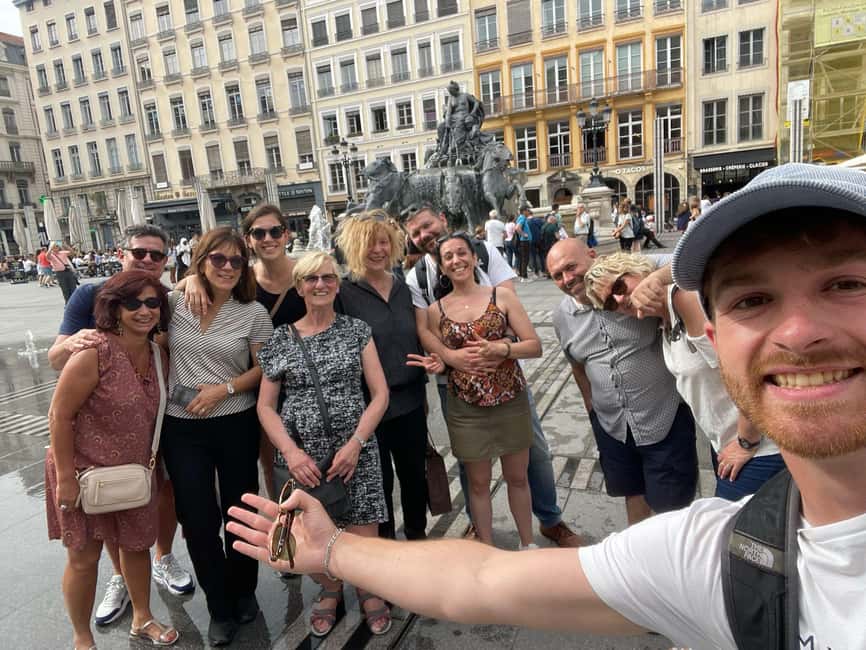
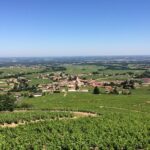
Rolling into Beaujolais in a vintage Land Rover makes the whole day feel more like a guided adventure than a standard wine shuttle. You’ll bounce between cru villages like Fleurie and Julienas, with stops designed for both tastings and real on-the-ground context, led by guides such as Alex, Emilie, and Amelie.
Two things I really like: first, the tour pace mixes wine with small, meaningful stops (like a chapel with hidden wall paintings and an abbey you may have almost to yourselves). Second, the food-and-wine moment is built into the trip, including a lunch in the vines at Domaine de la Madone, with a barbecue or picnic setup depending on conditions.
One possible drawback: this isn’t for you if you hate riding around in a vintage car.
In This Review
- Key Things You Should Know Before You Go
- The Vintage Land Rover Factor: Why the Transportation Is Part of the Magic
- The Day’s Game Plan Starts Early in Belleville-sur-Saône
- Stop 1: Fleurie, the Village Mood-Setter
- Stop 2: Saint-Amour-Bellevue and the Medieval Church Story
- Stop 3: Chenas for a Castle and a World War I Anecdote
- Stop 4: Julienas, a Church Turned Wine Cellar
- The Cru Moment at Famour: Hill, Tour de France, and Popular Status
- Domaine de la Madone Lunch in the Vines: Where the Day Becomes Real
- Stop 6: Regnie-Durette Chapel With Hidden Paintings
- Stop 7: Salles-Arbuissonnas-en-Beaujolais Abbey by the Cluny Order
- Stop 8: Château de Nervers and the Eccentric Owner Story
- Wine Tastings and Vineyard Time: What You’ll Really Feel Day-Long
- Price and Value: Is $591.33 Per Person Worth It?
- What to Expect From the Guides (Names You Might Hear)
- Who This Private Beaujolais Day Fits Best
- Quick FAQ
- FAQ
- How long is the Beaujolais tour?
- Where do we meet, and where does the tour end?
- Is lunch included?
- Do we get wine tastings during the tour?
- What if the weather is bad?
- Can I get a refund if I cancel?
- Should You Book This Vintage Land Rover Beaujolais Tour?
Key Things You Should Know Before You Go
- You’re in a private group, so the day feels tailored to your pace and interests.
- Multiple cru stops across Beaujolais mean you sample different styles rather than repeating one place.
- Lunch is part of the experience, not an afterthought, and it’s tied to the vines at Domaine de la Madone.
- Hidden-story sites show up alongside wineries: a chapel saved in the 1980s after paintings were discovered, plus a 5th-century abbey by the Cluny order.
- Tastings are structured, with reviews describing tasting several wines at each vineyard stop.
- Weather matters, especially for the lunch setup in the vineyard.
The Vintage Land Rover Factor: Why the Transportation Is Part of the Magic
Beaujolais is beautiful from the road, but this tour changes the feel of travel. The Land Rover is vintage, off-the-beaten-path friendly, and it gets you to vineyard viewpoints and rural roads that larger vehicles can’t always reach comfortably.
From my perspective, the best part is how it shapes the day’s rhythm. You’re not just “getting from place to place.” You’re moving through the region with a guide who can explain what you’re seeing as you go—whether that’s the character of a cru village or why certain sites matter beyond wine.
The trade-off is simple: you need to be okay with being driven around in a classic vehicle. If you’re sensitive to bumpy roads or you’re traveling with mobility concerns, don’t treat this as a normal car day.
You can also read our reviews of more private tours in Lyon

The Day’s Game Plan Starts Early in Belleville-sur-Saône
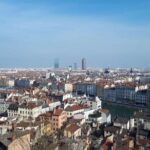
The tour runs for about 8 hours, starting at 9:00 am at Gare de Belleville-sur-Saône (15 Bd Gambetta, 69220 Belleville-en-Beaujolais). You’ll return to the meeting point at the end of the experience.
Pickup is offered, which makes it easier if you’re staying in Lyon and you’d rather not figure out local logistics. Reviews also note guides meeting people after a train ride from Lyon and driving out from there, but the core plan stays anchored around that Belleville-sur-Saône meetup.
In practical terms, you should expect roughly 1h20 of driving. That’s not constant highway time. It’s mostly the “connecting tissue” that lets you sample multiple corners of Beaujolais in one day.
Stop 1: Fleurie, the Village Mood-Setter
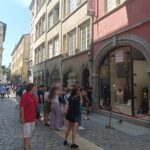
Fleurie is where you start getting the “cru village” vibe. It’s described as a quaint place with more wine shops than you can imagine, and it’s the kind of village stop where you can look around at your own pace while your guide keeps the day moving.
The practical upside of starting here: it sets context fast. You get an early hit of Beaujolais culture—small streets, wine storefronts, and that immediate sense that the region is lived in, not just visited.
There’s also a comfort factor: the first stop is short (about 10 minutes) and the admission ticket is free, so you’re not locked into anything heavy before you’ve even had your first tasting rhythm.
Stop 2: Saint-Amour-Bellevue and the Medieval Church Story
Saint-Amour-Bellevue is built for atmosphere. You get a visit to a medieval church, and your guide explains why Japanese visitors come here to renew their vows. That detail matters because it shows how places gain meaning beyond their original function.
This stop is romantic in theme, but also useful if you like cultural explanations that are tied to a real place. It’s not just “look at the building.” You’ll hear why this location connects to people today.
It lasts about 20 minutes and is free for admission, so it’s a low-stress pause in the driving and tasting loop.
Stop 3: Chenas for a Castle and a World War I Anecdote
Chenas is a lesser-known cru, which is exactly why it can feel refreshing after more familiar names. You’ll make a short stop (about 10 minutes) and get a castle viewpoint plus an anecdote tied to World War I.
Why I think this works: it adds perspective. Wine country isn’t only about terroir. It’s also about the people, events, and stories that shaped the region long before tourists arrived.
The admission is free, so you’re spending time on the experience rather than paying entry costs for the privilege of looking around.
A few more Lyon tours and experiences worth a look


Stop 4: Julienas, a Church Turned Wine Cellar
Julienas brings you one of the more visually interesting concepts on the route: an old church turned into a wine cellar. You’ll stop there for about 20 minutes, and you’ll also have a drink with local wine growers.
If you like mixing architecture with wine, this is the kind of stop that sticks in your memory. It’s also a good reset. You get a drink, but in a place with a strong “why” behind it, not just a tasting room with a counter.
In terms of pacing, this stop helps balance the more scenic village moments with something that feels hands-on.
The Cru Moment at Famour: Hill, Tour de France, and Popular Status
After the more obvious village names, you’ll take a look at Famour, known for its hill and for hosting the Tour de France regularly. It’s described as the most popular cru of the Beaujolais region, so your guide uses this viewpoint to connect geography to reputation.
I like this kind of stop because it explains the region’s “shape.” When you see a hill that gets repeatedly used in major races, you start understanding why certain areas gain attention in the first place.
The visit here is more of a viewpoint/spot-check rather than a long activity block, so it fits well into the day’s overall flow.
Domaine de la Madone Lunch in the Vines: Where the Day Becomes Real
This is the anchor of the schedule. At Domaine de la Madone, you’ll have about 1 hour 30 minutes for lunch, and admission is included.
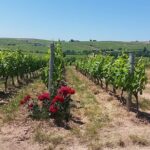
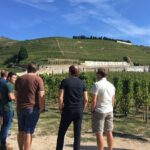
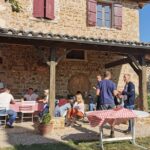
Weather allowing, lunch happens in the middle of the vine area. You should expect a barbecue or a picnic, with the exact setup discussed during the day.
What makes this special is how the food is tied to the setting. One review describes a picnic table setup at a hilltop within the vineyard area, with a guide cooking a barbecue. Another adds that cheese and charcuterie were selected from a local fromagerie, and there’s mention of an outstanding lunch experience that went beyond typical tour meals.
If you’re deciding whether you want the picnic style option (when offered), I’d lean yes. It’s the moment where the tour stops feeling like “things we did” and starts feeling like “a place we sat inside of for a while.”
Stop 6: Regnie-Durette Chapel With Hidden Paintings
Regnie-Durette is the kind of stop that changes how you look at ruins and old buildings. You’ll visit a 12th-century chapel that was saved from destruction in the 1980s after paintings were discovered on the wall behind plaster coverage.
You also get about 20 minutes here, and the admission ticket is free. The short time is enough, because the story carries it. This isn’t a “read every plaque” stop unless you want to. It’s more like a guided explanation with time to take photos and look at the place’s texture.
The value here: it grounds the day. Wine is the headline, but this keeps the day from becoming one-dimensional.
Stop 7: Salles-Arbuissonnas-en-Beaujolais Abbey by the Cluny Order
This stop is a time-and-scale experience. You’ll see a 5th-century abbey built by the Cluny order, which is described as having massive influence over Europe.
It lasts about 45 minutes, with free admission. One nice detail: there’s a good chance you’ll have the place to yourselves, which can make the abbey feel quieter and more meaningful than it would during busier hours.
If you like stopping for the “architecture breath” of a day, this is where you get it. You’ll have enough time to wander and absorb the place, rather than rushing through it.
Stop 8: Château de Nervers and the Eccentric Owner Story
The day ends at Château de Nervers. Admission is included, and you’ll have about 10 minutes to take in the castle and hear the story behind it.
The tone is different from the abbey. It’s more personal and unusual: the château is described as being built by an eccentric owner. One review also mentions a private motorcycle collection, so if that’s part of what’s on display during your visit, expect a “surprising-but-fun” twist at the end of the day.
This final stop keeps the energy from dropping too low. After wine, food, and chapels, a quirky château story is a solid landing.
Wine Tastings and Vineyard Time: What You’ll Really Feel Day-Long
Even though the schedule has many stops, the wine focus stays present. Reviews describe tastings happening at multiple vineyards, with at least five wines tasted at each vineyard stop in some cases.
That structure matters. If you just did one cellar and a snack, you’d leave with opinions but fewer comparisons. Here, the goal is to show how different crus and producers can feel different, even within the same broader region.
You’ll also get chances to connect with the people making the wine. Several reviews mention meeting winemakers and seeing working vineyards up close, and that personal contact is a big reason the tour consistently earns high ratings.
If you’re the type who likes asking questions in plain English—What’s your approach? What do you taste most?—this is a good match.
Price and Value: Is $591.33 Per Person Worth It?
At $591.33 per person for roughly 8 hours, this isn’t a budget day. But it’s also not trying to be a one-stop tasting experience.
You’re paying for:
- Private transportation in a vintage Land Rover
- A full-day plan that mixes cru villages, historic stops, and multiple wine moments
- A lunch setup at Domaine de la Madone with admission included
- A guide who can translate the region in a way that’s easy to follow in English
From the reviews, the biggest “value feel” comes from the day being intimate and paced well. People mention that guides tailor the experience to what they want, and that they cover multiple crus without feeling rushed.
So my take: it’s a good value if you want the whole story of Beaujolais in one go—wine, food, and place—without renting a car and making the day a logistics project.
If you only want the cheapest wine tasting possible, this probably isn’t your best match. But if you want a memorable, well-paced day with real access, it makes more sense.
What to Expect From the Guides (Names You Might Hear)
The guide makes a huge difference on tours like this, and the repeated names in the reviews stand out.
- Alex is praised for crafting a tour that checks the boxes and delivering a smooth English experience.
- Emilie is described as extremely knowledgeable and passionate, with frequent mentions of her leading people through vineyard stops and making the wine feel approachable.
- Amelie shows up in reviews with strong praise for people skills, great pacing, and helping people connect with producers.
- Aldric is also praised for warm guidance, plus for making the day feel interesting even when weather isn’t perfect.
No matter which name you get, you can plan on a guide who talks through what you’re seeing and keeps the day moving while still letting you enjoy the moments.
Who This Private Beaujolais Day Fits Best
This tour is a great fit if you:
- Want a private experience without driving yourself
- Enjoy small cru villages and historic stops alongside wine
- Like structured wine tastings with chances to meet producers
- Think a lunch in the vines sounds like the reason to do wine country at all
It’s less ideal if:
- You don’t enjoy being driven in a vintage car
- You want a purely indoor, low-scenery day
And if you’re traveling with kids: anyone under 18 will only be served non-alcoholic beverages, so your group won’t feel stuck compromising the outing.
Quick FAQ
FAQ
How long is the Beaujolais tour?
It runs about 8 hours.
Where do we meet, and where does the tour end?
You meet at Gare de Belleville-sur-Saône (15 Bd Gambetta, 69220 Belleville-en-Beaujolais) at 9:00 am, and the tour ends back at the same meeting point. Pickup is also offered.
Is lunch included?
Lunch at Domaine de la Madone is included, with a lunch setup that depends on weather (barbecue or picnic).
Do we get wine tastings during the tour?
Yes. The day includes wine tastings at vineyard stops.
What if the weather is bad?
This experience requires good weather. If it’s canceled due to poor weather, you’ll be offered a different date or a full refund.
Can I get a refund if I cancel?
Yes, free cancellation is available. You can cancel up to 24 hours in advance for a full refund.
Should You Book This Vintage Land Rover Beaujolais Tour?
If you want Beaujolais as more than a tasting room day, I’d book it. The combination of cru village stops, historic site stories (like the chapel saved after paintings were found), and the lunch in the vines makes the day feel complete.
I’d only hesitate if you dislike vintage-car driving or you’re looking for the absolute cheapest way to drink local wine. For everyone else, this is the kind of day that turns into a clear memory: wine, food, countryside, and a guide who knows how to pace it.