REVIEW · AVIGNON
From Avignon: Roman Tour to Pont du Gard, Nîmes & Orange
Book on GetYourGuide →Operated by Ventourisme · Bookable on GetYourGuide
Roman ruins feel different when you visit them with a guide. This trip strings together Pont du Gard, Orange’s Roman Theatre, and key Nîmes sights in one smooth day. I love the local farm picnic at Pont du Gard (when offered) and the way Arnaud, your guide, keeps the stories practical and clear. One thing to consider: it’s not for people with mobility impairments, and there’s a quick climb of about 100 stairs if you want the best viewpoint.
The sites are big, but the day doesn’t feel rushed. You also get small-group attention, plus ticket access where it counts. A possible drawback is simple logistics: the car can be tight—one review noted squeezing into the back seat—so it helps to travel light.
You’ll start in Avignon at Hôtel Le Bristol, then tour Roman engineering and spectacles—aqueduct waterworks, a gladiator arena, and a theatre that still hosts major performances. If you like your Roman history with real-world context (how the city worked, how people lived, why these monuments mattered), this is a strong, good-value way to do it.
In This Review
- Key highlights to look forward to
- The Roman triangle: what makes this day trip click from Avignon
- Starting with Arnaud at Hôtel Le Bristol (and why the small group matters)
- Nîmes: Maison Carrée and the Arena (with the right season-based expectations)
- Maison Carrée: a short stop that’s worth getting right
- Nîmes Arena: gladiators, then modern crowds
- What this stop feels like for you
- Pont du Gard: the aqueduct you can actually stand beside
- The farm picnic at Pont du Gard (April to October)
- The 100 stairs viewpoint (and why you might want them)
- Orange: Arc de Triomphe and the Roman Theatre that still performs
- Roman Arc de Triomphe: a gate with a purpose
- Ancient Theatre of Orange: from theatre plays to festivals
- Price and logistics: what $128 gets you (and when it’s a deal)
- What to pack and how to survive the day without stress
- Who this tour suits best (and who should choose another option)
- Should you book this Roman day trip from Avignon?
- FAQ
- How long is the Roman tour from Avignon?
- Where do we meet the guide in Avignon?
- What’s included in the ticketed sites?
- Is the picnic included year-round?
- Will we visit the Nîmes Arena in winter months?
- Is there audio guidance during the tour?
- Is the tour suitable for wheelchair users or limited mobility?
Key highlights to look forward to
- Pont du Gard in person: aqueduct views from the river and from the bridge
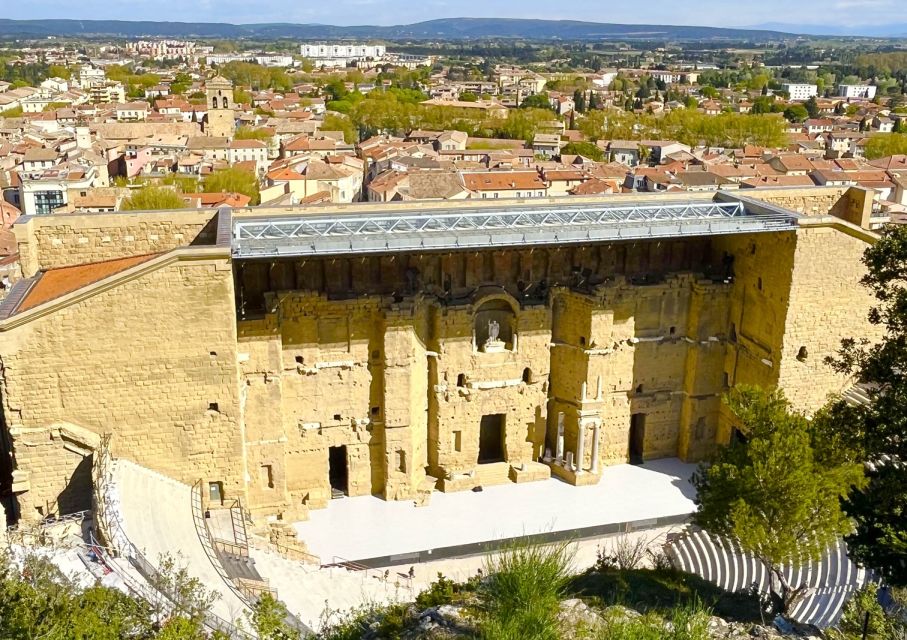
- Orange Ancient Theatre and its performance legacy, including Les Chorégies d’Orange since 1869
- Nîmes Maison Carrée photo stop with the temple’s 4 AD completion date
- Nîmes Arena: gladiator-era amphitheatre that still hosts events (tickets only in Apr–Oct)
- Arnaud’s local picnic from farms (April to October only), plus plenty of time to sit and enjoy
The Roman triangle: what makes this day trip click from Avignon
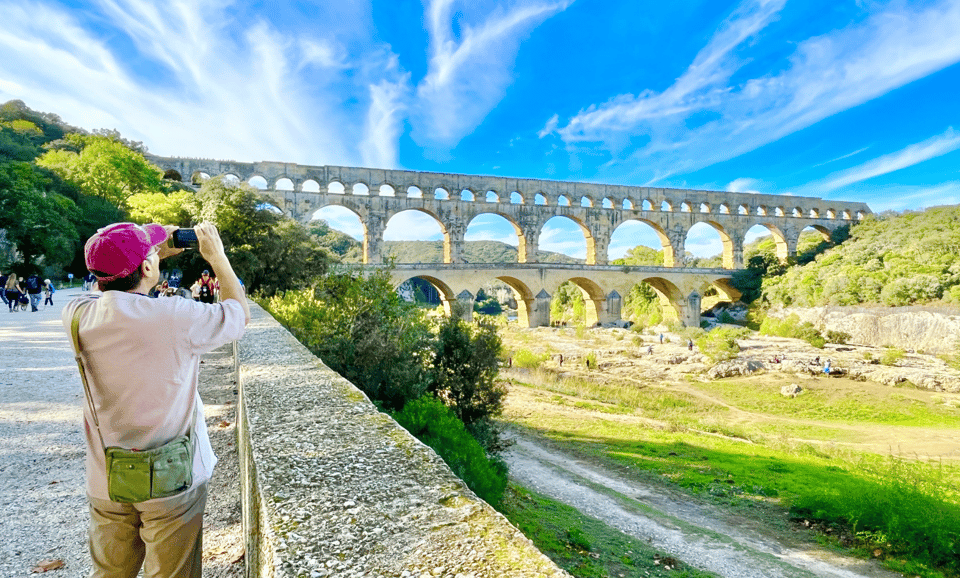
This works because you’re not bouncing around on your own schedule. You’re handed a tight cluster of monuments that were all tied to the same Roman world: water supply, power, games, and public performances.
You’ll see the kind of Roman building that still looks modern. Pont du Gard is the headline—an aqueduct structure built to move water into a major city. Then Orange and Nîmes show the “people side” of Rome: temples, arenas, and the theatre spaces where crowds gathered.
One smart detail is the seasonal swap. From April to October, the day includes a farm picnic and the option of an audio-guided visit at the Nîmes Arena. From November to March, the route runs in reverse (Orange → Pont du Gard → Nîmes) and the day is without meals; the Nîmes stop becomes more of a walking look at the main sights.
You can also read our reviews of more tours and experiences in Avignon.


Starting with Arnaud at Hôtel Le Bristol (and why the small group matters)
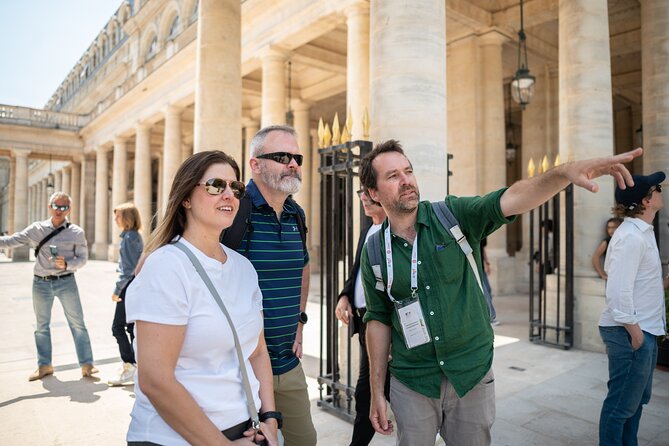
Meet your guide outside Hôtel Le Bristol in Avignon. You’re looking for a black car with Ventourisme on the sides.
This small-group setup caps you at 6 participants, which means fewer bottlenecks at photo stops and more time for questions while you’re actually on-site. In the reviews, people liked how Arnaud adjusts the pace to the group and keeps things moving without turning the day into a race.
Car comfort is the one practical catch. A couple of guests noted the vehicle is compact, and sitting in the back can mean squeezing a bit. If you’re sensitive to cramped seating, it’s worth mentioning your comfort needs when you meet up.
Nîmes: Maison Carrée and the Arena (with the right season-based expectations)

Nîmes gives you two instantly recognizable Roman “statements,” and both come with clear context from the guide.
Maison Carrée: a short stop that’s worth getting right
You’ll make a photo stop at Maison Carrée, an ancient Roman temple dedicated to Augustus’s grandsons. The construction timeline is part of what makes it impressive: it took six years and ended in year 4 AD.
Even if you only have about 15 minutes here, it’s a good use of time because Maison Carrée is visually clean and easy to study: you can frame it quickly, take your photos, and still learn what it represented in the Roman imperial world.
Nîmes Arena: gladiators, then modern crowds
Next comes the Arena of Nîmes, built at the end of the 1st century AD for gladiator fighting. It’s still very much in use—now for concerts, sporting events, and bullfights.
Important seasonal detail: tickets and the guided experience are tied to April to October. From November to March, you won’t have arena ticket access and the plan becomes more of a walk through the old town to see major monuments such as Maison Carrée, the Arena area, and Fountain’s Gardens.



What this stop feels like for you
If you like Rome as a “public life” machine, the Arena is a big win. This isn’t a museum-room story. It’s a place designed for noise, crowds, and spectacle—so you can understand how Romans experienced entertainment as a shared event.
Pont du Gard: the aqueduct you can actually stand beside
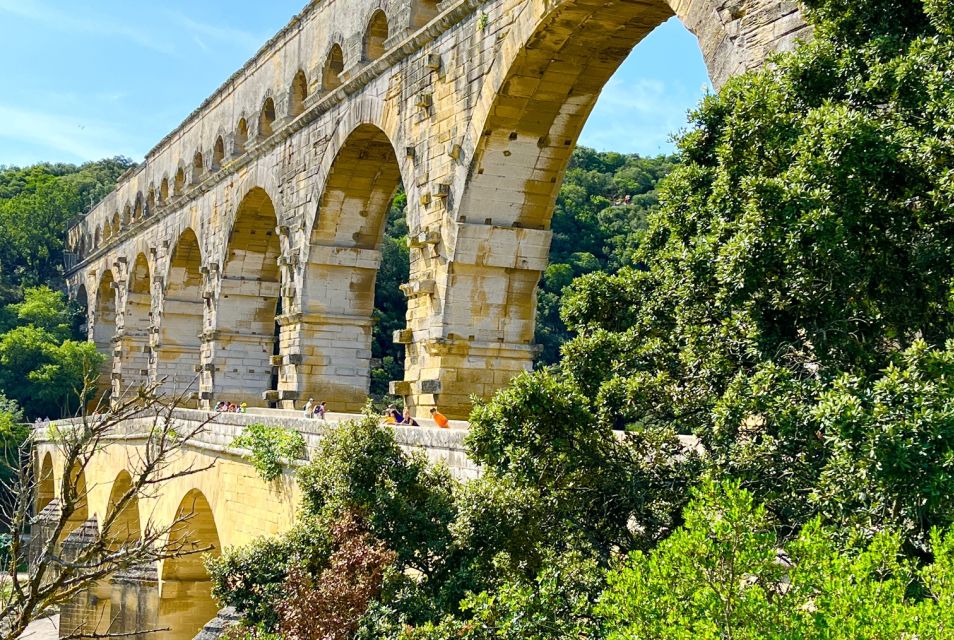
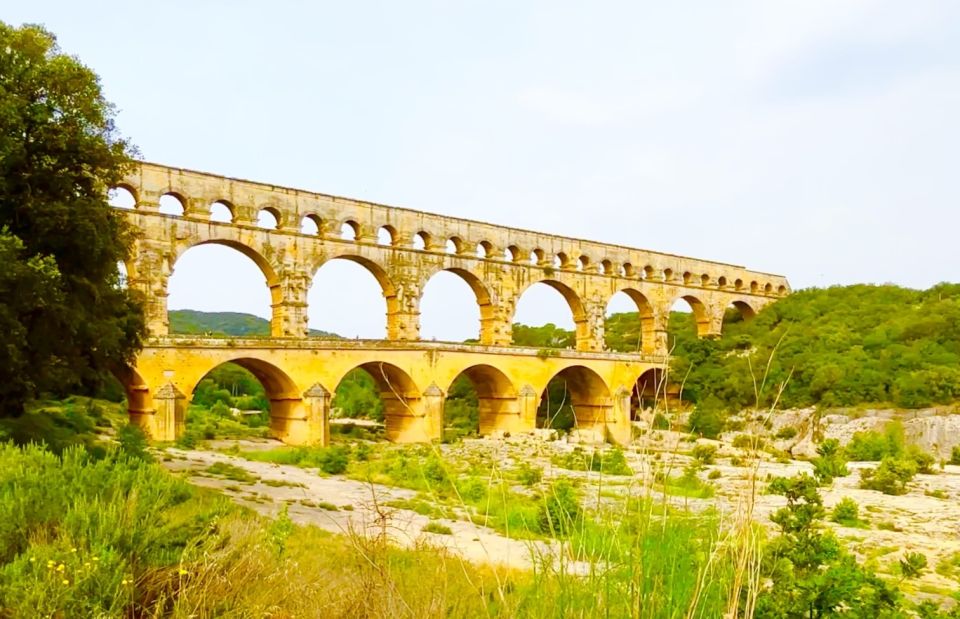
Pont du Gard is the star of the show, and for good reason. This bridge was part of a 52 km aqueduct built around 30 to 50 AD, bringing water from Uzès to Nîmes. Nîmes mattered to the Roman Empire, and it needed water for baths, gardens, and fountains.
When you arrive, you’ll do two things that make the monument “click”:
1) Walk and look from the riverside for the grand scale.
2) Get perspective from the bridge itself, where you can see the engineering logic in a way photos never quite manage.
The farm picnic at Pont du Gard (April to October)
From April to October, the middle of your Pont du Gard time includes a picnic lunch with local produce from farms. The spread can include items like eggs, black olive tapenade, sweet pepper tapenade, fresh goat cheese, seasonal fruits, and fruit juice.
This is one of the best value pieces of the day because it replaces a full meal hunt later. You also avoid the typical tourist-trap “grab lunch, sit somewhere, lose half your afternoon” cycle. You sit. You eat. You look up at Roman stone and realize the aqueduct wasn’t just for practicality—it was a visible sign of power and planning.
The 100 stairs viewpoint (and why you might want them)
You’ll have time to stroll and enjoy views, and you’ll also be offered the option of climbing quickly the 100 stairs to reach a viewpoint. If you’re steady on your feet and wear proper shoes, it’s a classic “you came this far” move.
Just be honest with yourself: if stairs are tough, plan on staying at the lower viewpoint and still enjoy the riverside views.
Orange: Arc de Triomphe and the Roman Theatre that still performs

Orange brings you back to Rome’s ceremonial and performance world—triumphal arches and a theatre built for dramatic crowds.
Roman Arc de Triomphe: a gate with a purpose
You’ll make a photo stop at the Roman Arc de Triomphe in Orange, completed around 20 AD. It was built to honor the 2nd Gallic Legion and functioned as an entry gate into the town during the Roman Empire.
It wasn’t limited to Roman times either. The arc also played a role later during the Principality of Orange in the Middle Ages. That mix of eras is handy for you: it helps you see why the monument survived—because it kept serving a meaning long after Rome.
Ancient Theatre of Orange: from theatre plays to festivals
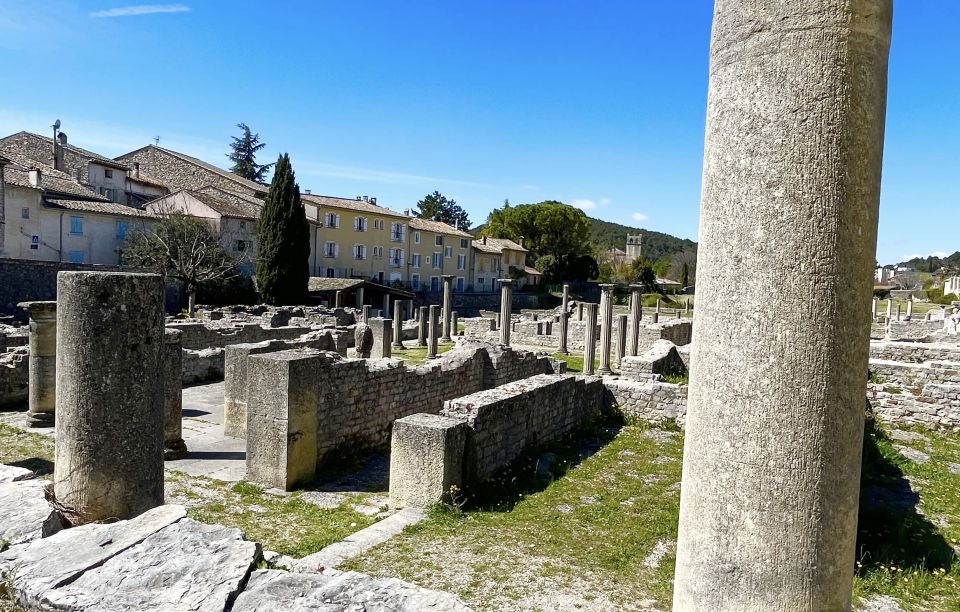
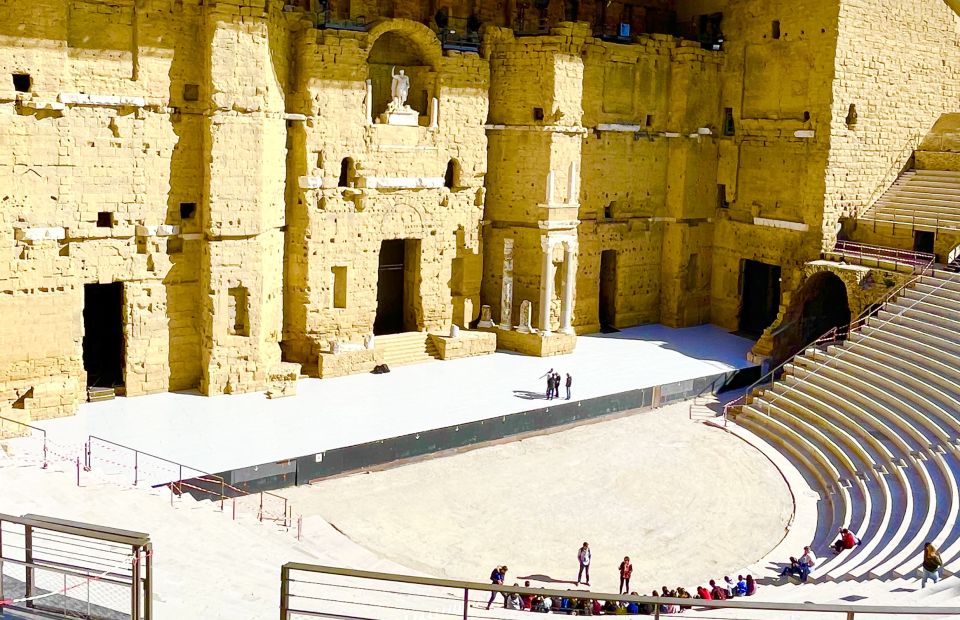
Then you’ll go to the Ancient Theatre for a guided experience and tickets. It’s described as the first major monument built in Orange around 20 BC. In Roman times, operas and theatre plays happened here.
Afterward, something unusual happened over time: the theatre became part of a district with houses built onto its façade and even inside the monument. Later, after restoration in the 1800s, the site became the heart of major performances again. The Chorégies d’Orange festival, focused on opera and classical music, has been organized there since 1869.
This is one of those places where the guide’s storytelling really matters. The theatre’s form makes sense once you know it wasn’t just a “stage building.” It was a living part of the town, and the dramatic arc of its uses—from performance to housing to restoration to modern festivals—adds layers without turning confusing.
Price and logistics: what $128 gets you (and when it’s a deal)
At about $128 per person for 6 to 8 hours, the value comes from three big areas.
First, you’re getting guided access to major ticketed sites:
- Tickets to the Ancient Theatre of Orange
- Tickets to the Pont du Gard
- Tickets to the Nîmes Arena only from April to October
Second, you’re not wasting time figuring out transport between dispersed Roman sites. A drive day like this works best when someone handles routing and timing.
Third—and this is the sneaky value—ticket line friction is reduced. The experience includes skipping the ticket line, so you spend more time looking at stone and less time standing around.
In the April–October season, the equation improves further because the price also includes a picnic lunch made from local farm products.
The one caution: the day can be affected by weather conditions. The company can cancel due to weather, so have a bit of flexibility in your plans.
What to pack and how to survive the day without stress
This is a “walk and stand” kind of tour. It’s not a museum-stool day.
Bring:
- Sunglasses
- Hiking shoes (Pont du Gard’s viewpoints and steps make this worth it)
Not allowed:
- Oversize luggage
- Luggage or large bags
- Walking frames
Two more practical notes:
- If you’re booking for mobility needs, be aware it’s not suitable for people with mobility impairments or wheelchair users.
- If you get motion-sensitive, the tight car seating might matter for you—especially if you’re the one in the back.
Who this tour suits best (and who should choose another option)
This is a great fit if you want:
- A guided Roman day without public-transport headaches
- Strong “wow” stops: Pont du Gard and Orange theatre
- A small group pace (max 6 participants) where you can ask questions and get clear explanations
It may not be ideal if:
- You need wheelchair access or have mobility limitations (the tour isn’t set up for that)
- You hate stairs. The 100-stair option is optional, but you may still encounter uneven walking and changes in elevation around sites.
Should you book this Roman day trip from Avignon?
Yes—if you want maximum Roman payoff in one day with minimal planning. Pont du Gard alone is a high-impact experience, and this tour adds Orange and Nîmes so you get both engineering and crowd-life Rome.
I’d especially book it in April to October because that’s when you get the farm picnic and the Nîmes Arena component is fully included. If you’re traveling in November to March, you’ll still get a strong monuments day, but plan around the fact there’s no picnic and the Nîmes part becomes a walking look at key sights rather than arena ticket time.
If you’re considering it for comfort: meet at Hôtel Le Bristol, expect a small group, wear proper shoes, and pack light so you’re not fighting space in the car. Do that, and you’ll spend the day seeing Roman structures that actually shaped daily life—not just ruins in the distance.
FAQ
How long is the Roman tour from Avignon?
The tour lasts 6 to 8 hours.
Where do we meet the guide in Avignon?
You meet your guide in front of Hôtel Le Bristol in Avignon. Look for a black car with Ventourisme on the sides.
What’s included in the ticketed sites?
Tickets are included for the Ancient Theatre of Orange, the Pont du Gard, and the Nîmes Arena in April to October.
Is the picnic included year-round?
No. The picnic lunch is included only from April to October.
Will we visit the Nîmes Arena in winter months?
From November to March, Nîmes Arena tickets aren’t included, and the Nîmes portion becomes a walk in the old town to see main monuments.
Is there audio guidance during the tour?
There is an audio-guided tour for the Nîmes Arena only from April to October.
Is the tour suitable for wheelchair users or limited mobility?
No. It’s listed as not suitable for people with mobility impairments or wheelchair users.