REVIEW · PARIS
Family Tour at the Musée d’Orsay
Book on Viator →Operated by Meet the Locals · Bookable on Viator
The clever part of this Musée d’Orsay visit is that it turns a grand art museum into a family puzzle. Your children receive activity booklets, then hunt for clues among the Great Clock, Rodin sculptures, Monet’s Poppies, Degas’s Little Dancer, Van Gogh’s Sunflowers, and Gauguin’s Tahitian scenes. Skip-the-line entry gets you inside without spending precious Paris time in the entrance queue.
I like the private format, since your guide can shape the visit around your children’s ages and interests. I also like the mix of art, odd little facts, architecture, roof views, and a café pause, which gives young minds a change of pace. The main drawback is the price: $702.93 for up to four people is a serious outlay for two hours, though it can make sense for a family that wants a focused visit rather than a long museum slog.
In This Review
- Key Points
- Why the Musée d’Orsay Works So Well for Families
- Meeting at the Great Clock and Starting the Hunt
- Paris Opera Stories and the Museum’s Grand Interior
- Impressionist Masterpieces With Questions Attached
- What the Treasure Hunt Adds for Different Ages
- A Café Pause and Roof Views Before the Finish
- Is $702.93 a Fair Price for Two Hours?
- Who Should Book This Orsay Visit?
- Final Call: A Smart Short Visit for Art-Shy Kids
- FAQ
- Where does the Family Tour at the Musée d’Orsay begin?
- How long does the tour last?
- Is this a private tour?
- How many people can join for the listed price?
- Are entrance tickets included?
- Do children receive anything for the treasure hunt?
- What language is the tour offered in?
- Is food included?
- What is the cancellation policy?
Key Points
- A private two-hour museum visit: Your group gets the guide to itself, with no strangers to slow the pace or change the focus.
- A treasure hunt for children: Each child receives an activity booklet with puzzles linked to works and museum details.
- Skip-the-line admission: Entrance tickets are included, so you can begin inside the Musée d’Orsay without waiting in the regular entry line.
- A smart introduction to Impressionism: Monet, Degas, Cézanne, Van Gogh, and Gauguin all feature in the planned route.
- More than paintings: Expect the former railway station’s Great Clock, Paris Opera references, sculptures, terraces, roof views, and a café stop.
- A strong family record: Families have especially praised guides such as Camille for engaging children, including 12-year-old twins and a teenage son.
Why the Musée d’Orsay Works So Well for Families
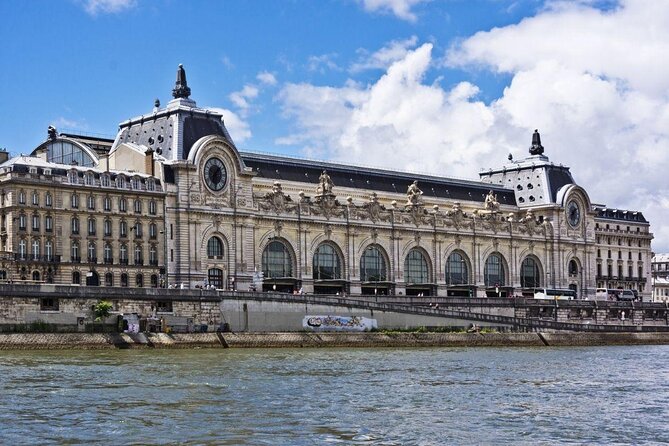
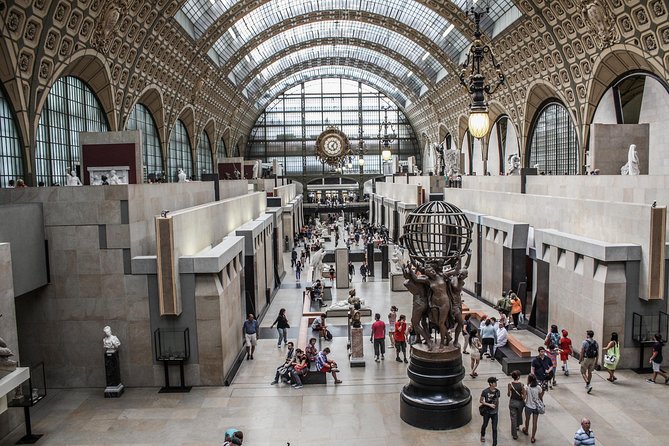
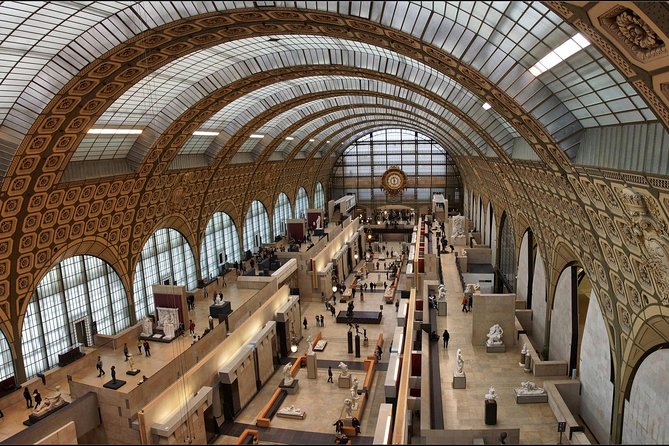
The Musée d’Orsay has a built-in advantage: the building itself is exciting. Before your child has seen a single painting, the huge clock and former railway-station setting offer something concrete to notice. Your guide uses that setting to explain why the museum feels different from a palace or a traditional gallery.
That opening matters. Young children often respond better to a place with a story, and the station gives them one. The Great Clock becomes more than a pretty window. It points back to the trains that once moved through the building, while the guide introduces the first riddle, linked to the Statue of Liberty.
The tour does not treat children as small adults. Its clues and explanations are adjusted to their age and level. That approach is especially useful if you have children who are curious but not yet ready for long art lectures, or teenagers who need a reason to look closely at a painting.
A private tour also removes much of the usual family pressure. You do not need to worry about keeping up with a large group, and the guide can pause when a child takes interest in a sculpture, a strange detail, or a question that leads somewhere unexpected.
You can also read our reviews of more tours and experiences in Paris.



Meeting at the Great Clock and Starting the Hunt
You meet your guide in front of the Musée d’Orsay façade at 75007 Paris. The guide provides the included entrance tickets and one activity booklet for each child before leading your party through the no-line entrance.
The starting point is practical as well as fun. You avoid the uncertainty of the main queue, then move quickly into the museum’s central spaces. If you are visiting during a busy period, that saved time is useful, especially with children who may lose patience before the art even begins.
The first major sight is the Great Clock. Your guide explains the building’s railway past and uses the clock as a way to get children looking upward and asking questions. The Statue of Liberty riddle gives the visit a clear mission from the start.
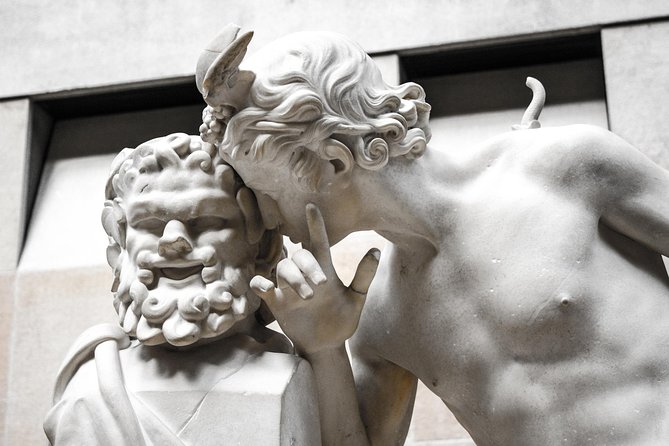
After that, the route can shift according to your family. You might stop at one of Rodin’s sculpted groups, where the human forms invite close looking, or at François Pompon’s Polar Bear, a simpler and more immediately readable sculpture for younger children.
This flexibility is one of the better reasons to choose a private visit. The supplied details do not promise one fixed path for every group, and that is a strength here. Your guide can spend more time with sculpture-loving children or move toward the famous paintings if that is what your family wants.
Paris Opera Stories and the Museum’s Grand Interior
The museum’s section on the Paris Opera House adds another story line to the visit. The Opera was the symbolic building of the period covered by the Musée d’Orsay, from 1848 to 1914, so it gives children a way to picture the Paris of artists, architects, performers, and city life.
The Phantom of the Opera connection adds a touch of drama. Your guide can explain the story of the river beneath the Opera and sort legend from fact. It is a good example of how the tour uses familiar tales to lead into French culture and architecture.
You also get more than a straight march from famous painting to famous painting. Views of the museum’s architecture and Paris roofs appear from terraces or lookouts along the visit. These pauses can be welcome for children who need a visual break from framed art.
The building’s details help keep the two hours varied. There is even a ballroom, which lets your family imagine the social world of the early 1900s. A child who is not yet taken with Impressionist brushwork may still enjoy the idea of dressing for a waltz in the room.
Impressionist Masterpieces With Questions Attached
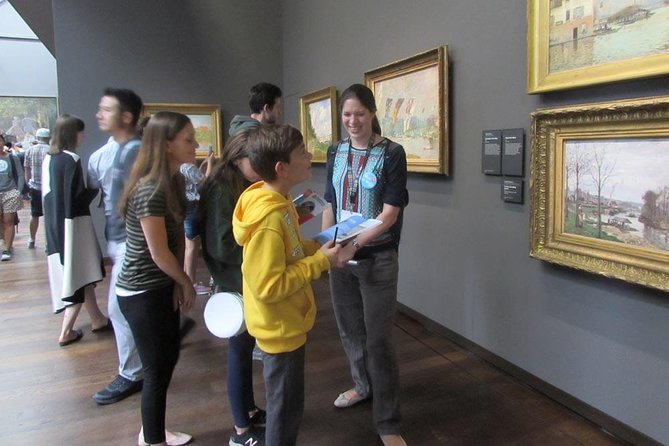
The Impressionist gallery is the heart of the visit. Rather than presenting a long list of artists, the guide uses questions to make individual works easier to remember.
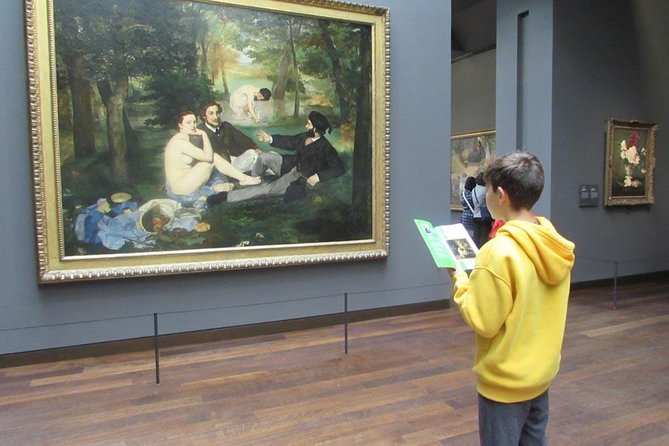
Monet’s Poppies becomes a mystery about the people shown in the scene. Degas’s Little Dancer Aged 14 offers an unusual story about the sculpture and the young model. Cézanne’s apples invite the kind of playful question that helps a child examine still life instead of walking past it.
These small prompts are useful because children often need a reason to stop. Asking who is in a painting, why a sculpture looks unusual, or what happened to the apples turns passive viewing into a search.
The route also includes major works by Van Gogh and Gauguin. Van Gogh’s Sunflowers provides a familiar image that many children already recognize, while Gauguin’s Tahitian scenes open a conversation about place, color, and the way artists represented distant settings.
You should keep your expectations realistic. Two hours is enough for a carefully selected introduction, not a complete survey of the Musée d’Orsay. The value lies in seeing key works with context and leaving with a clearer sense of how to look, not in checking every gallery.
That time limit can actually help families. A full day at the museum may sound appealing, but children often remember a shorter visit more fondly. This tour gives you a planned beginning, middle, and end, with enough variety to keep the pace moving.
What the Treasure Hunt Adds for Different Ages
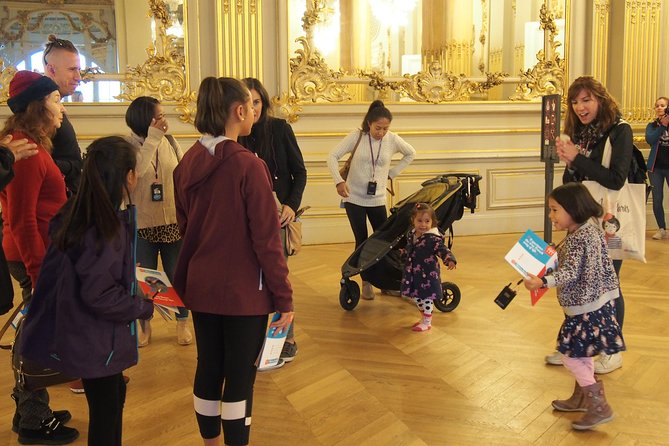
The activity booklet is not just a giveaway. It gives each child something to do with the guide’s explanations. The clues connect the children to objects in front of them, so the adults can listen without having to invent games as they go.
The age range matters. A five-year-old, a 12-year-old, and a teenager will not respond to the same questions, and the guide is expected to adjust the language and level. The strongest family feedback centers on that child-focused approach, including a visit in which 12-year-old twins stayed engaged through clues and age-appropriate conversation.
Teenagers can also benefit from the private setting. A guide who can speak directly to a child, answer questions, and allow some humor has a better chance of holding attention than a standard adult art talk. One family particularly appreciated a guide who engaged a teenage son who spoke French while the rest of the family did not.
The experience is offered in English. The company has also arranged guides speaking other languages for some activities, including Portuguese on a wider Paris program, but you should treat English as the language offered for this particular booking unless the provider confirms another option.




A Café Pause and Roof Views Before the Finish
Near the end, the visit includes time for a refined pause in one of the Musée d’Orsay’s cafés. Food, snacks, and alcoholic drinks are not included, so any purchase is at your own expense.
The café stop is less about a full meal than about giving the family a chance to sit and reset. After galleries and questions, even a short break can help children finish the last part of the visit in a better mood.
The roof and terrace views add another useful change of scene. You can look over Paris roofs and take in the museum’s design from a different angle. These views also help connect the paintings to the city outside, rather than leaving the art sealed inside four walls.
The route finishes back at the meeting point. Transportation to and from the attraction is not included, although bus tickets used during the tour are included if they are needed. In practical terms, you should arrange your own way to the Musée d’Orsay and plan the rest of your day from there.
Is $702.93 a Fair Price for Two Hours?
At $702.93 per group of up to four, the tour costs about $175.73 per person if you fill all four places. The price applies to a family of two adults and two children, and entrance tickets plus a professional guide are included.
That is expensive compared with entering a museum on your own. It becomes easier to justify if you place a high value on skip-the-line access, a private guide, and a route designed for children rather than adults.
The price is less attractive for a couple with no children, since the activity is built around family puzzles and child-focused explanations. It is also a poor fit if you prefer to spend half a day wandering freely and reading labels at your own speed.
For a family visiting several major Paris sights in a short trip, the structure can save effort. You do not have to plan a child-friendly route through the galleries, decide which masterpieces are worth prioritizing, or invent questions on the spot.
The biggest value comes from attention, not admission alone. Your guide is there to help your children connect with the museum, and the private format means you receive the full two hours rather than sharing the guide’s time with another group.
Who Should Book This Orsay Visit?
I would consider this tour first for families with children who tire quickly in museums, need a clear activity, or have already spent several days seeing major Paris sights. It is also a strong choice for parents who want their children to learn something without turning the day into school.
The activity suits families with different ages because the guide can adjust the conversation. The examples of successful visits include younger children, 12-year-old twins, and a teenager, though the exact match will depend on your children’s interests.
You should think twice if your children dislike puzzles or if your family already knows the Musée d’Orsay well. You may also prefer a self-guided visit if the fixed two-hour format feels too short.
Physical demands are listed as moderate. You should be comfortable moving through a large museum for about two hours, with time spent standing and walking. The experience does not include transportation to the museum, so factor that into your day.
Booking confirmation is received at the time of booking. Cancellation is free if you cancel at least three full days before the local start time. Cancellations or changes made inside that window are not accepted for a refund.
Final Call: A Smart Short Visit for Art-Shy Kids
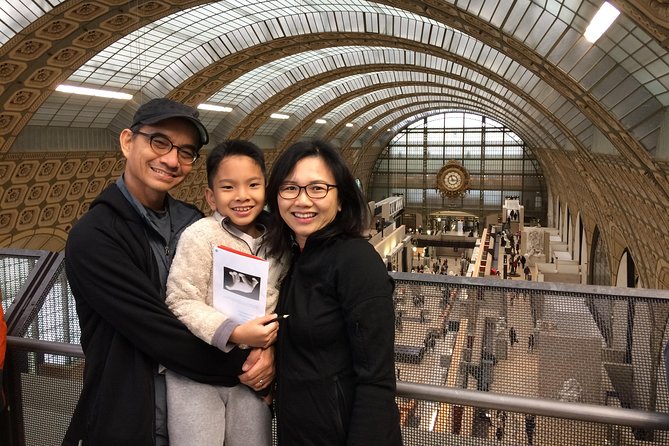
Book this tour if you want your children to meet the Musée d’Orsay through stories, clues, and famous works rather than a standard gallery march. The private guide, included tickets, flexible route, and café pause make the experience easy to manage.
The price is the deciding factor. For two adults and two children, it offers a focused family service, but it is not a budget museum entry. I would choose it for a first Orsay visit when keeping children engaged matters more than seeing every room.
If you do book, arrive ready to share your children’s ages and interests with the guide. Ask for extra time with sculpture, Impressionism, architecture, or the Paris Opera material as needed. That is where the private format can earn its cost.
FAQ
Where does the Family Tour at the Musée d’Orsay begin?
The tour begins at the Musée d’Orsay, 75007 Paris, France. You meet the guide in front of the museum façade.
How long does the tour last?
The visit lasts approximately two hours.
Is this a private tour?
Yes. Only your own group participates in the activity.
How many people can join for the listed price?
The price applies to a family of two adults and two children, with up to four people in the group.
Are entrance tickets included?
Yes. Entrance tickets to the Musée d’Orsay are included, along with skip-the-line access.
Do children receive anything for the treasure hunt?
Yes. Each child receives an activity booklet with puzzles and clues connected to the museum visit.
What language is the tour offered in?
The tour is offered in English.
Is food included?
No. Food, snacks, and alcoholic beverages are not included. You can enjoy a café in the museum, but purchases are your own responsibility.
What is the cancellation policy?
You can receive a full refund if you cancel at least three full days before the experience’s start time. Cancellations or changes made less than three full days in advance are not accepted for a refund.