REVIEW · PARIS
Eiffel Tower Guided Tour by the Stairs up to Second Floor
Book on Viator →Operated by Adventour · Bookable on Viator
The best part of this Eiffel Tower tour is the climb itself. You take the stairs up to the second floor, gaining views slowly instead of jumping straight into a lift and arriving above the city with little sense of the structure beneath you. Along the way, your guide explains how the tower was built and helps you read the ironwork around you.
I like the active pace and the planned pause on the first level. I also like the second-floor view, where you can pick out landmarks including Sacré Coeur, the Arc de Triomphe, Notre Dame, Les Invalides, Montparnasse Tower, and La Défense. The main consideration is simple: stairs require more effort than an elevator ride, and the tour depends on good weather.
In This Review
- Key points at a glance
- Why the stairs make this Eiffel Tower visit different
- Meeting at 9 Allée Paul Deschanel
- The first 35 minutes: learning the tower while climbing
- The first floor: 25 minutes to pause and look around
- The second floor: Paris landmarks from a higher view
- What the $51 price buys you
- Who should choose this tour
- Weather, cancellation, and planning details
- How to make the most of the 90 minutes
- Should you book the Eiffel Tower stair tour?
- FAQ
- How long does the Eiffel Tower stair tour last?
- How high does the tour go?
- What landmarks can I see from the second floor?
- Where does the tour meet?
- Can I use a mobile ticket?
- What happens if the weather is poor?
Key points at a glance
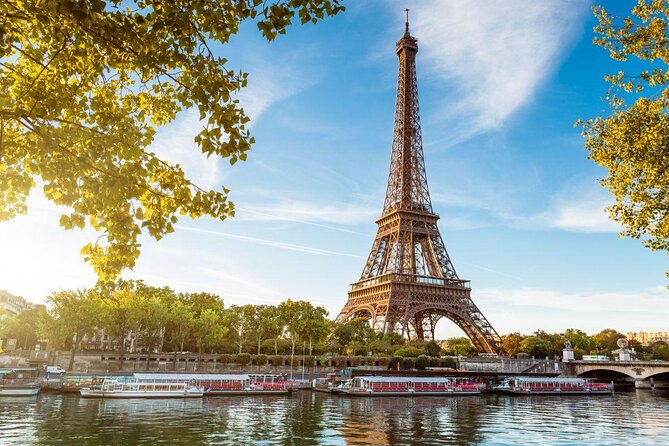
- Stair climb to the second floor: You experience the Eiffel Tower from inside its iron framework rather than simply riding upward.
- About 90 minutes: The time includes the guided climb, a first-floor stop, and the second-floor visit.
- Paris landmarks from above: Your guide points out Sacré Coeur, Notre Dame, the Arc de Triomphe, Les Invalides, Montparnasse Tower, and La Défense.
- First-floor breathing space: Shops, cafés, and exhibits give you time to pause before climbing higher.
- Mobile ticket: You can keep the booking on your phone.
- Weather and group limits matter: The experience requires good weather and allows up to 35 people, even though the tour is designed with an intimate feel.
Why the stairs make this Eiffel Tower visit different

The Eiffel Tower is often treated as a photo stop: arrive, ride up, snap a few pictures, and leave. This tour gives you a more physical connection to the monument. The staircase turns the tower into part of the attraction, not just a platform for looking over Paris.
As you climb, you can see the iron structure at close range. The gradual ascent gives you time to notice the crossing beams, changing angles, and open views through the metalwork. I find that useful because the Eiffel Tower is much more interesting when you understand that it is a huge working structure, not a solid stone monument.
The climb also gives the visit a clear rhythm. You begin below, work upward with commentary, stop at the first level, then continue to the second. That sequence feels more satisfying than a fast vertical ride, especially if you enjoy walking and want the journey to be part of the sightseeing.
There is a tradeoff. This is not the best choice if you want the least strenuous route or if your priority is reaching the highest possible point. The advertised experience ends at the second floor, and the main feature is the stair climb. Go in expecting an active visit, not a quick elevator ride.
You can also read our reviews of more guided tours in Paris

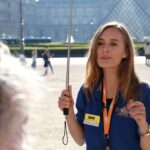

Meeting at 9 Allée Paul Deschanel
The meeting point is 9 Allée Paul Deschanel, 75007 Paris. This places the start near the Eiffel Tower, and the activity ends back at the meeting point. Your confirmation arrives at booking, and the ticket is available on your mobile device.
Allow enough time to get to the meeting point. The tour includes travel time in its total duration, so the stated 1 hour 30 minutes is an approximate door-to-door activity length rather than 90 full minutes at the top. Since the instructions identify the Eiffel Tower area and note nearby public transportation, you can plan the approach by transit, but the exact route depends on where you begin in Paris.
I would keep your phone charged and the ticket easy to open. A mobile ticket is convenient, but a dead battery or slow connection can create needless stress at the meeting point.
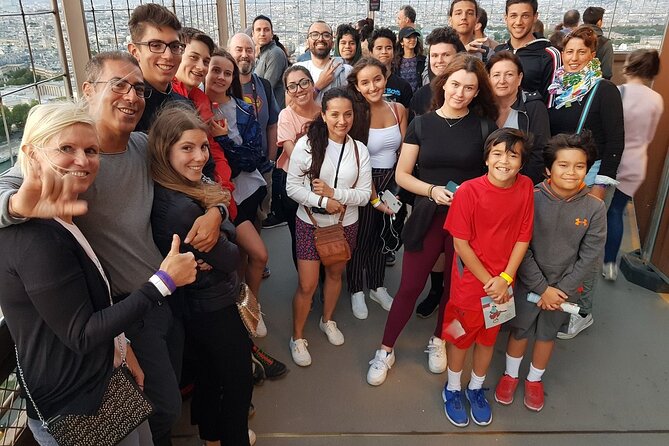
The group limit is 35 people. That is not a tiny private outing, but it is controlled enough for a guide-led climb. The tour description also emphasizes an intimate format and personal attention. In practice, your experience will depend on the final group size and how well you can stay near the guide during the ascent.
The first 35 minutes: learning the tower while climbing
The opening section lasts about 35 minutes. You start the climb by stairs while your guide discusses the Eiffel Tower’s construction and history.
This is where the tour earns its keep. Without context, the iron lattice can become a blur of beams and bolts. With a guide explaining what you are seeing, the climb becomes easier to follow. You are not only counting steps. You are watching the structure change as the tower rises around you.
The slow upward route also helps you notice the tower’s scale. From below, it looks like four giant legs meeting in the sky. From the stairs, you see how those legs support a web of iron and how the views open as you gain height.
You should have your camera ready, but do not spend the whole climb looking at your screen. Some of the best moments come from looking through the gaps in the structure and seeing Paris appear in pieces. The changing angle is part of the appeal.
The guide commentary is especially useful for first-time visitors who want more than a photograph. If you have already studied the Eiffel Tower or visited before, you may find the information familiar, but the stair route still gives you a different physical view of the monument.
The first floor: 25 minutes to pause and look around
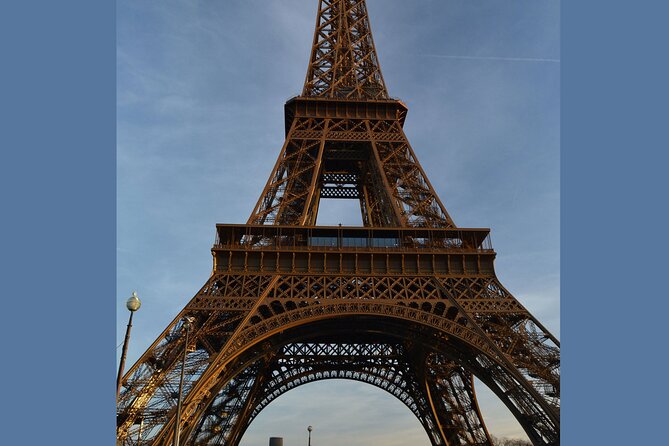
The first-floor stop lasts about 25 minutes. This is a practical break as well as a sightseeing stop. You can catch your breath, take in the broad Paris view, and spend time around the shops, cafés, and exhibits located there.
I like this pause because it keeps the tour from becoming one long push upward. A break gives you time to settle into the height and look around without trying to walk and listen at the same time. It also lets you decide how much time you want to spend on photos before the group continues.
The first floor has a different feel from the second. You are high enough to see across Paris, but still close enough to appreciate the tower’s structure and the activity around it. You might find the first level more comfortable for taking in the building itself, while the second floor is better for identifying distant landmarks.
Keep an eye on the guide during this stop. The schedule is organized, and the group continues upward after the 25-minute pause. Shops and cafés can tempt you to wander, but this is not a free-form visit with unlimited time at each level.
The second floor: Paris landmarks from a higher view
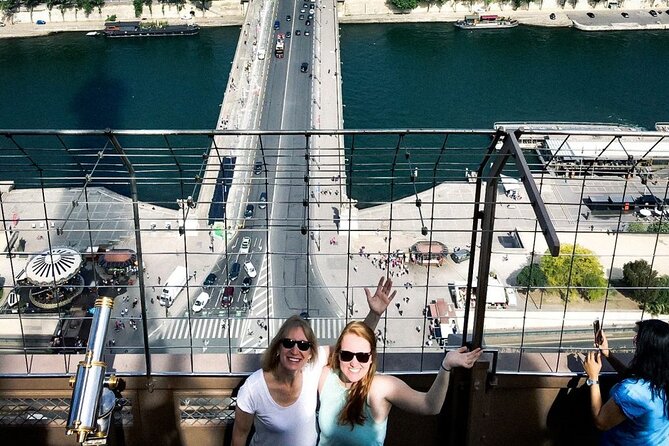
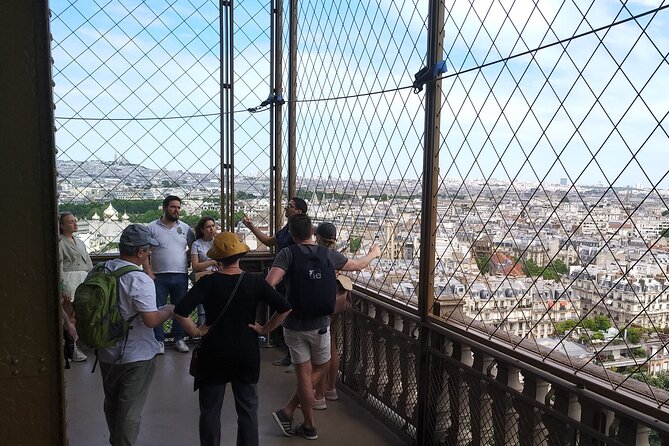
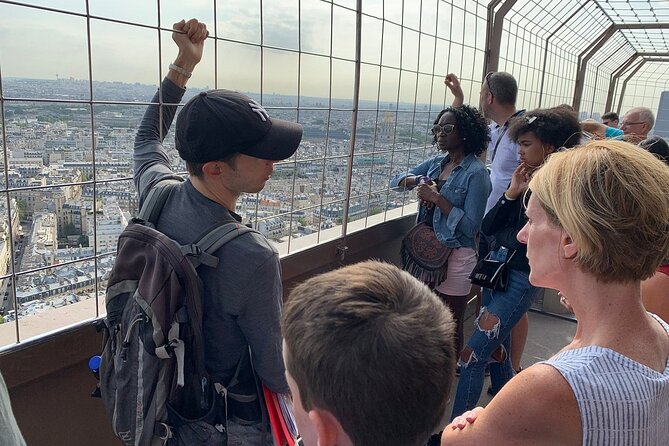
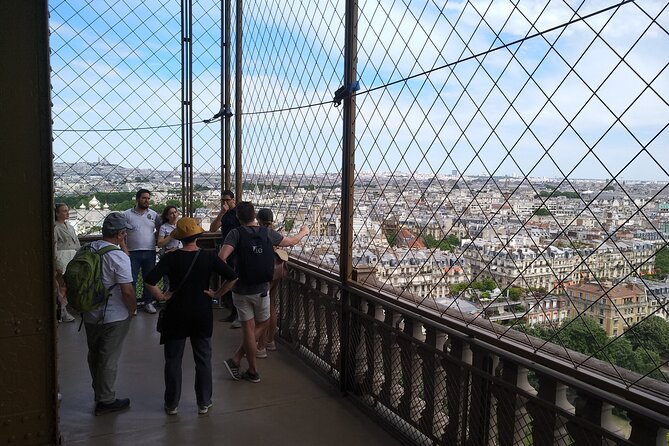
The final sightseeing stop lasts about 25 minutes on the second floor. Here, your guide points out major Paris landmarks from above:
- Montmartre and Sacré Coeur
- The Arc de Triomphe
- Notre Dame
- Les Invalides
- Montparnasse Tower
- La Défense
This list gives the view a useful framework. Paris can look like a broad spread of rooftops when you first reach the second floor. Knowing where to look turns the panorama into a map. You can connect the city’s neighborhoods and monuments instead of taking in one undifferentiated view.
The time of day matters. The one posted comment about the experience specifically recommends going when it is not dark, so the buildings are clear and the guide’s explanations have more visual meaning. I agree with that advice based on the nature of the stop. If the city is hidden in darkness, you lose much of the architectural detail that makes this view worthwhile.
Daylight also helps with photographs. You can see the contrast between major monuments and the surrounding streets, and you have a better chance of recognizing the landmarks your guide names. An evening visit may have its own mood, but this tour’s strongest educational feature is the ability to see Paris clearly.
The second floor is not the summit of the Eiffel Tower. That matters when comparing this experience with other tower visits. You are choosing a guided stair climb and a substantial view, not the highest available observation point. For many people, the second floor offers enough height to understand the city while keeping the visit to a manageable 90 minutes.






What the $51 price buys you
At $51, this is more expensive than simply approaching a monument and looking around on your own, but the value rests in the guided structure. You are paying for a planned route, live commentary, a first-floor pause, and help identifying the city from the second floor.
I think the price makes the most sense for a first visit. If you know little about the Eiffel Tower, the guide gives the climb a purpose and helps you notice details you could easily miss. The landmark list on the second floor also saves you from trying to identify distant buildings by guesswork.
The value is less clear for a repeat visitor who wants only a quick view. You may prefer to spend your budget elsewhere if you already know the tower well or if you do not want a stair climb. The advertised price should also be judged against your energy and time, not just against admission costs.
The description lists admission tickets at no extra charge within the stops, but it does not spell out every ticketing detail beyond the mobile ticket feature. Read the final booking confirmation carefully so you know exactly what to show and where to meet.
Who should choose this tour
This experience suits you best if you enjoy walking, want a guide’s explanation, and prefer a gradual climb to a direct lift ride. It is also a good fit for anyone who wants to see the Eiffel Tower from within its iron frame rather than treating it as a viewing platform alone.
Most people can participate, according to the activity information. Still, you should be honest with yourself about climbing stairs and spending time on your feet. The experience is not described as wheelchair accessible, and the route is built around stairs, so you should contact the provider before booking if you have mobility concerns.
Families with older children may like the physical challenge and the clear goal of reaching the second floor. The tour’s 90-minute length keeps the outing from taking over the whole day. Younger children may find the climb tiring, and the group schedule means you cannot set your own pace for every section.
This also works well for visitors with a busy Paris plan. You get a focused visit with three clear stages instead of a long open-ended stop. Add extra time before the start to reach the meeting point and after the tour if you want to linger near the tower.
Weather, cancellation, and planning details
Good weather is required. If conditions force a cancellation, you are offered another date or a full refund. The same applies if the minimum number of participants is not reached, with the choice of a different date or experience, or a full refund.
For your own booking, the key deadline is 24 hours before the start time. Cancel at least 24 hours ahead for a full refund. Cancellations or changes made inside that window are not accepted and are not refunded. The cut-off uses Paris local time, so check the clock carefully if you are booking from another time zone.
A clear day is the best match for this tour. The climb remains possible in less ideal conditions only if the provider runs it, but the second-floor commentary depends on being able to see the buildings below. The practical tip is to choose a daytime slot when possible and keep your plans flexible enough to handle a weather change.
How to make the most of the 90 minutes
Wear shoes you can comfortably use on stairs. The tour is short by Paris sightseeing standards, but the climb is the central activity, so comfort matters more than dressing for a formal attraction.
Bring water if you normally need it during physical activity, and use the first-floor stop to pause rather than rushing through it. The 25 minutes there are part of the experience, not wasted time.
Try to listen for the guide’s landmark directions before taking photographs. Once you know where Sacré Coeur, Notre Dame, or the Arc de Triomphe sits in the view, your pictures will have more meaning. You can also ask yourself how the city’s major points relate to one another.
Plan for daylight if clear views are important to you. The available information does not give a specific sunset or evening advantage, and the strongest practical advice is to avoid darkness so you can see the buildings clearly.
Keep the group together. With up to 35 people, losing sight of the guide could make the commentary hard to hear and could slow the climb. The tour is guided from start to finish, so it works best when you stay with the pace.
Should you book the Eiffel Tower stair tour?
Book it if you want the climb to be part of your Eiffel Tower visit. The guided route gives you context during the ascent, a useful first-floor rest, and a second-floor panorama with clear landmark identification. At $51, it offers the most value to first-time visitors who want an organized introduction rather than a simple ride upward.
Skip it if stairs are a concern, if you need the highest possible Eiffel Tower viewpoint, or if you want complete freedom to set your own pace. For everyone else, choose a daytime slot, allow time to reach 9 Allée Paul Deschanel, and treat the climb as the main event. The beautiful view is the reward, but understanding how you reached it is what gives this visit its character.
FAQ
How long does the Eiffel Tower stair tour last?
The activity lasts approximately 1 hour and 30 minutes. The stated duration includes travel time.
How high does the tour go?
The guided climb goes to the Eiffel Tower’s second floor. The itinerary includes time on the first floor before continuing higher.
What landmarks can I see from the second floor?
The guide points out Montmartre and Sacré Coeur, the Arc de Triomphe, Notre Dame, Les Invalides, Montparnasse Tower, and La Défense.
Where does the tour meet?
The meeting point is 9 Allée Paul Deschanel, 75007 Paris, France. The activity ends back at the meeting point.
Can I use a mobile ticket?
Yes. A mobile ticket is included as a feature, and confirmation is provided when you book.
What happens if the weather is poor?
The experience requires good weather. If it is canceled because of poor conditions, you are offered another date or a full refund. You can also cancel at least 24 hours before the start time for a full refund.