REVIEW · PARIS
Early Access Paris Notre Dame Cathedral Walking Tour
Book on Viator →Operated by LetzGo City Tours · Bookable on Viator
Notre-Dame is better with context. This early access walking tour pairs a guided look at the island’s big stories with real time inside the newly restored cathedral. I especially like how you get pointed to what to notice—like the restored limestone glow and the painted ceilings—before you go in, and then you finish with gorgeous Seine and Notre-Dame plaza viewpoints. One thing to consider: Notre-Dame is so popular after reopening that wait times can still happen, and the cathedral interior portion may feel more self-paced once you enter.
This is a 2-hour experience built around an efficient route through Paris’s medieval core, capped at 25 people. And yes, the guides get real credit here—names that show up again and again include Maja, Saeed, Nina, Abbie, Maya, Mija, Abi, Ife, Carol, and Ben—so you’ll likely get that mix of history, practical directions, and “look up here” guidance.
In This Review
- The quick route: from Place Louis Aragon to Notre-Dame’s river views
- Square Jean XXIII: Roman power, propaganda, and great buttress photos
- Walking the Seine: UNESCO banks and the art of noticing angles
- Île de la Cité: the medieval island that became the city’s center
- Notre-Dame Cathedral interior: what the restoration changed (and what to look for)
- Parvis Notre-Dame: Charlemagne, a redeveloped plaza, and how to read the square
- From justice and clocks to WWII scars: the island’s darker edges
- Courthouse and revolutionary prison context
- Prefecture de Police: WWII bullet impacts
- Tour de l’Horloge: a 47-meter watchtower with thick walls
- Pont Neuf finish: the view that ties the day together
- Sainte-Chapelle upgrade: royal Gothic with timed entry and interior time
- Is $71.20 good value for an early access Notre-Dame walk?
- Practical tips so the day goes smoothly
- Should you book this Early Access Paris Notre-Dame walking tour?
- FAQ
- How long is the Early Access Paris Notre-Dame Cathedral walking tour?
- Where does the tour start and end?
- Is Sainte-Chapelle included?
- Do I need tickets for Notre-Dame Cathedral?
- What should I bring for the tour?
- Will there be a line to enter Notre-Dame?
The quick route: from Place Louis Aragon to Notre-Dame’s river views
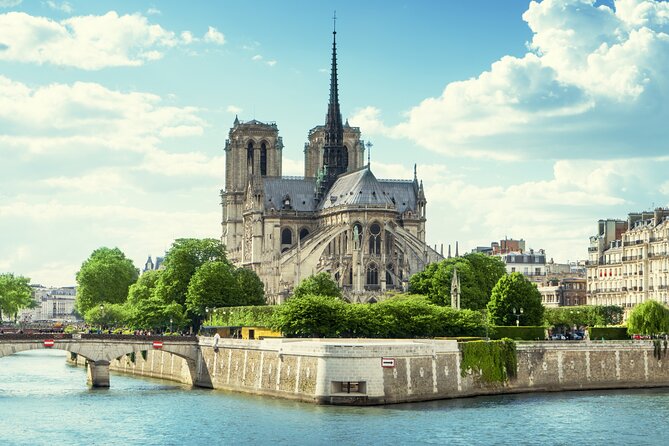
You start at Place Louis Aragon (75004) and end at Pont Neuf (75001), with the option for Sainte-Chapelle upgrades that change the finishing point. The walking isn’t a slow stroll for its own sake; it’s paced to fit stops that build a story: Roman-era traces, royal France, revolutionary justice, and then Gothic architecture centered on Notre-Dame.
If you’re the type of traveler who likes having a plan but still wants to wander, this works. You’re not stuck watching a screen of facts—you’re moving through the exact spaces where those events happened, then turning those details into what you actually see.
One practical note: expect uneven cobblestones, some stairs, and time outdoors. You’ll want comfortable shoes and water.
Square Jean XXIII: Roman power, propaganda, and great buttress photos
Your first stop is Square Jean XXIII, near the cathedral zone but rooted in a much older Paris. Here, you’re led to an archaeological site where excavations turned up a pillar used for propaganda, tied to the Nautes—a traders’ corporation with economic and political power in Roman-era Paris. It’s the kind of detail that makes you look at the area and think: people have been gathering here for centuries, just under different names and empires.
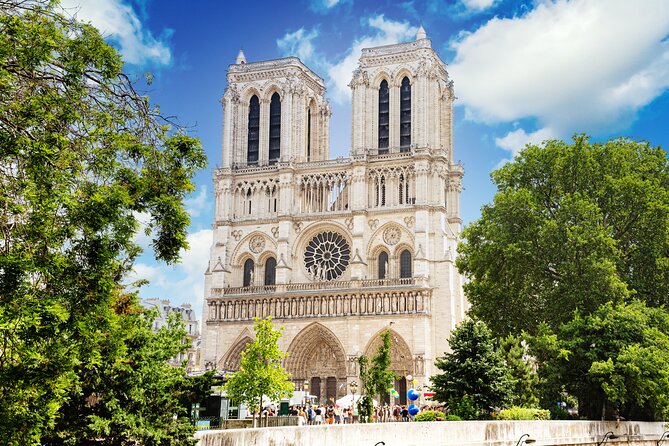
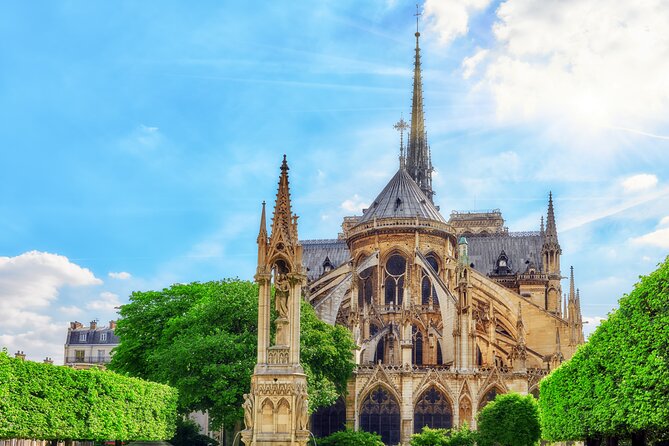
Why this stop matters: it sets up Notre-Dame not as an isolated monument, but as the current star of a long-running civic and religious stage. And it’s also a quick win for photos: you can grab solid views of Notre-Dame’s flying buttresses from the square.
You can also read our reviews of more walking tours in Paris



Walking the Seine: UNESCO banks and the art of noticing angles
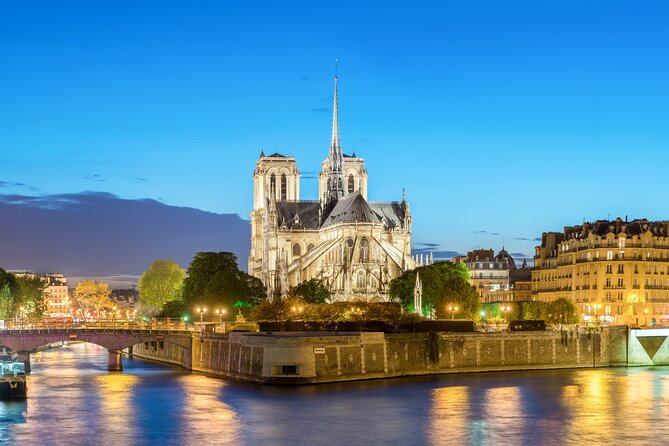
Then you shift to the Seine. The tour gives you time to walk along the river—one of those “simple” moments that’s actually the whole point of Paris. The Seine and its central banks are listed as UNESCO World Heritage, and standing beside the water makes the Île de la Cité feel like the heart of the city rather than a small island.
What to do here: watch how views change as you move. Notre-Dame’s silhouette shifts by just a few steps, and the river creates those classic framing shots you can’t get from a single fixed spot.
This is also where the tour’s pace starts to feel comfortable. You’re not sprinting from one landmark to the next; you’re letting your eyes adjust, then snapping photos when the angles click.
Île de la Cité: the medieval island that became the city’s center
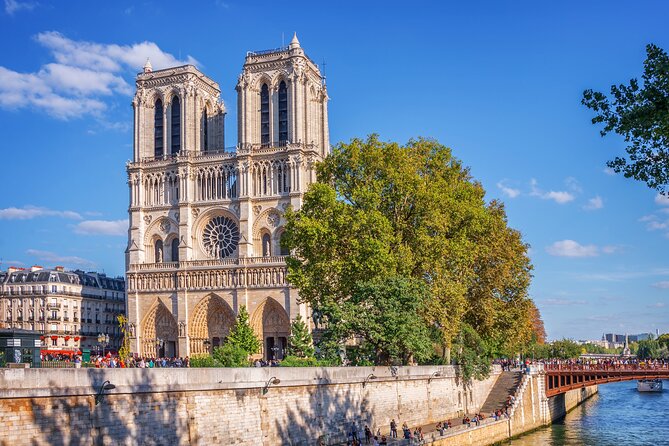
Next comes Île de la Cité, the island in the Seine that holds a concentration of landmarks, including Notre-Dame and the Sainte-Chapelle. You get a structured orientation: what’s where, what matters, and how the island’s layers connect.
A key value of this part is mental framing. Once you understand you’re on a “stack” of eras—Roman roots, royal power, revolutionary upheaval—the rest of the sights stop feeling like disconnected postcards.
Notre-Dame Cathedral interior: what the restoration changed (and what to look for)
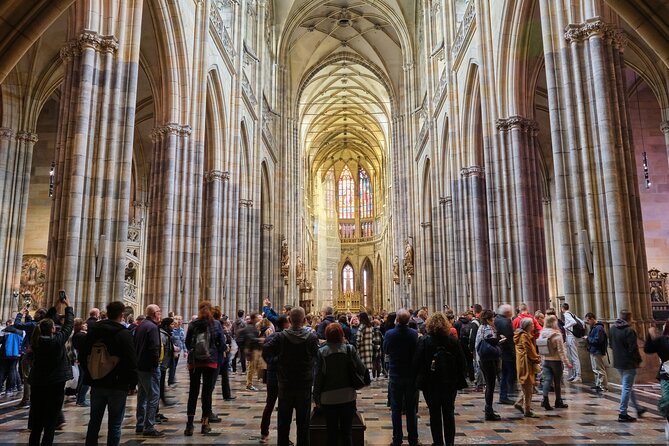
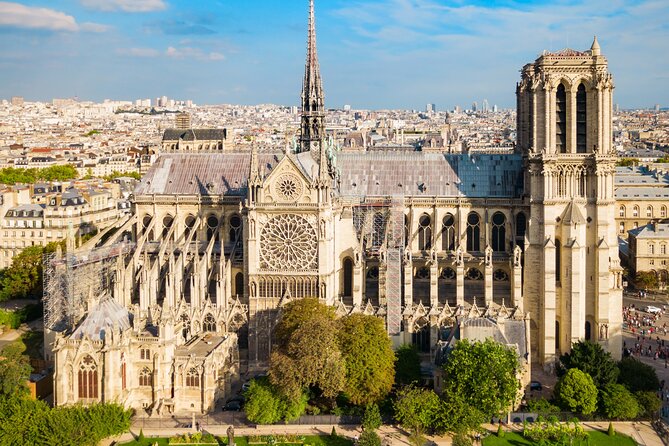
Now the tour’s centerpiece: Cathedrale Notre-Dame de Paris. You enter a 12th–13th-century Gothic monument and focus on what restoration has made possible. You’re guided through details like the cathedral’s cream-colored limestone, described as meticulously cleaned of ash, lead dust, and centuries of grime. The result is a bright, almost startling clarity in the vaults and thick columns.
You’ll also hear about the people and the work behind the comeback. The narration highlights the effort of over 2,000 workers and craftsmen from around France involved in reconstruction, which helps you see restoration as a living craft—not just a renovation job.
Inside, your eyes should go to:
- the new liturgical furniture, including the altar
- carved scenes from the life of Christ in side chapels
- gold-leaf stars on a deep blue ceiling in a painted chapel
- cherubs on the oculus, the circular stone feature at the crossing of the four vaults
- the central nave, restored to support the cathedral’s larger architectural effect
One more practical detail: the tour includes a church dress code requirement. Bring a scarf or jumper that covers your shoulders, especially if you plan to stay inside for the full time allowed. Also remember: Notre-Dame is extremely popular after reopening, so lines and waiting can affect your day.
Parvis Notre-Dame: Charlemagne, a redeveloped plaza, and how to read the square
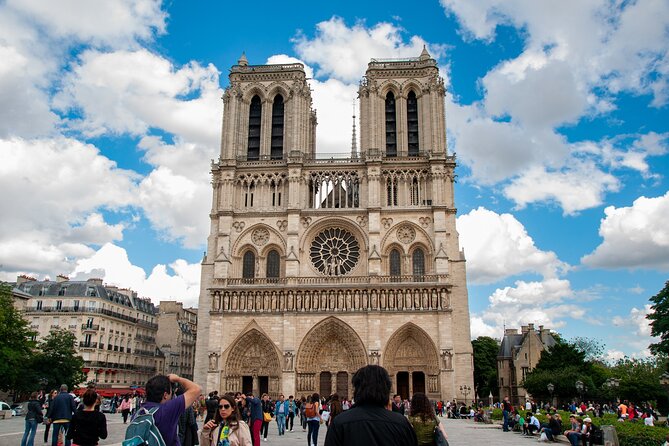
After Notre-Dame, you step out onto the Parvis Notre-Dame – Place Jean-Paul II. This plaza in front of the cathedral is being redesigned to open more toward the Seine and improve visitor flow—something you’ll actually notice as you walk through.
Your guide points you to the Statue of Charlemagne and His Guards, and you get historical context for what the square means dating back to Roman times. The payoff here is that you’re not just collecting monuments—you’re learning how public space works in Paris. Squares function like theaters, and this one is central.






From justice and clocks to WWII scars: the island’s darker edges
The tour keeps moving through the island’s “serious” side, not just the postcard views.
Courthouse and revolutionary prison context
You’ll pass by or discuss Palais de Justice, the law courts. The emphasis is on how the site served as a government place as far back as Roman times, then continued through Merovingian and Capetian eras. It’s also where the island’s later history turns sharp: the tour includes a photo stop connected with the old prison area where Marie Antoinette stayed for nine months, and where revolutionary tribunals sentenced 2,639 people to execution during the Reign of Terror.
Even if you’re not a “Revolution France” fanatic, this stop makes the island feel real. It’s a reminder that the same streets that draw you for Gothic architecture also hold human drama.
Prefecture de Police: WWII bullet impacts
Next comes the Préfecture de Police building. The narration notes that it houses the Paris Police Prefecture, overseeing policing, emergency services, and administrative functions for Paris and surrounding departments. The standout visual detail: the building shows bullet impacts from WWII during the liberation period, which gives the place a grim, grounded history.
Tour de l’Horloge: a 47-meter watchtower with thick walls
Then you see the Tour de l’Horloge, a clock tower tied to royal security. The tour frames it as about 650 years old, roughly 47 meters high, and describes it as originally functioning as a watchtower for the Royal Palace. You’re given restoration dates too (mid-1800s work is part of the story), plus the note that the tower’s walls were close to one meter thick.
This stop is short, but it’s worth paying attention. Thick walls and old towers are the difference between Paris that you photograph and Paris that you understand.
Pont Neuf finish: the view that ties the day together
You wrap up on Pont Neuf, described as the oldest bridge in Paris. From here, you get striking views that pull your morning’s story into one frame: the Louvre, the Seine, the Eiffel Tower, the French Academy, and Monnaie de Paris.
This ending is practical. You finish with a view that’s easy to orient from, so if you want to keep wandering on your own, you’ve got a geographic anchor.
Sainte-Chapelle upgrade: royal Gothic with timed entry and interior time
If you upgrade, you’ll include Sainte-Chapelle, a Gothic royal chapel built within the medieval Palais de la Cité. Construction began after 1238, and it was consecrated on 26 April 1248. The tour provides a short exterior orientation first, and then you enter later with the people who chose the ticketed option.
The interior visit is allotted about 60 minutes, which is a strong chunk of time for a small building. The reason this upgrade is popular is simple: Sainte-Chapelle is visually intense. You don’t need a long lecture to know you’re in a special place—you just need time to look.
One caution: the tour data makes it clear that Sainte-Chapelle entry is not included by default, so plan for extra cost and give yourself enough patience for how busy the area can be.
Is $71.20 good value for an early access Notre-Dame walk?
At $71.20 per person for about 2 hours, you’re paying for more than the walk and more than a ticket. The value is the structure: a guided orientation that helps you read Notre-Dame’s restoration and the island’s layers fast, plus an interior visit to Notre-Dame itself.
A fair way to think about it:
- Notre-Dame entry is free, but free entry doesn’t come with someone telling you exactly where to look once you’re inside.
- You’re also paying for the guided sequencing—Roman traces early, island timeline in the middle, and then the cathedral and finishing viewpoints.
- The route ties into iconic Paris scenery like the Seine and Pont Neuf, which matters if you only have a half-day.
Where value gets shaky for some people is when expectations are off. If you’re imagining a full-on, guide-in-the-room experience inside the cathedral at every moment, know that the tour is set up so you get guidance before entry, and then you spend time inside independently. That tradeoff works well for many visitors, but it’s worth matching to your preferred travel style.
My take: if you like your landmarks explained and you want a plan that moves efficiently through Île de la Cité, the price feels reasonable.
Practical tips so the day goes smoothly
Here’s how to make this tour feel easy instead of stressful.
- Bring photo ID. You’ll be asked for it.
- Dress for the church shoulder-cover rule. Bring a scarf or a light jumper to cover your shoulders.
- Wear comfortable shoes. Cobblestones and uneven paving are part of the charm.
- Carry water. The tour notes you’ll wait in the sun.
- Go in with weather flexibility. It runs in all weather, so pack for rain or cold.
- Consider timing. One review specifically called out January as a calmer month with less crowding, which can make the whole day feel more relaxed.
Finally, check your expectations about waits. The tour notes that Notre-Dame’s popularity after reopening can increase wait times, and that part is out of the guide’s control.
Should you book this Early Access Paris Notre-Dame walking tour?
Book it if you want:
- an efficient route around Île de la Cité with real context
- a guided introduction that helps you notice what matters inside Notre-Dame’s restoration
- a finishing view at Pont Neuf that makes the city feel connected
Skip it (or consider a different format) if:
- you need a guide inside Notre-Dame the whole time, without any independent portion
- you have limited mobility (the route includes uneven surfaces and stairs)
For most people, this is a smart use of a morning or early afternoon: you get the cathedral experience plus the island’s story in a single, walkable sweep.
FAQ
How long is the Early Access Paris Notre-Dame Cathedral walking tour?
The tour is about 2 hours.
Where does the tour start and end?
It starts at Place Louis Aragon (75004 Paris) and ends at Pont Neuf (75001 Paris). If you upgrade for Sainte-Chapelle entry, the tour ends in Sainte-Chapelle.
Is Sainte-Chapelle included?
Sainte-Chapelle entry is an optional upgrade. Without the upgrade, the tour ends at Pont Neuf.
Do I need tickets for Notre-Dame Cathedral?
Notre-Dame Cathedral entrance is free and open to all. The tour includes an interior visit, and the included services are independent of access to the interior.
What should I bring for the tour?
Bring a photo ID, comfortable shoes, and water. The church dress code requires covering shoulders with a scarf or jumper.
Will there be a line to enter Notre-Dame?
Notre-Dame is extremely popular after reopening, and wait times can increase. Early access helps, but wait times are still possible and are out of the tour’s control.