REVIEW · PARIS
Side-car Paris Visit with a River Cruise
Book on Viator →Operated by Wild Side Tour · Bookable on Viator
Paris has secret layers under Notre-Dame. This small-group side-car day pairs pre-booked access to the archaeological crypts with a relaxing Seine cruise.
I like the personal guide time with the archaeologist, especially for answering questions and tying the ruins to what you’ll see above. The main thing to think about is that many famous stops are only quick photo windows, not full sightseeing time.
I also like the tight routing: you get a lot of Paris landmarks packed into about 90 minutes, which is ideal when you want momentum without a full day plan.
The drawback is simple: if you want to linger in museums or queue for viewpoints, this format will feel rushed.
In This Review
- Key highlights
- The side-car format: how you see more with less stress
- Notre-Dame archaeological crypts: the real payoff
- Eiffel Tower and Musée d’Orsay: quick views that still help
- Arc photo stop and the bridges-to-history feeling
- Conciergerie: when Gothic architecture meets French Revolution drama
- Pont des Arts to Pont Alexandre III: romance and Belle Époque detail
- Invalides, Palais de Chaillot, Grand Palais: exteriors that point to bigger plans
- Place de la Concorde and the Louvre perimeter: seeing the big picture
- Île Saint-Louis, Hôtel de Ville, and Sainte-Chapelle: the historical heart
- From crypt to cruise: transport that actually protects your time
- Price and value: what $170.05 buys you in real terms
- Pacing, crowds, and how to get the most out of 90 minutes
- Who should book this side-car + Seine cruise
- Should you book it?
- FAQ
- How long is the experience?
- Is pickup available?
- What language is the tour offered in?
- Is admission to the Notre-Dame archaeological crypt included?
- Are tickets included for stops like the Eiffel Tower or Musée d’Orsay?
- Is this a private tour?
- Is free cancellation available?
Key highlights
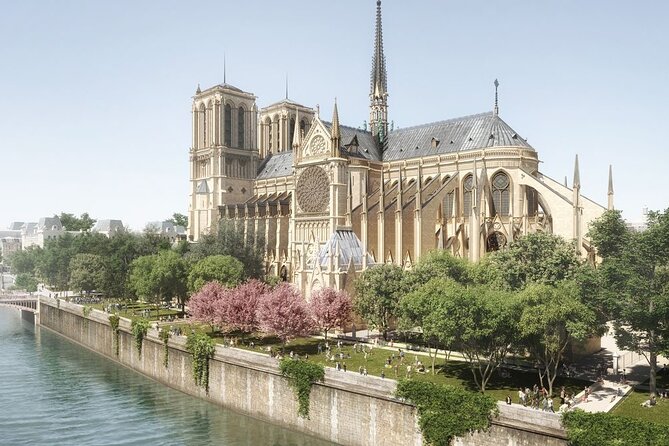
- Pre-booked Notre-Dame archaeological crypts to reduce time lost to queues and uncertainty
- Small private group with a guide who uses clear, story-driven explanations
- Side-car style transport plus quick transfers to keep your schedule from slipping
- Landmark photo stops that help you orient fast: Eiffel Tower, Orsay, Louvre, Sainte-Chapelle, Arc de Triomphe
- Seine river cruise reset after the underground visit, with a calmer pace on the water
- Family-friendly storytelling that makes archaeology easier to follow than a textbook
The side-car format: how you see more with less stress
A side-car style sightseeing day works because it cuts the usual Paris friction: finding your way, waiting for transfers, and wasting daylight on logistics. Here, you’re guided through a short loop that mixes walking time (mostly around Notre-Dame) with quick stops at major landmarks.
You get two “modes” in one outing. First is the concentrated part, where the archaeologist and the crypt setting do the heavy lifting of understanding. Then you switch to the Seine, where the city becomes scenery instead of homework.
If you’re in Paris for the first time, this kind of route is great for getting your bearings. You’ll come away knowing where key sights sit relative to each other, which makes it much easier to plan a longer visit on a second day.
You can also read our reviews of more boat tours in Paris



Notre-Dame archaeological crypts: the real payoff
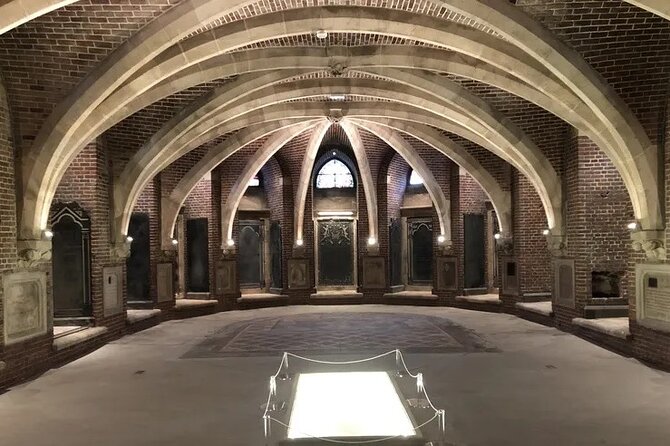
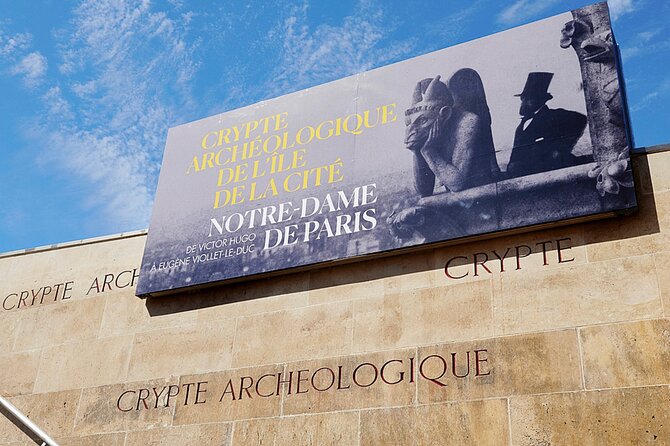
The heart of the experience is meeting at Cathedrale Notre-Dame de Paris, then spending about 30 minutes focused on what’s below the cathedral. The guide/archaeologist leads a walking-style tour around the area and gives context with amusing, family-friendly anecdotes.
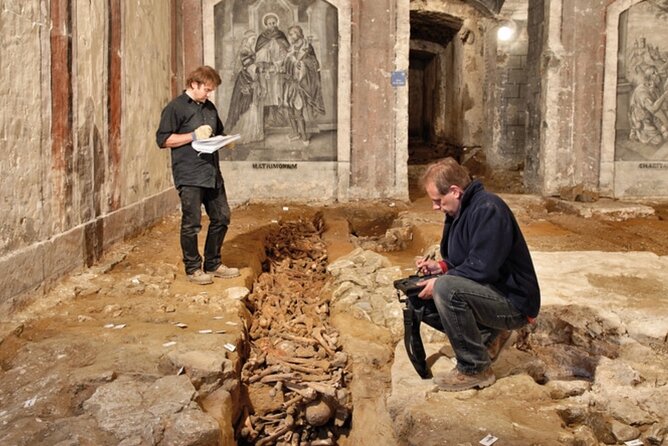
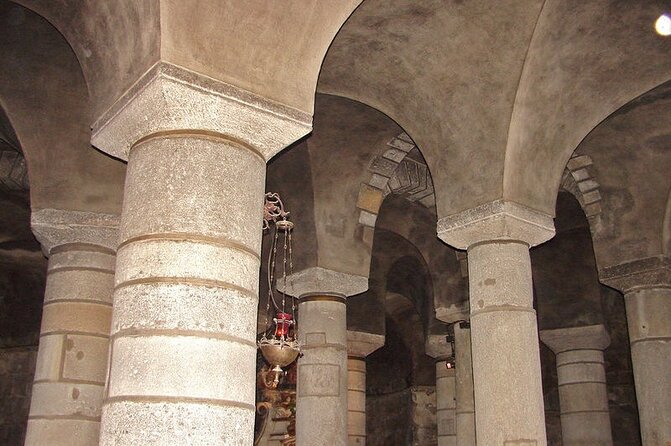
This is the part that most people talk about for a reason: you’re not just looking at a famous building. You’re seeing how the site layers across periods, with explanations tied to what survives underground. Many visitors find the “dig site” walls and how they’re presented make the history feel visible, like you can picture the scenes that once surrounded that ground.
A practical bonus: the experience includes admission for the crypts, which helps you beat the chaos you’ll find when you’re trying to line up spontaneously. It also means you’re spending your time where the tour actually earns its keep—inside the archaeological area—rather than in long queues.
One more detail to watch for: this visit is about the archaeological crypt under Notre-Dame, not the Catacombs. If your dream is bones underground in the Catacombs of Paris, you’ll want to confirm that you’re booking the correct attraction for that specific feeling.
Eiffel Tower and Musée d’Orsay: quick views that still help
After Notre-Dame, the day shifts into short, efficient landmark stops—think “see it, orient yourself, take a photo, move on.”
At the Eiffel Tower, your time is brief (around 3 minutes) and admission is not included. This isn’t the stop for climbing or going inside. It’s for seeing the tower from the street level context and syncing it to the rest of your mental map of central Paris.
The same logic applies to Musée d’Orsay. You get a fast look at the museum’s setting in its former railway-station home, which is a big part of why it feels special even before you enter. Admission is not included, so you’re not doing a full museum visit here. But you can still decide, on the spot, whether you want to return later with tickets and a plan.
If you’re visiting in a short window, these “flash” stops are a strength. If you’re the type who likes slow looking, plan to treat this as a preview, then book separate museum time later.
Arc photo stop and the bridges-to-history feeling
There’s also a photo stop at the Arc (Arc de Triomphe area by context), which acts like a visual bookmark for the end of the sightseeing loop.
Then the route leans into symbolism and location. Even with short stop times, you get a sense of how Paris tells stories in space: where power sat, where revolution happened, and how the city’s river shapes walking routes and views.
If you’re the kind of traveler who likes connecting dots, this is one of the most useful parts of the day. You’ll see spots you’ve only seen in postcards, and suddenly you know what’s nearby and what direction things sit in.
Conciergerie: when Gothic architecture meets French Revolution drama
The Conciergerie stop is brief (about 3 minutes), but it comes with a strong storyline. This building started as a royal palace and later became infamous as a prison during the French Revolution. The tour context points to Marie Antoinette waiting for execution.
Even if you don’t go inside on this outing, the architecture matters. Gothic stonework in this setting feels like it’s built for tension, and that helps the guide’s historical framing land fast. It’s the kind of stop that’s less about ticking a box and more about feeling the atmosphere.
One consideration: because the time here is short, you’ll get the basics of the story rather than a long walkthrough. If you want a deeper dive, you’ll want a separate visit later with more time and an audio guide.




Pont des Arts to Pont Alexandre III: romance and Belle Époque detail
The route includes Pont des Arts, known for its romantic associations, plus one of the best perks: views across the Seine. From here, you can look over toward the Louvre and Institut de France, and that makes it a strong “orientation” stop. Even with limited time, the visual connection helps everything else make sense.
Next comes Pont Alexandre III, often described as one of the most beautiful bridges in Paris. The stop is short, but the guide context highlights what you’re looking at: statues, ornate lamps, and gilded details that reflect Belle Époque design.
If you like photography, these bridge segments are where you’ll enjoy the day most. They’re also where the boat cruise afterward feels like a natural transition, because you’ve already trained your eye on how the city looks from the river.
Invalides, Palais de Chaillot, Grand Palais: exteriors that point to bigger plans
Several of the stops here are quick looks at major landmarks where admission is not included.
At Musée de l’Armee des Invalides (Les Invalides area), the big draw is the grand complex and the gilded dome over the military museum area, with Napoleon’s tomb being the headline connection. The stop is only a few minutes, so it’s more about absorbing the setting than touring the exhibits.
You’ll also get views at Palais de Chaillot, opposite the Eiffel Tower, with terrace viewpoints and Art Deco architecture in the 1930s style. Again, this is a snapshot, not a full museum hour.
And then there’s the Grand Palais, with its famous glass-domed roof and role as a major exhibition hall. It was built for the 1900 World’s Fair, and even a short look helps you understand why it remains a “wow” exterior.
Here’s the value: this tour helps you decide what to return to. If you spot something you care about more than the others—architecture, military history, or painting—this day gives you the context to make your next booking smarter.
Place de la Concorde and the Louvre perimeter: seeing the big picture
At Place de la Concorde, you’ll see one of Paris’s largest squares and learn what it’s tied to historically, including French Revolution references and the Egyptian obelisk connection. It’s brief, but it’s a key “wide-angle” moment because the square sits like a hinge between neighborhoods.
Then comes the Louvre Museum stop. You won’t be going in on this outing, and the stop is short. Still, it’s worth it for the sense of scale and for seeing how the Louvre’s setting and glass pyramid entrance fit into the surrounding city.
A quick note for planning: if you want the Louvre’s highlights, you’ll need a separate timed ticket and a strategy. This tour isn’t trying to do the Louvre as a full museum day. It’s helping you understand where the Louvre lives in your Paris map.
Île Saint-Louis, Hôtel de Ville, and Sainte-Chapelle: the historical heart
This route spends time on parts of Paris that feel older and more lived-in, especially around the river.
Île Saint-Louis gets a quick pause for its residential calm and 17th-century townhouses. Even a few minutes here can give your day a breather, because the island feels less like a nonstop spectacle than central river corridors.
At Hôtel de Ville, you get the Renaissance-style facade context and the fact that it was reconstructed after a fire. Again, it’s not an interior tour. But the exterior matters because Paris is full of “story buildings,” and the guide points out why this one is central.
Then you reach Sainte-Chapelle, famous for its stained glass windows. The stop is short, but the guide framing explains why the chapel is so revered: it was built in the 13th century and connected to relics, including the Crown of Thorns. Even if you don’t spend long in the chapel itself during this outing, the context makes the building feel more than just pretty windows.
Finally, the itinerary includes time around Île de la Cité, emphasizing it as the historical heart of Paris. That helps you connect the dots between Notre-Dame, Sainte-Chapelle, and the medieval atmosphere of the island.
From crypt to cruise: transport that actually protects your time
A major quality-of-life detail here is the transfer between the crypt and the boat launch. The experience is built with comfortable private transport in mind, and that matters more than you might think. Paris can be slow on foot for even a small route, especially if you’re moving after an underground visit when everyone’s ready to sit down.
Several accounts also highlight that the transport portion can be handled in a fun way—some guides arrive by motorcycle style vehicle for the transfer to the Seine cruise portion. Even if you’re not riding the motorcycle personally, the point is the same: you’re not left to scramble for transit while your day gets smaller.
And timing has a way of changing at Notre-Dame sometimes, due to security checks or evacuations. In at least one documented situation, the guide kept the group moving and redirected the plan toward the river cruise even after an interruption. That’s the kind of flexibility you want to see on a short-format tour, because one delayed moment can otherwise ruin an entire afternoon.
Price and value: what $170.05 buys you in real terms
At $170.05 per person, this isn’t a bargain, especially for travelers who want a long, unguided stroll through every sight.
But I think it’s closer to fair when you look at what’s included in the experience structure, not just the list of landmarks:
- You get pre-booked admission to the Notre-Dame archaeological crypt area, which is usually where timing uncertainty can hurt you most.
- You get a guide-led explanation that’s meant to make the site make sense quickly, especially for archaeology and Notre-Dame’s layered story.
- You get private, small-group transport that keeps the route moving and reduces the chance you’ll lose time to transit.
Where the value can feel thin is exactly where the schedule is tight: many iconic stops are only a few minutes and admission for big museums is not included. So if you’re expecting a full Louvre or Eiffel Tower experience here, you’ll feel the gap.
My practical take: this is worth it if you want a guided orientation day plus one premium ticketed moment underground. It’s not worth it if you want to “do” the sights with long lines, deep museum time, and lots of independent exploration.
Pacing, crowds, and how to get the most out of 90 minutes
The short time windows shape everything. You’ll likely walk a bit near Notre-Dame, then you’ll spend most of the rest of the day in fast viewing mode. That’s normal for this format, and it’s why the guide’s explanations during the crypt visit matter so much.
Here’s how to make it work for you:
- Arrive with good expectations: this is not a full museum day.
- Bring a camera and accept quick photos will be the main outcome at many landmarks.
- If there’s one sight you care about most outside Notre-Dame—like Sainte-Chapelle or the Eiffel Tower—plan to return on a separate day with tickets.
Mobility is also a factor to consider. Short stops can still involve uneven surfaces and walking time. If you rely on a wheelchair, plan carefully and expect limitations, since European city centers often aren’t designed for smooth accessibility.
Who should book this side-car + Seine cruise
This works best for:
- First-time visitors who want a fast, guided route and a clear sense of where key sights sit
- History lovers who enjoy archaeology and want the Notre-Dame site explained from underneath the cathedral
- People who don’t want to manage tickets, transit, and timing between multiple landmarks
It may not be the right match if you:
- Want long museum hours at every stop
- Prefer deep, independent exploration over guided orientation
- Need an extremely accessible route with minimal walking (short walking is part of the plan)
Should you book it?
If you’re choosing between a “lots of landmarks but no real story” day and a “one big thing only” day, I’d lean toward this. You get a guided, ticketed highlight at Notre-Dame’s archaeological crypts, then you transition to the Seine when your brain (and feet) are ready to slow down.
Book it if you’re excited by the idea of seeing Paris icons in a short loop and you care most about understanding what you’re looking at, especially under Notre-Dame.
Skip it or pair it with other plans if you’re hoping to fully tour every big-name sight. This tour is best when you treat it as your orientation + ticketed archaeology moment, not as your only shot at Paris.
FAQ
How long is the experience?
It’s listed at about 1 hour 30 minutes.
Is pickup available?
Yes. You’re met at your address.
What language is the tour offered in?
The tour is offered in English.
Is admission to the Notre-Dame archaeological crypt included?
Yes. The Notre-Dame archaeological crypt admission is included, marked as free.
Are tickets included for stops like the Eiffel Tower or Musée d’Orsay?
No. Admission for those stops is not included.
Is this a private tour?
Yes. It’s a private tour/activity, with only your group participating.
Is free cancellation available?
Yes. You can cancel up to 24 hours in advance for a full refund.