REVIEW · PARIS
Best of Paris Private Rickshaw bike Tour with guide
Book on GetYourGuide →Operated by GoTurtle · Bookable on GetYourGuide
Paris, pedal-powered and personal.
What makes this one feel different is the private rickshaw ride plus an onboard audio guide that keeps the story moving as you roll past the big names. I also like how compact it is: you get a best-of overview without spending your morning stuck in lanes crawling between sights. The main trade-off is that so many places are quick photo stops, so you won’t get a slow, inside-the-building visit at every stop.
You’ll start near the center—either 99 Rue de Rivoli (often near the Carrousel du Louvre area) depending on what option you choose—and you’ll come back to the same area. Expect a route that swings from the classic Left Bank mood over to the Seine, then up into the grand monuments and wide boulevards that define the postcard Paris most people come for.
In This Review
- Key things I’d circle on your planning map
- Where You Start at 99 Rue de Rivoli (and the Louvre Carrousel Option)
- Hôtel de Ville, Notre-Dame, and La Sorbonne: the classic core in quick hits
- A quick practical note
- Pantheon and the Luxembourg Gardens: where Paris gets philosophical
- Saint-Sulpice and Saint-Germain-des-Prés: the Left Bank vibe on wheels
- Bonus to listen actively
- Along the Seine: bridges and river drama without the traffic headache
- Practical tip for photos
- Eiffel Tower to Statue of Liberty: the iconic views, plus a twist
- A realistic note
- Place du Trocadéro, Arc de Triomphe, and Champs-Élysées: postcard Paris gets wide
- Why this section is valuable
- Grand Palais, Pont Alexandre III, and l’Assemblée Nationale: the “big architecture” stretch
- Place Vendôme and Palais Garnier: elegance meets opera glamour
- Louvre Museum and Sacré-Cœur: how the tour closes with two Paris icons
- Private Rickshaw Reality Check: what to watch (and how to get the best ride)
- The rickshaw advantage
- Value in your itinerary: why this tour can be the smart use of limited time
- Who this tour fits best (and who should choose differently)
- Final verdict: should you book the Best of Paris Private Rickshaw bike Tour?
- FAQ
- Where does the tour start and end?
- How long is the tour?
- Is this a private tour?
- What language is the guide?
- Is there an audio guide?
- What landmarks can I expect to see?
- Can you customize where you want to go or spend time?
- Are alcohol and drugs allowed?
- What’s the cancellation policy?
- Can I reserve without paying right away?
Key things I’d circle on your planning map

- Private rickshaw comfort: you move through streets without the stop-and-go stress of driving.
- Onboard audio in many languages: you can follow along even when the sights go by fast.
- A true best-of loop: major landmarks from Notre-Dame to the Eiffel area to the Champs-Élysées.
- Photo-stop rhythm: you see a lot, but you plan for quick looks rather than long museum time.
- Routes can adapt: if roads are blocked by events, your guide may use alternate streets to keep you moving.
- Seine photo moments: the river stretch is built into the route, not treated like an afterthought.
Where You Start at 99 Rue de Rivoli (and the Louvre Carrousel Option)

Your meeting point is in central Paris at 99 Rue de Rivoli, 75001 Paris, and you’ll return to the same spot. There’s also a second starting option that references the Carrousel du Louvre area. Both put you in striking distance of the densest concentration of monuments—useful if this tour is your first or last “big overview” during your trip.
Because you’re starting so central, you’ll feel Paris quickly: tight street corners, sudden views opening up, and that classic sense that everything is connected by walking paths you can later explore on your own. The tour duration is listed as 45 minutes to 3 hours, with many departures running around the shorter, “see the highlights” window. That timing matters: shorter rides mean fewer stops, longer rides mean more chances to linger and take photos.
You can also read our reviews of more cycling tours in Paris

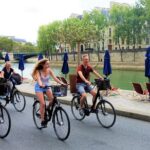
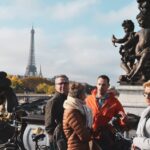
Hôtel de Ville, Notre-Dame, and La Sorbonne: the classic core in quick hits

Early on, you’ll work your way through the civic and cathedral zone—prime Paris for architecture fans and first-time visitors alike.
Hôtel de Ville (Photo stop)
This is the city’s grand “house”—the vibe here is official, symmetrical, and designed for public spectacle. Since it’s a photo stop, you’re not meant to do a long detour, but you’ll get the full scale of the building and its place in the center of government-era Paris.
Notre-Dame Cathedral (Photo stop)
Notre-Dame is Notre-Dame—no one needs convincing. The value here is timing and pacing. You’ll see it from the street and get the big-picture composition that helps you understand why this area anchors the story of Paris.
La Sorbonne (Photo stop)
La Sorbonne represents the city’s intellectual side. Even if you don’t know the details yet, it helps you read Paris as more than monuments—it’s also universities, debates, and ideas. Quick stops like this are great for getting your bearings, because later you can choose what to explore deeper.
A quick practical note
When a tour is private, your guide can adjust how the stop happens—where you pause, how long you wait, and what side of the street gives the best photo angle. That flexibility is one reason a rickshaw tour can feel smoother than a bus ride for landmark photos.
Pantheon and the Luxembourg Gardens: where Paris gets philosophical

Then the route shifts into a different tone: the Pantheon and the Luxembourg Gardens give you that classic “Paris has thoughts” feeling.
Pantheon, Paris (Photo stop)
The Pantheon is all about memory and national identity. It’s a huge visual statement, and even a quick look helps you understand why Parisians treat monuments as more than decoration.
Luxembourg Gardens (Photo stop)
The gardens are a reminder that Paris isn’t only stone and statues. This is a place of promenades and everyday elegance. In a photo-stop format, you’ll still get a sense of the space—how it spreads out and how locals treat it as a daily pause.
Why this combo works
Pantheon gives you the big idea; Luxembourg Gardens gives you the human-scale contrast. That’s a strong use of limited time.
Saint-Sulpice and Saint-Germain-des-Prés: the Left Bank vibe on wheels

Next comes the Left Bank flavor—church grandeur, old-street atmosphere, and a neighborhood feel that many visitors love but usually only catch after they’ve already missed it.
Church of Saint-Sulpice (Photo stop)
This church carries a quieter dignity than the loudest-famous cathedrals. A photo stop is enough to register the scale and the sense of place in this part of the city.
Saint-Germain-des-Prés (Photo stop)
Saint-Germain-des-Prés is one of those names that means something the moment you say it. Even without a deep dive, you’ll sense the neighborhood’s culture: cafes, writers, and that older Paris rhythm. For many people, this is where the tour starts to feel less like a checklist and more like a real city ride.
You can also read our reviews of more guided tours in Paris
Bonus to listen actively
Use the onboard audio guide during the ride segments, not only at stops. If you’re waiting at lights or moving through tighter streets, the commentary helps you connect the building you just saw to the next one you’re about to pass.
Along the Seine: bridges and river drama without the traffic headache

One of the best uses of a rickshaw tour is the way it can thread through the city without you sitting in a full-day traffic jam. This route specifically includes the river stretch and multiple bridge photo moments.
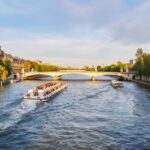
Seine River (Photo stop)
Seeing the Seine from the right angle matters. The river acts like Paris’s visual backbone—everything lines up around it.
Pont de l’Alma (Photo stop) and Pont de Bir-Hakeim (Photo stop)
Bridges are underrated on landmark tours. They’re built-in vantage points and they show you how Paris organizes movement. These stops help you read the city’s geometry, not just its famous facades.
Practical tip for photos
If you care about photos, aim to have your camera ready before you arrive. Bridge moments can be quick, and the best light changes fast on open river views.
Eiffel Tower to Statue of Liberty: the iconic views, plus a twist

Then you hit the Eiffel-area energy—bright, crowded, and instantly recognizable from a block away.
Eiffel Tower (Photo stop)
This is the headline. Even if you’ve seen it on screens, being there changes the scale in your mind. Photo stops work well here because you want a quick “I’m actually here” moment and then you want to keep the day moving.
Statue of Liberty, Paris (Photo stop)
This one surprises people—in a good way. It’s a reminder that Paris collects symbols and reuses them across neighborhoods, like a city remixing its own mythology.
A realistic note
The route can be affected by events and closures. In at least one real-world situation, access to some sights was limited due to street restrictions near the Louvre and other areas. The good news: your guide may compensate by taking you through smaller streets and alternative viewpoints rather than just canceling parts of the route.
Place du Trocadéro, Arc de Triomphe, and Champs-Élysées: postcard Paris gets wide

Now the tour leans into the grand stage sets: viewpoints, ceremonial avenues, and the kind of architecture that looks best when the street opens up.
Place du Trocadéro (Photo stop)
Trocadéro is all about perspective. It’s one of the classic places to appreciate the Eiffel Tower in a wider frame—great for photos and for that “stand back and take it in” feeling.
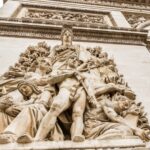
Arc de Triomphe (Photo stop)
The Arc is a Paris compass point. Even a quick look gives you a sense of direction—how this city builds axes and landmarks to lead the eye.
Champs-Élysées (Photo stop)
This is the famous boulevard experience: busy energy, grand storefronts, and big city spectacle. In a rickshaw, you’ll glide through it more comfortably than if you were stuck in traffic on your own.
Why this section is valuable
If your time is short, this is where the tour pays off. You leave with a mental map of Paris’s most recognizable lines: river-to-tower-to-avenue-to-arc.
Grand Palais, Pont Alexandre III, and l’Assemblée Nationale: the “big architecture” stretch

Next you get a strong dose of monumental Paris, the kind you usually only appreciate fully when you slow down a bit.
Grand Palais (Photo stop)
The Grand Palais reads as power and design. Even if it’s just a quick pause, you’ll see the scale and the confidence of the structure.
Pont Alexandre III (Photo stop)
This bridge is about drama in stone and detail. Bridges like this don’t just connect points; they perform.
l’Assemblée Nationale (Photo stop)
You’ll be passing and photographing a place tied to the country’s governance. It’s a reminder that Paris’s identity isn’t only artistic—it’s political, too.
Place Vendôme and Palais Garnier: elegance meets opera glamour

Then the route turns toward the polished center—fashion-square energy and the world-famous opera silhouette.
Place Vendôme (Photo stop)
This is a square that feels curated. Even if you’re not shopping, the visual style helps you understand why Paris became a global fashion and luxury reference point.
Palais Garnier (Photo stop)
The opera house is one of those buildings that looks theatrical from every angle. A photo stop here is perfect because the impact is immediate—this is the sort of architecture you remember later.
Louvre Museum and Sacré-Cœur: how the tour closes with two Paris icons
Near the end, you’ll circle back to the cultural center and then climb into another classic silhouette.
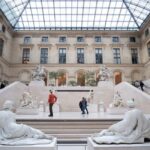
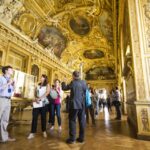
Louvre Museum (Photo stop)
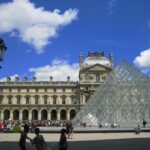
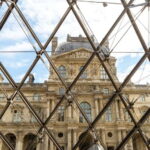
Even if you don’t go inside, the Louvre exterior works as a final “Paris is art” reminder. It’s also helpful to have it later in your trip: it makes it easier to decide if you want a separate, time-heavy museum visit.
Sacré-Cœur Basilica (Photo stop)
Ending with Sacré-Cœur changes the mood. The look is lighter and more uplifting than many of the earlier stops. It’s a strong way to finish a best-of loop: your day ends with a sense of view and atmosphere rather than just the next landmark in line.
Private Rickshaw Reality Check: what to watch (and how to get the best ride)
A few practical things can make or break your experience—good news is, you can control many of them.
- You’re riding in a public city. Road works and events happen. In at least one real situation, a guide handled significant street closures by adjusting the route and finding smaller lanes and quieter photo points. Still, build in flexibility so you don’t mentally plan on hitting every single stop on the dot.
- Photo stops mean quick angles. Expect to see a lot and move on. If you want long museum time or lots of interior exploring, you’ll need to pair this with separate visits.
- Audio sound depends on setup and conditions. The onboard audio guide is included, and it covers many languages. If you find the audio hard to hear, ask your guide/host to help with volume or placement rather than waiting silently.
The rickshaw advantage
This format helps you avoid the worst part of sightseeing: sitting in traffic. You’re still moving through iconic streets, but you’re not burning hours inching along. That’s why this works so well for a short visit or for the day you want a reset after slower walking routes.
Value in your itinerary: why this tour can be the smart use of limited time
No price is listed here, so I’ll judge value by what you get for your hours.
You’re paying for three things:
- Time savings from a tight route between major landmarks
- Convenience of private guiding and onboard audio
- A best-of sequence that helps you build a Paris map you can use later
If you’re comparing it to a self-guided day, the math is simple: you skip a lot of decision-making and transportation friction. If you’re comparing to large group tours, privacy is the big differentiator—you can customize where you want to spend your time more than you would on a fixed coach itinerary.
Who this tour fits best (and who should choose differently)
This is a great match if:
- You’re in Paris for a short time and want a high-impact overview
- You like big, classic landmarks and want them connected into one logical loop
- You prefer learning while you move, not only while standing still
- You want a private experience without the stress of driving or navigating constantly
It may feel less ideal if:
- You want deep museum time at multiple stops
- You’re aiming for long interior visits and guided explanations inside every site
- You’re hard-sensitive to sound and need a quiet, personalized audio environment all the time
Final verdict: should you book the Best of Paris Private Rickshaw bike Tour?
I’d book it if you want the fast, feel-for-the-city version of Paris. It’s especially useful as a first big orientation day—or as a last-day sweep—because it helps you decide what deserves your longer attention later.
If you’re traveling with mixed interests (someone wants Eiffel Tower photos, someone else wants Left Bank vibe), this tour balances both without forcing you into a full-day walking grind. Just go in expecting photo stops and a guided “greatest hits” rhythm, and you’ll leave with a clear map, fresh context, and a strong sense of where to return.
FAQ
Where does the tour start and end?
The tour starts and ends at 99 Rue de Rivoli, 75001 Paris. There’s also an option that starts around the Carrousel du Louvre area, and the tour returns to either drop-off location.
How long is the tour?
The duration is listed as 45 minutes to 3 hours, depending on the starting time you book.
Is this a private tour?
Yes, it’s described as a private group experience.
What language is the guide?
The host or greeter is listed as speaking English and French.
Is there an audio guide?
Yes. An onboard audio guide is included, with options in Dutch, German, English, French, Italian, Spanish, Japanese, and Chinese.
What landmarks can I expect to see?
Key landmarks included on the route include Eiffel Tower, Notre-Dame Cathedral, Pantheon, the Seine River, Place du Trocadéro, Arc de Triomphe, Champs-Élysées, Grand Palais, Pont Alexandre III, Palais Garnier, Louvre Museum, and Sacré-Cœur Basilica. The route also includes several bridge and viewpoint photo stops.
Can you customize where you want to go or spend time?
The tour is private, so you can discuss your preferences with the guide during the ride, including where you want to spend time.
Are alcohol and drugs allowed?
No. Alcohol and drugs are not allowed.
What’s the cancellation policy?
There is free cancellation up to 24 hours in advance for a full refund.
Can I reserve without paying right away?
Yes, it offers Reserve now & pay later, so you can book your spot and pay nothing today.