REVIEW · PARIS
Behind the Scenes Experience of World’s Oldest Circus in Paris
Book on Viator →Operated by Off Beat Paris · Bookable on Viator
The best part of this Paris experience happens before the first act. You enter Cirque d’Hiver Bouglione, a famous 1852 circus building, then go beyond the public seating areas to learn how this old venue works and why it matters. After that, you settle into VIP lodge seats for a full circus show with international performers, live music, dancers, and stage lighting.
I like the two-part format. The guided tour gives the performance a sense of place, while the show provides the color, speed, and spectacle. I also like the warm, personal guiding style reported for Katie, whose animated storytelling brings the Bouglione family and the building to life. The main consideration is timing: three hours is a serious block in a busy Paris schedule, and a group of up to 50 people may feel less intimate than a small walking tour.
In This Review
- Key Points to Know Before You Book
- Why Cirque d’Hiver Matters
- Meeting at 110 Rue Amelot
- The First Hour: A Guided Look Behind the Curtain
- The Building’s Architecture and Circus Family
- The Second Hour and Third Hour: The Circus Show
- What the VIP Seating Adds
- Is the Three-Hour Length Worth It?
- Value, Price, and Group Size
- Who Will Enjoy This Most?
- Booking and Cancellation Details
- Should You Book the Cirque d’Hiver Experience?
- FAQ
- Where does the experience begin?
- Where does the experience end?
- How long does the experience last?
- Is seating included?
- Is the guided tour included?
- Are food and drinks included?
- What is the cancellation policy?
Key Points to Know Before You Book
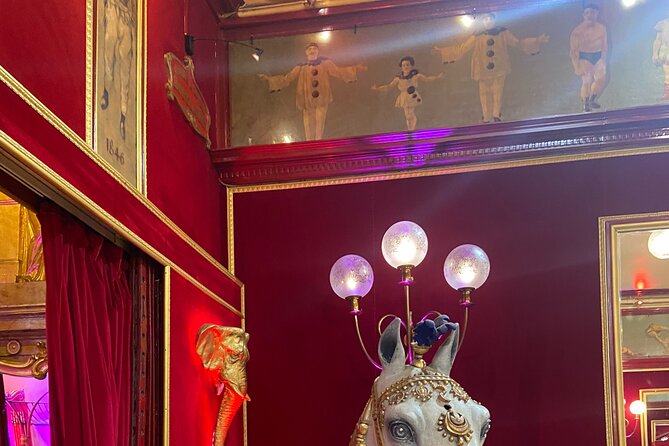
- A rare look inside Cirque d’Hiver: See backstage areas and learn about a venue built in 1852.
- The birthplace of the trapeze: The tour connects the building with a major chapter in circus history.
- Two experiences in one booking: Plan on about one hour of guided touring followed by a two-hour show.
- VIP lodge seating included: Your ticket covers the best seats in the house, according to the experience description.
- Katie may be your guide: Her expressive, friendly approach has been singled out as a strong part of the experience.
- A practical cold-weather choice: Much of the activity takes place indoors, which makes it useful during chilly Paris months.
Why Cirque d’Hiver Matters
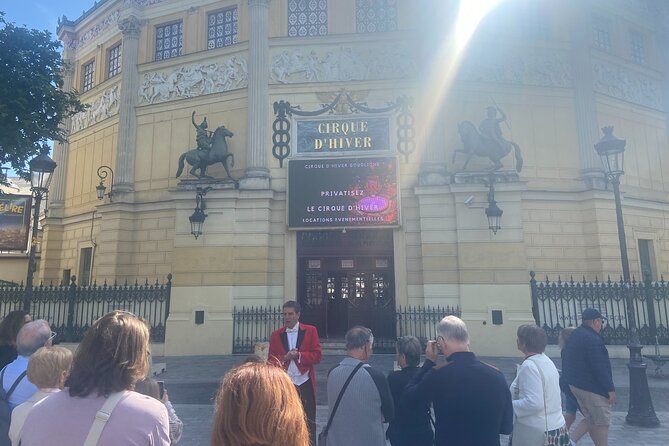
Cirque d’Hiver is not a temporary tent erected for a season. It is a permanent Paris circus venue with roots reaching back to 1852. That alone changes how you watch the show. Instead of treating the performance as a stand-alone night of entertainment, you first see the building as part of the story.
The venue was created under founder Louis Dejean and played a role in the 19th-century entertainment scene. Over time, it changed with the circus itself, yet the building remained a working place for performers and audiences. The tour explains those changes and points out parts of the venue you would likely miss if you simply arrived for your seat.
The connection with the trapeze is another reason this experience has more substance than a standard circus ticket. The venue is described as the birthplace of the trapeze, giving the pre-show tour a clear theme. You are not just hearing a list of dates. You are learning how a particular building helped shape the form of entertainment you are about to see.
You can also read our reviews of more tours and experiences in Paris.



Meeting at 110 Rue Amelot
You meet at Cirque d’Hiver Bouglione, 110 Rue Amelot, in Paris’s 11th arrondissement. The activity begins and ends at the same venue, so you do not need to arrange a separate transfer between the tour and the show.
The meeting point is near public transportation. That matters because the experience occupies roughly three hours, and you will probably want a simple route back to your hotel or onward to dinner. Check the exact start time on your booking confirmation, since the supplied information does not give a fixed daily schedule.
The mobile ticket format is convenient. Keep your phone charged and have the confirmation ready when you arrive. The meeting instructions say to meet the local guide in front of the circus, so avoid wandering around the block looking for a different entrance.
The First Hour: A Guided Look Behind the Curtain
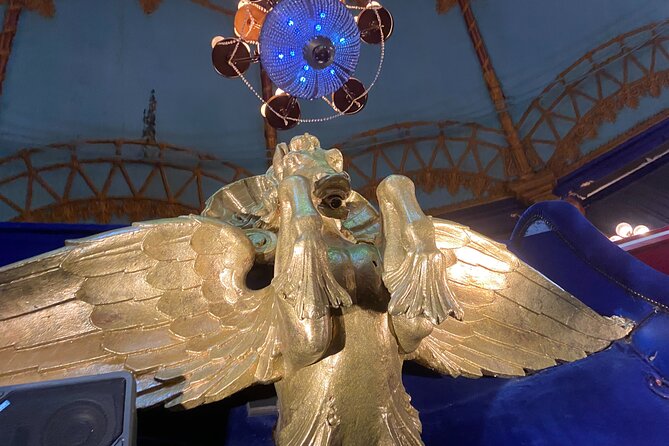
The first part lasts about one hour. Your guide introduces the building, its design, and the stories connected with the circus family that has shaped its modern identity. You also visit backstage areas and hear about performers who have appeared on the stage.
This is where the tour earns its place in your Paris plan. A regular audience member sees the ring and the seating bowl. This visit adds the working side of the venue. You get a better sense of the spaces that support the performance, along with the changes the building has undergone over the years.
The guide makes a big difference here. Katie is specifically named in the supplied feedback, and her style is described as funny, expressive, warm, and animated. That combination suits circus history. A dry lecture would miss the point, while a guide who turns every fact into a joke could lose the useful detail. The strongest comments suggest that Katie keeps the stories moving and makes the venue feel personal.
You should expect storytelling rather than a technical architecture inspection. The tour focuses on the building’s 1852 origins, Louis Dejean, the circus family, famous performers, and backstage secrets. If you are interested in how entertainment venues develop over time, this context will likely be more rewarding than simply taking photos of the interior.
The size limit is 50 people. That is not a tiny group, so do not expect a private architectural tour. Still, the hour-long format keeps the pace manageable, and the guide’s personality can help hold the group together. If your priority is a quiet, highly detailed building study, the group size is worth considering.
The Building’s Architecture and Circus Family
The venue’s architecture is one of the central attractions. Built in 1852, Cirque d’Hiver offers a fixed setting for circus performance, rather than a modern arena with little connection to its past. The guide explains how the building functioned in its earlier years and how it transformed over time.
The Louis Dejean connection gives the story a human focus. Founders are often reduced to a name on a plaque, but here Dejean is part of the explanation of how the venue entered Paris’s entertainment life. You also hear about the Bouglione family, whose name is attached to the present-day circus.
The family story is especially useful for people who know little about French circus traditions. You do not need to arrive with background knowledge. The guide fills in the basic links between the building, the performers, and the circus company, then sets up the show that follows.
One point to keep in mind is that the tour’s exact route and backstage access may vary. The description promises a facilities tour and backstage areas, but it does not provide a room-by-room list. Think of it as access to parts of the venue that ordinary ticket holders do not see, not as a guarantee of entry into every working area.
The Second Hour and Third Hour: The Circus Show
After the tour, you watch the main performance for about two hours. Your admission includes VIP lodge seating, described as the best seats in the house. The exact view and location are not specified, but this inclusion is important because seating can make or break a circus show.
A strong seat lets you follow movement across the ring and notice details in the costumes, lighting, and physical work. Lodge seating can also make the evening feel more special than a basic admission ticket. If the show is your main reason for booking, the seating upgrade is a meaningful part of the value.
The production includes a full live band, a dancing troupe, international circus performers, and elaborate lighting. That points to a staged show with more than one act or skill. You should expect music and dance to be part of the presentation, not just background support for the performers.
The description does not list the individual acts, so I would not book this expecting a specific animal act, aerial routine, or named performer. The appeal is the overall French circus production: a ring, live music, dancing, lighting, and artists from around the world.
That variety should work well for families and mixed-age groups. Children can focus on the visual action, while adults may pay closer attention to the building, costumes, music, or traditions behind the performance. Since the show lasts two hours, younger children may find the length demanding, but the supplied information describes the experience as suitable for circus lovers of all ages.




What the VIP Seating Adds
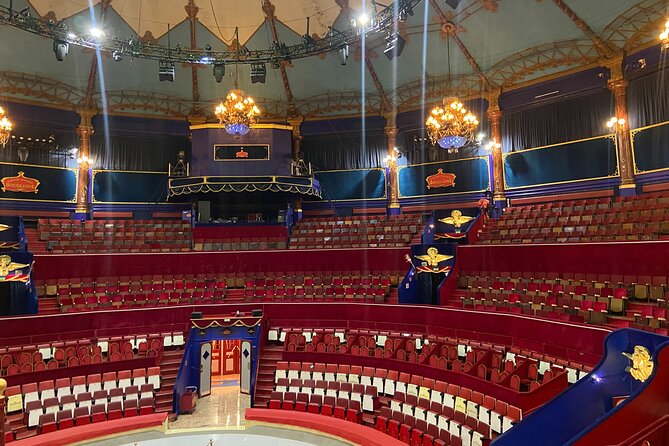
The phrase VIP lodge seating sounds impressive, but practical value depends on what matters to you. Here, it is useful because the performance is the final two-thirds of the activity. You are not paying for a short add-on after the tour. You spend about two hours in the auditorium, so a preferred seat has plenty of time to justify its place in the package.
The seating also creates a clean transition from the guided portion to the show. You do not have to leave the venue, find another entrance, or worry about losing your place in line. You finish the tour, then watch the performance in the same historic setting.
The information does not specify whether the lodge seats include food, drink, or a private service area. Do not assume that VIP means refreshments are included. Snacks, popcorn, beer, and other items are available for purchase at the concession stand before the show.
Is the Three-Hour Length Worth It?
I think the length works for visitors who want an evening activity with real context. One hour gives you enough time to understand the building, and two hours lets the show develop rather than rushing through a short sampler. The result feels like a complete outing rather than a quick photo stop.
The trade-off is flexibility. Three hours, plus the time needed to reach the venue and return afterward, can take up much of an evening. If you have a dinner reservation, a concert, or a tightly packed sightseeing plan, leave plenty of room around the booking.
The indoor setting helps during cold months. One supplied comment specifically points to the experience as especially useful in colder weather. Paris can be damp and chilly, and this activity gives you a long indoor cultural option without sacrificing entertainment.
The show also gives you a break from museum-style sightseeing. After days of paintings, churches, and monuments, a live circus can reset your attention. You sit down, listen to a band, watch the lights, and let the performance carry the evening.
Value, Price, and Group Size
The supplied price is shown as $0.00, which does not provide a usable paid admission figure for judging the actual cost. Before you commit, check the final price shown at checkout. Do not assume the experience is complimentary simply because the summary displays zero dollars.
To judge value, compare what is included: a guided facilities tour, backstage access, VIP lodge seating, and a two-hour show. Buying an ordinary circus ticket would not necessarily provide the same explanation of the building or the behind-the-scenes portion. If you already plan to see Cirque d’Hiver, adding the guided access may make the package worthwhile.
The experience allows a maximum of 50 people. That limit keeps the group from becoming enormous, but it is still large enough that you may not get much personal attention. Katie’s warm and lively approach appears well suited to making a group feel involved, though your experience will depend on the guide assigned to your departure.
There is no stated breakdown of how much time is spent in each backstage area, and the exact show acts are not listed. I would value the package most if you care about both the venue and the performance. If you only want a circus show, compare the package price with a standard ticket. If you mainly want architecture, remember that the show takes up about two hours.
Who Will Enjoy This Most?
I would recommend this experience to:
- First-time Paris visitors looking for something beyond the main monuments
- Circus fans interested in the trapeze and traditional performance
- Families seeking an indoor activity with music, lights, and live action
- Visitors who enjoy historic buildings but do not want another formal museum
- Couples and friends wanting a full evening performance in a distinctive venue
- Anyone visiting Paris during colder weather
It may be less suitable if you dislike live performance, need a very short activity, or prefer small private tours. The group can reach 50 people, and the show’s specific acts are not provided in advance.
The tour also works best when you can give it your full attention. Arriving late would be especially unfortunate because the guided hour explains what you are seeing and prepares you for the performance. Treat it as a scheduled event, not a casual stop between attractions.
Booking and Cancellation Details
Confirmation is normally received when you book. If you book within one day of the experience, confirmation arrives as soon as possible and remains subject to availability.
Free cancellation is available if you cancel at least 24 hours before the local start time. Cancellations or changes made within 24 hours are not refunded or accepted. The activity also requires a minimum number of participants, so if the provider cancels because that number is not reached, you are offered another date or experience, or a full refund.
Most people can take part, and the venue is near public transportation. The provided information does not give detailed accessibility notes, so contact the experience provider if you need specific assistance.
Should You Book the Cirque d’Hiver Experience?
Book it if you want more than a standard circus ticket. The combination of backstage access and VIP lodge seating gives you both context and spectacle, while the historic setting makes the evening feel distinctly Parisian.
I would be particularly inclined to book during colder months or for a family evening. Katie’s reported storytelling style is another reason to choose the guided version rather than attending the show alone. Just confirm the actual price, allow the full three hours, and remember that the group may include as many as 50 people.
Skip it if your schedule is packed or if you are only interested in a specific circus act that is not listed. For everyone else, this is a strong choice for a lively night out with a useful look at one of Paris’s most unusual performance spaces.
FAQ
Where does the experience begin?
It begins at Cirque d’Hiver Bouglione, 110 Rue Amelot, 75011 Paris, France.
Where does the experience end?
The activity ends back at Cirque d’Hiver Bouglione, the same place where it begins.
How long does the experience last?
The total duration is approximately three hours. The guided facility tour lasts about one hour, followed by a show lasting about two hours.
Is seating included?
Yes. VIP lodge seating is included with the experience.
Is the guided tour included?
Yes. A guided facility tour is included, covering the venue and backstage areas.
Are food and drinks included?
No. Popcorn, beer, snacks, and other items can be purchased at the concession stand before the show.
What is the cancellation policy?
You can cancel at least 24 hours before the local start time for a full refund. Cancellations or changes made less than 24 hours before the start are not refunded or accepted.