Montmartre has two faces, and this tour chooses well. You’ll get the real street-life feel, plus vineyards and a panorama that many visitors never find. It’s also priced accessibly for what you pack in for 2 hours.
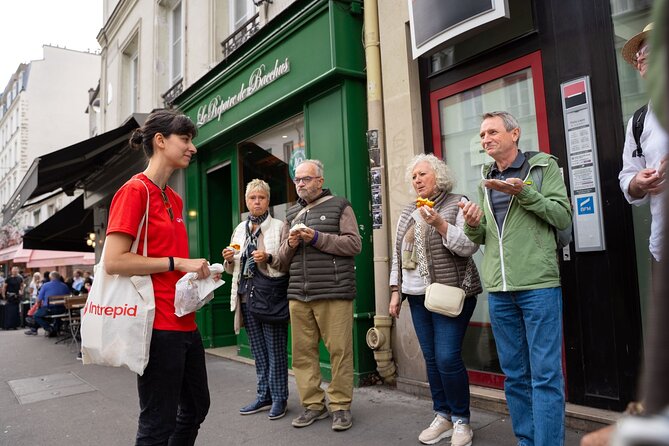
I especially love how the walk balances famous stops with the quieter lanes that make Montmartre feel like a village. And I’m a sucker for the food part: you’ll sample a butter croissant from an award-winning bakery right at the start, with the guide setting the context so it feels like more than just a snack.
One thing to plan for: this is a hilly climb. Even though the distance is only about 2 km, you’ll handle steep streets and stairs, so wear proper walking shoes.
In This Review
- Key highlights to look for
- Montmartre’s Village Feel Starts at Place Blanche
- Croissant Stop #1: Start With an Award-Winning Bite
- Moulin Rouge on the Hill: More Than a Photo Stop
- Le Mur des Je t’aime and Picasso’s Shadowed Stories
- Le Moulin de la Galette: Windmills, Expensive Streets, and a Secret Passage
- The Montmartre Vineyard Stop: Where Grapes Grow in Town
- Sacré-Cœur From a Less-Touristy Angle
- Walking Pace, Steep Inclines, and Group Size That Works
- Price and Value: Why $44.44 Can Actually Make Sense
- Should you book Hidden Montmartre?
- FAQ
- How long is the Hidden Montmartre walking tour?
- Where does the tour start and end?
- Is the croissant tasting included?
- Does the tour include a Moulin Rouge show?
- How much walking is involved?
- Can the tour accommodate vegetarians?
- Can I cancel for a full refund?
Key highlights to look for
- Award-winning bakery croissant as an included tasting stop
- Iconic Montmartre sights plus quieter side streets that keep the pace pleasant
- Moulin Rouge area context, including art and film references along the hill
- Montmartre’s vineyard stop, with a real look at where grapes are grown
- A less-known Sacré-Cœur view reached from an angle few tourists get
Montmartre’s Village Feel Starts at Place Blanche
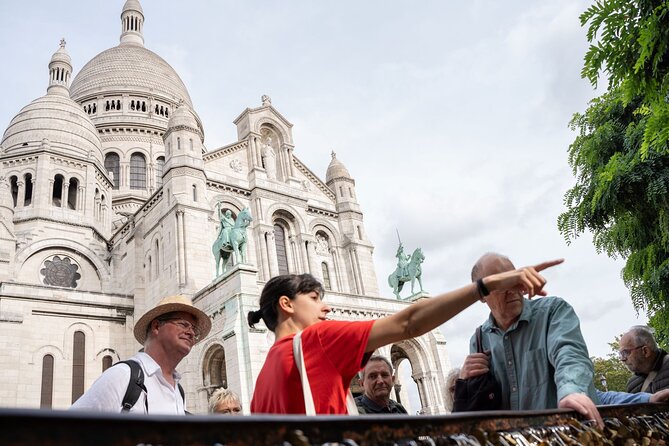
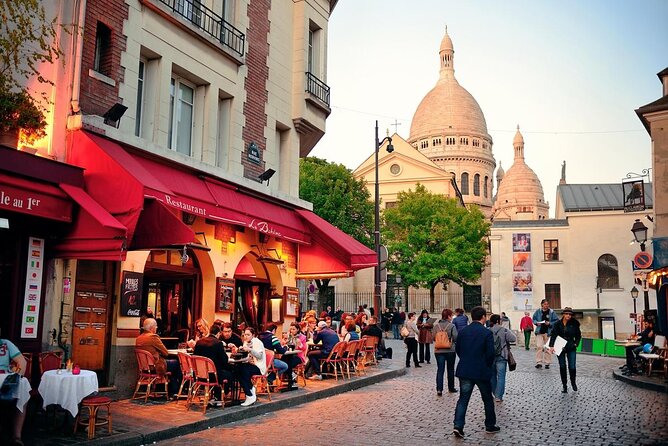
This tour begins at Place Blanche and ends at the Basilica Sacré-Cœur area, which is a smart setup. You start near the action and then work your way upward through the neighborhood’s steep streets, ending where most people want to be anyway.
The vibe here is the point. Montmartre is nicknamed the Village for a reason: cobblestones, tight streets, small squares, and the sense that you’re walking through a self-contained world rather than a checklist stop. A good guide matters because the difference between a crowded experience and a calm one is often just routing and timing.
You’ll walk a total of about 2 km (around 1.2 miles). That’s not far on a map, but it can feel longer in Paris because Montmartre is all about inclines. If you want a “yes, we did Montmartre” day without spending hours trying to connect dots yourself, this route is built for that.
Also note the tour is offered in English, and it runs as a group capped at 14. That small size tends to keep the walk friendly and conversational, especially if you like asking questions.
You can also read our reviews of more walking tours in Paris



Croissant Stop #1: Start With an Award-Winning Bite
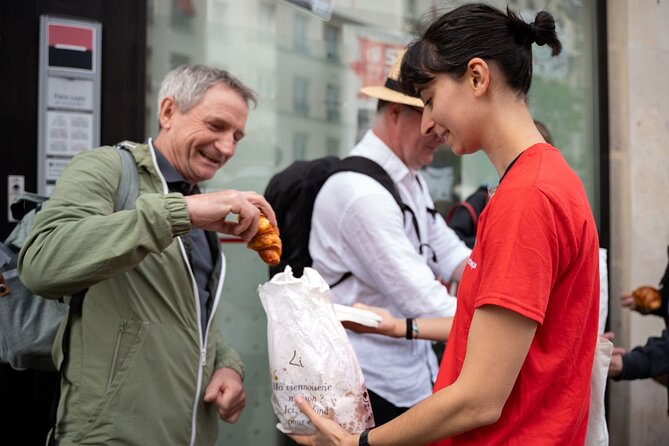
Right after you begin near Moulin Rouge, you head up the hill toward one of Paris’s top bakeries. The croissant tasting is included, and it’s not just any pastry: this bakery is described as winner of many prestigious prizes for bread and pastries.
Why I like starting with food: it eases you into the neighborhood. You’re not trudging uphill on an empty stomach while your brain tries to process history at the same time. The croissant stop also gives you a quick “Paris reset,” because the guide uses that pause to set up what you’ll see next—artists, landmarks, and how Montmartre became a magnet for creative types.
A practical tip: if you’re even mildly picky about breakfast, arrive a little hungry so you can actually enjoy the pastry. And if you have dietary needs, the tour can cater for vegetarians, but extra drinks and additional food aren’t included—so bring water money or plan to keep it simple during the tasting.
This is also one of the most consistently praised parts of the experience. Guides like Max and Cecilia come across as energetic here, making the stop feel like a highlight instead of an obligatory break.
Moulin Rouge on the Hill: More Than a Photo Stop
The second stop theme is classic Montmartre, starting opposite the Moulin Rouge windmill. From there, you climb and the hill starts doing its job—slowing you down just enough to look closely at what’s around you.
This is where the guide’s storytelling helps. You’ll spot details tied to pop culture and art, including references to the café where Amélie was shot and Van Gogh’s home as you make your way up. That’s a big deal if you’re the kind of traveler who doesn’t just want landmark names—you want reasons they matter.
Two things to keep in mind at this stage:
First, you’re walking through an area that’s famous, so you’ll likely pass crowds at points. The tour’s value is that you’re not stuck staring at one view; you’re moving, learning, and switching from spectacle to street-level Montmartre.
Second, it’s a climb. If you treat the hill as the activity, not a problem, this part feels fun instead of exhausting. Good pacing from the guide can help a lot, and multiple guides (including Max and Benjamin, based on the guided style described) are praised for keeping groups engaged across ages.
Le Mur des Je t’aime and Picasso’s Shadowed Stories
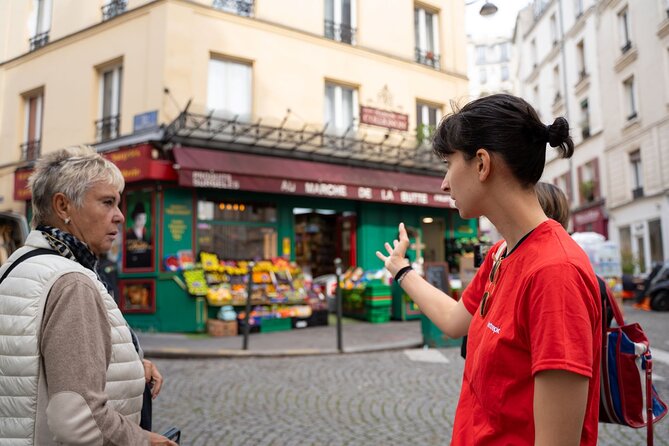
As you go deeper, the tour shifts from big icons to intimate details that make Montmartre feel human. One of the most memorable moments is Le Mur des Je t’aime, where the message appears in 250 different languages.
The guide also shares a legend tied to a first Parisian bishop. Even if the story isn’t what you expected, it adds character to the square. You start noticing that Montmartre is packed with symbols and small, surprising narratives.
From there, you’ll climb stairs to a lovely square and hear about Pablo Picasso’s connection to the area. You won’t just get the name-drop. You’ll also hear stories about the struggle many local artists faced before fame arrived. That context changes how you look at the neighborhood: it’s not just pretty scenery; it’s a place where ambition, poverty, and creativity all overlapped.
Practical note: this stop includes stairs. It’s not a marathon, but it can be a test if you’re visiting with mobility limitations. The tour keeps moving, so bring steady shoes and take your time at the stair sections.
Le Moulin de la Galette: Windmills, Expensive Streets, and a Secret Passage
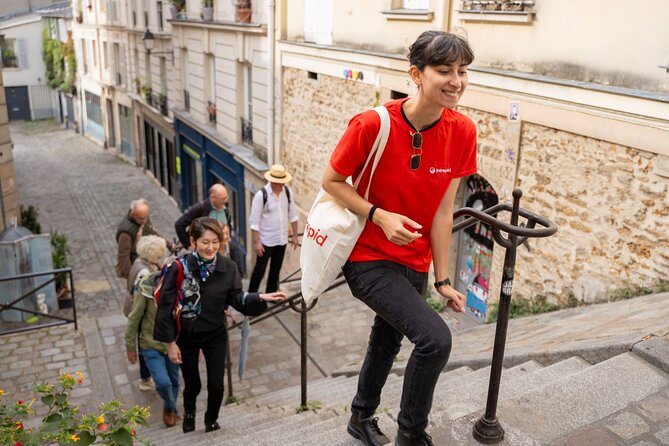
You’ll pass one of the last remaining windmills in Paris—Le Moulin de la Galette—though it’s now privatised. That’s a quick reminder that Montmartre’s icons aren’t frozen in time. Some things survive, some things change ownership, and the neighborhood keeps evolving.
Next comes a stretch described as Montmartre’s version of the Champs-Élysées: you’ll promenade past some of the most expensive houses in the capital. This shift is interesting because it underlines a big truth about Paris neighborhoods. They can be artistic and bohemian in the imagination while also commanding serious prices in real life.
Then the tour delivers a standout moment: your guide leads you through a totally secret passage. The payoff is a perspective over Paris plus a cute cobbled street—exactly the kind of stop you’d miss trying to go solo, because it requires local knowledge and willingness to take a side route.
If you care about photos, this is where your camera earns its weight. If you care about atmosphere, this is where you feel the neighborhood’s “how did I not find this earlier” factor without having to plan a scavenger hunt.






The Montmartre Vineyard Stop: Where Grapes Grow in Town
One of the most charming ideas in this walk is the stop near the vineyards of Montmartre. The tour points out where urban wine grapes are grown, and it frames the vineyards as almost surprising—because you don’t expect a working grape patch in the middle of one of Paris’s most touristed neighborhoods.
This is also where you hear about the wine produced here, including that it’s surprisingly good red. The point isn’t to become a sommelier in 2 hours. The point is to see Montmartre as more than murals and windmills. It’s a living neighborhood with agriculture in the margins.
Opposite the vineyard is the entrance to Le Lapin Agile, one of Montmartre’s famous cabarets. Your guide shares the legend of Lolo, the painting donkey. That’s classic Montmartre: oddball folklore mixed with the real creative scene that used to power the area.
This part feels especially rewarding if you like “texture” over pure sightseeing—street-level details, small stories, and the sense that you’re walking through layered time.
Sacré-Cœur From a Less-Touristy Angle
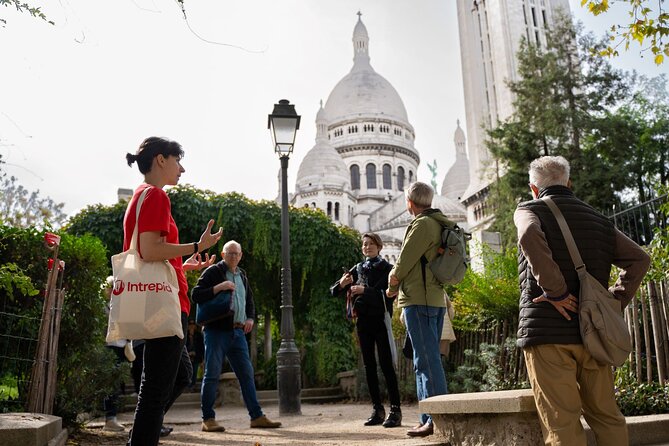
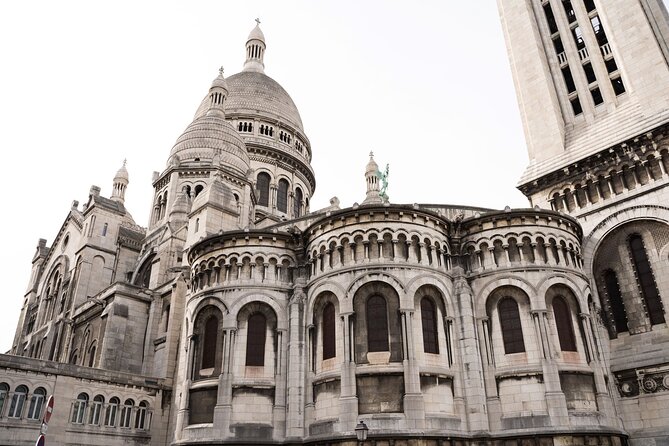
The last stretch brings you to the Basilica Sacré-Cœur. This is where the walk pays off with a view. The guide plans a stop to admire the church from a perspective that very few tourists know about, then caps the finale with another Paris panorama.
What makes this ending work is that you’re arriving after you’ve already learned how the neighborhood became what it is. By the time you reach Sacré-Cœur, you’re not just thinking big religious architecture. You’re seeing the area that produced artists, stories, and the creative energy that shaped the hill.
One more helpful thought from the style of guides on this tour: timing can matter. In some departures, the group is led up so you can catch the cathedral area with softer light—one account highlights arriving as the sun was setting and taking a quieter approach through a back garden with fewer people. You can’t guarantee that specific moment, but you can be confident the guides understand how to manage views and movement.
End location is at Basilique du Sacré-Cœur (35 Rue du Chevalier de la Barre). That’s convenient because once you finish, you’re already where you’d likely want to go next for photos or a wander.
Walking Pace, Steep Inclines, and Group Size That Works
This tour covers about 2 km, but Montmartre isn’t flat. Expect steep streets and stairs. Even if you’re a regular walker, plan for the hill effort.
The tour is designed to be manageable for most travelers, and it’s described as child-friendly. There’s an explicit note asking you to inform the operator if you bring a child under age 12. That tells me the guides are used to adapting the pace and keeping kids interested.
Group size is capped at 14 travelers. That limit matters more than you might think. It helps avoid the classic big-bus effect where you’re herded past everything with no time to absorb details or ask questions. The small-group style is part of why guides like Max, Cecilia, and others are praised for keeping everyone engaged—people of different ages and energy levels can stay together.
Weather note: the itinerary might be slightly modified on public holidays if shops are closed. Croissant lovers should still be happy, but the exact flavor of a stop could shift if a storefront is shut.
Price and Value: Why $44.44 Can Actually Make Sense
At $44.44 per person for about 2 hours, this is not a “cheap quick tour.” But it’s also not a long museum day, either. The value comes from several parts that usually cost extra if you DIY:
- Croissant tasting included at the start, from a prize-winning bakery
- Guide time spent linking landmarks to art, film, and neighborhood stories
- Multiple viewpoints, including a perspective from a less common angle
- Vineyard access/knowledge in an area that people often treat as only scenery
- Local tips at the end for what else to see and eat
If you’re already paying for pastries and spending time bouncing between landmarks, the guide can save you effort. If you’re the type who likes to wander without planning too hard, the guided route does that work for you.
Also, the tour gives flexible options: you can pick a small-group version or a private tour. A private format may make sense if you want more control over pace or you’re traveling with family members who need breaks.
Should you book Hidden Montmartre?
Book it if you want Montmartre in a way that feels lived-in: street corners, artist stories, a vineyard, and viewpoints—without needing to map your own route or fight crowds all the way up the hill. It’s also a smart choice if food is part of your travel style, since the croissant stop is included and consistently treated as a highlight.
Skip (or rethink) if you’re uncomfortable with hills, stairs, and cobblestones. Even though it’s only about 2 km, the vertical effort is real. And if you’re looking only for a checklist of Montmartre icons with zero walking, this tour won’t match that goal.
If you fall somewhere in the middle—curious, enjoy local texture, want both famous sights and quieter streets—this is one of the better ways to spend a couple hours in Paris.
FAQ
How long is the Hidden Montmartre walking tour?
It’s about 2 hours long.
Where does the tour start and end?
The tour starts at Place Blanche and ends at Basilique du Sacré-Cœur de Montmartre (35 Rue du Chevalier de la Barre, 75018 Paris).
Is the croissant tasting included?
Yes. You’ll taste a butter croissant at one of the neighborhood’s best bakeries.
Does the tour include a Moulin Rouge show?
No. The Moulin Rouge show is not included.
How much walking is involved?
The tour covers about 2 km (1.2 miles) of walking.
Can the tour accommodate vegetarians?
Yes, the tour can cater for vegetarian dietary requirements.
Can I cancel for a full refund?
Yes. You can cancel up to 24 hours in advance for a full refund. If you cancel less than 24 hours before the start time, the amount paid won’t be refunded.