REVIEW · AVIGNON
Avignon: La Noctambule du Pape Night Tour
Book on GetYourGuide →Operated by Les Noctambules d'Avignon · Bookable on GetYourGuide
Avignon makes an especially good night tour because its old stone walls, churches, and papal monuments take on a different mood after sunset. La Noctambule du Pape traces the city’s role as the center of Christianity in the 14th and 15th centuries, beginning at Porte de l’Oulle and ending at the Palais des Papes.
I like the route’s mix of famous sights and less obvious corners, especially the walk along the ramparts to Saint Bénezet bridge. I also like the human touch: guide Vincent, a native of Avignon, is known for clear explanations, local pride, humor, and lively stories. The main consideration is that this is a two-hour walking tour, so it suits you best if you want history on foot rather than a quick photo stop or a full interior visit to every monument.
In This Review
- Key points to know before you book
- Why Avignon works so well after dark
- Starting at Porte de l’Oulle
- Following the ramparts to Saint Bénezet bridge
- Entering the old city through a lesser-known gate
- Churches, Bonaparte, and the city beyond the Popes
- Place de l’Horloge and the town hall
- Reaching the Palais des Papes
- Vincent’s style and the human side of the tour
- Is $46 a fair price?
- Who should book La Noctambule du Pape?
- My recommendation
- FAQ
- Where does La Noctambule du Pape begin?
- How long does the tour last?
- What is the tour price?
- Which languages are available?
- Does the tour visit Saint Bénezet bridge?
- Does the tour include the Palais des Papes?
- Is hotel pickup included?
- Can I cancel the booking?
Key points to know before you book
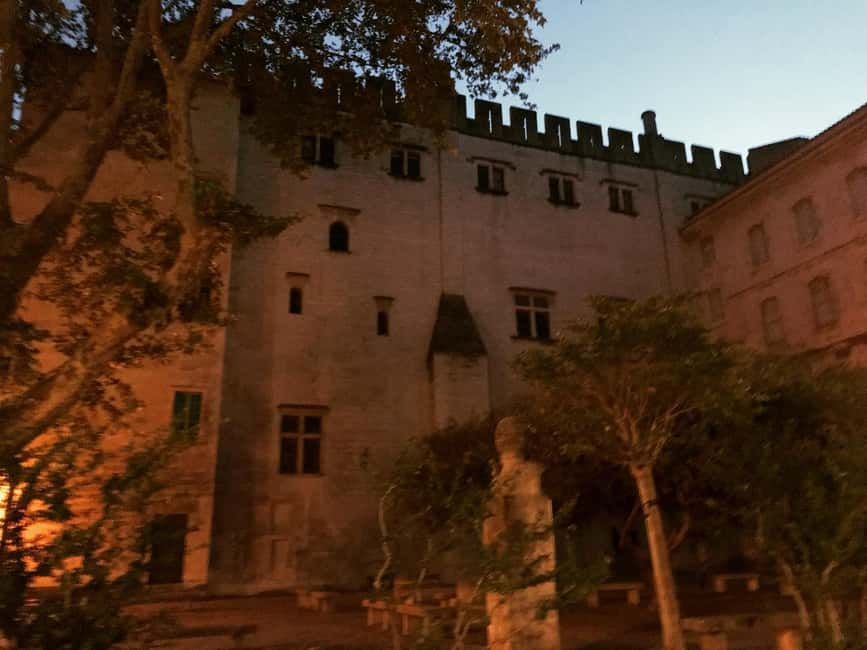
- Nighttime route: Start at Porte de l’Oulle, follow the ramparts, and see Avignon’s major sights under evening light.
- Papal focus: Learn why Avignon became the capital of Christianity during the 14th and 15th centuries.
- Saint Bénezet bridge: Hear the story behind one of the world’s best-known medieval bridges.
- Local storytelling: Vincent has been praised for his humor, clear explanations, and strong connection to his native city.
- More than papal history: The walk also touches on Bonaparte’s connection to Avignon, historic churches, and Place de l’Horloge.
- Flexible booking: The tour lasts two hours, costs $46 per person, and allows free cancellation up to 24 hours before the start.
Why Avignon works so well after dark
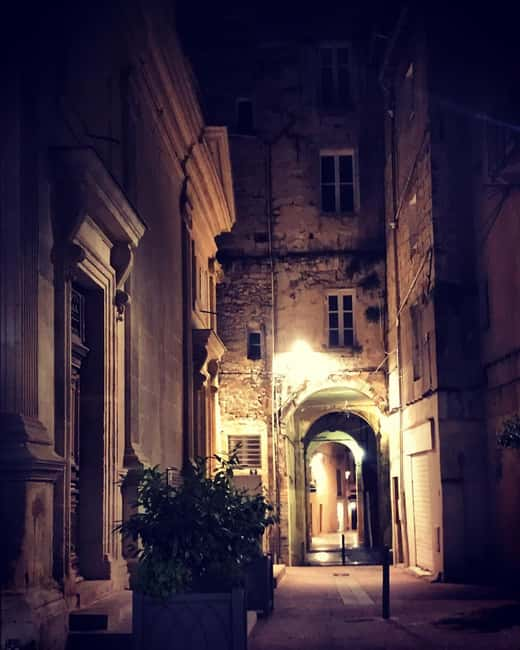
Avignon is easy to recognize by day. The massive Palais des Papes dominates the center, the old ramparts frame the city, and Saint Bénezet bridge draws visitors toward the Rhône. At night, the same sights become easier to take in as part of a story rather than a checklist.
That is the strength of La Noctambule du Pape. You are not simply led from one photo stop to the next. The guide connects the walls, streets, churches, town hall, bridge, and papal palace to the period when Avignon held unusual power in Europe.
The title refers to the night walking format and the city’s papal identity. The focus is the 14th and 15th centuries, but the route also reaches into other periods. That gives you a broader sense of Avignon rather than a narrow lesson about the Popes alone.
I find evening tours most useful after you have spent some time in a city during the day. You already recognize the main shapes, but the guide helps you notice how the pieces fit together. One direct account of the experience described it as a strong complement to a daytime tour. That is sensible advice: schedule this walk after you have seen Avignon in daylight, not instead of seeing it.
You can also read our reviews of more evening experiences in Avignon
Starting at Porte de l’Oulle
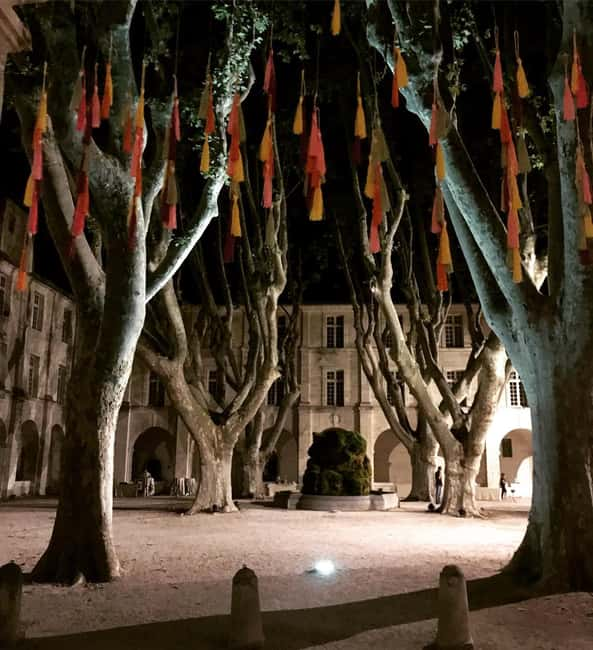
You meet just in front of the Oulle gate, known in the tour information as Porte de l’Oulle. This puts you beside the old fortifications and gives the guide a natural place to explain Avignon’s defensive past before the group heads toward the center.
The ramparts are not just a backdrop. They help you understand the physical shape of the medieval city and why Avignon developed as a fortified place. From this starting point, the guide reveals the less visible stories connected with the walls before leading you along them.
I like this opening because it avoids beginning with the most obvious monument. Instead of meeting directly at the Palais des Papes and hearing a standard introduction, you begin at the edge of the old city. The walk then builds toward the center.
The meeting point is practical, but you should allow enough time to find the gate. The supplied information gives the location as directly in front of Porte de l’Oulle, with no hotel pickup or transportation included. You make your own way there and return on your own after the tour.
Following the ramparts to Saint Bénezet bridge
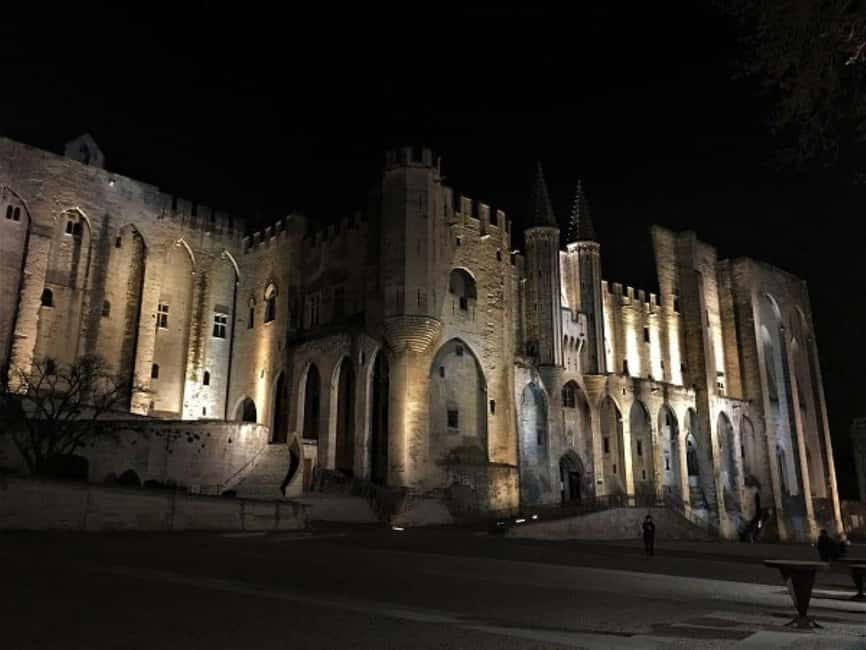
The route continues along the ramparts toward Saint Bénezet bridge. This is one of the most recognizable sights in Avignon, and the guide gives it more attention than a quick visit usually allows.
The bridge is famous around the world, yet its story can easily be reduced to a photograph and a familiar song. A guided explanation gives you the background needed to understand why this structure mattered and why it remains so closely tied to Avignon’s identity.
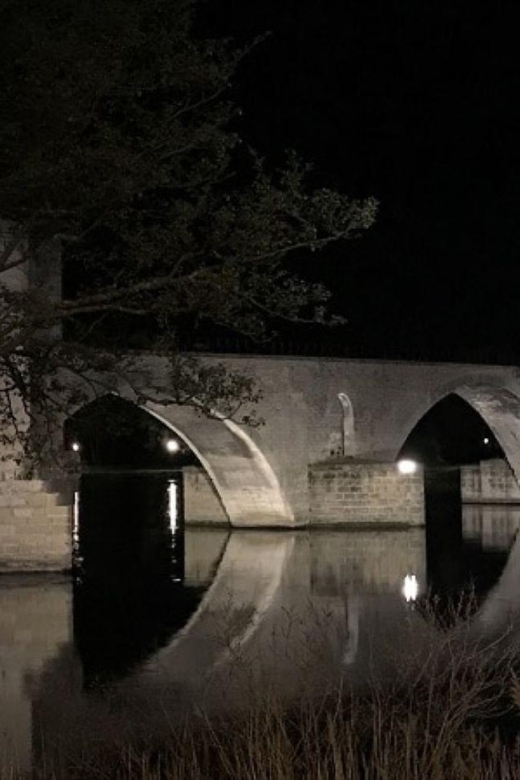
The night setting also changes the experience. You are seeing the bridge as part of the city’s evening outline, with the walls and riverfront forming a larger scene. The tour information does not promise a special bridge entry or a private viewpoint, so think of this as a guided stop and explanation rather than a separate bridge attraction.
This portion should appeal to first-time visitors who want the major Avignon sights included without spending the entire evening inside a single monument. It also works for returning visitors who saw the bridge earlier but want the story behind it.
Entering the old city through a lesser-known gate
One of the more distinctive parts of the walk is entering the city through a clandestine or less obvious entrance. The supplied details do not identify the gate by name, so I would not book this expecting a particular secret doorway. The value is the change in approach: you move from the fortifications into the old streets in a way that feels connected to the city’s defensive layout.
From there, the route passes through historic alleys and by monuments from different periods. This is where the tour moves beyond a single papal story. Avignon’s character comes from layers of use, and the guide helps you read those layers while walking.
The alleys are also where a guide adds the most value. A map can show you where the streets are, but it cannot explain why a church matters, how a monument fits into the city, or which story connects a quiet corner to a major event.
Do keep your expectations realistic. The tour lasts two hours and includes several subjects, so each alley or church receives an explanation rather than an extended visit. If you want long periods inside individual buildings, this may feel brisk.
Churches, Bonaparte, and the city beyond the Popes
The walk includes churches that form part of Avignon’s cultural identity. Specific church names are not provided, so you should expect several historically important religious buildings rather than a fixed list of interiors.
This broadens the tour in a useful way. Avignon is often treated as a city of one palace and one bridge, but the churches help show how religious power shaped everyday urban life. Their presence also gives the guide a chance to explain how the city’s papal period affected architecture and public space.
The route also covers Avignon’s link to Bonaparte’s rise in the French army. That is an unexpected turn from the papal era, and it gives the tour a wider time span. You are not left with the impression that Avignon stopped changing once the Popes moved away.
I appreciate this kind of connection because it keeps a history walk from becoming too narrow. The main theme remains the Popes of Avignon, but the Bonaparte reference reminds you that the city continued to matter in later French history.





Place de l’Horloge and the town hall
As the route moves toward the Palais des Papes, you stop at Place de l’Horloge and learn about the town hall. This is another useful pause because it shifts attention from religious authority to civic life.
The square helps explain how Avignon functioned as a town, not just as a papal seat. A palace can tell you about rulers and church power. A town hall points toward administration, public life, and the continuing role of the city after its papal period.
The guide’s job here is to put the building in context. You receive an explanation of its historical importance rather than simply passing it on the way to the palace.
Evening timing should make this part pleasant for anyone who prefers cooler, calmer sightseeing. Still, the activity is a walking tour, not a seated talk. Wear comfortable shoes and be ready to keep moving through streets and squares.
Reaching the Palais des Papes
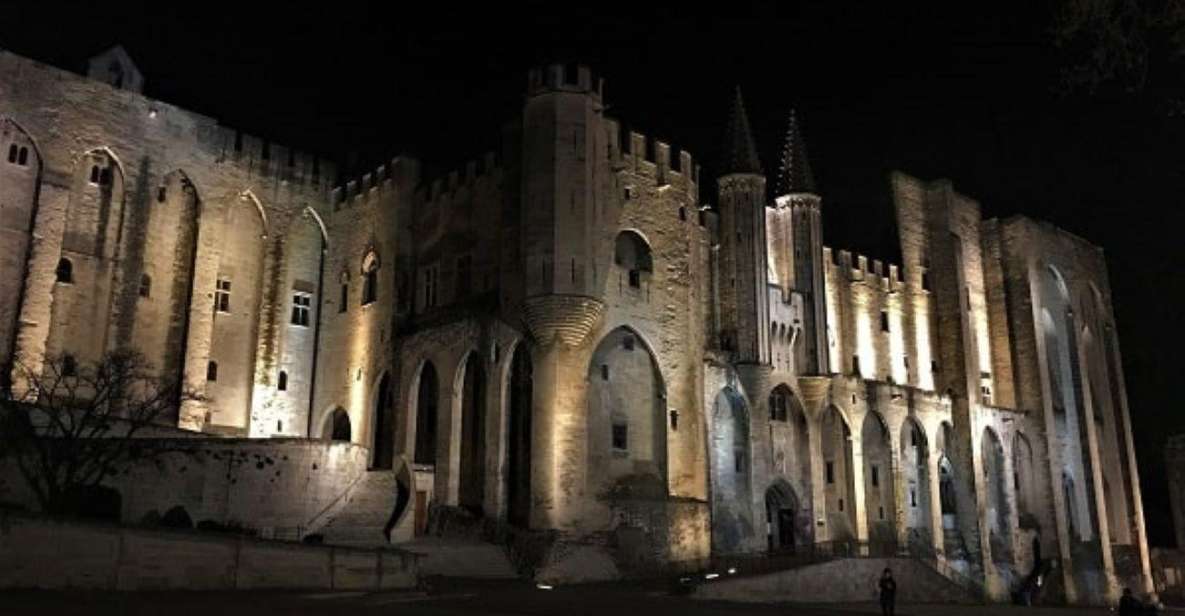
The tour concludes at the Palais des Papes, Avignon’s defining monument. By the time you reach it, the guide has already discussed the walls, bridge, alleys, churches, civic center, and papal period. The palace then feels like the logical final point rather than an isolated attraction.
The activity information includes a guided tour of the Palais des Papes, while the route description says the walk ends in front of the palace. The safest way to read this is that the palace receives a substantial guided explanation, but you should check the exact access arrangements when booking if entering the building is important to you.
Either way, finishing here gives the night a strong visual ending. The papal builders left behind a huge presence, and the guide explains how that legacy shaped the city around it.
If you plan to visit the Palais des Papes inside during the day, the evening tour still has value. The guide’s interpretation can help you understand what you see there, and the nighttime approach shows how the palace relates to the rest of old Avignon.
Vincent’s style and the human side of the tour
One guide named repeatedly in the supplied feedback is Vincent. He is described as a native of Avignon who brings the city to life with humor, local pride, and clear historical explanations.
That combination matters. A guide who only recites dates can make the papal era feel remote. Vincent’s approach, as described, includes anecdotes and a playful tone, while still keeping the history understandable. One account specifically notes that a 10-year-old enjoyed an anecdote involving a neighbor, which suggests the storytelling can work for families as well as adults.
You should not assume Vincent leads every departure. The experience is offered in English and French, and the guide may vary. Still, his reported style gives you a useful idea of the tone to expect from Les Noctambules d’Avignon: personal, spirited, and rooted in local knowledge.
The French feedback also points to a guide who made people want to continue exploring Avignon after the walk. That is one of the best results a short city tour can offer. You do not need every fact memorized. You need enough context to look at the city with more curiosity afterward.
Is $46 a fair price?
At $46 per person, this is not the cheapest way to stroll through Avignon. You can walk the ramparts, see the outside of the palace, and find Saint Bénezet bridge without paying for a guide.
The price makes more sense if you value interpretation. In two hours, you cover several connected parts of the city and hear about the Popes, the bridge, historic alleys, churches, Place de l’Horloge, the town hall, and Bonaparte’s connection to Avignon. Replicating that route with reliable research would take time, and you might miss the links between the places.
I see the best value for a first visit or for anyone who has already seen the main sights but wants a clearer story. The tour also adds something that an audio guide may not: a live person who can explain, joke, and adjust the emphasis for the group.
Meals, drinks, personal expenses, and hotel pickup are not included. Those exclusions are easy to manage because this is a compact walking experience. Plan your dinner separately and meet at Porte de l’Oulle.
The activity allows you to reserve now and pay later, and you can cancel for a full refund up to 24 hours before the start. Those terms help if your Avignon plans are still shifting.
Who should book La Noctambule du Pape?
I would recommend this tour to you if you want Avignon’s headline sights placed in historical context. It is especially useful on a first evening in town, when you want to get your bearings and learn what deserves a closer look the next day.
Families may also find it a good fit if children can manage two hours of walking. The reported success with a 10-year-old seems tied to the guide’s anecdotes and humor, not to a special children’s program, so the experience still has an adult historical focus.
It also suits couples and solo visitors who prefer a guided evening activity. The route offers more substance than a simple after-dark stroll, but it does not require a full day or a long excursion outside the city.
I would think twice if you dislike walking, want a slow visit inside one monument, or need a tour built around food and drinks. No group size or exact starting time is provided, so check availability and the language of your preferred departure before booking.
My recommendation
Book La Noctambule du Pape if you want to understand why Avignon is called the city of the Popes, not just photograph the Palais des Papes. The combination of ramparts, Saint Bénezet bridge, old alleys, churches, Place de l’Horloge, and papal history gives you a useful two-hour introduction.
The strongest reason to choose it is the storytelling. Vincent’s reported mix of local pride, humor, and clear explanations is exactly what can turn a familiar city walk into a memorable one. The main limitation is scope: many sights appear on one compact route, so expect interpretation and exterior viewing rather than lengthy stops at every building.
FAQ
Where does La Noctambule du Pape begin?
The meeting point is just in front of Porte de l’Oulle in Avignon.
How long does the tour last?
The guided walking tour lasts two hours.
What is the tour price?
The price is $46 per person.
Which languages are available?
The live tour guide is available in English and French.
Does the tour visit Saint Bénezet bridge?
Yes. The route follows the ramparts toward Saint Bénezet bridge, where the guide explains its history.
Does the tour include the Palais des Papes?
The activity information includes a guided tour of the Palais des Papes, and the route description says the experience concludes in front of the palace. Check the access details when booking if interior entry is important to you.
Is hotel pickup included?
No. Hotel pickup and drop-off are not included. You meet the guide at Porte de l’Oulle.
Can I cancel the booking?
Yes. You can cancel up to 24 hours in advance for a full refund. You can also reserve now and pay later.