REVIEW · AVIGNON
Arles & Camargue Natural Park (including Aigues Mortes)
Book on GetYourGuide →Operated by Time 4 Provence · Bookable on GetYourGuide
Arles gives this full-day trip its strongest opening: in one compact walking tour, you move from Roman monuments to medieval streets and places painted by Vincent van Gogh during his 14 months in town. Then the scene changes completely, from stone streets to the open wetlands of the Camargue, where white horses, black bulls, and pink flamingos are the main attraction.
I like the varied route, which gives you ancient history, art, wildlife, seaside time, and a fortified medieval town in one day. I also like the small group of no more than eight, since that makes a long day in a minivan more personal and helps the guide manage several stops. The main drawback is the pace: at 570 minutes, this is a full outing with plenty of time on your feet, and no single stop gets the leisurely attention it would receive on a separate day trip.
In This Review
- Key points to know before booking
- Why this route works as a full day from Avignon
- Arles in 90 minutes: Romans, medieval streets, and Van Gogh
- The Camargue: black bulls, white horses, and open country
- Aigues Mortes and its 13th-century defenses
- Saintes Maries of the Sea, church and Mediterranean beach
- The bird reserve and the search for flamingos
- The return through Tarascon
- What the small group and minivan mean for you
- How the day is paced
- Is $176 a fair price?
- Who should book this Camargue tour?
- Should you book it?
- FAQ
- How long does the Arles and Camargue tour last?
- What language is the tour conducted in?
- How large is the group?
- Is entry to the Aigues Mortes ramparts included?
- Is the bird reserve admission included?
- Is lunch included in the price?
- Is the tour suitable for wheelchair users?
Key points to know before booking
- Arles combines Roman monuments and Van Gogh locations during a 1.5-hour guided walk.
- Aigues Mortes includes entry to the 13th-century ramparts and Constance Tower, with time for a two-hour lunch break.
- The Camargue offers a chance to see black bulls, white horses, and pink flamingos in their natural setting.
- Saintes Maries of the Sea adds beach time and an 11th-century church, including its crypt.
- The bird reserve entry is included, with more than 300 bird species recorded there.
- The small group is limited to eight people, and English is the tour language.
Why this route works as a full day from Avignon
This is not a single-theme excursion. You are not spending all day looking at Roman ruins or all day searching for birds. Instead, the route links several parts of southern France that feel quite different from one another.
The day begins in Arles, continues through the Camargue Regional Park, pauses in Aigues Mortes, reaches the Mediterranean at Saintes Maries of the Sea, and finishes at a bird reserve. On the return to Avignon, the route passes through Tarascon, where you can see the town’s imposing castle from the road.
At $176 per person, the price makes the most sense if you value convenience and a guide who can connect the places. You are paying for a 9.5-hour outing, transportation between several towns and nature areas, a walking tour, entry to Aigues Mortes ramparts and Constance Tower, and admission to the bird reserve. Lunch is not listed as included, so plan for that cost separately.
The route is especially useful if you do not have a car. The Camargue is spread out, and combining Arles, Aigues Mortes, Saintes Maries, and the reserve by public transport would take much more planning. The tradeoff is a long day and a fixed schedule.
You can also read our reviews of more tours and experiences in Avignon.


Arles in 90 minutes: Romans, medieval streets, and Van Gogh
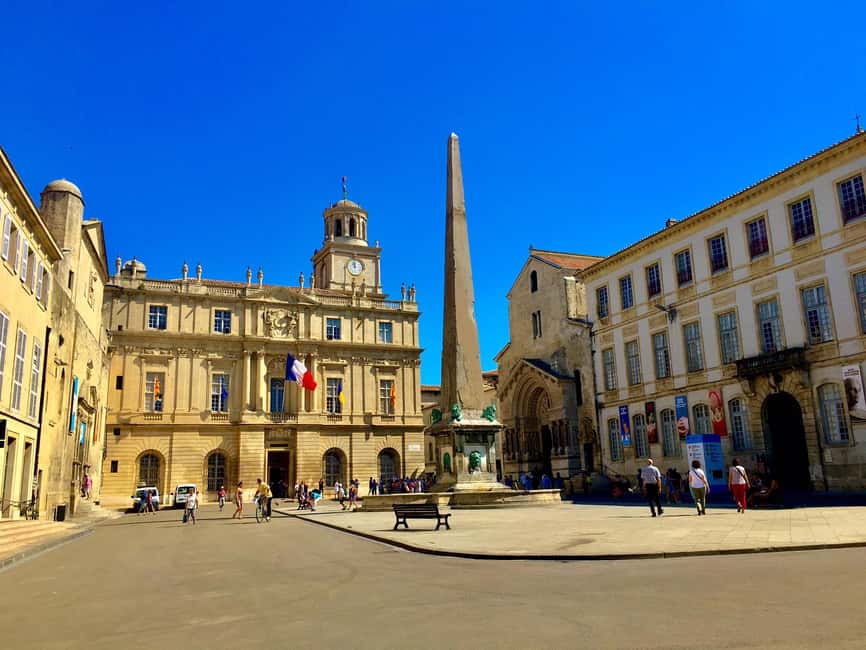
The opening walking tour lasts about 1 hour and 30 minutes. That is enough time to get a clear sense of Arles without turning the first stop into an exhausting archaeology lesson.
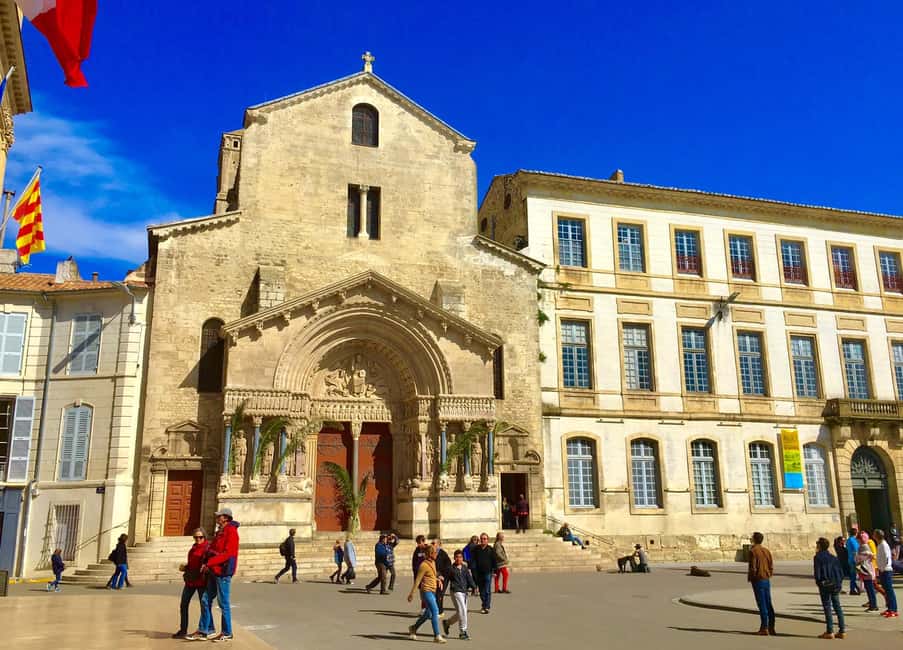
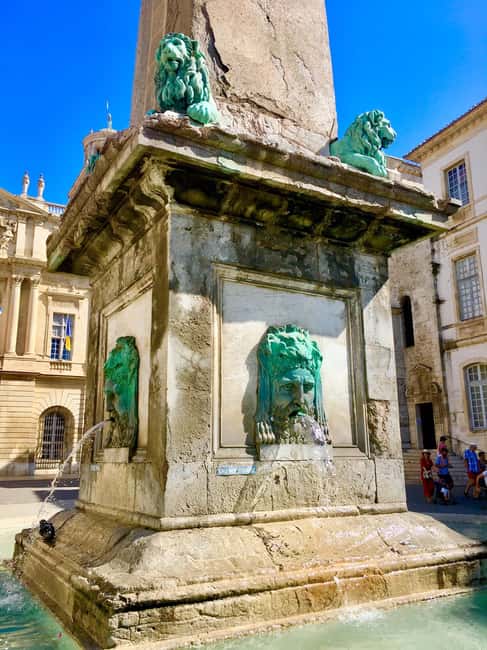
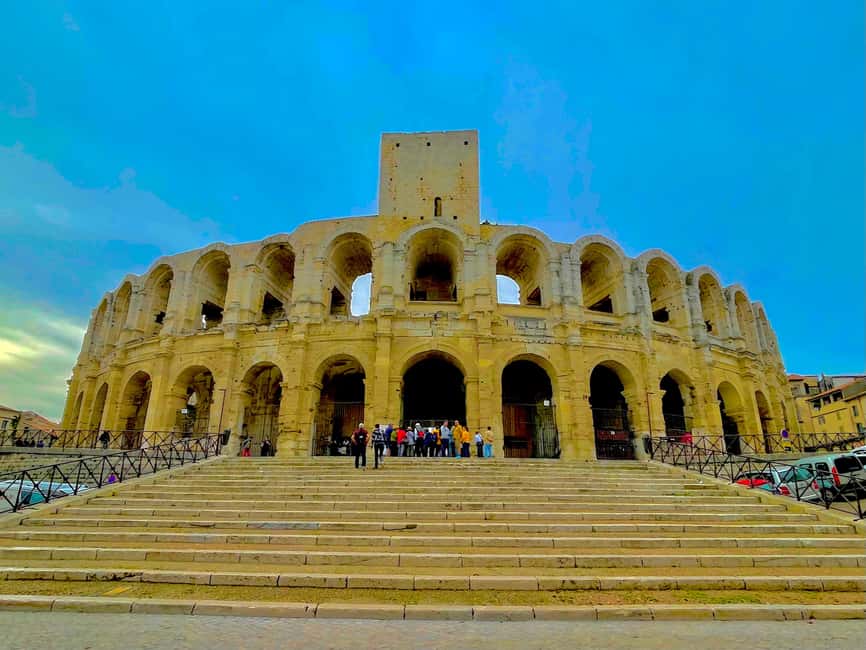
Arles is a good place to see how Roman and medieval layers sit close together. Roman monuments and later streets appear throughout the town, so the history is not confined to one museum or fenced-off site. Your guide provides the thread that ties those pieces together.
The Van Gogh connection gives the walk a more personal angle. He lived in Arles from February 1888 until May 1889, and the tour points out places he painted during that period. You are not simply hearing that an artist once lived here. You are being shown the streets and views that shaped his work.
I would bring comfortable shoes for this first section. The tour is described as a walking tour, and later stops also involve walking on ramparts, through a reserve, and around a seaside town. Arles is a strong start for anyone who likes art and history, but you should not expect a long museum visit or an in-depth look at every Roman monument.
Guides have included Nathalie and Kelsy. The supplied information describes Nathalie as sharing a great deal about the region, while Kelsy was praised for making the day fun and informative, helping with practical matters, and remaining patient when people were late returning to meeting points. The guide can make a real difference on a route with this many moving parts.
The Camargue: black bulls, white horses, and open country
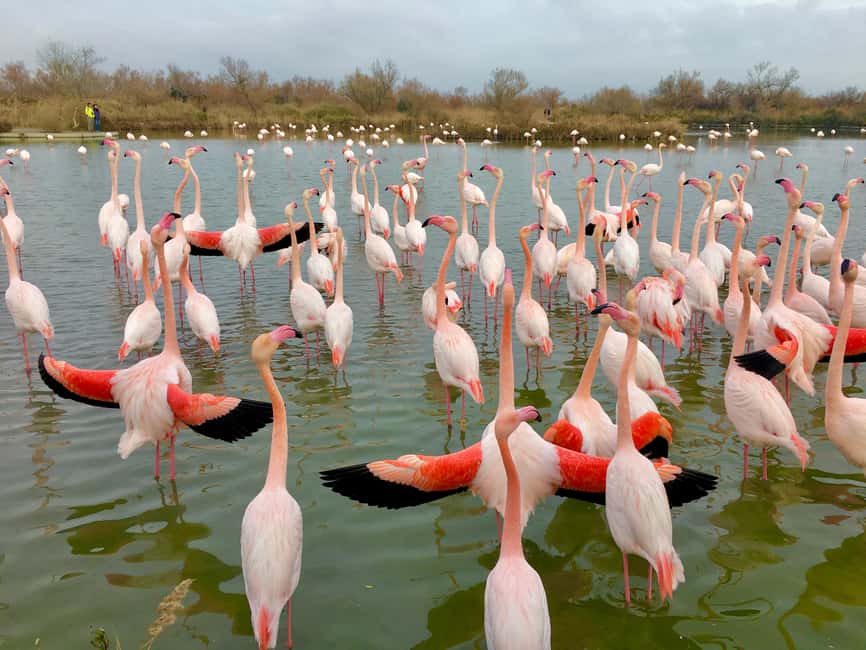
After Arles, the tour heads into the Camargue Regional Park. This is where the character of the day changes. The built environment falls away, and the focus turns to animals, birds, and wide open scenery.
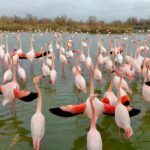
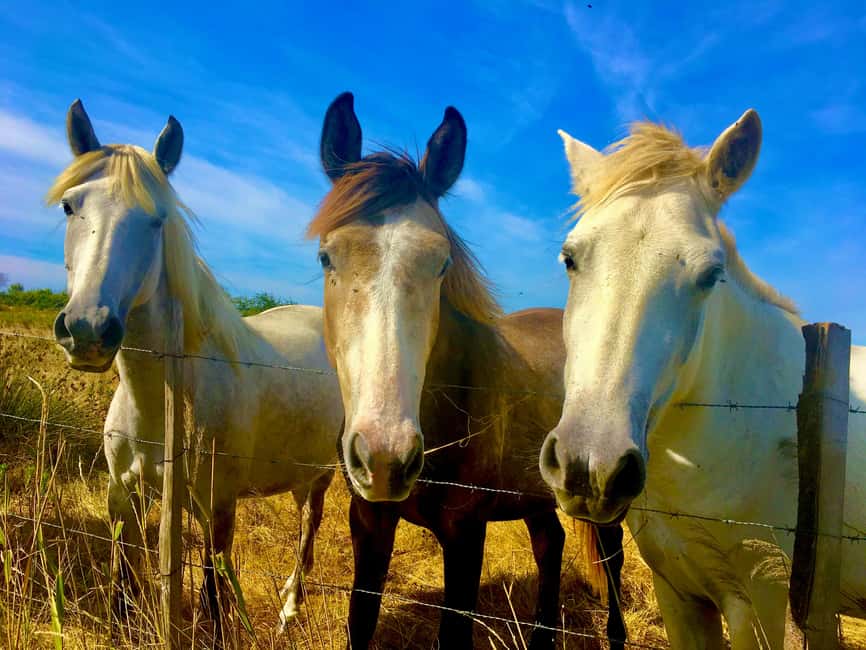
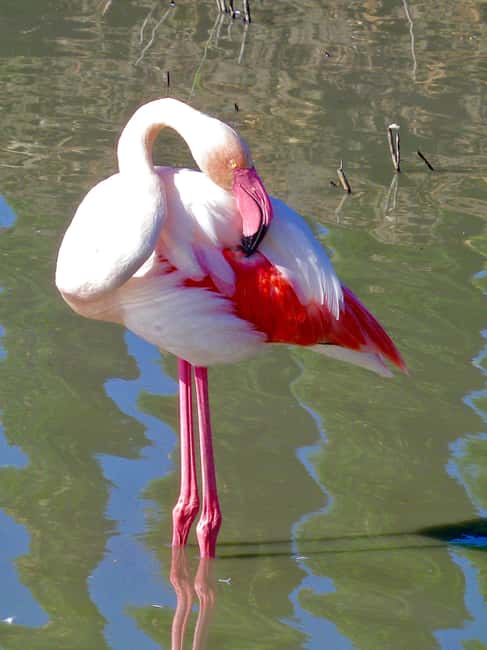
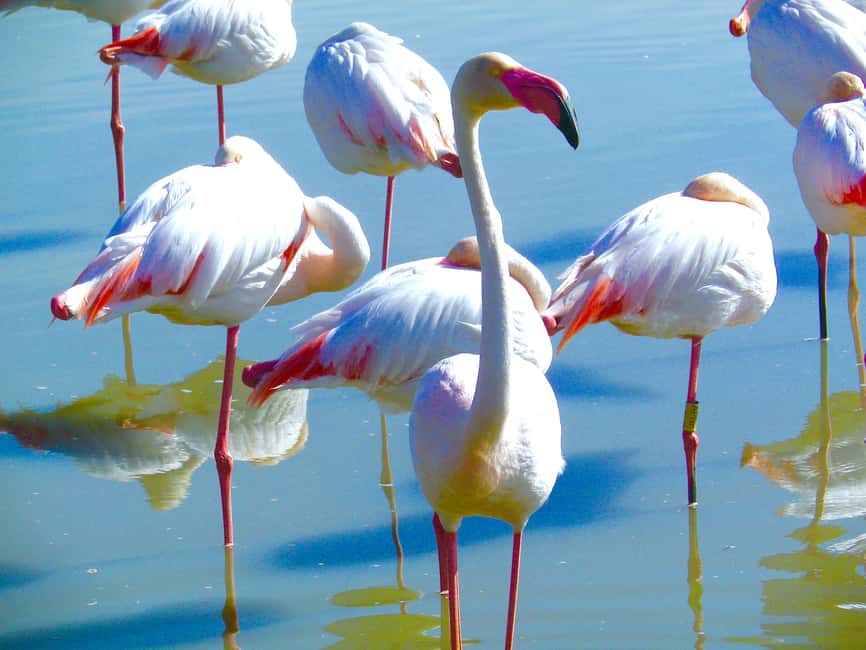
The Camargue is known here for three especially memorable sights: black bulls, white horses, and pink flamingos. You may see the bulls in their natural setting and have the chance to pet the horses. That mix gives the stop more life than a standard drive-by viewpoint.
The region is also a major habitat for birds, with more than 300 species recorded across the park. The pink flamingo is the most famous, but the tour description also points to cattle egrets, blue herons, and storks. Bird sightings depend on conditions and timing, so you should treat the wildlife as a real possibility rather than a guaranteed parade of animals.
This part of the day suits you if you enjoy nature but do not want a demanding hike. The information provided does not describe a long trek, and the tour is conducted by minivan, but you should still be ready to get out and walk at several points. The open setting can also mean sun and exposure, so a hat, water, and sun protection are sensible choices.
The Camargue stop is valuable because it shows a side of Provence that you will not find in Avignon or Arles. The region feels less polished and more elemental. You see working animals and wetland wildlife rather than another church or stone square.
Aigues Mortes and its 13th-century defenses
Aigues Mortes receives a long lunch break of about two hours, making it one of the more relaxed stops. The town is enclosed by 13th-century ramparts and looks across colorful salt lakes, giving you both a strong historic setting and striking views beyond the walls.
The town was once a royal port. Louis IX, later canonized as Saint Louis, departed from here for two different crusades to the Holy Land, twenty years apart. That background helps explain why such a substantial fortified town was built in this otherwise low-lying part of southern France.
Entry is included for walking on the ramparts and visiting Constance Tower. This is an important value point, since you are not just being dropped at the town for a quick photo. The rampart walk lets you see the fortified layout from above, while the tower adds a more enclosed, defensive side to the visit.
The two-hour break gives you room to explore at your own speed and find lunch. Since lunch is not included, this is the time to budget for a meal. It is also a useful pause in a day that begins with a guided walk and continues with several outdoor stops.
Aigues Mortes may be your favorite stop if medieval fortifications appeal to you. If you prefer wildlife and beaches, it may feel like a slower interlude. That is not a flaw, but it is worth knowing before you book. The tour tries to serve several interests, and the balance means each place receives a limited slice of the day.
Saintes Maries of the Sea, church and Mediterranean beach
The next stop is Saintes Maries of the Sea, a seaside resort on the Mediterranean. You have free time here rather than a tightly scripted visit, which is useful after the guided sections.
The town is linked to the story of followers of Christ arriving by boat after a shipwreck. The figures named in the tour description include Marie-Jacobé and Marie-Salomé, described as sisters of the Virgin Mary, along with Mary Magdalene, Saint Martha, and Sarah, who is honored as a saint by the Gypsies.
The church dates from the 11th century and includes a crypt. You can visit the church and crypt, then take a stroll along the beach. This pairing gives you a clear contrast: religious tradition in a sturdy old church, followed by open sea and sand.
Do not think of this as a full beach day. The itinerary gives you free time, but the tour still has another major stop afterward. You will have a chance to walk by the Mediterranean and see the church, not settle in for hours of swimming or sunbathing.
Saintes Maries works well as a change of mood. After the inland wildlife areas and the walls of Aigues Mortes, the sea gives the afternoon a more spacious feel. It is also a good stop for you if you want a little unstructured time rather than another continuous explanation from the guide.

The bird reserve and the search for flamingos
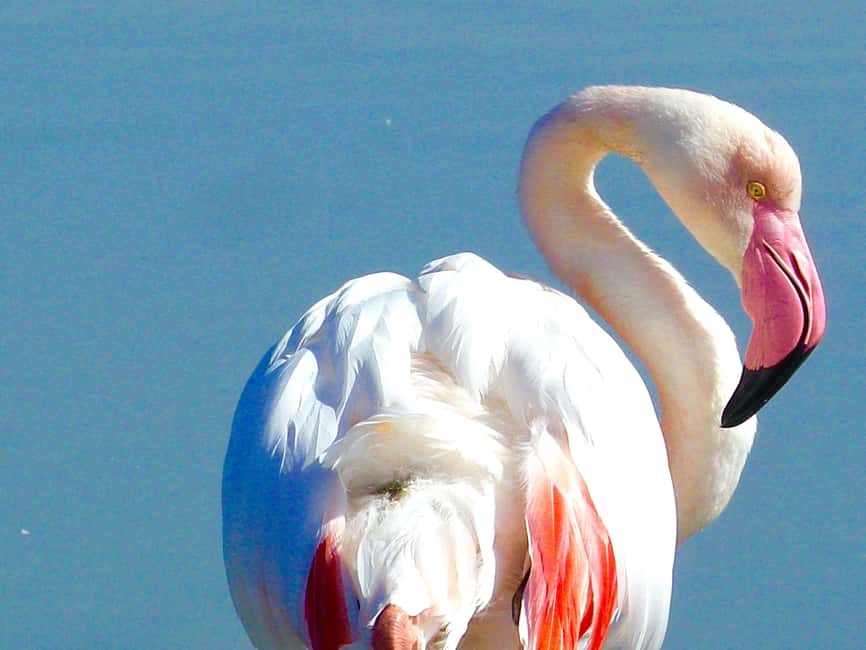
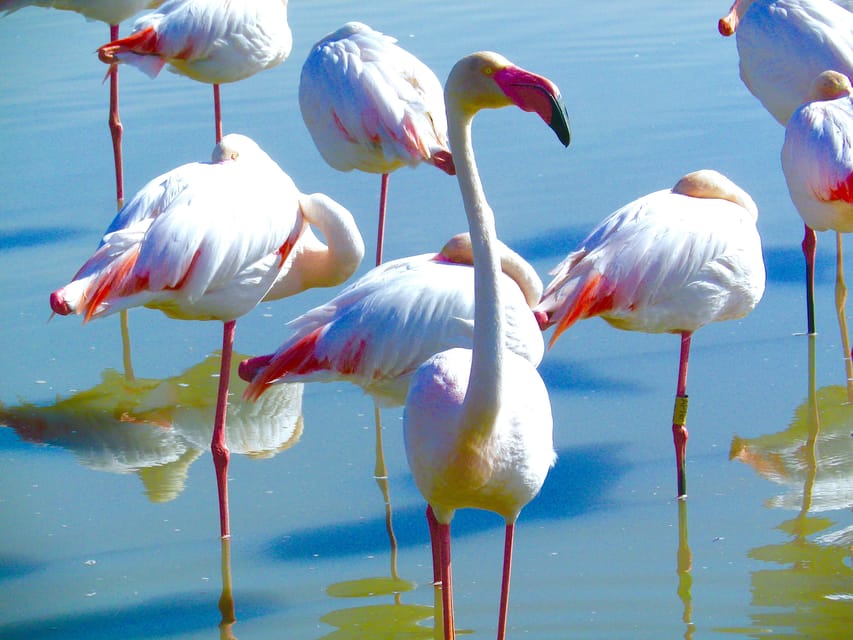
The final major stop is a local bird reserve, with about one hour set aside for the visit. Entry is included, and more than 300 bird species may be seen, including flamingos, cattle egrets, blue herons, and storks.
This reserve gives you a better chance to focus on birdlife than the broader Camargue drive. In the park, you may be watching the scenery and animals around you. At the reserve, you can use the hour to look more carefully for different species and appreciate the range of wetland birds.
The hour is not long, so keep moving at a comfortable pace and follow the route available inside the reserve. If bird photography is important to you, the time may feel brief, especially if birds are distant or conditions are not ideal. Still, including admission means you get a dedicated wildlife stop rather than relying entirely on roadside sightings.
Flamingos are the headline attraction, but the other birds matter too. Cattle egrets, herons, and storks show how varied this habitat is. Even if you are not a serious bird watcher, the reserve provides a quiet, nature-focused finish before the drive back.
The return through Tarascon
The return to Avignon follows a different road and passes through Tarascon. The main sight noted here is the town’s imposing castle.
This is a passing stop rather than a full castle visit. You should think of Tarascon as a final visual bonus, not another scheduled attraction. By this point, the day has already included a walking tour, ramparts, wildlife areas, a beach, and a bird reserve.
The different return route is a small but welcome touch. You are not simply retracing the morning drive, and you get another glimpse of the region before returning to Avignon.
What the small group and minivan mean for you
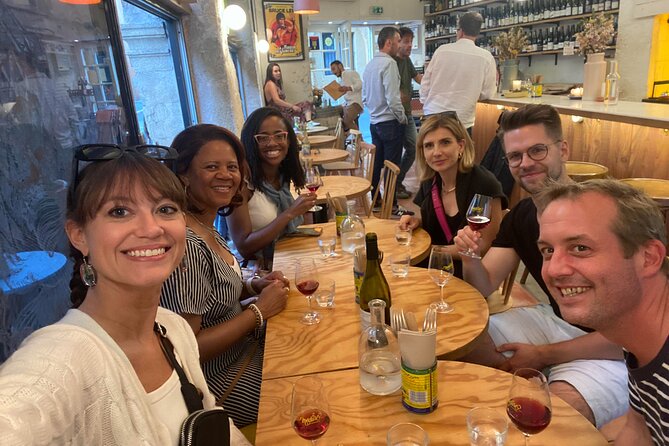
The group is limited to eight participants, and the outing uses a minivan. That size is well suited to a route with several meeting points and free-time periods.
A small group can make it easier to hear the English-speaking guide in Arles and during road commentary. It can also make departures smoother, although you still need to return to meeting points on time. One guide, Kelsy, was specifically praised for handling delays patiently while keeping the day moving.
The minivan matters because this route covers a lot of ground. You are not just visiting one nearby town. You are moving between Avignon, Arles, the Camargue, Aigues Mortes, Saintes Maries, the bird reserve, and Tarascon.
Comfort is important on a 570-minute outing. One account of the trip described the minivan as comfortable, but the tour still involves a full day of sitting, walking, and getting in and out. If you need frequent rest or find long road days tiring, consider that before reserving.
The tour is not suitable for wheelchair users. The information provided also states that alcohol and drugs are not allowed. English is the listed tour language, and the group format is small rather than private.
How the day is paced
The schedule has one clearly long free period: two hours in Aigues Mortes for lunch and exploration. Saintes Maries of the Sea also includes free time, though the exact length is not stated. The Arles walk lasts 1.5 hours, and the bird reserve visit lasts about an hour.
That structure gives the day a useful rhythm. You begin with a guided history and art walk, move into nature, receive a longer break in a walled town, then have seaside time before a final bird-focused visit.
Still, this is an ambitious itinerary. You will see more than you could comfortably cover alone in one day by public transport, but you will not have unlimited time at any stop. I would choose it for breadth, not for slow travel.
The best way to enjoy it is to decide what matters most before you leave. If Arles is your priority, pay close attention during the opening walk. If wildlife matters most, save energy for the Camargue and bird reserve. If you prefer a relaxed lunch and historic streets, use the Aigues Mortes break well.
Is $176 a fair price?
The price is reasonable for the number of places and admissions included, provided you want a full day rather than a narrow subject tour.
Included value comes from the English-speaking guide, transportation by minivan, the Arles walking tour, access to the Aigues Mortes ramparts and Constance Tower, and entry to the bird reserve. You also avoid arranging separate transport between widely spaced stops.
Lunch is separate, and the tour does not promise a private vehicle or a private group. The eight-person limit is smaller than a large coach tour, but it is still a shared experience.
I would compare the price with the cost and difficulty of arranging all these stops yourself. For someone based in Avignon without a car, the convenience is a major part of the value. For someone already renting a car and happy to plan independently, the decision depends on how much you want guide commentary and included admissions.
Who should book this Camargue tour?
I would recommend it to you if you want a broad introduction to southern France in one day. It suits people who like to mix Roman sites, painting, medieval architecture, animals, birds, church history, and the coast.
It is also a good fit for solo visitors or couples who prefer a small group over a large coach. The guide names associated with the experience include Nathalie and Kelsy, and the available feedback highlights clear communication, good organization, patience, and engaging regional commentary.
I would be more cautious if you want a slow, restful day. The route is long, the stops are varied, and several include walking. It is also not suitable for wheelchair users.
You can cancel up to 24 hours before departure for a full refund, and reserve now while paying later. Those terms help if your plans in Provence are still shifting.
Should you book it?
Book this tour if your ideal day includes a little of everything: Van Gogh and Roman Arles, fortified Aigues Mortes, Camargue animals, flamingos, an 11th-century church, a Mediterranean beach, and a final wildlife reserve.
Skip it if you would rather spend a full day in one town or need a very relaxed pace. At $176, the value lies in the range of places covered, the included entries, and the small group. You are buying access to a wide slice of the region, not a deep study of one attraction.
For most visitors with limited time in Provence, that tradeoff is worthwhile. Pack comfortable shoes, allow for lunch money, and expect a long but rewarding day.
FAQ
How long does the Arles and Camargue tour last?
The tour lasts 570 minutes, or about 9.5 hours.
What language is the tour conducted in?
The live tour guide speaks English.
How large is the group?
The group is limited to eight participants.
Is entry to the Aigues Mortes ramparts included?
Yes. Entry includes walking on the 13th-century ramparts and visiting Constance Tower.
Is the bird reserve admission included?
Yes. Entry to the local bird reserve park is included.
Is lunch included in the price?
Lunch is not listed as included. You receive a two-hour lunch and exploration break in Aigues Mortes, so plan to pay for your meal separately.
Is the tour suitable for wheelchair users?
No. The tour is not suitable for wheelchair users.