REVIEW · BORDEAUX
2-Hour Walking Tour of the City’s Iconic Sights and History
Book on Viator →Operated by OT Bordeaux · Bookable on Viator
Bordeaux in two hours, with a streetwise guide. This compact walk strings together the city’s most recognizable landmarks, then explains how they link to the French Revolution, trade, and local ambition.
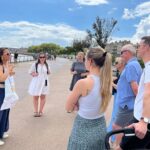
I like the payoff-per-minute: Monument aux Girondins delivers big symbolism fast, and Place de la Bourse gives you that classic Garonne-and-reflections moment. I also love the human factor—guides such as Bruno and Christine are often praised for keeping the group moving while telling stories in a way you can actually follow.
One thing to plan for: the tour runs bilingual, and in mixed-language groups the pacing can skew toward French, so your English might get shorter when the guide switches languages.
In This Review
- Key points to know before you walk
- A 2-hour Bordeaux loop that helps you orient quickly
- Monument aux Girondins: freedom in bronze and fountains
- Allées de Tourny: a refined promenade with a marketplace vibe
- Église Notre-Dame de Bordeaux: Baroque details you might miss on your own
- Place de la Comédie and the Grand Théâtre facade
- Rue Sainte-Catherine: the long pedestrian street break
- Place du Parlement: a quieter square with smart photo angles
- Place de la Bourse and the Miroir d’eau moment
- How the bilingual format affects what you hear
- Logistics that can make or break a smooth walk
- Price and value: what $17.37 really buys you
- Who should book this Bordeaux walking tour
- Should you book it
- FAQ
- How long is the walking tour?
- How much does the tour cost?
- What language is the tour offered in?
- Where do I meet the guide?
- Where does the tour end?
- What is included in the price?
- Is the tour suitable for everyone who can walk?
- Do I need to bring anything?
- How big is the group?
- Is there a way to cancel and get a refund?
Key points to know before you walk
- City-center highlights in 2 hours, starting from the Bordeaux tourist office area and finishing near Place de la Bourse
- Icon stops that actually tell a story, from the Girondins monument to the neoclassical Grand Théâtre
- Rue Sainte-Catherine: you’ll pass through one of Europe’s longest pedestrian shopping streets
- Bilingual commentary (English and French), so hearing quality can depend on how the group splits
- Bring a mask and expect a steady walk with no long sit-down breaks
A 2-hour Bordeaux loop that helps you orient quickly
This is the kind of tour that helps you stop wandering and start understanding. You’ll walk through central Bordeaux and leave with a mental map of where power, money, and rebellion showed up in stone and street layout.
The route is designed as a highlights walk, not a full museum day. Expect stops, photos, and short explanations, then more walking—because Bordeaux’s best clues are out on the sidewalks.
Also, the end point can shift a bit with weather and group size. You start at the Office de Tourisme et des Congrès on Cr du 30 Juillet, and you’ll typically finish around the Place de la Bourse area.
You can also read our reviews of more walking tours in Bordeaux
Monument aux Girondins: freedom in bronze and fountains
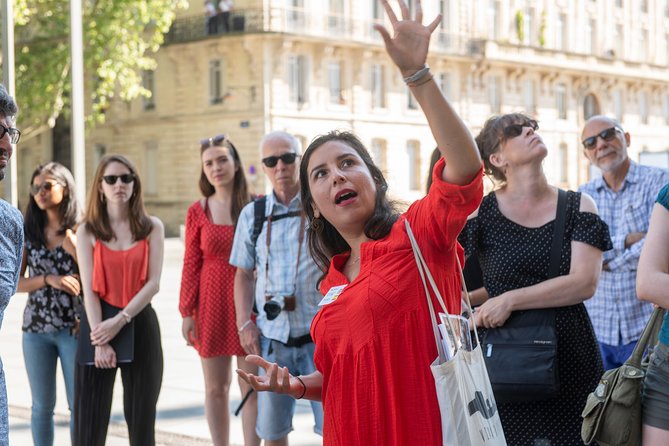
Your first major moment is the Monument aux Girondins in Place des Quinconces. This isn’t just a pretty sculpture. It’s a memorial that points straight at the French Revolution era and the fate of the Girondists, executed in 1793 for political reasons tied to counter-revolutionary activity.
Look up at the column and you’ll see the winged Statue of Liberty crowning it. It’s a dramatic visual that makes the history feel less abstract. And even if you only catch part of the explanation, the symbolism lands quickly: this is Bordeaux using art to argue for ideals.
The nearby fountains and bronze figures add motion to the scene, so it’s a good stop to slow down, look up, and take a few photos before the walk pulls you back into the streets.
Allées de Tourny: a refined promenade with a marketplace vibe
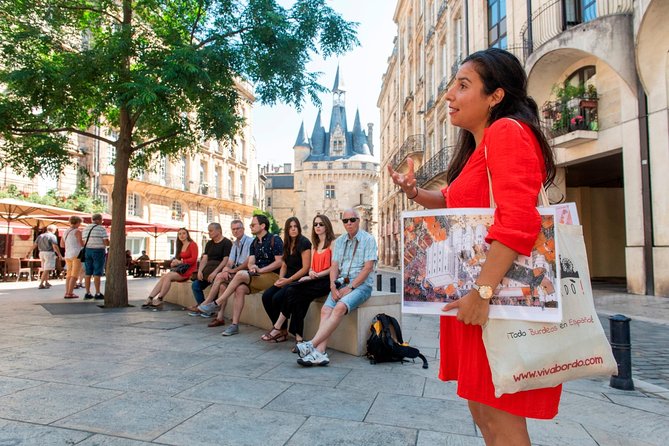
From there, the tour moves into a more elegant, human-scaled part of the city at Allées de Tourny. Think 18th-century architecture, storefront energy, and café culture—exactly the sort of place you can picture locals using as a stroll corridor.
The timing matters here. This promenade shines around events like the Christmas market or summer activities, when the avenue feels like a living room for the city.
Even if you visit outside peak seasons, this stop works as a transition. You go from monument drama to an everyday Bordeaux rhythm.
Église Notre-Dame de Bordeaux: Baroque details you might miss on your own
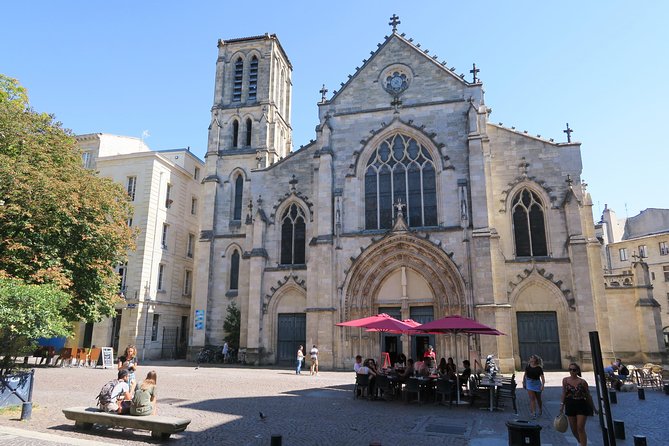
Next comes Église Notre-Dame de Bordeaux, noted for its Baroque style. The exterior is richly sculpted, and the interior has vaulted drama that feels bigger than you expect once you’re standing inside.
This is a useful stop for first-timers because it trains your eye. Bordeaux has a lot of elegant stonework, but the church helps you spot how the city uses curves, ornament, and proportion to create impact.
If you’re trying to decide whether to go inside independently later, this stop is a low-pressure sampler. You get the context and a sense of what to look for.
Place de la Comédie and the Grand Théâtre facade
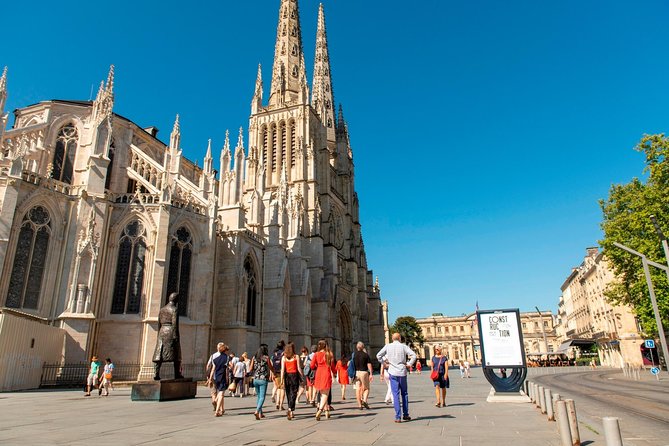
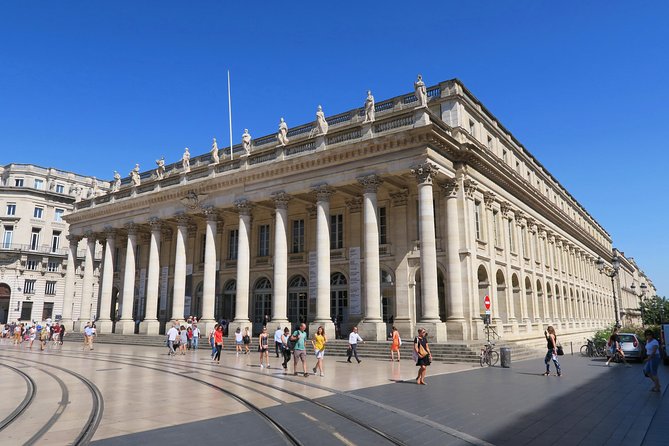
Then you hit Place de la Comédie, where the big star is the Grand Théâtre. The square feels like the city’s cultural living room, and the theater’s size makes it hard to miss—even before you get the historical explanation.
Stand for your photos in front of the theater’s sweeping, columned portico. This neoclassical building is described as a symbol of Bordeaux’s wealth as the bourgeoisie rose to power. The theater was completed in 1780, and you’ll also hear the interesting link that the site was once a Roman temple.
What I like about this stop is how it connects layers of time. You’re not just seeing one era. You’re seeing how Bordeaux reuses space and language—Roman footprint, then neoclassical ambition.
If you’re into architecture, pay attention to the façade proportions. The whole design looks carefully measured, and you’ll feel the logic once the guide points it out.
You can also read our reviews of more city tours in Bordeaux




Rue Sainte-Catherine: the long pedestrian street break
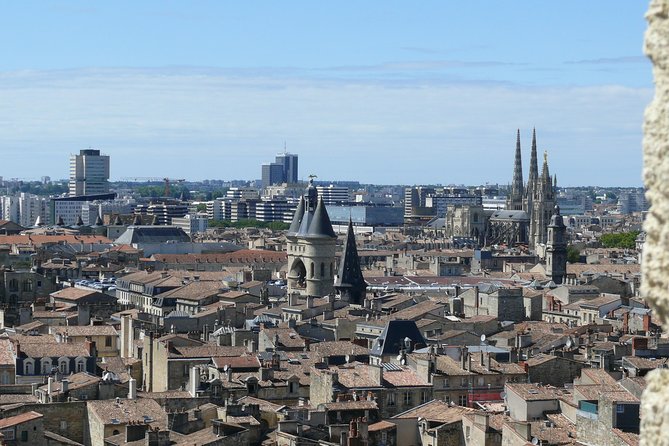
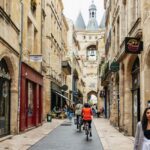
Between the major squares, you’ll walk past Rue Sainte-Catherine, a traffic-free avenue that’s known as one of Europe’s longest pedestrianized shopping streets.
This stretch is more than “just walking.” It’s where Bordeaux’s everyday city energy shows up. You’re moving at a human pace, and that’s exactly what makes the rest of the stops easier to appreciate—you’re not stuck in a rigid checklist.
If you need a bathroom, this is the moment to plan one. You’ll be in a commercial corridor with shops and services around you.
Place du Parlement: a quieter square with smart photo angles
At Place du Parlement, the vibe gets a touch calmer. This is a picturesque square with historic architecture and cafés, and it works well for a breather without losing the tour momentum.
Here’s what to watch: the surrounding 18th-century buildings. They help you understand how Bordeaux’s elegance isn’t confined to one museum-like district. The city’s “pretty layers” repeat, so your eye starts to learn patterns.
It’s also a good place to line up photos that show the square’s shape rather than only focusing on one monument.
Place de la Bourse and the Miroir d’eau moment
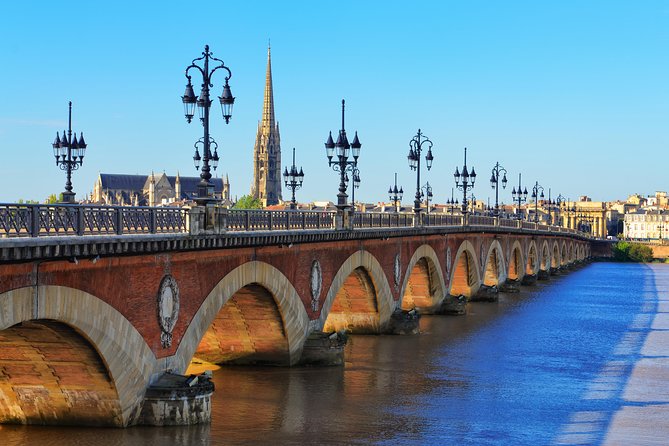
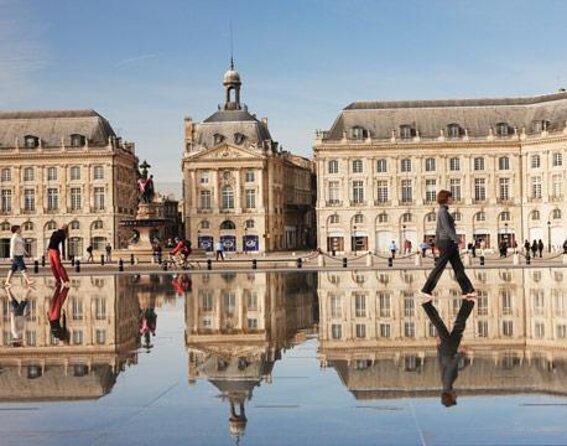
Now for the Bordeaux postcard: Place de la Bourse and its reflective Miroir d’eau. This is one of the city’s most iconic squares, set up with a grand classical feel facing the Garonne River.
The square was created by Louis XV’s chief architect, Ange-Jacques Gabriel, in the 18th century. That kind of detail matters because it explains why the space feels so planned—this isn’t random street romance. There’s structure.
You’ll also hear about the fountain of the three graces. Whether you’re here in bright light or overcast conditions, the layout gives you great photo opportunities, especially because the water feature turns reflections into part of the scene.
If you like taking pictures, build in a few extra seconds here. This is one stop where the setting does half the work for you.
How the bilingual format affects what you hear
This tour is offered in English, but the commentary is bilingual in English and French. Some people love the switch-hitting rhythm. Others find that when the group is mixed, English can feel secondary.
In practice, that can show up in a couple ways:
- The guide may explain the same point twice, once per language.
- In mixed groups, French-speaking participants may naturally steer the pace because the guide has to cover more air-time.
One way to protect your experience: arrive ready to listen with an open attitude and keep your questions short. If you’re handed any small audio devices, get them working right away. When audio fails, the tour can slow down while you wait for a fix.
The bottom line: this is still a strong highlights tour, but it rewards listeners who don’t need every detail in perfect English order.
Logistics that can make or break a smooth walk
The tour lasts about 2 hours and is designed for people who can walk that long. There’s a max group size of 25, which usually keeps things friendly and moving at a reasonable clip.
You’ll start at 10:30 am near public transportation, and you should plan to finish back in the Place de la Bourse area (even if the exact end point can vary). If the weather turns rough, your guide may adjust the route, but the key landmarks are still the goal.
Also, bring your own mask. It’s specifically required, so don’t assume you can buy one nearby at the last second.
Price and value: what $17.37 really buys you
At about $17.37 per person for roughly two hours with a local licensed guide, this is priced like an efficient orientation walk. You’re not paying for a long itinerary or multiple entrances. You’re paying for a guided route that turns famous stops into a connected story.
That value depends on your expectations. If you want a quick first look at the city’s most famous architecture and squares, the cost-to-time ratio makes sense. If you expect a deep, long-form lecture with every major church and museum stop, you might feel the clock is strict.
Given the landmarks included—Monument aux Girondins, Notre-Dame, Place de la Comédie, the Grand Théâtre exterior, and Place de la Bourse—you’re getting a lot of “why Bordeaux looks the way it does” for the money.
Who should book this Bordeaux walking tour
This works especially well if:
- It’s your first time in Bordeaux and you want the big sights in a manageable walk
- You like architecture plus political and trade history, explained in bite-size chunks
- You’re traveling in a small group that can handle bilingual pacing
If you’re the type who hates walking, this may not be your best fit. The tour assumes you can cover the city center route for about two hours. Also, if you’re very sensitive to hearing English vs French timing, consider going in with flexibility and bring headphones-free backup focus, like taking notes on the buildings and squares as you go.
Should you book it
Yes, if you want a fast, well-paced highlights walk that helps you decode Bordeaux’s key landmarks. It’s a solid pick for getting your bearings, especially because the route links political history, city planning, and major architecture without turning into a long, slow slog.
I’d book it with one practical mindset: treat it as a guided sampler. Then, later in your trip, you can return to the places you liked most—especially the Grand Théâtre area and Place de la Bourse—when you have time to linger.
FAQ
How long is the walking tour?
It runs for about 2 hours.
How much does the tour cost?
The price is $17.37 per person.
What language is the tour offered in?
The tour is offered in English, and the commentary is bilingual in both English and French.
Where do I meet the guide?
You meet at the Office de Tourisme et des Congrès de Bordeaux Métropole at 12 Cr du 30 Juillet, 33000 Bordeaux, France.
Where does the tour end?
It typically ends at Place de la Bourse, but the exact end point can change depending on weather and group size.
What is included in the price?
A local professional licensed guide is included.
Is the tour suitable for everyone who can walk?
Most people can participate, but you must be able to walk for the full 2 hours.
Do I need to bring anything?
You must bring your own mask.
How big is the group?
The tour has a maximum of 25 travelers.
Is there a way to cancel and get a refund?
Yes. You can cancel up to 24 hours in advance for a full refund.