REVIEW · PARIS
2 Hour Private Opera Garnier Guided Tour
Book on Viator →Operated by Iuliana Pintea · Bookable on Viator
Paris opera, minus the guesswork. This 2-hour private walk through Palais Garnier turns the building into a story, with your guide guiding you from the famous exterior entrance to the opulent public rooms. It’s in English, and it’s built for your group only—up to 8 people.
I really like two things here: you’re not just looking at pretty rooms, you’re getting the why behind them, including the architect and the 19th-century high-society world around the opera. And I like the structure of the tour—security, then the special-feeling interior path under the Rotonda, up the Grand Staircase, and into the auditorium area.
One thing to consider: admission tickets are not included, so you’ll need to plan for that extra cost and any on-site entry rules. With only about 2 hours, you’ll see a lot—but not everything the house offers.
In This Review
- Key highlights worth booking
- Entering Palais Garnier with a guide instead of a checklist
- Meeting at Place de l’Opéra and planning your arrival
- Exterior first: why the façade matters before you walk in
- After security: under the Rotonda, where prestige begins
- The Grand Staircase: where the building shows off
- Auditorium and lodge views: Chagall’s ceilings hit harder in person
- Finding the Phantom of the Opera in the flow of rooms
- Divers galleries and decorated salons: where the side spaces matter
- Grand Foyer: the closing space that makes the whole visit click
- Who this tour suits best (and who might want something else)
- Price and value: is $692.36 per group fair?
- The guide factor: Iuliana Pintea’s storytelling is the difference
- Practical tips so your 2 hours go smoothly
- Should you book this private Garnier tour?
- FAQ
- How long is the private Opera Garnier guided tour?
- What’s included in the price?
- Is this tour private?
- What language is the tour offered in?
- Where does the tour start and end?
- What hours is this activity available?
- Is the booking refundable if plans change?
Key highlights worth booking

- A guide who makes 1889 Paris feel real with stories about the architect, opening-era life, and social norms
- Rotonda access and prestige seating perspective right after security control
- Grand Staircase to lodge viewpoints so you understand the room, not just the photos
- Chagall ceilings in the auditorium area—a specific visual payoff you can anchor your visit on
- Phantom of the Opera stop plus decorated galleries and salons that keep the momentum going
- A classic end point at the Grand Foyer that helps you leave with a clear sense of the building’s flow
Entering Palais Garnier with a guide instead of a checklist

Palais Garnier can feel a bit like sensory overload on your own. The building is gorgeous, yes, but it’s also huge. Without context, you end up taking pictures and hoping the dots connect later. With this private tour, the dots show up as you move—room by room, with a guide who talks like you’re being hosted.
The tour’s main value is that it treats the opera house as a social machine. You don’t only learn design details; you learn what it meant for people—especially the high-status crowd of late 19th-century Paris. That’s why the experience works even if you’re not an opera superfan. You’re still getting the cultural logic of the place: who used it, how they used it, and why the architecture was designed to impress.
And because it’s private for your party (up to 8), you’re not stuck matching your pace to a larger group. If you want a question answered right away, you’re more likely to get it.
You can also read our reviews of more guided tours in Paris


Meeting at Place de l’Opéra and planning your arrival

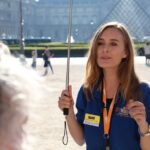
This tour starts at Place de l’Opéra (Pl. de l’Opéra, Paris). That’s convenient, because it’s a central area with public transport nearby, so you’re not spending your “best sightseeing time” zigzagging through Paris trying to find the right street.
Plan to arrive a bit early. The tour begins with security control before the interior route starts. If you arrive right on time, you risk wasting part of the 2 hours waiting rather than seeing.
Also keep the venue’s window in mind: 10:00 AM to 4:00 PM, Monday through Sunday. The tour is offered across a wide date range, but your actual visit still needs to happen during those daytime hours.
Exterior first: why the façade matters before you walk in

The tour starts in front of Palais Garnier because the building already “speaks” from outside. That matters more than it sounds. The opera house exterior isn’t just decoration—it’s signaling. It tells you: this is meant to be seen, admired, and used as a stage for status.
So by the time you’re inside, you’re primed. You’ll notice how the interior continues that same idea of theater and display. You’re not entering a random museum room—you’re entering a deliberately designed world.
After security: under the Rotonda, where prestige begins

Right after security control, you visit under the Rotonda, which is described as the entrance for the most prestigious spectators. Even if you don’t know opera details, this is one of those “oh, that’s how it works” moments.
On your own, it’s easy to walk through public spaces without understanding how the building separates people by status. Here, that point becomes part of the story. Your guide sets you up to feel the contrast between ordinary visitors and the elite experience the house was built to host.
This is where the tour earns its “private” label. You get to move through key architectural spaces with explanations tied directly to what you’re standing in.
The Grand Staircase: where the building shows off

Next comes one of Paris’s most famous interior moments: the Grand Staircase. The tour focuses on how opulent it is, but the best part is how it’s framed. You’re encouraged to see it like 19th-century opera-goers would—this was not a quick path to your seat. It was part of the event.
As you ascend and look around, you start to understand why people treated a night at the opera as social performance. The staircase isn’t only about aesthetics. It’s about procession, visibility, and arrival.
This is also a good spot to slow down. If your photos tend to be rushed, this is the place to take your time. The staircase is the kind of interior that rewards a calm look.
You can also read our reviews of more private tours in Paris





Auditorium and lodge views: Chagall’s ceilings hit harder in person

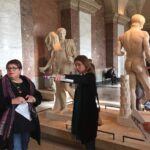
From there, you’ll follow your guide to a lodge and get views toward the Auditorium. This is one of the most satisfying parts of the tour because it ties architecture to atmosphere.
The description highlights the ceiling painted by Chagall. On a screen, it’s impressive. In the auditorium, it feels like something that belongs to the ceiling’s own scale—big, dramatic, and impossible to ignore.
Your guide also helps you interpret what you’re seeing. Instead of just saying the ceiling is famous, the focus is on the overall experience of the house: where you are, how you’d view the space, and what the room communicates.
And yes, this area can make you feel like you’ve stepped into a different era. Part of that comes from the design itself; part comes from the way your guide walks you through the symbolism.
Finding the Phantom of the Opera in the flow of rooms

The tour also includes a stop to meet the Fantôme de l’Opera. That’s a big deal for pop-culture recognition, but the advantage here is that it’s not treated as a random photo stop. It sits inside a wider guided route through the house’s rooms.
That approach keeps things from feeling like a theme park checklist. You see the phantom-related moment, then you immediately connect it back to the space around it—galleries and salons that feel built for drama.
If you care about storytelling (even beyond opera), this is a highlight. You’re getting the emotional hook plus the architectural context.
Divers galleries and decorated salons: where the side spaces matter

After the auditorium-focused moments, you’ll continue through galleries and decorated salons. These aren’t leftovers. They’re part of the opera experience—places for movement, conversation, waiting, and display.
This is also a smart pacing choice. After the “wow” of big dramatic spaces like the staircase and auditorium, the tour gives you smaller, richly detailed rooms where you can actually process what you’re seeing. Your guide points out details and connects them to how the building was used.
If you’re the type who tends to get tired at sightseeing stops, this segment helps. It breaks the day into digestible chunks while still feeling on-theme.
Grand Foyer: the closing space that makes the whole visit click
The tour finishes in the Grand Foyer. This is one of those spaces where, if you pay attention, the whole building makes sense. It’s a central hub feeling—an in-between zone that explains how the opera house works as a social stage.
By the time you reach the end, you’ll likely feel the “travel in time” effect the tour promises. Not because you’ve memorized a textbook, but because you walked through a designed sequence and had it explained in plain language.
That matters. Many people leave famous buildings still confused about what they actually did see. This tour aims to leave you with a clear mental map: entrance, procession, viewing, decorated in-between spaces, and grand concluding room.
Who this tour suits best (and who might want something else)
This is a strong fit if you want:
- A private experience in English with your party only (up to 8 people)
- A tour that focuses on architecture and the opera-house experience, not just quick sightseeing
- A guide-led understanding of late 19th-century social life around the opera
It’s also ideal for first-timers to Palais Garnier who feel overwhelmed by the building’s size. The tour gives you a route you can follow without second-guessing.
If you’re the type who wants an independent, open-ended wander with zero structure, this may feel a little directed. You’ll have a plan (about 2 hours), and you’ll cover key rooms rather than spending extra time in just one area.
Price and value: is $692.36 per group fair?
The price is $692.36 per group (up to 8) for about 2 hours, and it’s often booked around 19 days in advance on average. That gives you a clue: this is in demand, and slots can fill.
Is it worth it? For me, the value comes down to two things:
- You’re paying for interpretation. Palais Garnier is impressive on its own, but it’s easy to miss the logic. A skilled guide turns the building into an understandable experience.
- You’re paying for privacy. Up to 8 people is still a small group, which makes questions and pacing more realistic than with larger tours.
Tickets are not included, so factor that in. That’s the only major cost surprise to plan for. Once you budget for admission separately, this becomes a solid choice if your group wants a guided, high-quality interior tour rather than casual wandering.
The guide factor: Iuliana Pintea’s storytelling is the difference
Your guide is Iuliana Pintea. In the feedback linked to this experience, guests mention names like Iuliana and Luliana, and the consistent theme is how well the guide brings the opera house to life.
What stands out in the praise is not only that the guide knows the building, but that the explanations are layered:
- How the architect and the winning contract story fits into the building’s meaning
- What life was like for high-society opera-goers when the house opened
- How design and construction innovations mattered in real terms
- How to connect the chandelier-level beauty to the social rules of the time
That’s exactly what you want from a private tour. The building is dramatic. The guide’s job is to make it make sense.
Practical tips so your 2 hours go smoothly
A few practical notes to help you get the most from the timing:
- Plan for security time. The tour starts with security control, so arrive early enough to avoid stress.
- Wear comfortable shoes. The staircase and indoor route are active compared to many “sit and hear” tours.
- Bring your ticket plans. Since admission ticket cost is not included, line up what you need ahead of time.
- Ask early. Because it’s private, questions early in the route can steer what you notice later.
Also, the activity lists that most travelers can participate and that it’s near public transportation. If your group can handle a walking tour through an active monument, you’ll likely be fine.
Should you book this private Garnier tour?
Book it if you want a guided, structured way to see Palais Garnier without missing the big ideas. If your goal is understanding—how it works, why it’s designed that way, and what it meant to 19th-century audiences—this is the kind of tour that pays off fast.
I would skip it (or compare options) if:
- You’re only interested in a quick photo tour
- Your group wants lots of free time to roam without a fixed route
- You don’t want to deal with extra planning since admission tickets are not included
For most people, especially first-time visitors, this private 2-hour English format is a smart match: focused, high impact, and built around the rooms that make Palais Garnier feel like a real spectacle.
FAQ
How long is the private Opera Garnier guided tour?
The tour runs for about 2 hours.
What’s included in the price?
The guided tour is included. Admission tickets are not included.
Is this tour private?
Yes. It’s a private tour/activity, and only your group participates. The group size is up to 8.
What language is the tour offered in?
The tour is offered in English.
Where does the tour start and end?
It starts at Place de l’Opéra and ends back at the meeting point.
What hours is this activity available?
The listed opening hours are 10:00 AM to 4:00 PM, Monday through Sunday.
Is the booking refundable if plans change?
No. This experience is non-refundable and cannot be changed for any reason.