REVIEW · LILLE
Vieux Lille 2-Hour Guided Walking Tour
Book on GetYourGuide →Operated by Office de Tourisme de la Métropole Européenne de Lille · Bookable on GetYourGuide
Two hours is enough to fall for Lille. This Vieux Lille walk strings together the big sights and the cobbled lanes, and your guide turns them into a clear story of how the city grew. I like the stop-by-stop explanations that make the buildings feel connected, and I also like the local pointers some guides share, like where to eat and what to try after the tour. One watch-out: it’s a walking tour, so expect a steady pace on older streets and bring shoes you trust.
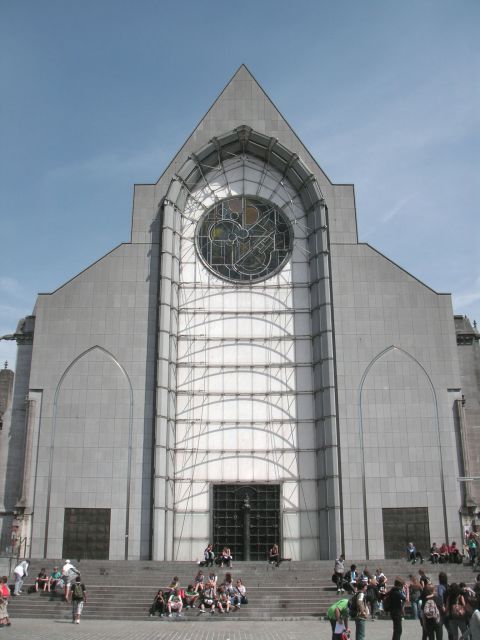
You’ll see a concentrated hit list of old-town landmarks, including the Palais Rihour, the main square, the Old Stock Exchange, the Opera House, the Chamber of Commerce, and Notre-Dame de la Treille Cathedral. Then you wrap up near Hospice Comtesse, founded in 1237 by Jeanne de Flandre, where you can linger over objects from Lille’s past.
The best value comes when you treat this as your first day mission. Use it to get oriented fast, learn the main threads of the city, and then follow your new curiosity on your own. If you’re only looking for a quick photo walk with zero talking, you might find the commentary heavy.
In This Review
- Key highlights worth planning for
- How the 2-hour route works in Vieux Lille
- What you’ll notice as you walk
- Palais Rihour and the main square: where Lille starts to make sense
- Old Stock Exchange and the Chamber of Commerce: reading Lille like a merchant city
- Opera House stop: culture isn’t an add-on here
- Notre-Dame de la Treille: a cathedral moment to slow down
- Ending near Hospice Comtesse: why the finale is more than a finish line
- Guides make the difference: Celeste, Isabelle, Stephanie, and Peter
- Price and value: is $17 fair for a two-hour walk?
- Timing, tour days, and language options that fit your schedule
- Practical tips for a smooth walk on old streets
- Should you book this Vieux Lille guided walking tour?
- FAQ
- Where is the meeting point?
- How long is the tour?
- What language are the tours offered in?
- What sites are included?
- Where does the tour end?
- Is the tour wheelchair accessible?
- How much does it cost?
- Are there days the tour does not operate?
- Is free cancellation available?
- Can I reserve without paying right away?
Key highlights worth planning for
- A tight 2-hour orientation of Vieux Lille that helps you navigate the old streets fast
- Major monuments in one route, including Palais Rihour, the Old Stock Exchange, and Notre-Dame de la Treille
- An ending near Hospice Comtesse so your walk finishes with a meaningful museum-style stop
- Guides with clear local storytelling, with repeat favorites like Celeste, Isabelle, Stephanie, and Peter mentioned for their energy
- Weather-smart pacing, with some guides taking groups indoors to keep things interesting when conditions turn
How the 2-hour route works in Vieux Lille
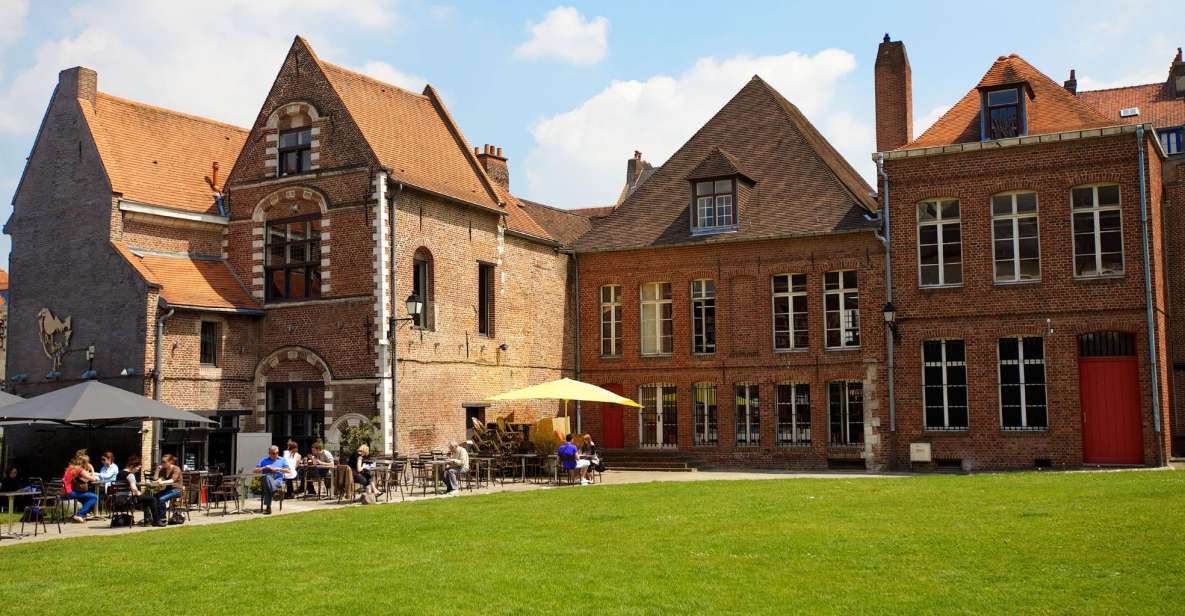
This is built for your first visit. You’re not trying to cover the whole city; you’re getting a smart slice of the most charming part—Vieux Lille—on foot.
Meeting point can vary depending on the option you choose, so check your confirmation so you don’t arrive chasing the group. Once you’re started, the tour moves at a pace that fits a full overview in two hours, which is great if you like seeing a lot without spending a whole day herding yourself from stop to stop.
Also, this tour is wheelchair accessible, which matters because many older-city walks can get tricky. You’ll still be on historic streets, so keep expectations realistic: accessibility can be good, but cobbles are cobbles.
You can also read our reviews of more walking tours in Lille


What you’ll notice as you walk
Think of it as learning by looking. Each corner you turn gives you a new visual clue—squares, civic buildings, cultural sites—then your guide connects the dots into a story you’ll remember later when you see those same facades on your own.
Palais Rihour and the main square: where Lille starts to make sense
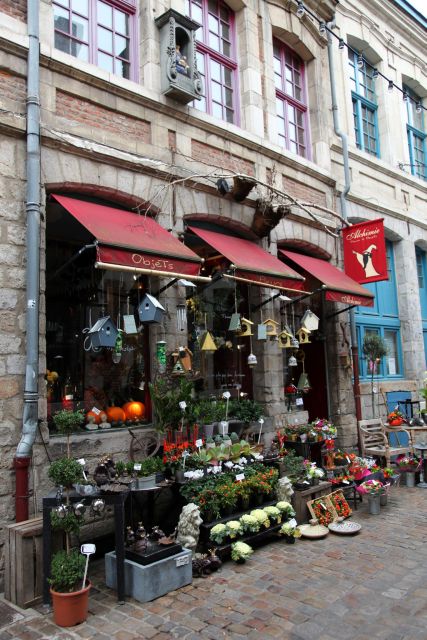
The tour begins by feeding you the essentials right away. The Palais Rihour and the main square are the kind of anchors that tell you what kind of city Lille became—one shaped by trade, civic life, and cultural ambition.
Here’s the practical value: once you understand the role these spaces played, you can read the city differently. Instead of seeing pretty buildings, you start spotting patterns—where people gathered, where power was displayed, and why certain streets feel like they were designed for movement and meeting.
If you like taking photos, this is your sweet spot. Early in the walk, you’ll have enough energy to frame shots without rushing, and you’ll know what you’re capturing instead of firing blind.
Old Stock Exchange and the Chamber of Commerce: reading Lille like a merchant city
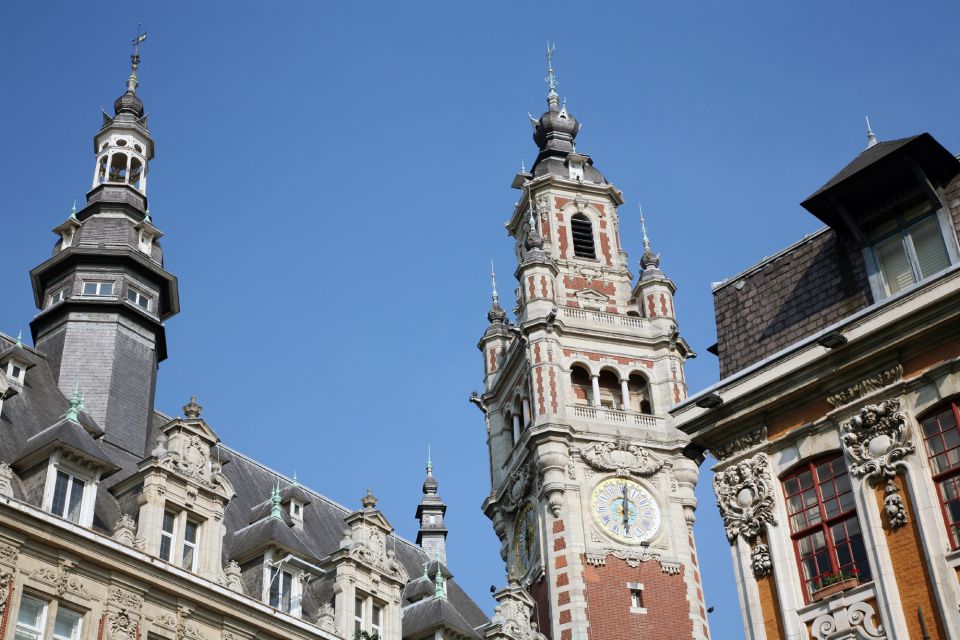
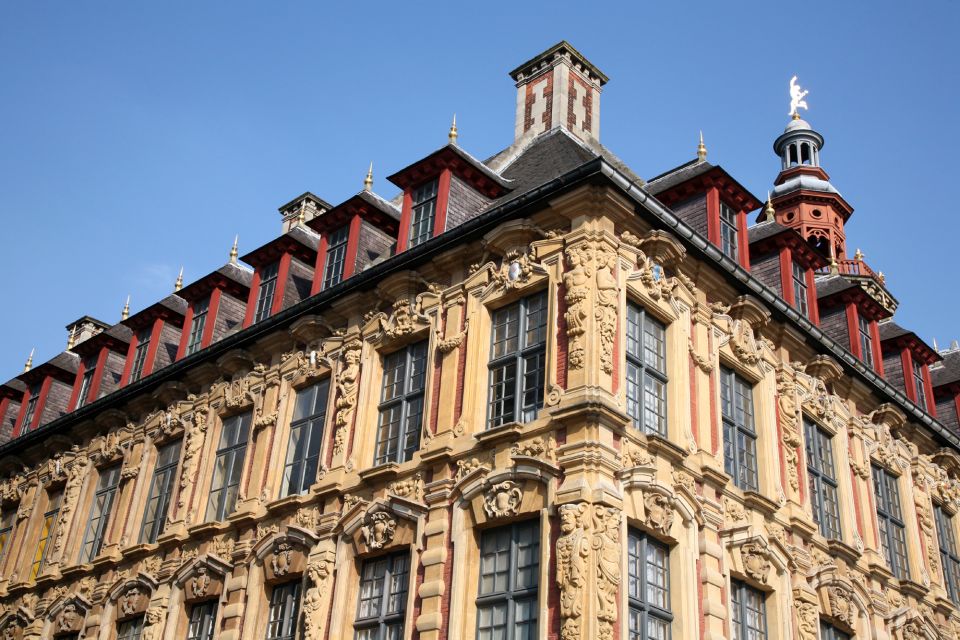
After you’ve taken in the civic heart, the route shifts toward the commercial side of Lille. You’ll pass the Old Stock Exchange and the Chamber of Commerce, and you’ll see how these buildings fit into the old-town rhythm.
Even without a museum ticket, these sites act like landmarks of the city’s economy. The message you get from this stretch is simple: Lille grew through business and people moving—goods, ideas, and ambition all traveling through the same streets.
What I like about this portion is the way the guide helps you “see the function.” You start noticing details that are easy to miss on a self-guided stroll. The overall effect is that Vieux Lille stops feeling like a postcard and starts feeling like a place with jobs, decisions, and momentum.
Opera House stop: culture isn’t an add-on here
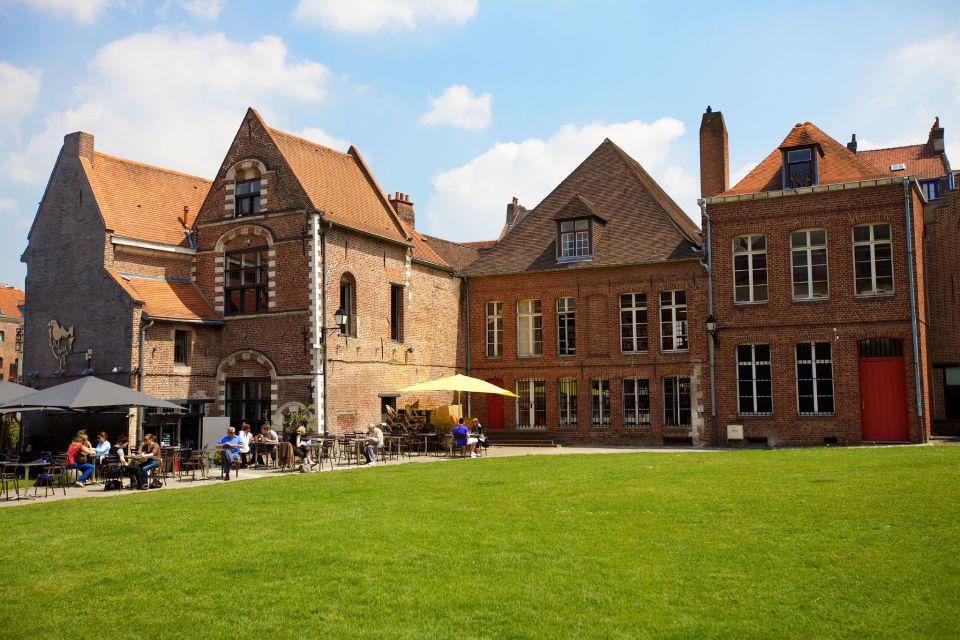
The Opera House is the kind of stop that changes your perspective. It’s not just another landmark; it’s a signal that Lille valued public culture, not only commerce.
On a short guided walk, this matters. It keeps the story balanced. You’re not only hearing about markets and civic buildings; you’re also getting the reminder that arts and public life were part of Lille’s identity.
If you’re the type who likes history you can point to in real space, this is where the tour helps most. You’re building a mental map you can carry into the rest of your day.
You can also read our reviews of more guided tours in Lille





Notre-Dame de la Treille: a cathedral moment to slow down
The tour includes Notre-Dame de la Treille Cathedral, which gives you a strong visual break from civic and commercial architecture.
Cathedrals can be hit-or-miss on walking tours, but this one works because it appears as a stop inside a larger story of how the city expresses values. Your guide’s commentary helps you connect what you see now with what the city has tried to represent over time.
I also appreciate that it’s late enough in the tour that you’re ready to pay attention. Your brain has warmed up from the earlier landmarks, so the cathedral doesn’t feel like a random checkbox.
Ending near Hospice Comtesse: why the finale is more than a finish line
The tour concludes near Hospice Comtesse. This is an excellent way to end, because the name sounds like just another place you’ll walk past—until you learn what it is.
Hospice Comtesse was founded in 1237 by Jeanne de Flandre. The display focuses on Lille’s past through everyday objects and art: wooden sculptures, earthenware, furniture, paintings, and other items that show daily life, not just big-ticket events.
That last detail is what makes the stop feel worth your time. Instead of ending with only street views, you get a chance to step away from the cobbles and look at the city through tangible objects. It’s a clean transition: walk the old streets, then zoom in on what people actually used and made.
If you want to extend your afternoon, this ending gives you an obvious next move. Even if you don’t stay long, you’ll have a strong sense of where to look on your own afterward.
Guides make the difference: Celeste, Isabelle, Stephanie, and Peter
The most praised part of this tour isn’t the route—it’s the people running it. Guides consistently get credit for passion and clear explanations, and you can feel it when they connect a building to a story you can repeat later.
Several guide names come up again and again, including Celeste, Isabelle, Stephanie, and Peter. From the comments, what stands out is how they match the tour to the group: Isabelle, for example, is noted for adjusting to group needs, and Peter is mentioned for mixing history with humor.
Some guides also use small extras to keep it memorable. One example: photos used as props. That’s a simple idea, but on a two-hour walk it helps you understand the past without needing a textbook.
On days when weather turns, your guide may also adjust. One account describes taking the group indoors to see a historic site when conditions were poor. That’s not something you can count on every day, but it’s reassuring to know the tour can flex.
Price and value: is $17 fair for a two-hour walk?
At $17 per person for two hours, this is priced like a practical orientation, not a long-day sightseeing program. The value comes from concentration: you see multiple top landmarks in one go and you get the “why it matters” commentary that you’d otherwise have to cobble together from guidebooks and apps.
If you were planning to wander Vieux Lille anyway, this can be the difference between random wandering and purposeful wandering. And if it’s your first day, the payoff is even bigger because it helps you decide where to spend more time later.
If you’re the kind of traveler who prefers quiet and self-guided pacing, you may feel the commentary is more than you want. In that case, you can still use the route for orientation and treat the talk as optional background—just keep in mind that this format is built around listening.
Timing, tour days, and language options that fit your schedule
Timing is straightforward, and it’s worth aligning your plan around the tour so you can use the rest of your day well.
French tours run daily at 15:00. English tours are available every Saturday at 11. That means if you’re visiting midweek, you’ll likely need the French option unless you’re specifically there on a Saturday morning.
Also note the tour doesn’t operate on 1 January, 1 May, 25 December, during the first weekend in September, or during Heritage Day weekend (3rd weekend in December). If your trip overlaps with any of those periods, you’ll want to build an alternate plan for Vieux Lille.
If the plan is flexible, you can reserve and pay later, which can help you lock in a spot without rushing your whole itinerary. And if you need to change plans, cancellation is offered with a full refund up to 24 hours in advance.
Practical tips for a smooth walk on old streets
A two-hour walk is usually manageable, but the street surface is the real wildcard. Cobblestones can be rough on the ankles, so plan comfortable shoes and avoid anything too slippery.
Bring a short list of questions before you start. If something feels unclear—why a building matters, what you should see next, or where the city’s story is heading—ask. This tour format is at its best when you treat it like a moving conversation.
Also, use the final stretch toward Hospice Comtesse strategically. It’s a good moment to decide whether you want to step deeper into the museum atmosphere afterward or simply use the walk’s final stop as a cue for what to explore on your own.
Should you book this Vieux Lille guided walking tour?
Book it if you want a fast, clear first look at Vieux Lille with major landmarks and a guide who can connect them into one coherent story. It’s especially smart if you like cities where old civic and commercial life still shows up in the streets, not just behind walls.
Skip it if you’re traveling for quiet, independent exploration only, or if you dislike structured walking tours with frequent commentary. This isn’t a “wandering without effort” experience.
My bottom line: for $17 and two hours, this is a solid way to get your bearings and leave Lille with a better mental map than you would from photos alone—plus a meaningful finish near Hospice Comtesse, where the objects from everyday life give the city a human scale.
FAQ
Where is the meeting point?
The meeting point may vary depending on the option you booked. Check your confirmation for the exact location.
How long is the tour?
The tour lasts 2 hours.
What language are the tours offered in?
Tours are offered in French and English, with French tours daily at 15:00 and English tours every Saturday at 11.
What sites are included?
You’ll see Palais Rihour, the main square, the Old Stock Exchange, the Opera House, the Chamber of Commerce, Notre-Dame de la Treille Cathedral, and the tour concludes near Hospice Comtesse.
Where does the tour end?
The tour ends near Hospice Comtesse.
Is the tour wheelchair accessible?
Yes, the tour is wheelchair accessible.
How much does it cost?
The price is $17 per person.
Are there days the tour does not operate?
The tour does not operate on 1 January, 1 May, 25 December, during the first weekend in September, or on Heritage Day weekend (3rd weekend in December).
Is free cancellation available?
Yes. You can cancel up to 24 hours in advance for a full refund.
Can I reserve without paying right away?
Yes. The reserve now & pay later option lets you book your spot and pay nothing today.