REVIEW · MARSEILLE
The Urban Hike of Marseille
Book on Viator →Operated by La Randonnée Urbaine de Marseille · Bookable on Viator
Marseille reveals itself best on foot, one stairway, harbor, fisherman’s cove, and hilltop view at a time. This 10-kilometer route moves far beyond the usual Old Port stroll, linking seaside neighborhoods, wooded parks, quiet lanes, and Notre Dame de la Garde. Guide Olivier adds the local stories and sharp sense of place that help the city make sense.
I like the way the route joins history with geography. You do not simply hear dates at isolated monuments. You watch Marseille change from port city to imperial city to modern Mediterranean center as you walk. I also like the small-group format, capped at 10 people, and the effort to use shaded paths, water stops, and a relaxed pace.
The main consideration is physical. Three and a half hours and roughly 10 kilometers include stairs, hills, and a steep return to the Old Port. The tour is described as accessible, but good walking shoes are essential, and the French-only format should be confirmed before you book.
In This Review
- Key Points at a Glance
- Why This Marseille Hike Feels Different
- Beginning at the Old Port
- Vallon des Auffes and the Corniche
- The Pharo Palace and Marseille’s Imperial Chapter
- Bompard, Malmousque, and the Quiet Side of the City
- The Steep Return Through Boulevard André Aune
- Notre Dame de la Garde as the High Point
- What the Three and a Half Hours Feel Like
- Price, Group Size, and Language
- Who Should Book This Walk
- Should You Book The Urban Hike of Marseille?
- FAQ
- Where does The Urban Hike of Marseille start?
- Where does the tour finish?
- How long is the experience?
- Is the tour conducted in English?
- How many people can join the tour?
- What happens if the weather is poor?
Key Points at a Glance
- A true city hike: Cover about 10 kilometers using streets, stairs, coastal paths, parks, and hill routes rather than a bus.
- Olivier’s local approach: Expect history, architecture, neighborhood stories, and personal details about Marseille’s people and culture.
- Major views without a standard sightseeing route: See the Old Port, Corniche Kennedy, Pharo, Malmousque, and Notre Dame de la Garde.
- Small groups: The maximum of 10 people makes it easier to ask questions and follow the guide through narrow streets.
- Heat-conscious planning: The route has eight water points, shaded areas, wooded parks, and early or late time slots.
- French-language tour: The supplied information identifies the experience as available in French, not English.
Why This Marseille Hike Feels Different
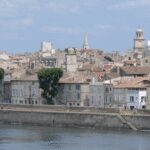
Many Marseille tours stay close to the Vieux Port, the city’s handsome center of gravity. This route uses the Old Port as both starting point and finish, but spends much of the time showing you the city around it.
You walk through places a vehicle cannot reach. Narrow lanes, steep stairways, coves, hillside paths, and small residential districts become part of the sightseeing. That matters in Marseille, where the distance between postcard scenery and ordinary neighborhood life can be only a few minutes on foot.
Olivier’s role is central. The experience is built around his storytelling, humor, and strong attachment to the city. The tone is not a formal lecture. It is more like a long walk with someone who knows how Marseille works and wants you to notice the details, from unusual housing styles to the city’s long habit of challenging central authority.
The route also gives you a useful physical sense of Marseille. You see how the sea shapes the city, how hills restrict movement, how grand Second Empire buildings changed the center, and how newer development spread around older fishing districts.
You can also read our reviews of more hiking tours in Marseille

Beginning at the Old Port
The walk starts at 19 Quai des Belges, beside the Old Port. This is a practical meeting point, close to public transportation and easy to recognize.
The opening introduction sets up the route, the pace, and the day’s themes. The Old Port is not just a convenient place to meet. It is the starting point for understanding Marseille itself. The city grew around this harbor, and its relationship with the Mediterranean has shaped trade, migration, work, food, architecture, and local identity for more than two thousand years.
You will spend about 30 minutes here, using the harbor to connect ancient Marseille with the city shaped under Louis XIV and later rulers. I like this beginning because it gives the rest of the walk a purpose. The harbor is not merely scenery behind your photographs. It is the reason the city exists where it does.
The tour ends here too, making the route easy to understand. After the final walk back, you can stop for a drink or hot chocolate around the Cours Estienne d’Orves.
Vallon des Auffes and the Corniche
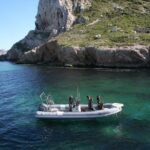
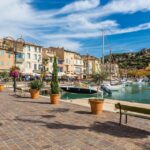
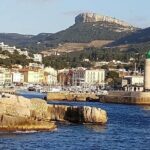
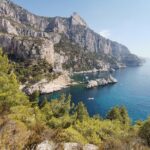
From the Old Port, the route reaches Vallon des Auffes, one of Marseille’s most recognizable seaside corners. Its small fisherman’s houses and protected cove offer a sharp contrast with the broad harbor.
The stop lasts about 10 minutes, but the setting gives Olivier a useful opening to explain traditional fisherman’s housing and the choices that allowed this place to survive as Marseille expanded. This is one of the most appealing parts of the walk for anyone interested in how people actually lived beside the sea.
Next comes the Corniche Kennedy, with about 20 minutes along the coast. Here, the view opens toward the Mediterranean, and you gain a better sense of how Marseille presents itself as a sea-facing city.
The Corniche section is scenic, but it is also a walking route beside a major road. It is not a quiet coastal trail throughout. Still, the broad horizon and changing views make it a worthwhile link between the old fishing quarter and the city’s grander waterfront spaces.
The Pharo Palace and Marseille’s Imperial Chapter
At Palais du Pharo, the route reaches a green setting with wide views back toward the Old Port and the Grand Port of Marseille. The palace was built under Napoleon III, and Olivier uses it to explain how strongly the Second Empire shaped the Marseille you see today.
This is one of the tour’s most useful history stops because it connects architecture with city growth. Instead of treating the palace as an isolated monument, the guide places it within a larger plan of urban change. You look across the harbor while learning how Marseille developed during the nineteenth century.
The stop lasts around 30 minutes. That gives you time to take in the views, study the city from above, and follow the explanation without rushing.
The route then moves to Parc Valmer and Villa Valmer. After the open sea, the park provides a welcome stretch of Mediterranean greenery. You may find this section especially pleasant in warm weather, since the walk includes wooded areas and shaded breaks.
The story here shifts toward Marseille’s economic past, including the nineteenth-century olive oil trade and the city’s later turn toward tourism. It is a good reminder that Marseille’s identity has never depended on one industry or one era.
Bompard, Malmousque, and the Quiet Side of the City
Chemin du Vallon de l’Oriol takes you away from the immediate waterfront and into Bompard. This part of the route is valuable because it shows a more residential Marseille, including the changing forms of housing and the attractive bastides associated with the twentieth century.
You are still close to major sights, but the mood becomes quieter. The path also helps you reach Notre Dame de la Garde gradually rather than simply arriving by road or public transportation.
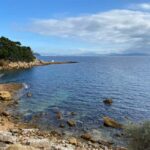
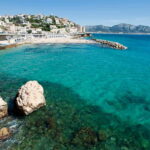
The tour then passes through Anse de Malmousque, a cove and small port with a calm, almost village-like character. The area reflects several layers of Marseille at once: Greek influence, fishing traditions, twentieth-century urban growth, and the appeal of living close to the sea.
This may be the most authentic-feeling section for you if you prefer ordinary neighborhoods to grand monuments. The route is not only about famous buildings. It asks you to notice balconies, houses, lanes, and the way residents use the coast as part of daily life.
Malmousque is also a strong photo stop. Bring a phone or camera, but avoid letting the pictures replace the view itself. The pleasure here is the combination of water, small-scale buildings, and quiet streets.



The Steep Return Through Boulevard André Aune
The way back toward the center is not flat. Boulevard André Aune is described as one of the steepest streets in Marseille, and it provides both a physical challenge and a lesson in the city’s built form.
You gradually move from the hillside into the center, looking down on the city before entering it. Olivier uses the street’s steepness and buildings to explain local architecture and the unusual ways Marseille developed around its hills.
This is where the 10-kilometer distance matters. The route is not a sightseeing walk with a short transfer between stops. You are walking the connections between them, and the uphill and downhill sections add real effort.
If you have a knee problem, dislike stairs, or are not used to long walks, take the physical demand seriously. The pace is described as slow and without time pressure, but a relaxed pace does not remove the hills.
Notre Dame de la Garde as the High Point
Notre Dame de la Garde is the visual and cultural high point of the walk. The basilica is impressive in its own right, but the square outside provides the real payoff for the route: a 360-degree view over Marseille.
From here, the city’s structure becomes much easier to read. You can see the Old Port, the larger port area, major monuments, and the way the urban area spreads outward. Earlier explanations about geography and development come together from this elevated viewpoint.
Olivier also uses the basilica to discuss how people in Marseille relate to the site. It is not treated as a quick stop for a photograph. The visit explores the building’s place in local culture and what it means to the people who live in the city.
Plan to spend about 30 minutes here. The square is a good place to pause, recover from the climb, and take in the view. Depending on the timing and conditions, the hilltop may feel exposed to sun or wind, so bring water even though the route includes eight water points.
What the Three and a Half Hours Feel Like
The advertised duration is about three hours and 30 minutes. That is enough time for a broad introduction to Marseille, but not enough for lengthy interior visits at every monument.
The route works best as a moving lesson. You hear a story, walk through the place where it makes sense, stop for a view, then continue into another district. You should expect frequent walking rather than long periods standing in one square.
The guide aims for a slow rhythm and includes breaks in wooded parks. Early morning and late afternoon time slots help reduce the worst heat. Sea breezes and shaded stretches also offer some relief, and sunscreen is available if needed.
Even so, Marseille can be hot. Wear comfortable walking shoes, carry water, and dress for a long outdoor outing. The route includes public streets, paths, stairs, and slopes, so sandals with poor support are not a smart choice.
Price, Group Size, and Language
At $41.27 per person, the price is reasonable for a private-feeling, small-group city experience lasting half a day. You are paying for a route that covers several districts and for Olivier’s interpretation of the city, not for entry to a long list of paid attractions.
The value is strongest if you want context. A standard harbor walk can show you Marseille’s main postcard view, but this hike explains how the Old Port connects to the Corniche, Pharo, Malmousque, Bompard, and Notre Dame de la Garde.
The group limit of 10 is another plus. A smaller group is useful on narrow lanes and makes it easier to ask about local details. It also suits people who prefer a conversation to a large guide-and-crowd setup.
Pay close attention to the language. The experience is conducted in French, and one booking problem arose when a participant expected an English tour. If you need English, do not assume it is available. Confirm the language before paying.
Who Should Book This Walk
I would choose this tour if you want to understand Marseille rather than simply tick off its best-known sights. It suits active visitors who enjoy combining exercise, views, architecture, and local history in one outing.
It is also a good first-day activity if you want a mental map of the city. Afterward, you will have a clearer idea of where the port sits, how the hills shape movement, and which neighborhoods deserve a return visit.
The tour may appeal to photographers because of the number of viewpoints and distinctive neighborhoods. It is also a strong fit for anyone curious about ordinary housing, fishing communities, and the social character of Marseille.
I would hesitate if you want a gentle, flat stroll, a bus-based tour, or extended time inside museums and monuments. The route is long, hilly, and outdoors. You need to be comfortable walking for several hours.
The activity welcomes most participants and allows service animals. It requires good weather, and if poor weather or an insufficient number of bookings cancels the outing, you are offered another date or a full refund. Free cancellation is available up to 24 hours before the start time.
Should You Book The Urban Hike of Marseille?
Book it if you want a local, active introduction to Marseille and are ready for hills, stairs, and roughly 10 kilometers on foot. Olivier’s strongest qualities are his enthusiasm for the city, his humor, and his ability to connect buildings and neighborhoods with Marseille’s larger story.
The best reason to choose it is the route. You get the Old Port and Notre Dame de la Garde, but also Vallon des Auffes, Malmousque, Bompard, Parc Valmer, and quieter paths that are difficult to find on your own.
Skip it if you need an English-language tour, have limited mobility, or prefer a short sightseeing circuit. For everyone else, this is a fairly priced way to see Marseille from street level, hilltop, harbor edge, and neighborhood lane, all in one well-planned walk.
FAQ
Where does The Urban Hike of Marseille start?
The tour starts at 19 Quai des Belges, 13001 Marseille, France, at the Old Port.
Where does the tour finish?
The walk ends back at the Old Port meeting point.
How long is the experience?
The tour lasts approximately three hours and 30 minutes and covers about 10 kilometers.
Is the tour conducted in English?
The provided tour information identifies the experience as available in French. If you need an English tour, confirm the language before booking.
How many people can join the tour?
The maximum group size is 10 people.
What happens if the weather is poor?
The experience requires good weather. If it is canceled because of poor weather, you are offered a different date or a full refund.