REVIEW · AVIGNON
The story of Pont du Gard
Book on Viator →Operated by Provence with Gordana · Bookable on Viator
Roman engineering still feels alive. This small-group day trip from Avignon strings together Nîmes, Uzès, and the Pont du Gard UNESCO bridge—plus a guide who makes the past sound usable. You’ll ride in an air-conditioned vehicle and get a clear story for the day, not just a checklist.
I especially love how the route balances big Roman icons with slower town-time: the Amphitheatre of Nîmes is still in use, then you get a breather in Uzès. I also like that the experience is powered by one excellent English-speaking guide—Gordana—who stays upbeat and answers questions without rushing you.
One drawback to consider: lunch isn’t included, so you’ll want to plan food timing or bring snacks for the gaps between stops.
In This Review
- Key highlights at a glance
- How this Avignon day trip fits together
- Nîmes: Maison Carrée and an arena from 70 C.E.
- What to watch for during the Nîmes stop
- Uzès: a short town break in France’s first duchy
- Pont du Gard: why the UNESCO bridge is the star
- The best way to use your hour
- Price and value: what you’re paying for
- Guide quality: why Gordana’s energy makes the day work
- Practical tips so your day feels smooth
- Who this tour suits best
- Should you book this Pont du Gard story tour?
- FAQ
- How long is the tour?
- Where is the meeting point in Avignon?
- Is Pont du Gard admission included?
- Is lunch included?
- Is the tour offered in English?
- How many people are in a group?
- Can I get a refund if I cancel?
Key highlights at a glance

- Max 8 travelers means you’re not swallowed by the group
- English-speaking guide (Gordana) keeps the story clear and lively
- Nîmes Roman hits: Maison Carrée and the Amphitheatre of Nîmes (70 C.E.)
- Uzès old town time: the first duchy of France, in a short, manageable stop
- Pont du Gard included: UNESCO-listed Roman bridge, plus about an hour on site
- Mobile ticket so check-in stays simple
How this Avignon day trip fits together

This is a 5-hour (approx.) day built for people who want real Roman sights without spending the whole day commuting. You start at the Office de Tourisme d’Avignon at 9:00am and return to the same meeting point when you’re done. Because it’s capped at 8 travelers, you tend to move as a unit, with time to actually hear the guide.
The itinerary also makes smart pacing choices. Nîmes gives you the heavy Roman concentration, Uzès offers a more human-scale town break, and Pont du Gard lands as the headline sight. That order helps: you build Roman context first, then you see the aqueduct-era achievement at Pont du Gard.
Price is $96.38 per person, and the value hinges on what’s included. The Pont du Gard admission is included, the rest of the key stops are listed as free, and transportation is provided with an air-conditioned vehicle. If you’re thinking of doing these on your own, you’d still pay for getting there and timing your visits—so the main thing you’re buying is a smooth, narrated day.
You can also read our reviews of more tours and experiences in Avignon.


Nîmes: Maison Carrée and an arena from 70 C.E.

Nîmes is the Roman “starter course,” and it hits hard—in a good way. You begin with a garden visit, then move into La Maison Carrée, described as one of the best-preserved Roman temples. Even if you’ve seen your share of ruins, this is the kind of structure where you immediately notice the craftsmanship and the intactness.
Then comes the Amphitheatre of Nîmes, constructed in 70 C.E., shortly after Rome’s Colosseum era. The standout detail here is that it’s still in use today. That matters more than it sounds. When an ancient arena still functions, you get a different feeling from purely “dead” monuments—you can picture crowds, movement, and noise in a more believable way.
The time given here is listed as about an hour. That’s not a full museum-day, but it’s enough if your goal is orientation and context. You’re not racing through everything; you’re getting the essential Roman story in a compact window.
What to watch for during the Nîmes stop
- Keep your expectations realistic: this is a guided highlight, not a slow wander.
- If you like architecture details, pay attention to the shape and preservation of Maison Carrée, because that’s where the site’s power comes from.
- With the Amphitheatre, focus on how the structure supports crowds and movement—still-in-use sites make that easier.
Uzès: a short town break in France’s first duchy
After Roman big-city energy, you shift gears to Uzès. This stop lasts about 45 minutes, and that brief window is exactly why it works on a tour like this. Uzès is described as the first duchy of France, with an old town full of charm and ancient heritage. You’re not meant to conquer it; you’re meant to get the feel and see enough to want more.
In practical terms, 45 minutes is the sweet spot for a photo-and-stroll stop. You can browse streets, look at historic buildings, and still be back with the group without stress. It also gives your brain a breather after Nîmes—Roman architecture can be mentally heavy, even when it’s fun.
If you like wandering just for the atmosphere, this is the part of the day that can feel the most “vacation-like.” If you prefer structured, ticketed sightseeing only, you may wish you had more time—but you’re also getting more time for Pont du Gard, the day’s main attraction.
Pont du Gard: why the UNESCO bridge is the star

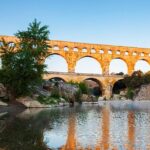
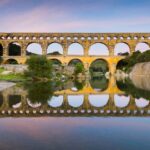
Pont du Gard is the headline, and it’s built to earn that role. You’ll spend about an hour here, with admission included. The tour describes it as the highest Roman bridge in the world and a masterpiece of Roman architecture—and it’s UNESCO-listed as a World Heritage Site.
This is the kind of place where the scale hits before the facts really sink in. A Roman bridge at this height is not subtle, and seeing it in person changes how you understand Roman engineering. One of the most repeated themes from the experience is the strength of the guide’s explanation of the Roman aqueduct-era achievement—so you don’t just look at stone, you grasp the purpose behind it.
The UNESCO label also matters for a reason beyond prestige. It signals you’re standing in a protected, internationally recognized site, which usually means the visitor experience is designed to help you understand what you’re seeing. On a guided tour, you benefit from having someone connect the dots quickly.


The best way to use your hour
You’ll only have about an hour, so don’t plan to do everything. Prioritize:
- getting a clear sense of the bridge’s height and overall form
- listening to the explanation of how it connects to the Roman water story (the tour framing is “aquaduct” focused)
- taking a few solid photos rather than chasing endless angles
If you’re the type who loves long lingering, be honest with yourself. This is a highlight stop, not an all-day hangout—so show up ready to pay attention.
Price and value: what you’re paying for

At $96.38 per person for about 5 hours, the big question is what you get besides transportation and entry. Here’s where the math feels fair.
You get:
- an air-conditioned vehicle (nice for hot days in Provence)
- an English-speaking guide (Gordana)
- Pont du Gard admission included
- free admission listed for the Nîmes and Uzès portions
- a max group size of 8 travelers, which helps you actually hear and ask questions
What’s not included: lunch. That’s the only obvious “you need to handle this” item. If you’re budgeting, assume you’ll need a meal option near your schedule, or at least snacks so you don’t get hangry mid-day.
Another small value point: the tour uses a mobile ticket, and it starts and ends back at the same Avignon meeting point (Office de Tourisme d’Avignon, 41 Cr Jean Jaurès). That reduces mental load. When you’re doing multiple historic sites in one day, not thinking about logistics is half the win.
Guide quality: why Gordana’s energy makes the day work

The name that keeps coming up is Gordana, and the reasons are practical. Multiple people highlight her energy and personality—upbeat, funny, and engaging. They also point to how her historical explanations make the sites more than postcard views.
Gordana’s English is described as perfect, which matters on tours where the difference between okay and excellent interpretation is huge. When you’re hearing why Maison Carrée looks the way it does, how an amphitheatre built in 70 C.E. fits into the Roman story, and how Pont du Gard ties into the aqueduct theme, you don’t just see more—you understand more.
There’s also a real-life comfort factor in the feedback. People mention she’s accommodating and thoughtful, including when there’s a baby involved and flexibility is needed. That suggests the day isn’t run like a rigid marching band. You get structure, but not at the cost of common sense.
If you care about the guide more than you care about owning every guidebook fact, this kind of tour can be a sweet deal. The guide is the product here, not just the itinerary.
Practical tips so your day feels smooth

Start time is 9:00am, and the total duration includes travel time. That’s a good sign if you hate the “half your day is transit” trap. Still, you’ll want to plan around walking at each site, especially at Pont du Gard and in Nîmes.
A few tips that match what this kind of route usually demands:
- Wear comfortable shoes. Roman stone can be slippery and uneven depending on weather.
- Bring a light layer. Even in summer, mornings and shaded areas can feel cooler.
- Plan your food. Since lunch is not included, either eat before you start or make a snack plan so the energy stays stable.
- Use the mobile ticket. It’s listed as a feature, so have it ready before you arrive.
The tour is also described as near public transportation, which can help if you’re combining it with other Avignon plans. Service animals are allowed, and most travelers can participate, so this reads as a generally workable day trip for a wide range of visitors.
Who this tour suits best

This is ideal if you want a guided Roman day from Avignon with enough structure to avoid decision fatigue. It’s also a strong pick if you care about explanation and storytelling, not just photos.
You’ll likely enjoy it most if:
- you want to see Nîmes, Uzès, and Pont du Gard in one day
- you like architecture and Roman engineering stories
- you prefer small-group pacing rather than crowds
If you’re the kind of traveler who wants hours alone at each site, this might feel a bit fast. The Nîmes window is about an hour, Uzès is 45 minutes, and Pont du Gard is one hour—so you’re there to learn and see highlights, not to slow travel.
Should you book this Pont du Gard story tour?
Book it if you want a smooth, English-friendly day trip that focuses on the Roman story, guided by Gordana with an energetic, clear approach. The mix of Maison Carrée, the Amphitheatre of Nîmes, and a full UNESCO stop at Pont du Gard is a smart use of time from Avignon.
Skip it (or at least rethink it) if you’re determined to spend long hours wandering independently or you don’t want to handle lunch planning. Given the schedule and included admission, this is best for people who like being guided and who want the payoff of understanding what they’re seeing—not just where to stand.
FAQ
How long is the tour?
It runs for about 5 hours (approx.), including travel time. The tour starts at 9:00am and ends back at the meeting point.
Where is the meeting point in Avignon?
You’ll meet at Office de Tourisme d’Avignon, 41 Cr Jean Jaurès, 84000 Avignon, France.
Is Pont du Gard admission included?
Yes. Pont du Gard admission is listed as included, while the other listed stops have free admission.
Is lunch included?
No. Lunch is not included in the tour.
Is the tour offered in English?
Yes. The tour is offered in English.
How many people are in a group?
The tour has a maximum of 8 travelers.
Can I get a refund if I cancel?
Yes. You can cancel for free up to 24 hours in advance of the experience’s start time for a full refund.