REVIEW · PARIS
Seine River Direct Access Guided Cruise
Book on Viator →Operated by Vedettes de Paris · Bookable on Viator
The Seine turns Paris into a moving postcard.
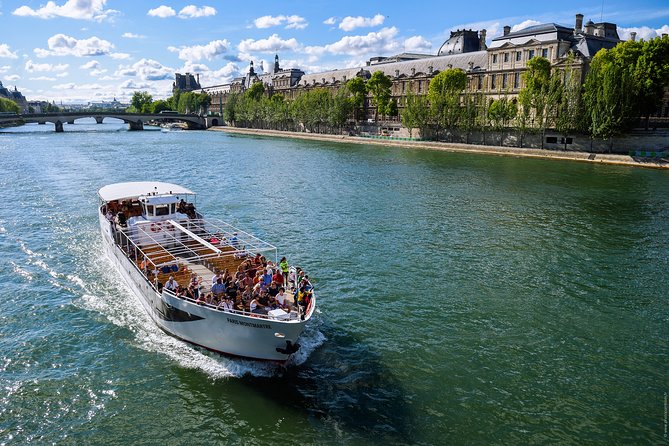
This 1-hour guided cruise from Port de Suffren is a simple way to see big landmarks in one shot, with an onboard guide giving live narration and panoramic windows for photos. I also like that it is on a 100% electric boat, so the ride feels modern and smooth. The main catch: the open-air top deck can get chilly and windy in fall and winter, so you’ll want a proper layer.
You’ll glide past classic sights like bridges, museums, and cathedrals without the stop-and-start of walking. It’s sold with mobile ticket entry and guided interpretation in English, plus morning and afternoon departures so you can fit it around your day.
For most people, it’s an easy win: relaxed pace, lots to see, and enough time to still do other things in Paris afterward. Just come ready to listen carefully, because English narration quality can vary depending on the day and the guide’s delivery.
In This Review
- Key things that make this Seine cruise worth your time
- A 1-hour Seine cruise that hits the Eiffel Tower level quickly
- Port de Suffren boarding and how to choose your deck for comfort
- Live bilingual narration: how to catch the English at its best
- From Eiffel Tower to Notre-Dame: the classic Seine highlights you’ll recognize fast
- Eiffel Tower and the whole 1889 story
- The American Church (Tiffany stained glass included)
- Hôtel des Invalides and Napoleon’s resting place
- Alexandre III Bridge: gold leaf symbolism and Franco-Russian ties
- Pont de la Concorde and the Bastille stone connection
- Musée d’Orsay’s predecessor: a station turned museum
- Institut de France and why the French language has an official job
- Pont Neuf and the 381 stone masks
- Pont Saint-Michel and Latin Quarter roots
- Île de la Cité and the Notre-Dame cornerstone
- Tournelle Bridge and Saint Genevieve
- Arab World Institute, Île Saint-Louis, the Louvre stretch, and the showpiece endings
- Arab World Institute: culture and science across the river
- Île Saint-Louis and the elegance of 17th-century houses
- Hôtel de Ville and the City Council’s mirrored hall link
- The Louvre: from palace to museum with a huge scale
- Place de la Concorde and the Luxor obelisk
- Grand Palais: glass roof engineering from the 1900 Exhibition
- Palais de Chaillot: the Trocadero finish with multiple museums
- Champagne onboard and the practical way to do it
- When to go: cold wind, hot inside, and how to pack smart
- Who should book this Seine direct access guided cruise
- Should you book it?
- FAQ
- How long is the Seine River direct access guided cruise?
- Where does the cruise start?
- What language is the guided narration offered in?
- Is the boat electric?
- Is champagne available onboard?
- Do I need a printed ticket?
- Are there departures in the morning and afternoon?
- Does weather affect the cruise?
Key things that make this Seine cruise worth your time
- Live onboard guide, not just an audio track: you’ll get real-time explanations as you pass each landmark.
- Electric boat comfort with a time-efficient route: one hour to collect the highlights from the water.
- Panoramic windows for photos and viewing: great for skyline shots even if the weather is weird.
- Morning and afternoon departures: handy if you’re planning around museums and long lunch breaks.
- A champagne option onboard: a fun upgrade if you want to toast the views without planning anything.
- Small-enough feel (up to 220 people): generally easier to move than the biggest cruise boats.
A 1-hour Seine cruise that hits the Eiffel Tower level quickly
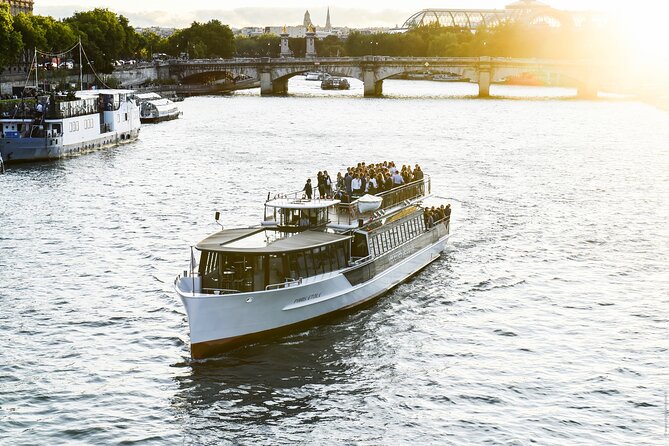
Paris can be overwhelming. You land, you map out monuments, and suddenly you’re walking in circles trying to “make it all happen.” This cruise is built for the opposite feeling: sit back, look around, and let the city come to you.
The route is packed with famous sights along the Seine: from the Eiffel Tower area to major bridges, then into the stretch where you see the grand institutions and palaces that define central Paris. With only about an hour on the water, the experience works best as a first-day orientation—or as a calmer reset on a travel day when your feet are already tired.
And the value isn’t just the views. It’s the combination of live narration and the fact that the boat passes landmarks in a sequence you can actually follow. When a guide explains why a bridge was built or what a monument represents, it turns random scenery into something you remember later.
You can also read our reviews of more boat tours in Paris

Port de Suffren boarding and how to choose your deck for comfort
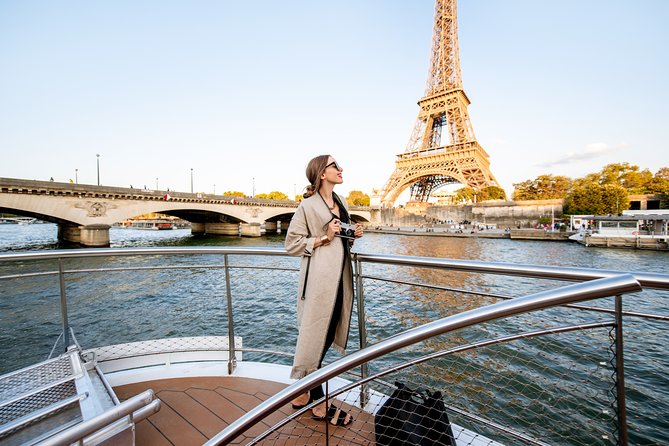
Your meeting point is Port de Suffren, 75007 Paris, and the tour ends back at the same spot. That back-to-back convenience matters in Paris, where getting across the city can cost you time and energy.
Once aboard, you can usually expect two different moods:
- The inside area can feel stuffy if the boat hasn’t moved yet.
- The top deck is where you’ll feel the wind most strongly, especially in cooler months.
So I treat this like a practical checklist:
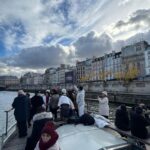
- If you’re going in October to November (or any season where breeze is a given), bring a wind breaker jacket and a hat. You’ll be much happier when the boat turns into a moving fan.
- If the day is hot and sunny, plan to switch between inside and outside as you like. Even with sunshine, waiting before departure can be uncomfortable.
One more photo tip: if you want the best angles, don’t assume one spot is always perfect. On the Seine, views change as the boat turns under different bridge spans. Give yourself a few minutes to look around after departure, then settle where you get the least glare.
Live bilingual narration: how to catch the English at its best
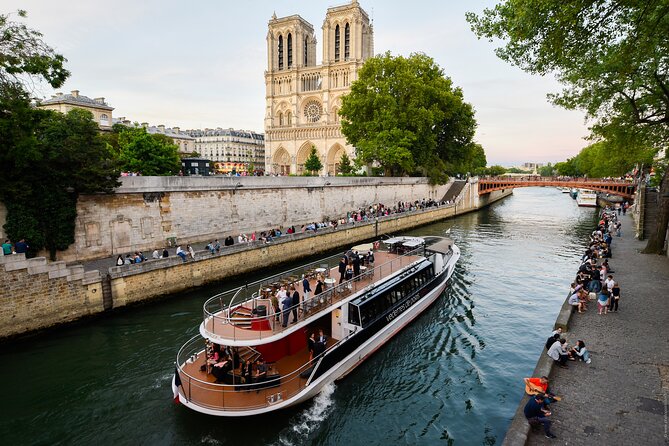
This cruise is offered with narration in English, and the experience is guided onboard by a real person (not a recording). That’s the big difference between “seeing Paris” and actually understanding what you’re seeing.
In practice, the narration quality can vary by day. If English is a key requirement for you, arrive a few minutes early, pick a seat where you can hear clearly, and listen from the start so you don’t miss the guide’s opening context.
If you like supporting materials, there’s also a free accompanying app that provides additional information while you’re on the water. It’s a helpful backup when you’re moving, taking photos, or the onboard sound isn’t perfect.
From Eiffel Tower to Notre-Dame: the classic Seine highlights you’ll recognize fast
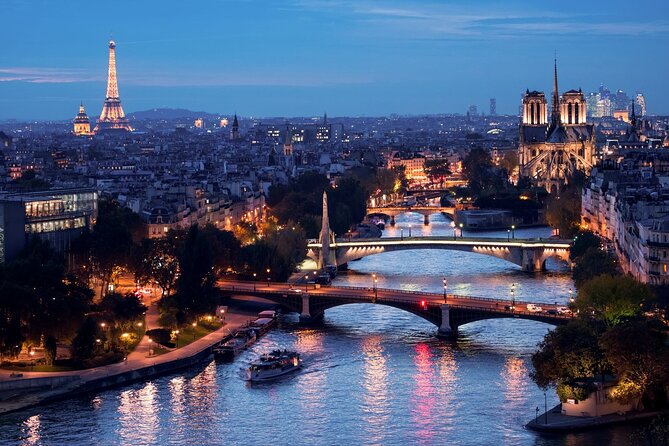
As the boat moves along, you’ll pass landmark after landmark—often within easy “recognize-it-from-a-postcard” range. Here’s what stands out, and why it matters.
Eiffel Tower and the whole 1889 story
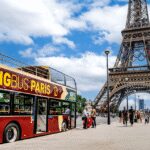
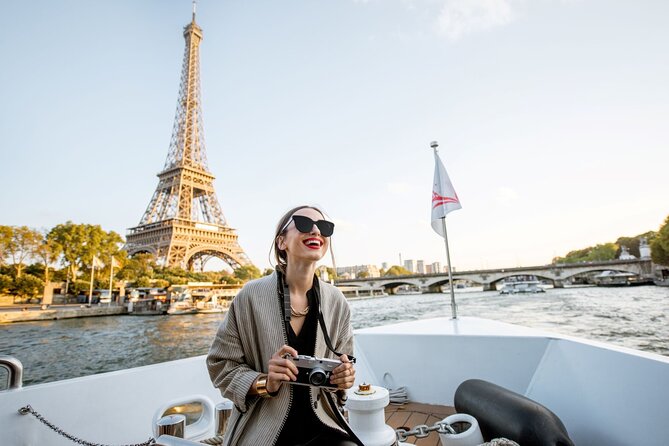
The Eiffel Tower was built for the 1889 Universal Exhibition. Gustave Eiffel’s team delivered it in about two years, two months, and five days, and the structure weighs around 7,300 tonnes. The best part of the explanation is the attitude of the time: Parisians were skeptical because it looked too metallic and tall, and the tower was originally meant to last about 20 years. A radio antenna added in 1903 helped ensure it wasn’t demolished.
From the boat, this becomes more than a photo target. The guide’s timeline makes the tower feel like a real historical moment, not just a symbol you’ve already seen in travel posters.
You can also read our reviews of more guided tours in Paris
The American Church (Tiffany stained glass included)
You’ll also see the American Church in Paris with its green clock-tower. It was the first American Church built outside the United States, finished in 1931. The stained-glass windows are by Louis Comfort Tiffany and are listed as a historic monument.
From the river, it’s one of those “you might not notice this on foot” sights. The narration helps you slow down and read the building instead of just counting monuments.
Hôtel des Invalides and Napoleon’s resting place
The cruise passes Hôtel des Invalides, built on the orders of Louis XIV as a military hospital for injured soldiers and officers. Today, its royal chapel is the tomb of Napoleon I.
This stop is valuable because it reminds you that Paris monuments aren’t only about beauty. They’re also about power, war, and state history.
Alexandre III Bridge: gold leaf symbolism and Franco-Russian ties
The boat runs past the Alexandre III Bridge, built for the 1900 Universal Exhibition and designed to seal the Franco-Russian Alliance. The central feature includes the Paris coat of arms covered in gold leaf, plus nymphs symbolizing the Seine. On the opposite side you’ll see arms linked with Saint Petersburg and nymphs symbolizing the Neva.
If you like symbolism, this bridge is one of the most satisfying explain-and-spot moments on the route. You can actually relate the story to what’s carved into the structure.
Pont de la Concorde and the Bastille stone connection
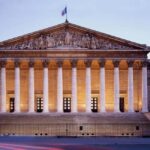
Next comes Pont de la Concorde. It was built using stones from the former Bastille prison, stormed in 1789. The bridge also frames major destinations: the Palais Bourbon on one side and Place de la Concorde on the other.
The “Bastille stone” detail turns a bridge from a crossing point into a reminder of the French Revolution’s real physical footprint.
Musée d’Orsay’s predecessor: a station turned museum
You’ll pass the former Orsay railway station, originally built for the 1900 Universal Exhibition. The key fact you’ll hear is that it became a museum in the 1980s, now home to 19th-century art, including work by Auguste Renoir, Claude Monet, and Vincent Van Gogh.
Even if you don’t go inside during your trip, seeing the building from the river gives you an easy mental anchor for later.
Institut de France and why the French language has an official job
The boat also passes Institut de France (the former Collège des Quatre Nations). It was built using funds left by Cardinal Mazarin in 1661 and houses five academies. The Académie Française is the famous one, and its job is to maintain and update the official French dictionary.
This is a stop that quietly shows you a Paris theme: institutions matter here, and the city preserves its cultural systems as carefully as its monuments.
Pont Neuf and the 381 stone masks
Pont Neuf is the oldest bridge in Paris, and it was the first stone bridge with pavements rather than houses built along the sides. It’s famous for its 381 grimacing stone masks, each uniquely decorated.
On the Seine, this is one you might zoom past if you’re not paying attention. The narration pushes you to look down and spot the variety.
Pont Saint-Michel and Latin Quarter roots
You’ll glide past Pont Saint-Michel, built at the request of Napoleon III (look for the imperial N details on the pillars). To the right is the route leading toward the Latin Quarter, named because students there spoke Latin until the 19th century.
This is a classic example of the city’s layers: a bridge built for one era becomes a signpost for a much older academic identity.
Île de la Cité and the Notre-Dame cornerstone
The boat reaches Île de la Cité, considered the presumed birthplace of Paris. The Parisii tribe settled there about 300 years before the Common Era, calling it Lutetia.
Then you’ll see Cathedrale Notre-Dame de Paris. Construction began in 1163 and finished nearly two centuries later in 1345. The cathedral’s features include gargoyles and sculptures, plus the Rose du Midi window on the south rose, dedicated to the New Testament and presented as a gift from King Saint Louis.
From a river cruise, Notre-Dame is often the monument you recognize first—but the guide’s dates help you see it as an engineered achievement with a long timeline, not just a “big church.”
Tournelle Bridge and Saint Genevieve
You’ll also pass the Tournelle Bridge, with a statue of Saint Genevieve nearby. The sculpture is by Paul Landowski, who later created the Christ the Redeemer statue in Rio de Janeiro.
If you’re a fan of art links between far-apart cities, this is a fun cross-connection you may not catch on a quick walking route.
Arab World Institute, Île Saint-Louis, the Louvre stretch, and the showpiece endings
After the early core landmarks, the cruise keeps stacking major sights, and the tone shifts toward grand civic buildings and cultural icons.
Arab World Institute: culture and science across the river
You’ll pass the Arab World Institute, inaugurated in 1987 by President François Mitterrand. The focus is on the Arab world’s history, art, society, religions, and science.
This is a good reminder that Paris isn’t only “old Europe.” It’s also a hub for modern international cultural conversation.
Île Saint-Louis and the elegance of 17th-century houses
The boat glides by Île Saint-Louis, known for prestigious areas and former town houses from the 17th century, including the Hotel Lambert and Hotel Lauzun. The narration often includes the fact that major cultural figures lived there, such as Charles Baudelaire and Georges Moustaki.
From the water, the island feels quieter and more refined than the busier banks you’ll see elsewhere. It’s a nice contrast mid-cruise.
Hôtel de Ville and the City Council’s mirrored hall link
You’ll see Hotel de Ville de Paris, the seat of the city council since 1357. The architecture draws inspiration from Neo-Renaissance style. It’s open to visitors, and the guide typically calls out the banquet hall’s design, modeled after the Hall of Mirrors in Versailles.
This is the kind of detail that turns a “big building” into a specific place with a clear identity.
The Louvre: from palace to museum with a huge scale
The cruise passes the Louvre, which began as a royal palace and became a museum in 1793. It’s the largest monument in Paris by size, with over four kilometres of façades and nearly 14 kilometres of galleries. The Louvre is also the most visited museum in the world, exhibiting about 38,000 works including the Winged Victory of Samothrace, Venus de Milo, and the Mona Lisa.
Even from the Seine, that scale lands differently when the guide gives you numbers like that.
Place de la Concorde and the Luxor obelisk
Next is Place de la Concorde, known for the execution of King Louis XVI and Queen Marie-Antoinette during the French Revolution. The central obelisk comes from Luxor, Egypt and is about 34 centuries old, brought to France in 1836.
This stop matters because it mixes beauty with consequence. The square is visually impressive, but the story is heavy.
Grand Palais: glass roof engineering from the 1900 Exhibition
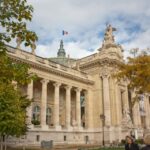
You’ll pass Grand Palais, built for the 1900 Universal Exhibition. The glass roof is described as the largest in Europe. Today it hosts cultural events and exhibitions, plus the space is used for a funfair and even an ice rink.
It’s a great end-of-cruise viewing area because the architecture is bold and clearly made for crowds.
Palais de Chaillot: the Trocadero finish with multiple museums
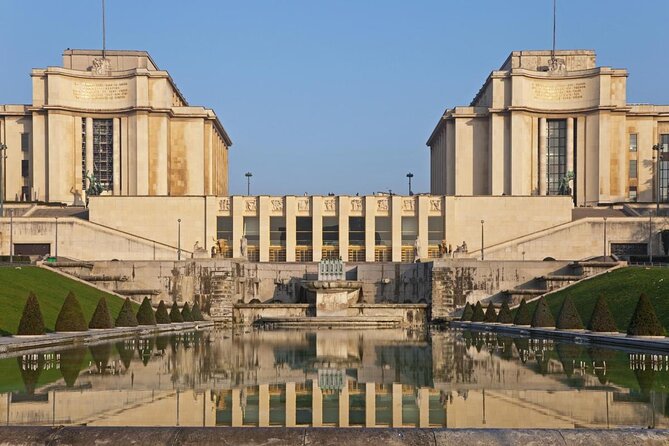
Finally, you’ll reach the Palais de Chaillot on Place du Trocadero. It was built in 1937 for the Universal Exhibition and includes two Neoclassical pavilions flanking an esplanade overlooking the Trocadero gardens. The narration often highlights its institutions: the City of Architecture and Heritage, the National Navy Museum, the Museum of Humankind, and the National Theatre of Chaillot.
This is a fitting closer because it gives you a sense of “big Paris institutions,” not just one landmark at a time.
Champagne onboard and the practical way to do it
You can buy champagne onboard, and one helpful point is that the tour only serves alcoholic drinks to travelers 18+ (with non-alcoholic options for anyone under 18). That makes it easier to plan your family trip or mixed-age group without awkward surprises.
If you want the champagne moment, I suggest treating it like a “small upgrade,” not a must. The real payoff is still the views and narration, and the boat is only about an hour, so don’t let ordering stretch your attention away from the next landmark.
When to go: cold wind, hot inside, and how to pack smart
This cruise works in many seasons, but conditions change the experience quickly.
- Cold and windy months: the open deck is exactly where you’ll feel the weather. Bring a hat and wind-resistant jacket.
- Hot sunny days: inside can feel uncomfortable before the boat moves, and some seating won’t have much airflow. Use the time to switch positions—inside for comfort when it’s slow, outside when the breeze starts.
The good news is the route is short. Even if the weather is not ideal, you won’t be stuck for half a day.
Who should book this Seine direct access guided cruise
This fits well if you:
- Are on your first visit and want the highlights without building a walking route.
- Want a low-effort activity that still feels meaningful because of live explanation.
- Travel with kids or anyone who gets tired fast. The pace is relaxed and the boat makes sightseeing easier.
- Prefer a smaller-feeling cruise experience compared to huge group tours.
It may be less ideal if:
- You’re very sensitive to sound and you need perfect clarity in English every minute (there can be off days).
- You hate being on exposed deck space in cooler weather and don’t want to dress for wind.
Should you book it?
If you want a smart, fast introduction to Paris from the water, I think this is a strong choice. The value comes from live narration, a short one-hour duration, and a route that hits the icons plus the lesser-seen explanations that make the sights stick.
I’d book it if you’re planning a tight itinerary, traveling with mixed ages, or simply want a calm change of pace. Bring layers for wind, arrive a bit early for the best seating, and plan to listen from the start—you’ll get a lot out of those landmark-by-landmark stories.
FAQ
How long is the Seine River direct access guided cruise?
It runs for about 1 hour.
Where does the cruise start?
The meeting point is Port de Suffren, 75007 Paris and the tour ends back at the same meeting point.
What language is the guided narration offered in?
The cruise is offered in English.
Is the boat electric?
Yes, the cruise is on a 100% electric boat.
Is champagne available onboard?
Yes, champagne is available to purchase onboard, and alcoholic drinks are served only to travelers 18 years old and above.
Do I need a printed ticket?
No. You’ll use a mobile ticket.
Are there departures in the morning and afternoon?
Yes, both morning and afternoon departures are available.
Does weather affect the cruise?
Yes. The experience requires good weather. If it’s canceled due to poor weather, you’ll be offered a different date or a full refund.