REVIEW · PARIS
Private Sidecar Tour of Montmartre : Off the Beaten Path
Book on Viator →Operated by Txango Tours · Bookable on Viator
Montmartre’s best stories are not all found on the postcard route. This private sidecar tour takes you through Pigalle’s old nightlife district, past former brothels and cabarets, then uphill toward the Moulin de la Galette, Dalida’s statue, and Sacré-Cœur. You get a close view of the neighborhood without spending two hours on foot.
I like the small private format, which lets your driver-guide adjust the conversation and pace for your group. I also like the practical gear: blankets, gloves, and rain protection matter on an open motorcycle, especially in Paris weather. The main drawback is the adult subject matter. The tour is advertised as R18, even though some past bookings included children, so families should confirm the current policy before booking.
In This Review
- Key points at a glance
- Why a sidecar works so well in Montmartre
- Rue de Navarin and the adult side of Pigalle
- Moulin de la Galette and Montmartre’s rougher past
- Dalida’s statue and a curious local custom
- Saint-Denys and the older Paris beneath Montmartre
- Sacré-Cœur and the payoff at the top
- Rain gear, blankets, and the comfort question
- What the guides add to the ride
- Meeting point, timing, and who should book
- Should you book the Montmartre sidecar tour?
- FAQ
- Where does the sidecar tour start?
- Where does the tour end?
- How long does the tour last?
- Is the tour private?
- What language is offered?
- Is food included?
- Are monument entry tickets included?
- Is the tour suitable for children?
Key points at a glance
- Private sidecar ride: Only your group takes part, with private transportation included.
- Adult Montmartre stories: Rue de Navarin and Pigalle bring frank tales of prostitution, cabaret, and Paris nightlife.
- A two-hour neighborhood sampler: You can fit the tour into a packed Paris schedule without giving up a full morning or afternoon.
- Weather gear supplied: Rain gear, gloves, and blankets are included for the open-air ride.
- Good local storytelling: Guides named Stephen, Simon, and Praveen have led rides, with strong praise for their warmth, driving, and storytelling.
- Sacré-Cœur views: The route ends with one of Paris’s best high viewpoints, though monument entry is not included.
Why a sidecar works so well in Montmartre
Montmartre is a tricky neighborhood to cover efficiently. Its streets climb sharply, the best sights are scattered, and the most atmospheric corners are often away from the broad stairways around Sacré-Cœur. A motorcycle sidecar solves part of that problem. You can see more in two hours, arrive with less effort, and still stop for stories and photographs.
The ride also gives you a different view of Paris. You are not sealed inside a bus or walking in a large group. You sit close to the street, with the city passing at a slower speed than it would from a car. The sidecar itself becomes part of the experience, and the unusual vehicle is sure to attract attention.
This is a private activity, so your group has the guide to itself. That matters if you want to ask about Paris nightlife, artists, religion, or local customs without waiting for a large group to catch up. It also gives the guide room to adjust the discussion. Praveen, for example, has been praised for suggesting options that matched the group’s interests, while Stephen and Simon have both led rides with an easy, friendly manner.
The experience lasts about two hours. That is enough time for a taste of Montmartre, not enough for a slow museum visit or a full neighborhood walk. Think of it as a lively introduction, or a way to revisit Montmartre after seeing the usual sights.
You can also read our reviews of more private tours in Paris


Rue de Navarin and the adult side of Pigalle
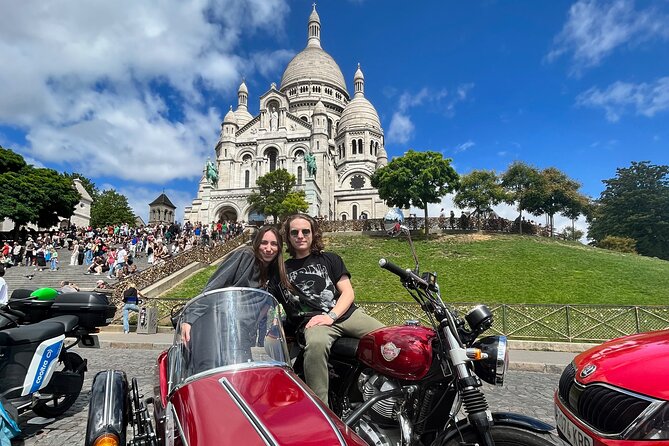
The first listed stop, Rue de Navarin, opens the tour with one of its frankest subjects. During the 1920s, the street was home to three famous Paris brothels. The guide uses this corner to explain prostitution in Paris and its effect on the city’s culture and public life.
This is not a polished, family-style version of Montmartre. The route deals with sex work, nightlife, and the less respectable side of the neighborhood. That candor will appeal to adults who want more than stories about painters and pretty staircases. It may be uncomfortable for some people, which is exactly why the R18 warning deserves attention.
You spend about 10 minutes here, and admission is free. That short stop is typical of the tour: enough time for a focused explanation, then back on the motorcycle. You will not stand around for a long lecture.
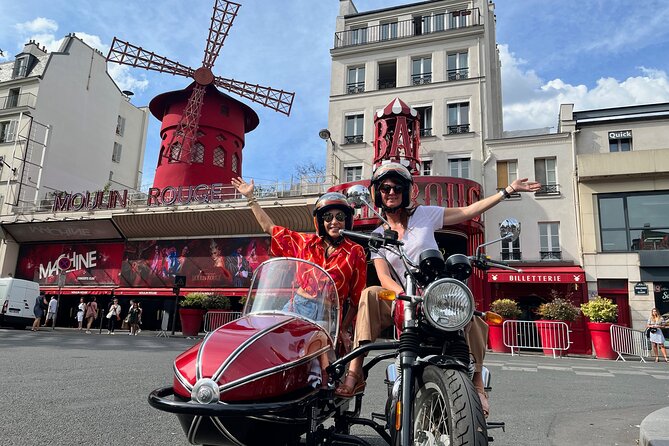
From Rue de Navarin, the route includes Paris’s best-known cabaret, the Moulin Rouge. This nightclub has operated since 1889 and helped make the performer La Goulue famous. The stop connects Montmartre’s streets to the grand cabaret tradition that shaped the area’s image around the world.
The Moulin Rouge is a useful counterpoint to Rue de Navarin. One location points to prostitution and private vice, while the other shows how nightlife became public entertainment. You should not expect a show or interior visit as part of this tour. The value is in seeing the setting and hearing the stories while moving through the district.
Moulin de la Galette and Montmartre’s rougher past
The Moulin de la Galette gives the tour a change of tone. The mill began life as Le Blute-Fin and belonged to a family that suffered tragedy across two generations during foreign invasions in the 19th century. Later, the site took on a more festive role, becoming associated with social life and entertainment.
You spend about five minutes here. Admission is not included, and the itinerary does not promise an interior visit. Treat this as a brief historical stop rather than a full attraction.
That distinction is important. The tour is designed around movement, storytelling, and a series of compact stops. If you want to study the mill or enter every monument, a walking tour with longer visits will suit you better. If you prefer a broad sense of place, the sidecar keeps the route moving and lets you connect several pieces of Montmartre in one outing.
Dalida’s statue and a curious local custom
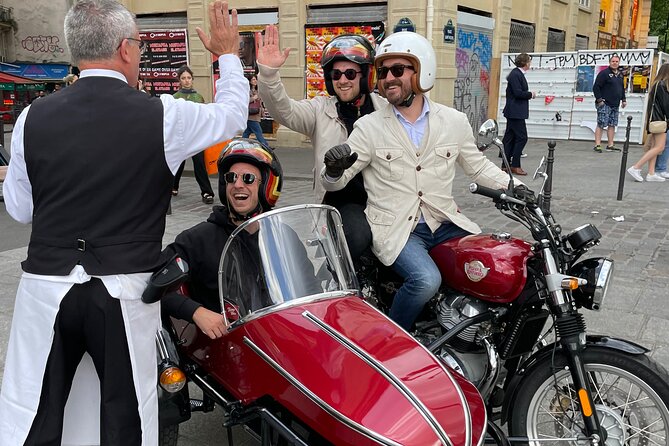
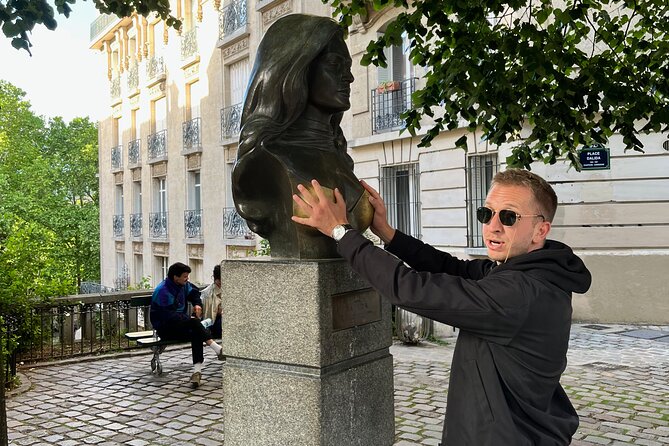
The Dalida statue honors a singer who lived and worked around Montmartre in the 1960s. She was celebrated for her beauty as well as her music, and an unusual custom has developed around one part of the statue.
The guide explains the story at the five-minute stop. It is a small detail, but these are often the moments that help a neighborhood feel human. Instead of only ticking off major monuments, you get a bit of local folklore and a reminder that public statues can gather their own habits and legends.
The stop is free, and the short time suits it. You hear the explanation, take a photograph if you wish, and continue. You should not expect a long biography of Dalida or a music-focused presentation. The emphasis is on the statue, the neighborhood, and the curious custom connected with it.
Saint-Denys and the older Paris beneath Montmartre
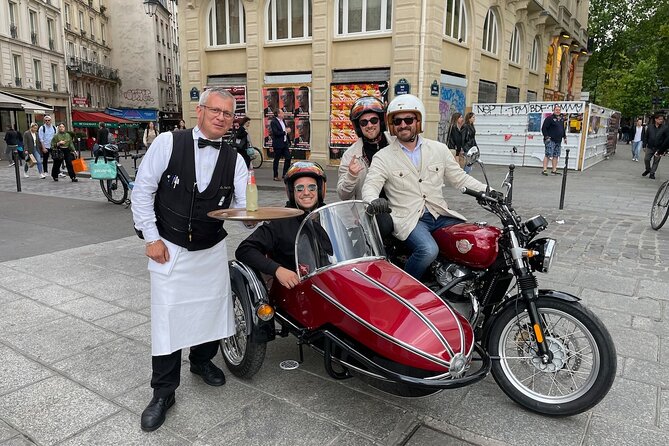
The statue of Saint-Denys brings the tour back to early Paris. Denis was the city’s first bishop under Roman occupation and was executed for his beliefs. He is also regarded as the patron saint of Paris.
The visit lasts about 10 minutes and is free. It adds a religious and Roman-era layer to a route otherwise known for artists, nightlife, and modern tourism. This contrast is one of the tour’s strengths. Montmartre is not only cabarets and scenic views. Its identity also rests on older religious traditions and the long story of Paris itself.
The stop is still a short roadside visit, not a formal religious tour. If Saint-Denys interests you, use the guide’s explanation as a starting point for further exploring Paris on your own.






Sacré-Cœur and the payoff at the top
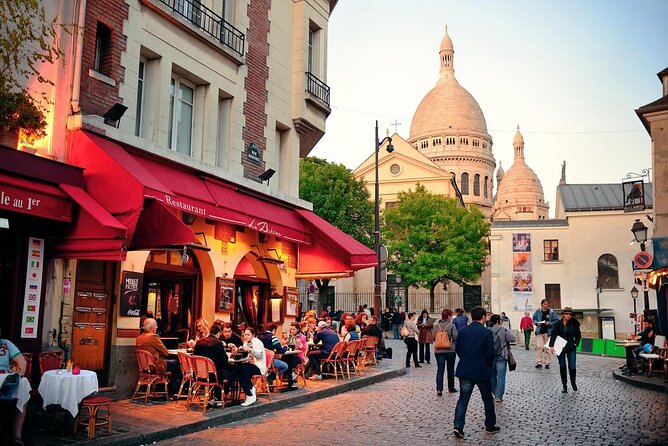
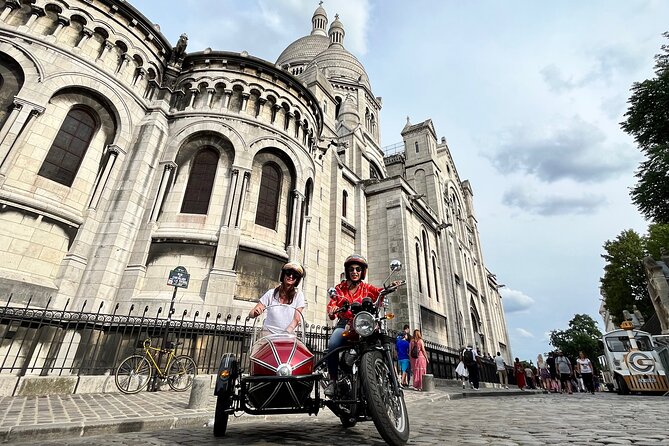
The Basilica of the Sacred Heart of Montmartre is the route’s grand visual finish. Its white domes are visible from many parts of Paris, and its position on the hill gives you a broad view across the city.
You spend about 10 minutes at the basilica. The stop is free, but entry tickets to monuments are not included. The information provided does not promise an interior visit, so you should think of this part primarily as an exterior stop and viewpoint unless your guide confirms otherwise.
The timing works well. After the darker stories of Pigalle and the smaller historical stops, Sacré-Cœur gives you space to look outward. From here, the city spreads below, and the ride’s compact route makes sense: you have crossed several sides of Montmartre without tiring yourself on the hill.
The practical limitation is time. Ten minutes can feel brief at Sacré-Cœur, especially if you want photographs, a quiet look inside, or time on the steps. If the basilica is your main reason for visiting Montmartre, plan a separate visit before or after the ride.
Rain gear, blankets, and the comfort question
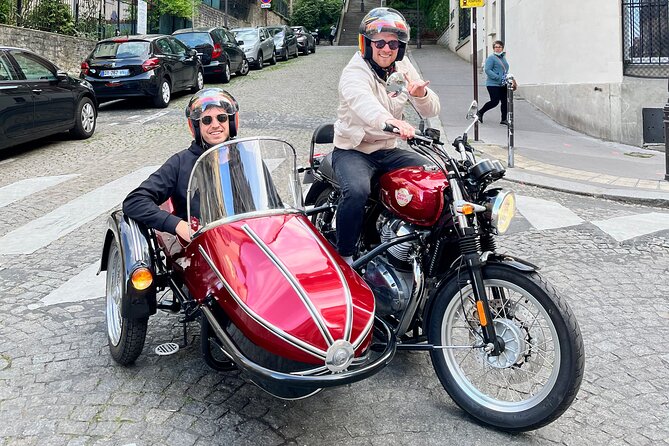
An open sidecar is fun, but it exposes you to the weather. Paris can be cold, damp, or windy, and the operator includes rain gear, gloves, and blankets to deal with that problem. One ride took place on a particularly wet and windy day, and the guide supplied waterproof clothing and a warm blanket for the sidecar.
That does not make the ride weatherproof. You should still dress in layers and wear practical shoes. The supplied gear is a useful safety net, not a reason to ignore the forecast.
The equipment also helps explain the price. At $176.26 per person, this is not a cheap way to move around Paris. You are paying for a private vehicle, a driver-guide, a tailored conversation, safety equipment, and a two-hour route. The value improves when two or more people in your party share the experience and care about the ride itself, rather than viewing it as simple transportation.
Group discounts are available, though the exact saving is not stated. Ask about the discount before booking if you have a larger party. A family of four previously used two sidecars, with children taking turns in the sidecar and on the motorcycle in quieter areas. That detail comes from an individual outing, not a guarantee, so you should confirm seating and age rules directly.
What the guides add to the ride
The guide makes or breaks a short tour. A two-hour route can feel rushed if the commentary is flat, but it can feel full if the guide knows how to connect each stop.
Stephen and Simon have led rides together, and Simon has also guided guests in poor weather. Praveen has been praised for careful driving, friendly conversation, and adapting the route discussion to suit the group. Another guide called Faithful led a ride focused on Montmartre and Pigalle, with stories about the Moulin Rouge, local history, and adult subjects.
The strongest pattern is not a single fixed script. It is the mix of riding and conversation. You can ask questions as you go, and the private format makes that easier. The guides also appear to use stories rather than simply reciting dates.
A bakery stop has been included on at least one ride, with pastries described as a local specialty. It is not part of the stated itinerary or included price, so do not book expecting food. Still, you might ask your guide if there is time for a short local stop. Food and drinks are not included.
Meeting point, timing, and who should book
The stated meeting point is 810 Pont de Bir-Hakeim, 75015 Paris, and the activity ends back there. The tour information also says the guide can be met near central-city metro stations. Because those details do not identify one exact station, confirm the precise meeting instructions after booking.
Your booking confirmation arrives at the time of booking. The tour is near public transportation, and service animals are allowed. Most people can take part, but the operator does not provide a detailed list of mobility or seating requirements, so ask ahead if you have a specific concern.
This tour suits you if:
- You want to cover Montmartre without walking every steep street.
- You enjoy unusual transport and a close view of the city.
- You like social history, cabaret, folklore, and adult stories.
- You have only two hours available.
- You prefer a private guide to a large group.
- You are comfortable riding in an open vehicle.
It may not suit you if you want a quiet, slow visit to the basilica, a child-focused outing, or long interior visits. The adult warning is especially important. Two past family outings included children aged 7, 9, 10, and 11, and those rides were described as safe and entertaining, but the current description specifically says the storytelling is not recommended for children. Get a clear answer from Txango Tours before bringing anyone under 18.
Should you book the Montmartre sidecar tour?
I would book this if you want a fast, personal introduction to Montmartre and see the motorcycle ride as part of the attraction. The strongest reasons are the private format, the entertaining mix of cabaret and local history, the careful driving, and the useful weather gear.
I would not book it solely to visit Sacré-Cœur. The basilica stop is short, monument entry is not included, and the route gives you an overview rather than a full visit. I would also skip it if frank stories about brothels and nightlife are not your style.
At $176.26 per person, the tour earns its price when you value the private guide, the unusual vehicle, and the ability to cover a lot of Montmartre in two hours. Free cancellation is available if you cancel at least 24 hours before the start time. Within 24 hours, the payment is not refunded and changes are not accepted.
FAQ
Where does the sidecar tour start?
The stated starting point is 810 Pont de Bir-Hakeim, 75015 Paris, France. The tour information also refers to meeting near central-city metro stations, so confirm the exact instructions after booking.
Where does the tour end?
The activity ends back at the meeting point.
How long does the tour last?
The tour lasts approximately two hours.
Is the tour private?
Yes. Only your group takes part in the private activity.
What language is offered?
The tour is offered in English.
Is food included?
No. Food and beverages are not included in the price.
Are monument entry tickets included?
No. Entry tickets to monuments are not included. The listed stops themselves are described as free except for the Moulin de la Galette, where admission is not included.
Is the tour suitable for children?
The tour description says its storytelling is not recommended for children and presents it as an R18 experience. Some previous bookings included children, but you should confirm the current age policy with Txango Tours before booking.