REVIEW · PARIS
Photo weekend for beginners
Book on Viator →Operated by PhotoProf - Cours de photographie · Bookable on Viator
Paris becomes your photography classroom during this two-day beginner course, where you spend less time listening to theory and more time testing camera settings in real conditions. Over two days, you’ll work from basic controls toward finished images, guided by qualified photographers such as Alexis.
I like the hands-on format and the small maximum group of eight. I also like that the course covers both day and night work, indoors and outdoors, rather than stopping after a quick introduction to aperture and shutter speed. The main caution is the schedule: two days from 10 a.m. to 6 p.m. is a serious block of study, not a light holiday activity.
In This Review
- Key points to know before booking
- A two-day photography class built around practice
- Meeting at 115 Place du Carrousel
- Day one: aperture, shutter speed, and focus
- Aperture and depth of field
- Shutter speed and motion
- Focus points and continuous focus
- By the end of day one
- Day two: turning camera settings into finished images
- Reading ambient light
- Exposure and light metering
- Color and white balance
- Composition
- The teaching style and the value of a small group
- What the included materials add
- Is $370.43 a fair price?
- Who should book this Paris course?
- Should you book PhotoProf’s beginner weekend?
- FAQ
- Where does the photography course begin?
- What time does the course start?
- How long does the experience last?
- Where does the course finish?
- How many people can join the course?
- Do I need to bring my own camera?
- What photography skills are covered on the first day?
- What is covered on the second day?
- What is included in the price?
- Can I cancel for a refund?
Key points to know before booking
- Practice starts in the field: You apply each technique right away instead of saving all the exercises for later.
- Manual control arrives quickly: Day one covers aperture, shutter speed, focus, and semi-automatic modes.
- Day two turns settings into pictures: You work with light, exposure, color, and composition to create a finished shot.
- Small groups keep questions moving: The maximum is eight participants, which gives the instructor room to watch your work.
- Alexis brings a practical teaching style: His accessible guidance has helped beginners find camera controls they had never used.
- The price includes follow-up material: You receive a booklet, video course material after the session, and a memorial diploma.
A two-day photography class built around practice
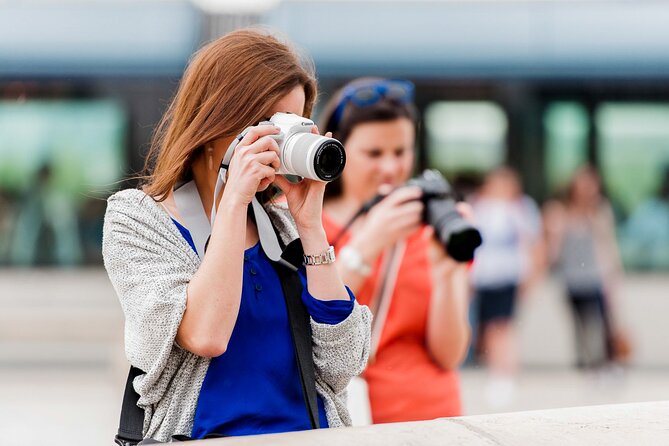
Many beginner photography classes explain the camera in a room, then send you away to figure out the hard part yourself. PhotoProf takes a different route. Its courses are held in real conditions, with the lessons tied to actual shooting.
That matters because photography settings make more sense when you can see the result immediately. Open the aperture, take a picture, inspect the background blur, and compare it with a smaller opening. Change the shutter speed, photograph movement, and see what happens. The cause and effect is clear.
PhotoProf has been running photography courses in Paris for almost 10 years and has taught more than 30,000 students. Those numbers do not guarantee that every session will suit every person, but they suggest a method tested on a large range of beginner questions and camera types.
The course is aimed at people who own a camera but do not yet feel in control of it. You do not need to arrive as a technical expert. In fact, the course is designed for the person who has pressed buttons at random, relied on automatic mode, or learned one setting but cannot yet combine several of them.
You can also read our reviews of more tours and experiences in Paris.



Meeting at 115 Place du Carrousel
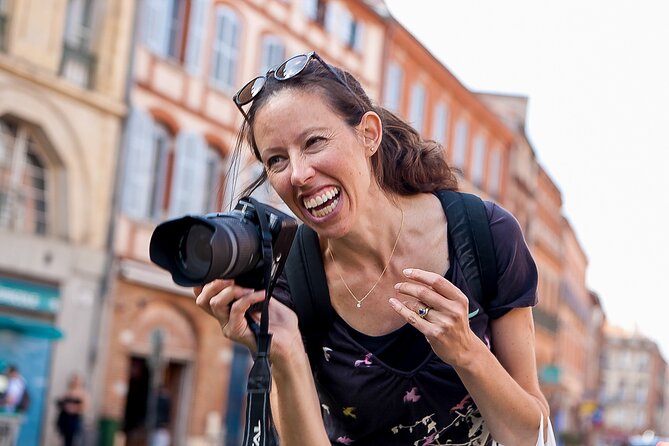
The course begins at 115 Place du Carrousel, 75001 Paris, at 10 a.m. The activity returns to this meeting point at the end.
The address places you near the Louvre area, and the meeting point is close to public transportation. That makes arrival fairly practical, especially if you are staying elsewhere in central Paris. The important point is to allow enough time to reach the meeting place without rushing. An 8-hour class leaves little room for a late start.
No detailed sightseeing route is provided, so you should not book this expecting a guided tour of famous Paris monuments. The city is the setting for your exercises, but the purpose is learning how to use your camera. You may work indoors and outdoors and in both daylight and darkness, yet the class is not presented as a fixed list of photo stops.
The end point being the same as the start point is useful. You do not need to work out a second pickup location after a long day with your camera and notes.
Day one: aperture, shutter speed, and focus
The first day runs from 10 a.m. to 6 p.m. and concentrates on the controls that shape how a picture looks.
Aperture and depth of field
You begin with aperture, the opening that controls how much light reaches the camera and how much of the scene appears sharp. The course links this directly to depth of field, so you learn why a subject can be sharp while the background softens, or why more of the scene can remain in focus.
For a beginner, this is one of the most useful settings to understand. It changes the visual feel of an image, not just its brightness. The instructor can help you connect the number shown on the camera with the result in the photograph.
Shutter speed and motion
Next comes shutter speed and the way it manages movement. You learn how a faster or slower exposure affects a moving subject and the overall sense of motion in the image.
This is where many new photographers discover that a camera is not simply recording a scene. You are choosing how movement appears. The value of practicing this in real conditions is that you can take a picture, check it, and adjust the speed while the lesson is still fresh.


Focus points and continuous focus
The class also covers single focus and continuous focus, along with selecting the focus point so the camera pays attention to the subject you choose. One of the most practical beginner problems is allowing the camera to decide what should be sharp. Learning to select the focus area gives you more control.
A session led by Alexis has been particularly useful for beginners who had never pressed some of the camera’s buttons before. That detail tells you something important about the level of instruction: the course is not only for people who know the basics already. It also makes room for the person who has owned a camera for some time but has never explored its controls.
By the end of day one
By the close of the first day, you should be working with Manual mode and the semi-automatic modes:
- Aperture Priority, marked A or Av on many cameras
- Speed Priority, marked S or Tv on many cameras
- Manual mode
You also work in daytime and at night, indoors and outdoors. That range is useful because camera settings can feel simple in bright daylight and confusing as soon as the light changes.
The day is long. Eight hours of settings, shooting, questions, and corrections can be tiring, especially if you are starting from zero. The trade-off is that you get enough time to repeat each idea rather than hearing it once and moving on.
Day two: turning camera settings into finished images

Day two also runs from 10 a.m. to 6 p.m. The focus shifts from individual camera controls to making a complete photograph.
Reading ambient light
You learn to work with light, darkness, and backlighting, as well as different weather conditions such as sun and cloud. This is an important step because a technically correct exposure can still produce a weak picture if the light is not handled well.
The course does not promise perfect weather, and weather is one of the conditions that can affect the activity. If poor weather forces a cancellation, you are offered another date or a full refund. That policy protects you from losing the booking, but it also means you should keep some flexibility in your Paris schedule.
Exposure and light metering
The second day covers several tools for controlling exposure:
- Light metering modes
- Exposure lock
- Histograms
- Exposure correction
- Luminosity indices
- Stops
This list may sound technical, but these controls answer a simple question: is the camera recording the scene as you intend? A histogram gives you another way to inspect brightness, while exposure lock and correction help you deal with scenes where the light is not evenly spread.
The useful part is that the course does not stop at telling you where the button is. The aim is to connect the setting with the finished image. You learn to make a choice, look at the result, and adjust.
Color and white balance
Color work includes white balance and saturation. White balance helps the camera interpret the color of the light, while saturation affects the strength of the colors in the image.
For a beginner, this is a good reminder that a photograph can look wrong even when the focus and exposure are fine. Light indoors, shade, clouds, and bright sun can all affect how colors appear. Learning to spot and correct those changes gives you more dependable results.
Composition
The final part of the course deals with composition. This is less about pressing a particular button and more about deciding what belongs in the frame, where the main subject sits, and how the parts of the image relate to one another.
Composition is also where technical lessons begin to serve a larger purpose. Aperture can separate a subject from its surroundings. Focus can direct attention. Exposure can preserve detail in bright and dark areas. Color can guide the eye. Day two brings these choices together so you are not simply producing correctly exposed test shots.
The teaching style and the value of a small group
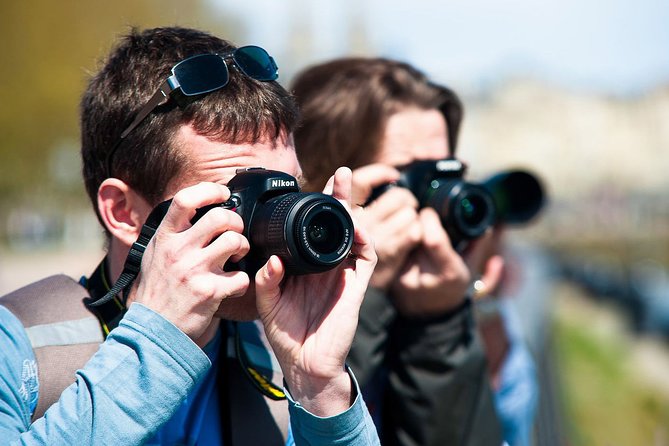
PhotoProf’s instructors are qualified photographers, but the most useful quality for a beginner is not a long list of technical terms. It is the ability to listen, explain clearly, and correct mistakes without making the student feel foolish.
The course places strong emphasis on discussion and questions. That is valuable when your problem is specific to your camera or your way of thinking. A booklet can explain aperture, but it cannot tell you why your particular image came out too dark. A live instructor can look at the result and guide the next adjustment.
The group is limited to eight people. That is not a private lesson, but it is small enough to keep the class from becoming a lecture. You should have opportunities to ask questions and discuss what you are seeing. The size also helps the instructor notice when a student is stuck on a control or using a setting incorrectly.
Alexis is named as one instructor connected with the course. His teaching is described as accessible and practical, and his guidance has helped beginners discover camera controls they had never used. That makes this a good match for people who want patient explanations rather than a fast technical presentation.
The teaching method is based on immediate application. You are expected to experiment, make mistakes, and ask constructive questions. If you prefer to sit quietly and copy a set of notes, this may feel demanding. If you learn best by trying something and seeing the result, the format should suit you well.
What the included materials add
The price includes a written course booklet, video course material provided after the session, and a memorial diploma.
The booklet is useful during the weekend because you can note settings and reminders while the instructor explains them. It also gives you something to consult after the class, when the details of focus modes or exposure correction begin to blur together.
The video material comes after the session, which gives the course value beyond the two days in Paris. You can return to the concepts while practicing on your own. That matters because two days can introduce a great deal of information, and most beginners need repeated use before the settings become natural.
The diploma is a keepsake rather than a reason to book. It may be a pleasant reminder of the weekend, but the real value lies in the instruction and the material you can use afterward.
A camera loan is not included, but the description says a loan is not necessary. You should plan to bring your own camera and be ready to work with it. Since camera controls differ by model, using your own equipment is also the more useful choice for long-term progress.
Is $370.43 a fair price?
The cost is $370.43 per person. At first glance, that is a substantial fee for a beginner course, especially when you still need to provide your own camera.
The better way to judge it is by the amount of instruction. The schedule offers about 16 hours over two days, which works out to roughly $23 per scheduled hour before considering the booklet, follow-up video material, diploma, and small-group format. That is not a promise of a private lesson, but it is more substantial than a short introductory walk.
I see the price as fair for someone who wants structured guidance and intends to keep practicing afterward. The follow-up videos help protect your investment because you can revisit the material instead of treating the course as a one-off activity.
It is less compelling if you only want a casual Paris photography stroll or a few scenic pictures for your phone. The course is designed to teach camera control, not simply to take you to attractive places.
Who should book this Paris course?
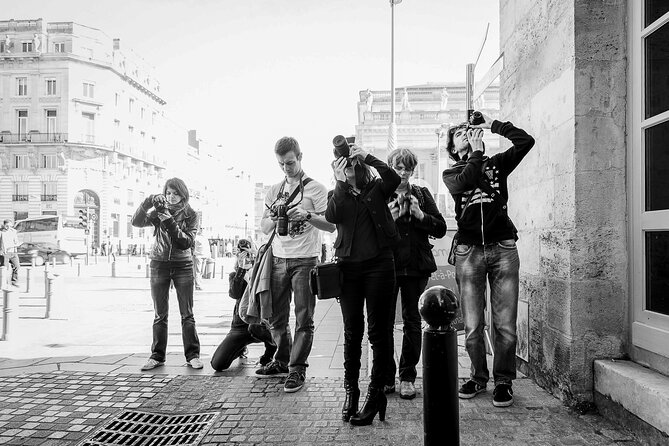
This experience suits you if you:
- Own a camera but mainly use automatic mode
- Want to understand Manual, Aperture Priority, and Speed Priority modes
- Learn better through practice than through a classroom lecture
- Can commit to two full days from 10 a.m. to 6 p.m.
- Want help with focus, exposure, color, and composition
- Value having course notes and video material afterward
- Are comfortable asking questions in a small group
It may not suit you if you want a relaxed half-day activity, a fixed sightseeing route, or a class focused mainly on editing. Photo retouching is not part of this course, and there is no promise of a camera loan.
The experience requires good weather and a minimum number of participants. If the organizer cancels for either reason, you are offered a different date or experience, or a full refund. You can cancel for a full refund up to 24 hours before the start time. Changes or cancellations inside that 24-hour window are not accepted and are not refunded.
Should you book PhotoProf’s beginner weekend?
Book it if your goal is to take control of your camera, not merely collect Paris pictures. The strongest reasons are the field-based practice, the eight-person limit, the broad range of topics, and the follow-up material that lets you keep working after the class.
Before paying, make sure you can handle two long days and bring a camera you want to understand properly. If that sounds right, $370.43 buys a serious introduction with enough time to move from isolated settings to complete photographs. If you want a short, easygoing photo walk, choose a different kind of activity.
FAQ
Where does the photography course begin?
It begins at 115 Place du Carrousel, 75001 Paris, France.
What time does the course start?
The course starts at 10 a.m.
How long does the experience last?
It lasts approximately two days, with both days scheduled from 10 a.m. to 6 p.m.
Where does the course finish?
The activity ends back at the meeting point.
How many people can join the course?
The maximum group size is eight participants.
Do I need to bring my own camera?
A camera loan is not included, and the course information states that a loan is not necessary. You should plan to use your own camera.
What photography skills are covered on the first day?
Day one covers aperture and depth of field, shutter speed and movement, focus points, continuous focus, Manual mode, Aperture Priority, and Speed Priority.
What is covered on the second day?
Day two covers ambient light, weather conditions, metering modes, exposure lock, histograms, exposure correction, luminosity indices, stops, white balance, saturation, and composition.
What is included in the price?
You receive a written course booklet, video course material after the session, and a memorial diploma.
Can I cancel for a refund?
Yes. You can cancel at least 24 hours before the start time for a full refund. If the activity is canceled because of poor weather or because the minimum number of participants is not met, you are offered another date or experience, or a full refund.