REVIEW · PARIS
Paris WW2 The German Occupation Small group or Private tour
Book on Viator →Operated by Chris Pollard · Bookable on Viator
Paris in WWII feels close enough to touch.
This small-group walk tracks how German control worked through hotels, cafés, streets, and museums you can still point to today. I especially liked the way Chris Pollard turns big events into human decisions, and the focus on both the resistance and the people who collaborated. The trade-off: it’s an outdoor, moving tour, and you’ll cover a heavy subject in limited time.
You’ll meet in the historic center at Place Colette near the Comédie-Française area, then spend the next few hours connecting key sites from the Occupation era to the visible marks left after Liberation. I came away with a better sense of how policies turned into real-world suffering, not just dates and names. One consideration: this general tour gives context on the Shoah and persecution, but it’s not a dedicated Holocaust-focused program.
If you like asking questions and you want more than a checklist of buildings, this format fits. With a max of 8–10 people, the pace stays discussion-friendly instead of lecture-style. Just be prepared to walk on streets where you’ll also stop for meaning, not just photos.
In This Review
- Key Points That Make This Tour Worth Your Time
- Why This Paris WWII Walk Works in Just 3–4 Hours
- Place Colette Meet-Up: Getting Oriented Fast
- Palais-Royal and the Louvre Area: Power in Everyday Architecture
- Rue de Rivoli and Hotel HQs: When Control Lives in Plain Sight
- Rue Rouget de Lisle and the Resistance Spark in October 1940
- Jeu de Paume: The Looped Story of Art Theft
- Place de la Concorde: Monumental Paris Meets War Scars
- Price, Pace, and What You’re Paying For
- Who This Tour Fits Best (and Who Might Want Something Else)
- Should You Book This Paris WWII Occupation Tour?
- FAQ
- Where do we meet for the tour?
- How long does the tour take?
- How big is the group?
- What language is the tour offered in?
- Is the tour focused on the Holocaust in depth?
- What sites are included during the walk?
- Is there any entry fees or museum ticket cost mentioned?
- Do I need to be ready for outdoor walking?
- What’s included in the price?
Key Points That Make This Tour Worth Your Time
- Small-group size (max 10): more talking time with Chris Pollard, not a headset shuffle.
- Occupation story through places people actually used: hotels, streets, and everyday Paris stops.
- Jeu de Paume Museum stop for looted-art context: art theft and Nazi logistics, not just a museum name.
- Resistance origins with street-level specificity: Rue Rouget de Lisle and the early 1940s momentum.
- Place de la Concorde ending with visible war scars: Liberation history anchored in monumental Paris.
- Guided “best snapshot” approach: flexible timing so your interests can steer a bit.
Why This Paris WWII Walk Works in Just 3–4 Hours
WWII in Paris can sound like a single straight line: invasion, Occupation, liberation. This tour treats it more like a growing machine—rules tightened, opportunities vanished, and choices (good and bad) accumulated fast. In a few hours, you get a sense of how pressure created both resistance and collaboration.
The best part is the method. You’re not rushing museum rooms in a chronological parade. You’re moving through the city as the stage, where the people and their incentives matter more than sightseeing.
Price-wise, you’re paying for expert guidance and time. For $108.84, the value is the small group limit, the personalized feel, and the ability to ask questions without losing the whole group to a conveyor belt.
You can also read our reviews of more private tours in Paris
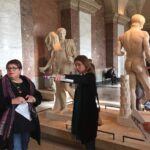


Place Colette Meet-Up: Getting Oriented Fast
You start at Place Colette (Rue Saint-Honoré, 75001), at Metro Exit 5, opposite the Comédie-Française theater. That choice matters because it puts you immediately into the tight central grid where most Occupation power plays happened.
Expect a quick orientation, then a historical setup for what you’ll see next. Chris Pollard is known for preparing his material (not reading a script), and he tends to shape the story to what you want to understand—especially if you communicate interests ahead of time.
Practical tip: dress for time on your feet from the start. Even when you stop often, you’re still walking between sites that are close in distance but big in meaning.
Palais-Royal and the Louvre Area: Power in Everyday Architecture
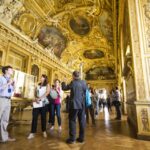
From the Palais-Royal/Louvre zone, the tour shifts from national-level history to how control felt at street level. This is where Paris starts to read differently, because German strategy isn’t only about battles—it’s also about logistics, intimidation, and access.
You’ll connect the Occupation overview to what you’re about to find in the surrounding streets: headquarters tucked into grand façades, propaganda and cultural control, and how “normal” buildings became part of the system. One reason I liked this section: it helps you stop treating the war as something that happened somewhere else.
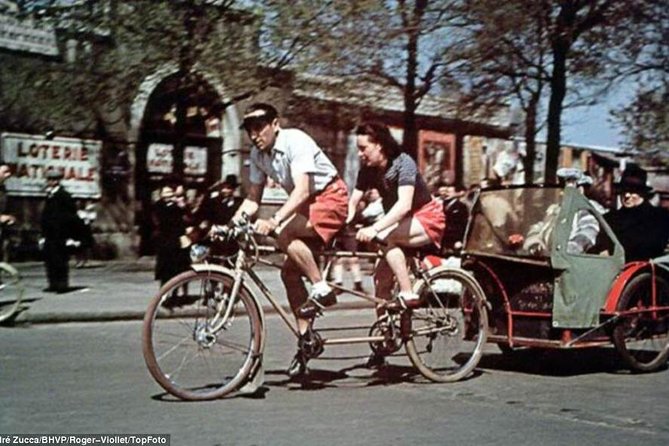
Also, you’ll hear how the Occupation affected the rhythm of daily life—through cafés, cinemas taken over by Germans, and the famous Paris social spaces you might associate with pleasure rather than power. This contrast is the point.
Rue de Rivoli and Hotel HQs: When Control Lives in Plain Sight
This is the spine of the tour. Around Rue de Rivoli and nearby streets, you’ll see how the Occupation used both secrecy and spectacle.
Some of the specific stops and themes you’ll cover include:
- The secret HQ of the Gestapo in Paris
- The headquarters of France’s largest collaborationist group, the PPF, and its leader
- The Louvre (exterior, as part of the occupation-era story around it)
- The Hotel Meurice, used as a German Army HQ for Paris
- Place Vendôme and how it links to the Ritz and to early anti-Nazi organization inside German forces
- The Societe Maurice Duclos, a secret site of the earliest Allied spy network in France, including radio work
- The Continental Hotel, under German Army control
What makes this section work is the way it’s framed. Chris Pollard doesn’t just say a building’s name; he explains why that place mattered—who used it, what it enabled, and what that meant for people nearby.
And yes, you’ll also get the strange crossover details that make the story feel real: where famous names like Coco Chanel stayed, and how places tied to status could overlap with looting, surveillance, and coercion.
Rue Rouget de Lisle and the Resistance Spark in October 1940
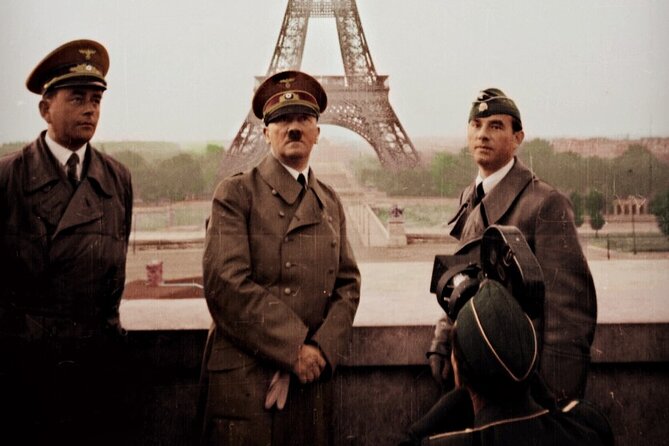
You’ll walk to Rue Rouget de Lisle, where the resistance’s early momentum is discussed—specifically its organic beginnings in October 1940. This is a useful pivot because it stops the story from being only about what the Germans did.
Instead, you start seeing how resistance formed under pressure. Not as a movie montage, but as a messy network built by people with limited time, limited safety, and constant risk.
This portion is also a good moment to ask questions. The tour’s format makes room for it, and it often helps you connect the big picture to smaller realities like communications, recruitment, and timing.




Jeu de Paume: The Looped Story of Art Theft
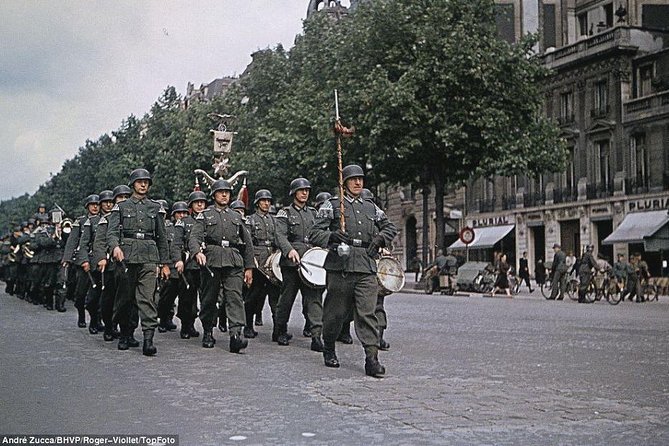
One of the stand-out stops is at Jeu de Paume Museum, where you learn about how Nazis hid, stored, processed, and looted artworks during the Occupation. This isn’t treated like a side note.
It’s explained as part of a system: cultural domination, organized extraction, and the way theft turned into bureaucracy. The museum’s role becomes a lens for understanding Occupation priorities beyond weapons and uniforms.
A subtle bonus: this stop lets you practice a different kind of historical reading. You’re not only trying to remember facts. You’re learning to look at institutions and ask what they were used for when power changed hands.
Place de la Concorde: Monumental Paris Meets War Scars
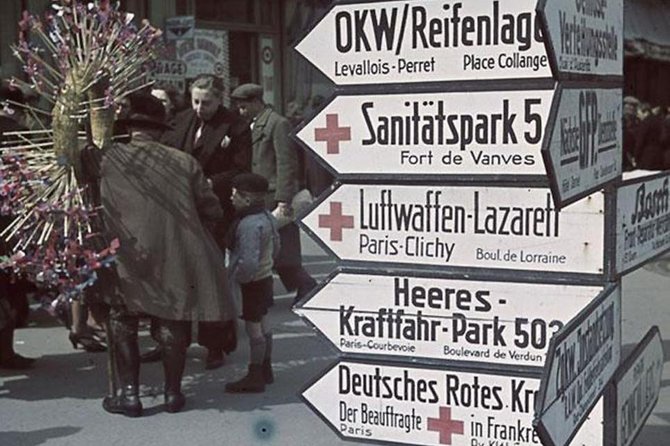
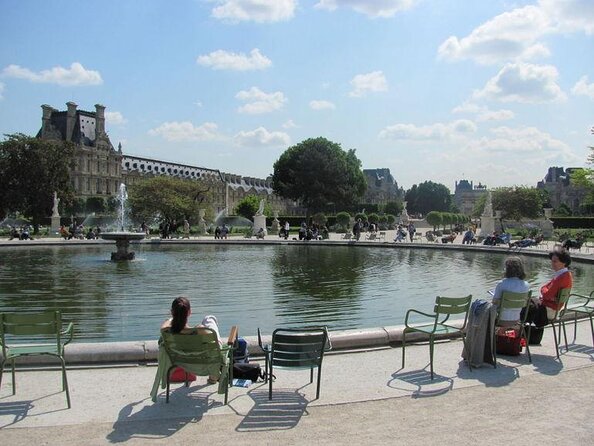
The tour ends around Place de la Concorde, and it’s an ideal closer because it’s a grand square with layers. You’ll hear how it was originally Place Louis XV in the 18th century, and why that matters when you add Occupation-era stories on top.
Key war-linked points you’ll cover here include:
- The guillotine events involving Louis XVI and Marie Antoinette
- Major German HQs during the war, including the twin Naval Ministry buildings and Hotel Crillon
- The Grand Palais, described as the only building in Paris actually destroyed during the Occupation and Liberation
- Bullet holes and hidden scars from the Liberation
- The famous Luxor Obelisk as part of the square’s visual identity
This ending is powerful because you’re not only learning about the past. You’re looking at the present-day city and seeing where violence left physical traces. And since the square is monumental, the scale helps the story land.
If your brain likes “why here,” this final stretch will reward you.
Price, Pace, and What You’re Paying For
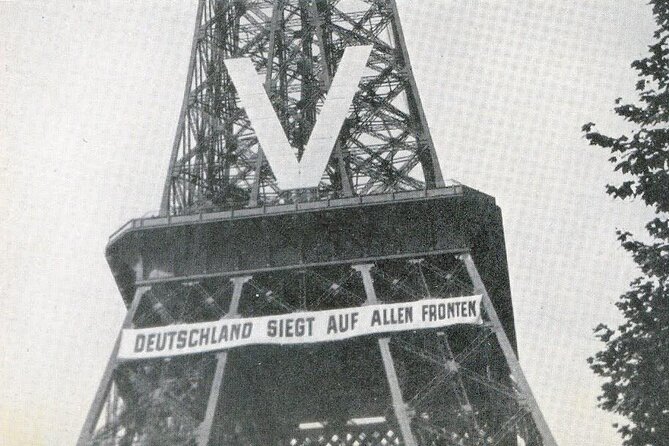
At $108.84 per person, the value comes from three practical things:
1) Small group limits (8–10 max, semi-private structure; private tours are also available).
2) A guide who’s set up for conversation, not just a timed route.
3) A curated set of high-signal sites—Gestapo, PPF, Hôtel HQs, early spy networks, resistance origins, and the looted-art stop—without trying to cram an entire month of reading into a single afternoon.
The pace is about a few hours total, typically around 3–3.5 hours, with flexibility if you want deeper discussion at a site. It’s also outdoor walking. Dress accordingly.
One last value note: you’ll get useful follow-up material. In at least some cases, Chris Pollard sends book lists based on your interests, which helps you keep learning after the walk.
Who This Tour Fits Best (and Who Might Want Something Else)
This tour is a great match if you:
- Want a city-walking approach instead of museum-only history
- Like understanding the Occupation through incentives and decisions, not just dates
- Prefer a smaller group where you can ask questions
- Are okay with a darker subject matter and want context for what enabled persecution
It might not be the best fit if you’re looking for a lighter, purely sightseeing-style stroll. This is still an Occupation story with persecution and collaboration built in.
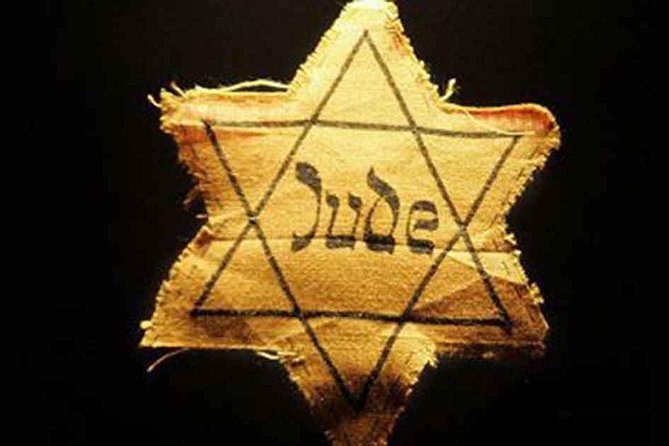
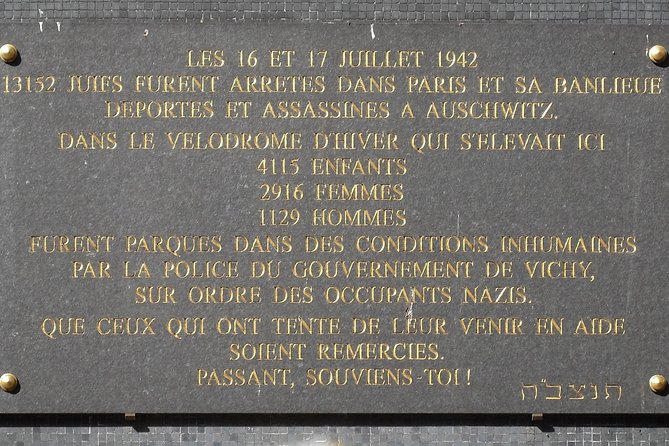
It’s also worth understanding the Shoah angle. On the general tour, you’ll get discussion of the overall currents that led to the Final Solution in France, conditions for Jewish people in Paris and occupied France, and their role in resistance. But it’s not positioned as a full Holocaust-focused program. If that’s your main priority, you’ll want the dedicated private Shoah option.
Should You Book This Paris WWII Occupation Tour?
I think you should book if you want to walk through central Paris with someone who can connect buildings to human choices—power, fear, profit, courage, and betrayal. The small-group format and Chris Pollard’s prepared, responsive style make it feel like a guided education, not a hurried route.
Skip it if you:
- Need a strictly timed, short, low-walking experience
- Want a Holocaust-only program as the main focus
- Are looking for a sightseeing tour with minimal discussion of persecution and collaboration
If you do book, do one thing that pays off big: show up ready to ask questions. This is the kind of tour where your curiosity becomes part of the itinerary.
FAQ
Where do we meet for the tour?
The meeting point is Place Colette, Rue Saint-Honoré (75001 Paris), at Metro Exit 5 opposite the Comédie-Française theater.
How long does the tour take?
The tour typically runs about 3 to 4 hours, often around 3–3.5 hours.
How big is the group?
It’s limited to a maximum of 10 travelers (semi-private style with small groups), with fully private options also available.
What language is the tour offered in?
The tour is offered in English.
Is the tour focused on the Holocaust in depth?
On the general tour, the Holocaust topic is discussed in context, but it’s not described as a standalone, deep-dive program. A dedicated private Shoah tour is available if you want more depth.
What sites are included during the walk?
You’ll cover key central locations tied to the Occupation, including areas around the Louvre and Palais-Royal, sites around Rue de Rivoli (including German HQ and resistance-related stops), Jeu de Paume, and an ending around Place de la Concorde.
Is there any entry fees or museum ticket cost mentioned?
The tour details note free admission ticket for the listed stops on the itinerary.
Do I need to be ready for outdoor walking?
Yes. It’s an outdoor walking tour, and you should dress for extended time outside and expect a fair amount of walking.
What’s included in the price?
You get the guided tour experience with Chris Pollard, and the booking includes a mobile ticket. The specific listed admissions show as free for the stops on the route.