REVIEW · PARIS
Paris Sightseeing by Tuk Tuk Golf Cart 2 hours
Book on Viator →Operated by Paris Green Ride · Bookable on Viator
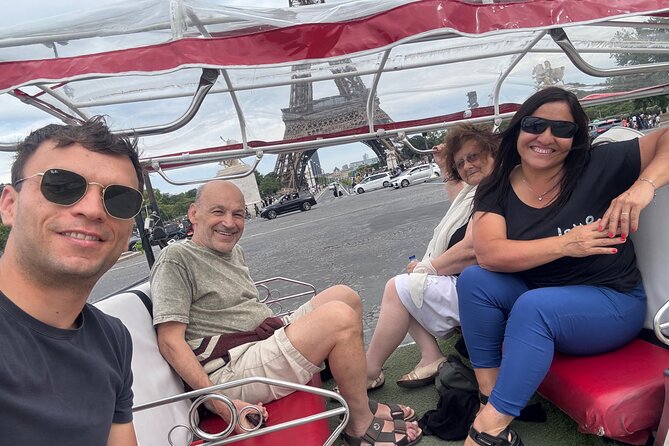
Paris in 2 hours is a fast trick. This private tuk tuk golf cart ride gives you a big-picture route across the Left Bank and beyond, with short photo stops and clear context so the city makes sense quickly.
I like how efficient it feels without turning into a blur. You get a hands-on orientation with stops like Saint-Sulpice and the Eiffel area, plus real guide energy—Jules, Kenny, and Félix all brought strong, personal storytelling in the reviews. The main thing to consider: some guides may speak English with a heavier accent or without a microphone, so if audio clarity matters a lot to you, keep that in mind.
In This Review
- Key things I’d note before you ride
- Why this 2-hour tuk tuk overview can be the smartest start
- Getting rolling from 159 Bd Saint-Germain (and why location helps)
- Stop-by-stop: how each moment earns its spot
- Saint-Sulpice Church: a grand church you don’t hear about enough
- Saint-Germain-des-Prés Abbey area: history that starts early
- Place de la Concorde: executions, obelisk, and big views
- Grand Palais and Petit Palais: 1900 Fair architecture from the road
- Pont Alexandre III: a bridge built for photos
- Champs-Élysées: the famous avenue with the real end points
- Arc de Triomphe: Napoleon’s commission and a city-wide view
- Trocadéro viewpoint: the best Eiffel photo stage
- Eiffel Tower stop: up close without the hours-long wait
- Ecole Militaire: Napoleon trained here
- Les Invalides: Napoleon’s tomb under the golden dome
- Luxembourg Gardens: fountains, statues, and locals on pause
- Pantheon: where big French figures are buried
- Île Saint-Louis pass: quieter Paris and a sweet detour (in spirit)
- Notre-Dame de Paris: a view during restoration
- Palais Bourbon pass: the French National Assembly
- The guide makes or breaks it: Jules, Kenny, and Félix as examples
- Price and value: what $150.18 buys in real Paris time
- Who this tour suits best (and who might want a different pace)
- Should you book this Paris tuk tuk tour?
- FAQ
- How long is the Paris Sightseeing by Tuk Tuk Golf Cart tour?
- What does the tour cost per person?
- Where does the tour start, and does it end there too?
- Is this a private tour?
- What language is the tour offered in?
- What’s included in the tour?
- What is the cancellation policy?
Key things I’d note before you ride
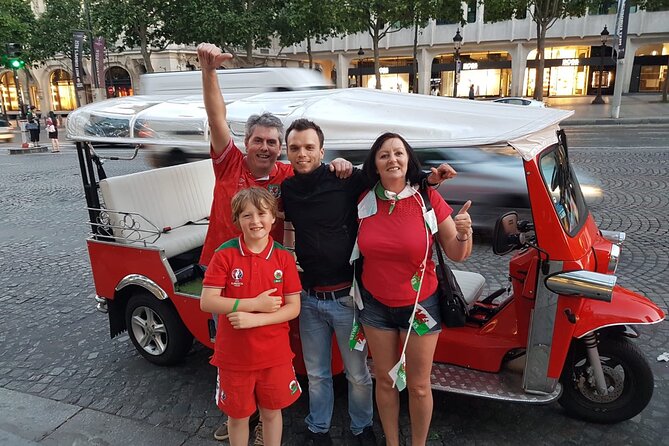
- You see the big names in a tight 2-hour loop: Eiffel Tower, Arc de Triomphe, Champs-Élysées, and more.
- Private means only your group in the cart, which usually makes photos and questions easier.
- Short stops, not long museum time: think quick looks and photo angles, not deep interior visits.
- Photo timing matters at Trocadéro: it’s one of the best Eiffel viewpoints, especially near sunset or when the tower sparkles on the hour.
- Different guide styles are part of the experience: Félix reportedly added small touches like water and croissants.
- Notre-Dame is visible during restoration: expect scaffolding in the scene, not a pristine facade.
Why this 2-hour tuk tuk overview can be the smartest start
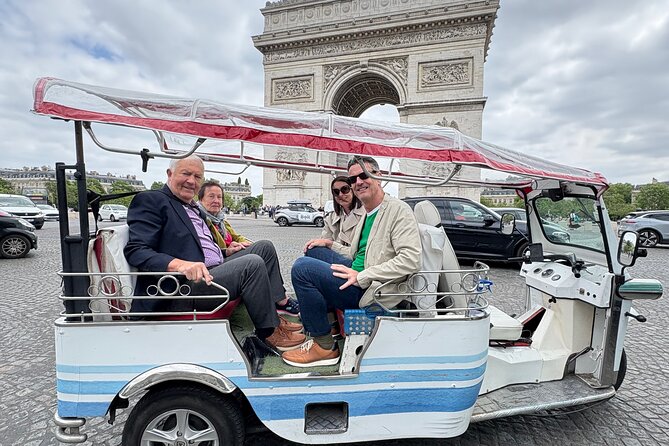
Paris can be overwhelming on day one. Streets feel like they twist, monuments seem to float apart, and you waste time figuring out where things actually are. This tour is built to fix that fast.
You’ll move by tuk tuk / golf cart style transport for about two hours, hitting a sequence of recognizable landmarks that map out central Paris. It’s not about getting every detail; it’s about building a route you can reuse later when you plan your walking days.
And yes, it helps with jet lag. Even if you sleep badly the first night, you still get that clean first pass where everything clicks: what’s on the Right Bank versus the Left Bank, where the river sits, and how the grand boulevards connect.
A few more Paris tours and experiences worth a look

Getting rolling from 159 Bd Saint-Germain (and why location helps)
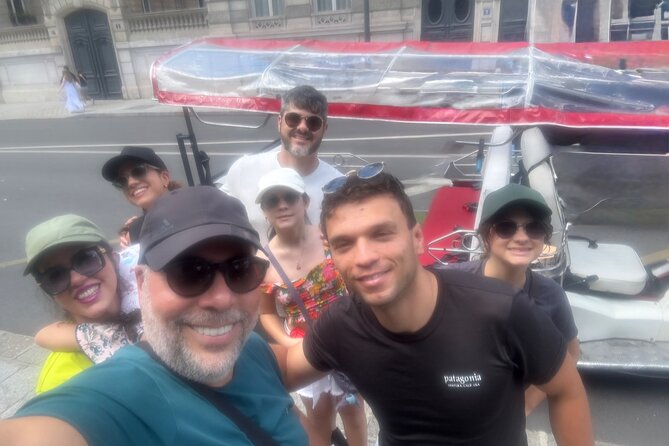
The tour starts at 159 Bd Saint-Germain in the 6th arrondissement, and it ends back at the same meeting point. That matters because Saint-Germain-des-Prés is a strong launchpad: you’re close to the Left Bank sights, and you’re positioned well for easy onward exploring after the ride.
You’ll get bottled water included, which sounds small until you’re out in the warmer (or stickier) months. Also, the tour uses a mobile ticket, so you’re not hunting paper confirmations on a busy street.
Because this is a private tour/activity, only your group participates. That usually means you can ask questions without feeling like you’re competing with 30 other voices.
Stop-by-stop: how each moment earns its spot
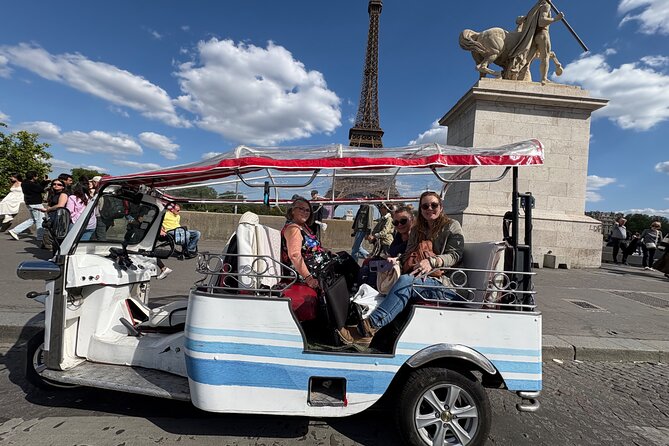
This route is packed with landmark variety. You’ll spend only a few minutes at each key stop, so the value is in seeing the relationship between places, not in lingering like you would on a walking day.
Saint-Sulpice Church: a grand church you don’t hear about enough
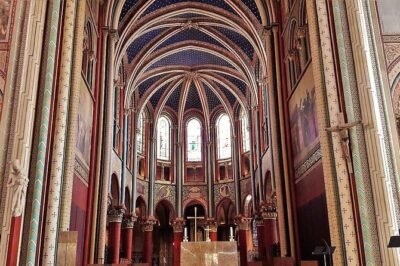
You’ll begin at Eglise Saint-Sulpice, one of Paris’s beautiful churches that many people overlook compared with Notre-Dame or Sacré-Cœur. The charm here is the slower sense of scale: big interior drama in a place that feels less of a headline.
Time is brief, so approach this like a quick orientation stop. Look at the facade first, then decide whether you want to step inside if the church is open when you arrive. Either way, it sets the tone for the Left Bank “classical Paris” feel.
Saint-Germain-des-Prés Abbey area: history that starts early
Next is Eglise de St. Germain des Prés, tied to the Saint-Germain-des-Prés Abbey tradition that reaches back to the 6th century. The tour frames it as more than a pretty building—it connects the church to the cultural life of the Left Bank.
A short stop works here because you’re mainly trying to get the geography and vibe. If you later return on foot, you’ll know where you are and why people care.






Place de la Concorde: executions, obelisk, and big views
At Place de la Concorde, you’ll see one of Paris’s largest squares and get an easy contrast lesson. It was once the site of public executions during the French Revolution, and now it’s anchored by the Luxor Obelisk.
This stop also functions like a visual relay station. From here, you get strong alignment toward Champs-Élysées and the general Eiffel direction. You’re not just looking at a monument—you’re learning how Paris lines things up.
Grand Palais and Petit Palais: 1900 Fair architecture from the road
You’ll drive past the Grand Palais and Petit Palais, two show-stoppers built for the 1900 World’s Fair. The route calls out the Grand Palais roof and its exhibition focus, while Petit Palais now houses the Paris Museum of Fine Arts.
You won’t have time to become a serious museum person in two hours, but seeing the buildings matters. They’re a great reminder that Paris isn’t only medieval or modern—some of its most influential looks come from fairs and world exhibitions.
If you’re an architecture fan, keep your camera ready. The exteriors move past quickly, so you’ll want to catch angles early.
Pont Alexandre III: a bridge built for photos
Next is Pont Alexandre III, widely considered one of the most beautiful bridges in Paris. It’s known for golden statues and Art nouveau lamps, with views out over the Seine.
This is one of those stops where the real payoff is what you can see from the roadway and nearby banks. You’ll likely spot the river’s perspective lines and get the sense of where the Eiffel area sits relative to the center.
Champs-Élysées: the famous avenue with the real end points
You’ll ride along the Champs-Élysées, the classic Paris boulevard that runs from Arc de Triomphe to Place de la Concorde. The route doesn’t pretend it’s subtle. It’s luxury shops, cafés, and tourist energy—yet it’s also one of the clearest “Paris axis” experiences.
A 7-minute window works because you mostly need orientation. Later, if you want to shop or sit, you’ll know where to go without feeling lost.
Arc de Triomphe: Napoleon’s commission and a city-wide view
At Arc de Triomphe, you’ll see one of Paris’s most iconic monuments commissioned by Napoleon to honor his army. Even without going inside, the outside view gives context: it’s built as a grand endpoint to the Champs-Élysées.
The tour uses a short stop, which is fair. To get a panoramic understanding, you mainly need the monument in your mental map. If you come back, then you can decide whether to climb.
Trocadéro viewpoint: the best Eiffel photo stage
One of the biggest highlights is the Place du Trocadero-et-du-11-Novembre area, framed as the best viewpoint for the Eiffel Tower. This is where the tour earns its reputation for photos.
You’ll get a longer stop here—around 10 minutes—so you can find a spot, take pictures, and wait for the light to do its thing. Sunset is the obvious win. The tour also notes that the Eiffel Tower sparkles every evening on the hour, so if timing lines up, you might catch that moment.
Eiffel Tower stop: up close without the hours-long wait
You’ll stop near the Eiffel Tower, the city’s strongest symbol. It was built for the 1889 World’s Fair, and in the tour context it’s more than a photo prop—it’s an event.
Ten minutes is not a lot for full immersion, but it’s enough to get the tower into your brain. If you’re doing multiple things in Paris, this kind of quick, guided placement can be worth more than a longer, unstructured visit.
Ecole Militaire: Napoleon trained here
You’ll also see Ecole Militaire, the prestigious academy where Napoleon trained. The tour notes it was built in the 18th century to educate future military leaders and still faces the Eiffel Tower area.
This stop is short, but it adds a layer: the Eiffel area isn’t only about the 1800s fair. It also connects to France’s military education and leadership myths.
Les Invalides: Napoleon’s tomb under the golden dome
Next you’ll pass by Les Invalides, built by Louis XIV for wounded soldiers. Today it houses military museums, and the route highlights Napoleon’s tomb under the golden dome.
You might not enter during a quick stop, but you’ll understand why this complex matters. It’s a physical focal point for the story of France, and it helps connect the Eiffel zone to the political center of the city.
Luxembourg Gardens: fountains, statues, and locals on pause
You’ll pass Luxembourg Gardens, created by Queen Marie de Medici in 1612. The tour points out fountains, statues, flowers, and locals relaxing.
Even from the cart, this park stop is useful. It shows you where you can take a break later that still feels classic Paris. You’re not just moving between monuments—you’re also seeing where Parisians actually breathe.
Pantheon: where big French figures are buried
At Pantheon, you’ll see the structure built in the 18th century to honor great French figures. The tour specifically mentions burial sites for Voltaire, Rousseau, Victor Hugo, and Marie Curie.
This is the kind of stop that turns sightseeing into story. Two minutes here can spark a later return when you have more time to read plaques and explore.
Île Saint-Louis pass: quieter Paris and a sweet detour (in spirit)
The route passes Île Saint-Louis, described as a peaceful historic island in the center of Paris. It’s known for elegant buildings and small shops, and it’s associated with Bertillon ice cream.
You won’t be spending hours here on this ride, but seeing the island helps you decide if it’s worth building a separate afternoon around. It’s a good contrast to the more monumental stops.
Notre-Dame de Paris: a view during restoration
You’ll see Cathedrale Notre-Dame de Paris, a Gothic masterpiece from the 12th century. The tour notes it’s currently under restoration after the 2019 events.
This matters for expectations. You’re not going to see a fully “normal” scene. You’ll likely see construction elements, and that’s part of how Paris looks today—important context if you’re visiting during restoration years.
Palais Bourbon pass: the French National Assembly
Finally, you’ll pass Palais Bourbon, home to the French National Assembly. The tour frames this as where elected officials debate and vote on laws.
It’s a quick, almost symbolic ending point. You’ve seen churches, bridges, imperial monuments, and now you’ve also touched the civic heartbeat.
The guide makes or breaks it: Jules, Kenny, and Félix as examples
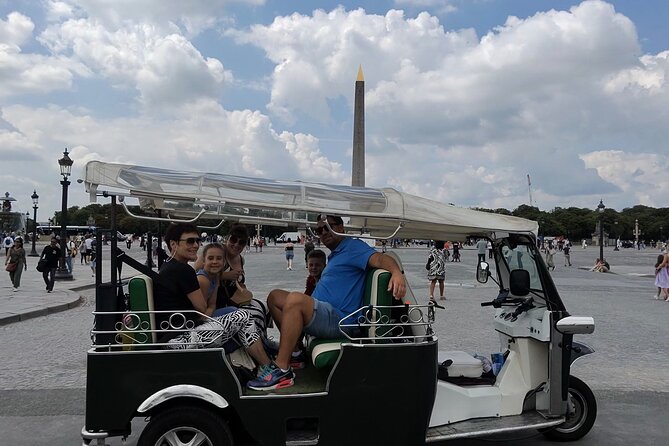
A tour like this depends on the guide’s ability to turn quick stops into understanding. The reviews highlight a few standout names.
Jules was described as exceptional, with commentary that balanced informative and entertaining. Kenny was praised as fun, friendly, and really helpful in guiding the route and atmosphere. Félix was noted as kind and personable, a native, and a strong match for photo moments—plus the nice touch of water and croissants.
Your takeaway: pick this tour when you like stories. If you want pure sightseeing with minimal talking, you may still enjoy it, but the real value is in the narration.
Price and value: what $150.18 buys in real Paris time
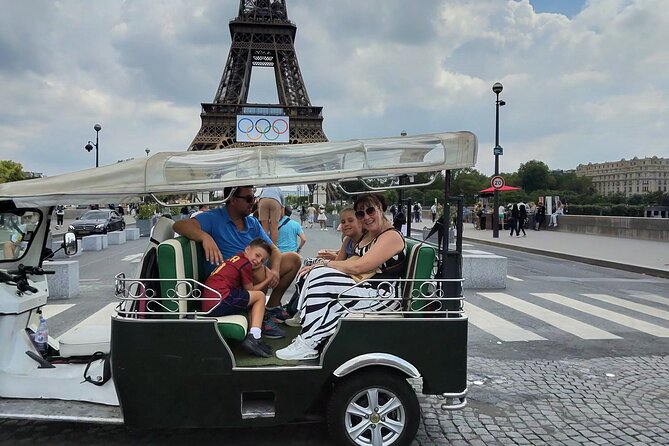
At $150.18 per person for about two hours, this isn’t a budget hop-on-hop-off. So you need to ask: what are you saving?
You’re paying for three things that matter in Paris:
- Time compression: you cover a long, landmark-heavy route without walking the whole distance.
- Private control: only your group participates, so the experience feels less crowded and more tailored.
- Built-in interpretation: the guide connects what you’re seeing to why it matters, so it becomes usable knowledge for your later days.
If you’re the kind of person who hates backtracking, this price can look reasonable fast. If you’re already comfortable with transit and you want to do everything on foot, you could build a DIY route. But if you want a fast start—especially early in your trip or after jet lag—this tour offers a clear payoff.
Who this tour suits best (and who might want a different pace)
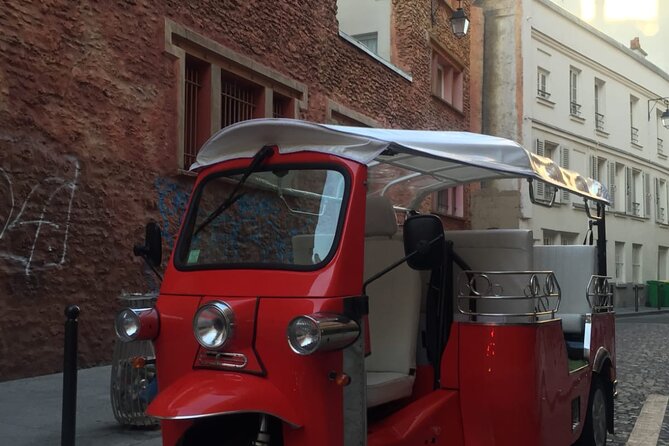
This is a strong match for:
- First-time Paris visitors who need orientation quickly
- People who want iconic sights plus context without long waits
- Anyone who prefers less walking while still covering a lot
It’s less ideal for:
- You if you want deep museum time or long cathedral interiors
- You if you need very precise audio in English and are sensitive to poor microphone setups
- You if you’re expecting a slow, café-hopping day
The best approach is to treat it like the backbone of your itinerary. After this ride, you’ll know where to spend your longer afternoons.
Should you book this Paris tuk tuk tour?
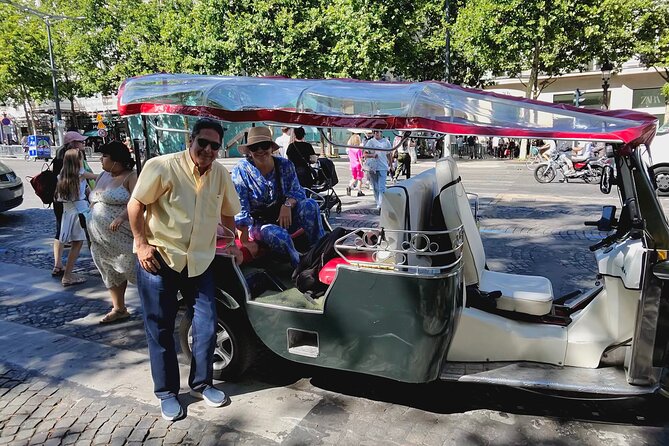
If you want a fast, fun first pass that links major monuments into a map you can use later, I’d book it. The route hits the big must-sees—Eiffel Tower, Arc de Triomphe, Champs-Élysées, Notre-Dame (restoration included)—while also adding meaningful stops like Saint-Sulpice and Pantheon that can get skipped on quick tours.
If you’re booking with the expectation of long indoor visits, you may feel rushed. And if clear English audio is non-negotiable, it’s worth choosing the time when you can maximize visibility and ask your guide questions early.
Overall, this works when you want results: a strong overview in two hours, with a friendly guide voice and a lot of prime photo territory around the Seine.
FAQ
How long is the Paris Sightseeing by Tuk Tuk Golf Cart tour?
It’s about 2 hours (approx.).
What does the tour cost per person?
The price is $150.18 per person.
Where does the tour start, and does it end there too?
The tour starts at 159 Bd Saint-Germain, 75006 Paris, France and ends back at the same meeting point.
Is this a private tour?
Yes. It’s private, so only your group participates.
What language is the tour offered in?
The tour is offered in English.
What’s included in the tour?
Bottled water is included.
What is the cancellation policy?
You can cancel for a full refund up to 24 hours in advance. If you cancel less than 24 hours before the start time, the amount paid is not refunded.