REVIEW · PARIS
Paris: Semi-Private Tour of the Louvre Museum and Mona Lisa
Book on GetYourGuide →Operated by the tour guy · Bookable on GetYourGuide
The Louvre is a maze. This semi-private tour helps you beat the worst lines with skip-the-line entry and a small group of just 6, plus an art-history guide who keeps things moving. One thing to plan for: even with fast entry, you may still wait at security, especially in peak season.
I really like the focus on real highlights instead of random wandering. With guides like Marion (one of the names that shows up in feedback), you get clear stories and smooth navigation through heavy crowds for about three hours.
You also get a satisfying mix of art and spectacle: from ancient Greek and Roman statues to da Vinci and the Mona Lisa moment, and then on to big, dramatic works tied to French power and pageantry. With only 150 minutes, you won’t see everything, but you’ll leave with a much better map of what matters.
In This Review
- Key Points That Make This Louvre Tour Worth Your Time
- Semi-Private Louvre for 6: Why It Feels Different
- Meeting at the Louvre Pyramid: Start Where Most People Feel Lost
- Security Still Exists: The One “Skip” That’s Not a Magic Spell
- Ancient Foundations: Greek and Roman Statues You’ll Actually Understand
- Raphael, Botticelli, Bernini, and Da Vinci: Art History Without the Homework
- Napoleon’s Coronation and Grand Drama: The Louvre’s Power Plays
- French Crown Jewels: Pageantry in a Museum Setting
- The Mona Lisa Moment: What to Do When Everyone Stares
- The Wedding Feast at Cana and Why “Scenes” Matter
- Pricing at $123 for 150 Minutes: Is It Good Value?
- After the Tour: How to Use Your Remaining Time Smartly
- What to Bring (and What to Leave at Your Hotel)
- Photography Rules: Know Where You Can and Can’t Film
- Who This Tour Fits Best (and Who Might Want Another Plan)
- Should You Book This Semi-Private Louvre Tour?
- FAQ
- Where is the meeting point for the tour?
- How big is the group?
- How long is the tour?
- What’s included in the price?
- Does the tour include hotel pickup or drop-off?
- What should I bring with me?
- What items are not allowed inside the Louvre?
- Can I take photos during the tour?
- Is the Mona Lisa included?
- Can I stay inside the Louvre after the tour ends?
Key Points That Make This Louvre Tour Worth Your Time

- Skip-the-line Louvre entry with a small group size that actually feels semi-private
- Mona Lisa viewing time built into the route, not left to chance
- Art-history guidance in English from a guide who keeps the stories going
- Royal and Napoleon-era highlights like the Coronation of Napoleon and French Crown Jewels
- Ancient foundations plus masterpieces spanning Greek/Roman sculpture to da Vinci
- 150 minutes that are paced for crowds, so you can enjoy the museum instead of sprinting
Semi-Private Louvre for 6: Why It Feels Different

The Louvre is so famous it can feel slightly unreal. In practice, it’s also huge, crowded, and easy to misread. This tour helps because it’s built around a maximum group size of 6, which changes your whole experience. In a big tour, you get dragged. In a tiny one, you can actually follow what’s happening, ask simple questions, and notice details without constantly recalculating where your guide went.
I also like the way the pacing is designed for a place like this. At 150 minutes, you’re not going to see every wing and every painting, but you do get enough structure to understand what you’re looking at. That’s the biggest value of a guided route: it helps you connect names, styles, and stories instead of treating the museum like a scavenger hunt.
And yes, the “skip the ticket line” part matters. The Louvre’s ticket line and the museum experience itself are separate issues. Even so, cutting out the long ticket queue buys you time to reach the art while you still have energy.
You can also read our reviews of more private tours in Paris


Meeting at the Louvre Pyramid: Start Where Most People Feel Lost

Your meeting point is outside the Louvre Pyramid, by the equestrian statue of Louis XIV. You’re supposed to arrive about 10 minutes early, and you’ll find a representative holding a sign for The Tour Guy.
Why this matters: getting oriented at the start is half the battle at the Louvre. The pyramid area is a logical reference point, and meeting at a landmark keeps you from doing that classic Paris move of circling the same streets while your phone struggles with the internet.
You’ll go in with your group and move toward the areas your guide has chosen. Since photography rules and museum logistics can shift depending on where you are, starting on time helps you stay on schedule.
Security Still Exists: The One “Skip” That’s Not a Magic Spell

Even with skip-the-line entry, you should plan for security screening. The tour info is clear that during high season this wait can reach up to 20 minutes.
So here’s my practical advice: dress for it. Comfortable shoes win. If you wear something with lots of pockets or tricky layers, you’ll lose time at security. Keep your essentials simple, and bring ID (passport or ID card) since you’ll need it for entry.
This isn’t a deal-breaker. It’s just the reality of a major museum in peak season. The good news is that once you’re in, you’re not just stuck hoping you’ll find the Mona Lisa. You have a route.
Ancient Foundations: Greek and Roman Statues You’ll Actually Understand

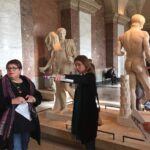
One of the smartest choices of this tour is how it starts. You begin with the Louvre’s ancient foundations—especially the older layers where you can see Greek and Roman statues and sculpture.
That context changes the way you view everything afterward. The Louvre isn’t just a stack of paintings. It’s a historical building with layers, and those layers explain why so many masterpieces feel like they’re part of a bigger political and cultural story.
When you see ancient sculpture early in the tour, you also get a baseline for “what counts” visually. You’ll notice how later artists borrowed ideas like anatomy, idealized proportions, and storytelling through posture. Even if you’re not an art expert, you’ll pick up those visual clues fast, because your guide frames them in plain terms.
What to watch for: don’t rush the early rooms. The ancient works may look quieter than the headline paintings, but this is where you start building your mental map of styles and influence.
Raphael, Botticelli, Bernini, and Da Vinci: Art History Without the Homework

After the foundation stops, the tour moves into major masterpieces linked to some of Europe’s best-known names, including Raphael, Botticelli, Bernini, and da Vinci.
Here’s why this works for most people: instead of tossing you into a corridor of random masterpieces, the guide tells you what to notice and why it was considered important when it was made. You’re not just walking past famous titles. You’re looking with a purpose.
A good sign is the way guides stay active through the whole 150 minutes. One of the strongest pieces of feedback mentions Marion keeping the storytelling going nonstop for about three straight hours. That’s exactly what you want in a museum tour: steady momentum, not long pauses where everyone drifts and your attention fades.
A practical drawback to remember: because the Louvre is enormous, even a highlight-focused tour can’t cover everything. But the upside is that you’ll learn enough to recognize why certain works are famous. That makes your self-guided time afterward far more satisfying.
You can also read our reviews of more museum experiences in Paris




Napoleon’s Coronation and Grand Drama: The Louvre’s Power Plays

This tour also includes works that connect art to authority and theater-like drama. You’ll see the Coronation of Napoleon and also a dramatic painting such as the Raft of the Medusa.
These pieces matter because they show the Louvre not as a quiet temple, but as a museum that holds political statements. Napoleon-era images are about legitimacy and national myth-making. Works like the Raft of the Medusa are about crisis, emotion, and the way art can be used to capture a public moment.
If you’ve ever felt lost at the Louvre, this is a turning point. You start realizing that many “masterpieces” aren’t just beautiful—they were built for impact. Once you get that, even crowded rooms feel more readable.
What you’ll likely enjoy most: the guide linking each work to a simple story so you can follow along even if you didn’t come with art-history notes.
French Crown Jewels: Pageantry in a Museum Setting

The tour highlights the French Crown Jewels and the famous Coronation of Napoleon. Even if you’ve seen jewel photos online, it’s different in person.
Jewels and royal regalia carry weight because they’re designed to look impressive. They connect power, ceremony, and symbolism—so seeing them in the Louvre context feels more like stepping into a chapter of history than browsing objects behind glass.
Just don’t expect this to work like a quick photo stop. If the guide is doing the job right, you’ll pause long enough to understand what you’re looking at and why it matters.
The Mona Lisa Moment: What to Do When Everyone Stares

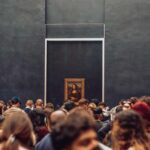
No Louvre route is complete without the Mona Lisa. This tour specifically brings you there, with time to stand before the painting and explore the mystery behind her smile.
My advice for the Mona Lisa moment is to treat it like a slow conversation, not a photo challenge. The room can feel chaotic. Your guide’s job is to help you look past the crowd noise and focus on the painting itself: the expressions, the subtle modeling, and the kind of ambiguity that makes people keep coming back.
Even better, the tour doesn’t treat the Mona Lisa as a one-stop performance. It’s part of a route that ties into wider masterpieces, so you’re not just checking off a name—you’re learning how the Louvre built its legend.
And yes, it’s also a good reminder that da Vinci isn’t the only reason the Louvre matters. Seeing her alongside other works helps you understand why the museum’s highlights keep echoing through European art.
The Wedding Feast at Cana and Why “Scenes” Matter

The tour also includes the Wedding Feast at Cana, a painting described as grand in scale. Scenes like this are useful for beginners because they offer multiple layers to watch.
You can approach it like a story: characters arranged for meaning, gestures that direct attention, and lighting or composition choices meant to guide the eye. If you’ve ever felt overwhelmed in the Louvre, “scene reading” is an easier strategy than trying to master one painting’s full technical background.
This is also where having an English guide helps. Instead of guessing what the scene is about, you’ll get the key points in plain language. Then you can go look and verify those points with your own eyes.
Pricing at $123 for 150 Minutes: Is It Good Value?
At $123 per person for 150 minutes, the tour sits in the mid-to-upper range for Louvre experiences. So the key question is: what are you buying?
You’re not just buying a ticket. You’re buying:
- Time (skip ticket lines, guided pacing)
- Attention (a route built around major highlights)
- Interpretation (an English-speaking guide who explains what you’re seeing)
- Comfort in crowds (a group capped at 6)
If you tried to replicate this yourself, you’d likely spend time figuring out where to go next, and you’d still be stuck with security. The cost starts to look more reasonable once you compare it to the price of admission plus the time lost searching.
Is it worth it? For most first-timers, I think yes, especially if you want the Mona Lisa experience and at least a strong sampling of European masterpieces without spending half the day “just trying to find things.”
After the Tour: How to Use Your Remaining Time Smartly
A big advantage is what happens after the guide finishes. Once the tour ends, you’re allowed to stay inside until closing time at your own pace.
But there’s an important rule: once you exit the area where the artwork is, you won’t be allowed to re-enter. So plan your self-guided time like a second act.
Here’s how I’d handle it:
- Prioritize any rooms you want to revisit while you still have the guide’s route in your head.
- If there’s something you noticed during the tour, go back while it’s fresh.
- Keep your walking energy for the final stretch. The Louvre wears you out fast.
Also note that there’s no coat check for this small group setup, and lockers aren’t accessible to you on the tour. That’s another reason to travel light.
What to Bring (and What to Leave at Your Hotel)
This kind of Louvre day is a “hands-free” event. Bring:
- Passport or ID card
- Comfortable shoes
Leave these at home or at your accommodation:
- Weapons or sharp objects
- Baby strollers
- Smoking
- Luggage or large bags
There’s also a strict size limit: items exceeding 55 cm x 35 cm x 20 cm can’t be brought in. No coat check exists on site for this tour, and lockers aren’t usable for the small group tour. Umbrellas and big backpacks are also called out as not allowed.
If you’re thinking this will be a good day for a giant overnight bag, it won’t be. Plan to travel with a manageable day pack, and you’ll move through security and rooms without fighting your own belongings.
Photography Rules: Know Where You Can and Can’t Film
Photography and filming are strictly prohibited in temporary exhibition rooms.
That means your camera behavior might depend on where you are at that moment. Don’t count on being able to film everywhere. If you keep your phone away until you’re in a normal gallery area, you’ll avoid awkward surprises and slowdowns.
Who This Tour Fits Best (and Who Might Want Another Plan)
This experience is built for people who want a structured route through the Louvre highlights without being stuck in the worst lines.
It’s also called out as not suitable for people with mobility impairments or for wheelchair users. That makes sense because you’re moving through the museum on foot and dealing with dense indoor crowds.
If you’re comfortable walking and you want a clear Mona Lisa-first highlight route, this tour is a strong match. If you need slow, step-by-step accessibility accommodations, you’ll want to look for an option specifically designed for mobility needs.
Should You Book This Semi-Private Louvre Tour?
Book it if you:
- Want skip-the-line entry and a calmer group size of 6
- Care about seeing the Mona Lisa and several major masterpieces in the same trip
- Prefer guidance that explains what you’re looking at, not just a list of names
- Like the idea of royal and dramatic works, including the Coronation of Napoleon and French Crown Jewels
Skip it or consider alternatives if:
- You’re the kind of visitor who wants total freedom from the start and doesn’t want a guided route
- You don’t handle security waits well during peak season
- You need accessibility arrangements beyond what’s described here
For most first-timers, I think this is a good value because it turns the Louvre from a confusing crowd maze into a route you can understand. You’ll spend your energy on art, not on figuring out where to go next.
FAQ
Where is the meeting point for the tour?
You meet at the equestrian statue of Louis XIV in front of the Louvre Pyramid. A representative holding a sign with The Tour Guy will be there. Arrive about 10 minutes early.
How big is the group?
The maximum group size is 6 participants.
How long is the tour?
The tour duration is 150 minutes.
What’s included in the price?
Skip-the-line entry to the Louvre Museum, a guided tour of famous artworks and exhibits, and an English-speaking guide with art history expertise.
Does the tour include hotel pickup or drop-off?
No. Hotel pickup and drop-off are not included.
What should I bring with me?
Bring a passport or ID card and wear comfortable shoes.
What items are not allowed inside the Louvre?
Weapons or sharp objects, baby strollers, smoking, and luggage or large bags are not allowed. Items larger than 55 cm x 35 cm x 20 cm cannot be brought in.
Can I take photos during the tour?
Photography and filming are strictly prohibited in temporary exhibition rooms.
Is the Mona Lisa included?
Yes. The tour includes time standing before the Mona Lisa.
Can I stay inside the Louvre after the tour ends?
Yes, you can stay until closing time after your guide says goodbye, but once you exit the area where the artwork is, you won’t be allowed to re-enter.