REVIEW · PARIS
Paris: Private Sightseeing Segway Tour
Book on GetYourGuide →Operated by SeeWay · Bookable on GetYourGuide
Paris looks different when you’re gliding. I love how fast this private Segway tour gets you oriented, and I love that the stops hit real “Paris famous” spots like Invalides and Pont Alexandre III without turning your day into a crowded crawl. The main thing to consider is that this ride has clear limits: it’s not for kids under 12, not for pregnant travelers, and not for anyone with mobility challenges or who weighs over 264 lbs.
You also get a level of guide attention that matters. In the reviews, people repeatedly mention guides like Alex and Sasha being patient during the first minutes, then stopping often for safety and solid explanations. One practical drawback: the meeting place is a small office on a side street, so plan a few extra minutes to confirm you’re in the right spot.
All in all, it’s a fun, efficient way to see Paris highlights—especially if you want the Eiffel Tower and major boulevards without burning the whole day in lines and traffic.
In This Review
- Key things I’d zero in on
- Why This Segway Tour Works for a Paris First-Timer
- Getting Set Up: Meeting at SeeWay in the 15th
- Invalides: The Dome Stop That Anchors the Whole Story
- Pont Alexandre III: The Bridge That Looks Like a Celebration
- Grand Palais and Petit Palais: Two Palaces, Two Moods
- Champs-Élysées: The Avenue You’re Going to Want to Walk Too
- Arc de Triomphe: Why Napoleon Wanted This Monument
- Champ de Mars and the Eiffel Tower: The Glide-to-Icon Moment
- The 2-Hour Flow: Stops, Safety, and How to Get the Most Out of It
- Price and Value: Why $70 Can Make Sense Here
- Who This Tour Fits Best (And Who Should Rethink It)
- Should You Book the Paris Private Segway Highlights?
- FAQ
- How long is the Paris private Segway tour?
- Where do I meet the guide?
- What’s included in the tour?
- What languages are offered?
- Is the tour private?
- Who isn’t this tour recommended for?
Key things I’d zero in on
- Segway i2 + helmets make it a structured, guided experience, not a random scooter adventure
- Pont Alexandre III + Champs-Élysées + Arc de Triomphe gives you big “postcard Paris” in one smooth loop
- Frequent stops for photos and explanations help the landmarks actually stick in your head
- Guides like Alex and Sasha are praised for patience, clear instruction, and picture-taking
- Eiffel Tower payoff happens after a classic run across central Paris
- 2 hours feels full—you’ll want comfy expectations about walking off and on curbs
Why This Segway Tour Works for a Paris First-Timer
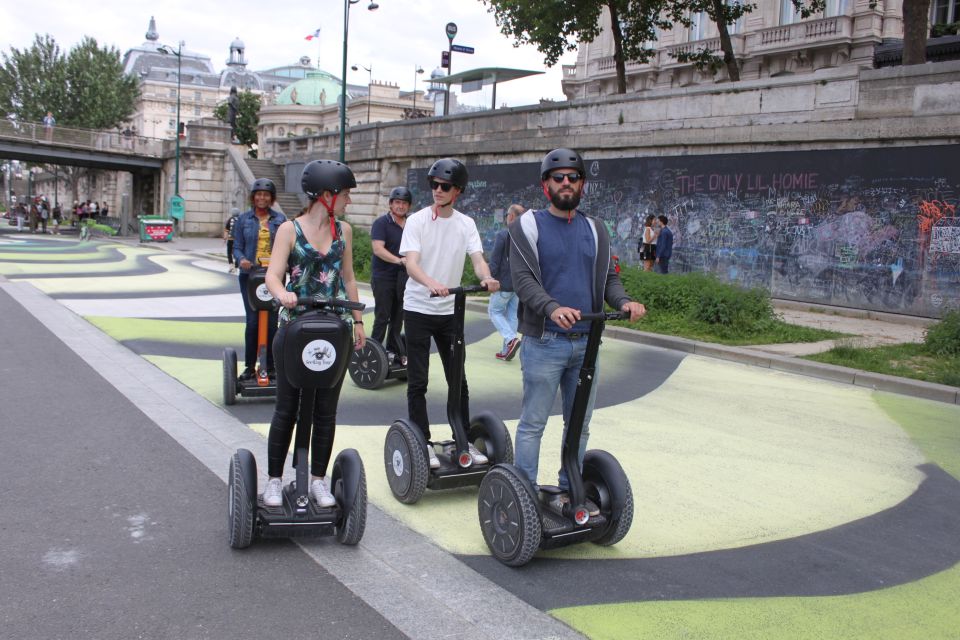
A Segway tour is basically a shortcut for your “I need to understand this city” phase. Paris is huge in personality and layout—big avenues, formal monuments, and little pockets of quiet tucked between them. On foot, it’s easy to feel like you’re only touching the edges. On a Segway, you cover ground with a sense of motion that makes the city feel less like a museum hallway and more like a living place.
What I like about this specific route is the balance between spectacle and story. You get grand, obvious landmarks (Dôme des Invalides, Grand Palais, Eiffel Tower). But you also get the “how Paris shows off” moments: Pont Alexandre III built for a major exposition in 1900, and the long ceremonial axis that funnels you toward the Eiffel Tower.
Also: this is private. That changes the vibe. You’re not fighting for position in a group when someone wants one more photo or when traffic forces a slower pace.
You can also read our reviews of more private tours in Paris


Getting Set Up: Meeting at SeeWay in the 15th
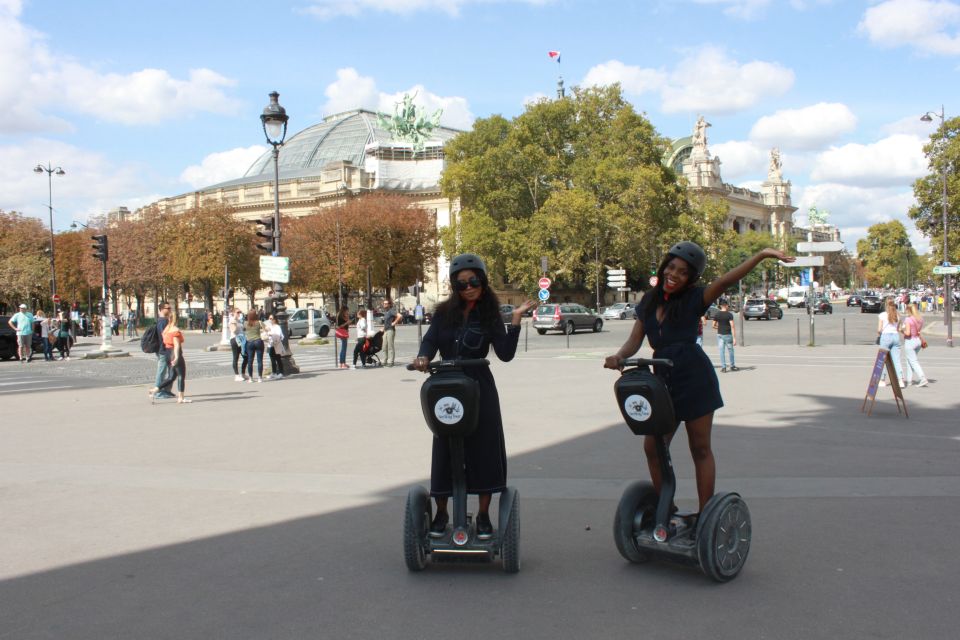
You meet at 14 Rue Mathurin Régnier, 75015 Paris, at the SeeWay tour office. The addresses can sound straightforward, but the reviews flag one real-world point: it’s not a grand public landmark. It’s an office on a side street. Ring the bell, and the guide should come to you.
Arriving early helps. You’ll be fitted for a helmet, then you’ll get instruction on how to drive the Segway i2. People who are new to Segways often feel shaky during the practice run, and the guide response seems to be consistently patient—exactly what you want before you glide near busy streets.
One more practical tip: if you’re attending right in the middle of a busy time, build in buffer time. One review mentioned a late start due to traffic setup and the guide waited and still completed the full tour. That’s reassuring, but it’s best not to make “traffic magic” your plan.
Invalides: The Dome Stop That Anchors the Whole Story
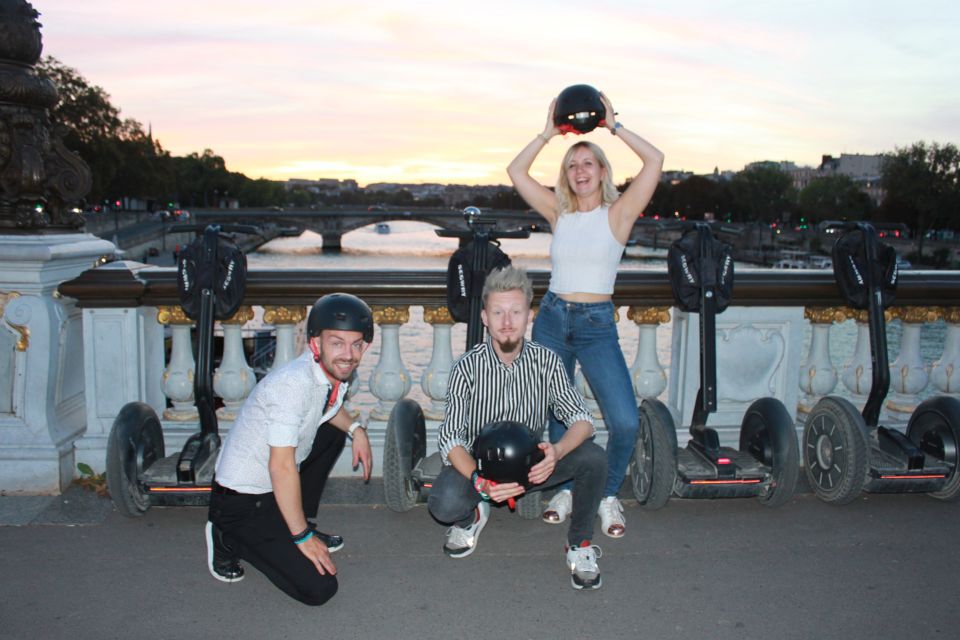
Your tour begins with Invalides, a 15-minute sightseeing and orientation moment. This is a smart first choice. The Dôme des Invalides is one of those Paris buildings you recognize even before you know why. It’s grand without needing explanation, and it sets the tone for the rest of the route: formal architecture, power symbols, and the way the city uses monuments to tell national stories.
In this segment, your guide ties together what you’re seeing with what Paris has valued over time. Even if you’re not deep into military history, you can still appreciate the scale and the “designed to impress” layout. It’s also a great place to get comfortable with your Segway before you move into busier, faster streets.
Drawback to keep in mind: it’s short. This isn’t a museum visit with slow browsing. Expect a guided pass and big visual moments, not ticketed indoor time.
Pont Alexandre III: The Bridge That Looks Like a Celebration
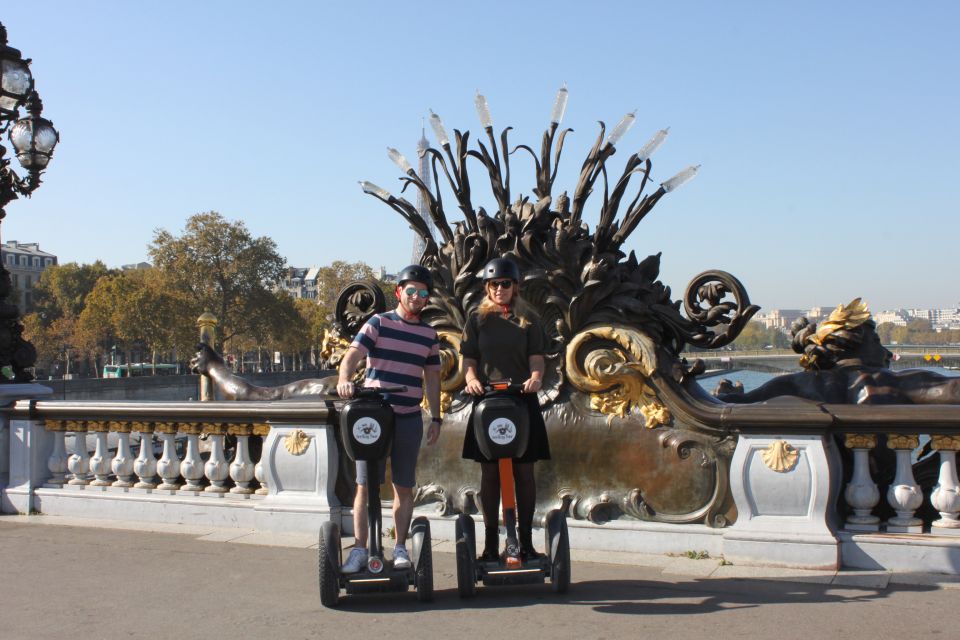
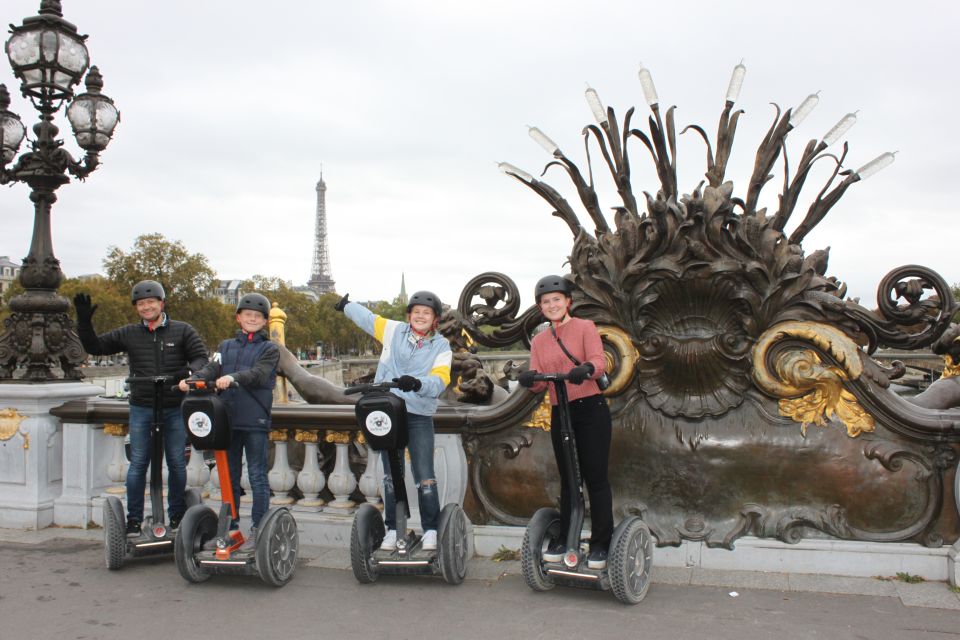
Next comes Pont Alexandre III, another 15 minutes. If you’ve only seen photos, you might think it’s just pretty. Up close, it hits harder because it’s an entire statement in stone, metalwork, and ornament. It’s also historically loaded: it was built for the Paris Exposition in 1900, so it carries that turn-of-the-century “world stage” energy.
On a Segway, the bridge moment is especially good. You get the feeling of crossing something rather than just pausing at it. You can look up at the details and still keep moving, and that matters because you’ll also be chasing your “photo angle” before the light changes.
What you should plan for: bridges can be windy. If you’re sensitive to cold breezes, bring a light layer. It’s not a deal-breaker, just a real comfort issue.
Grand Palais and Petit Palais: Two Palaces, Two Moods
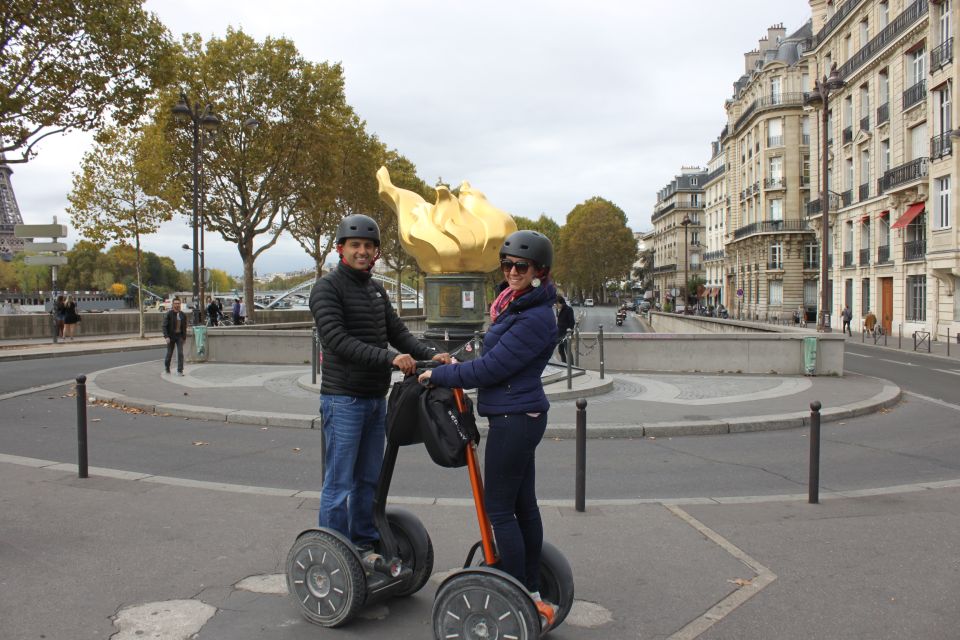
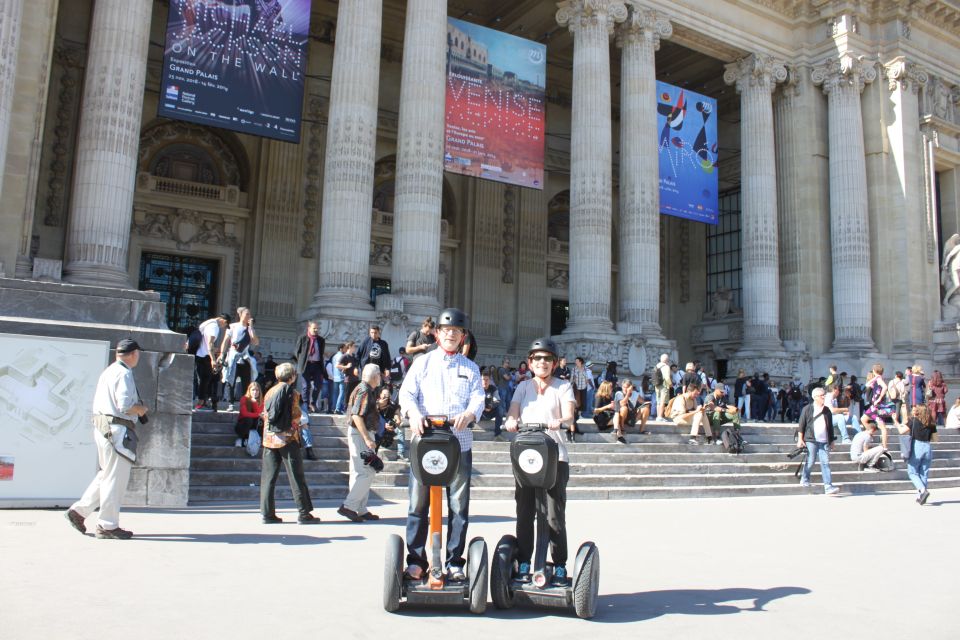
You then roll to Grand Palais (10 minutes) and Petit Palais (10 minutes). Even though they’re cousins—same fancy neighborhood, same official Paris language—they don’t feel identical. Grand Palais reads as monumental and theatrical. Petit Palais tends to feel more delicate in proportion, more “perfectly put together” in a way that rewards quick stops.
These are good Segway stops because they’re front-facing. You don’t need to be stuck behind fences or in long lines to appreciate the façade. Your guide can also explain what to notice—how Paris planned these spaces for culture and display, and how today’s city continues to use those same settings for events and modern life.
One consideration: 10 minutes is tight. If you want slow art gazing, you’ll likely do that on another day. Here, you’re getting the landmarks’ character fast, then moving on.






Champs-Élysées: The Avenue You’re Going to Want to Walk Too
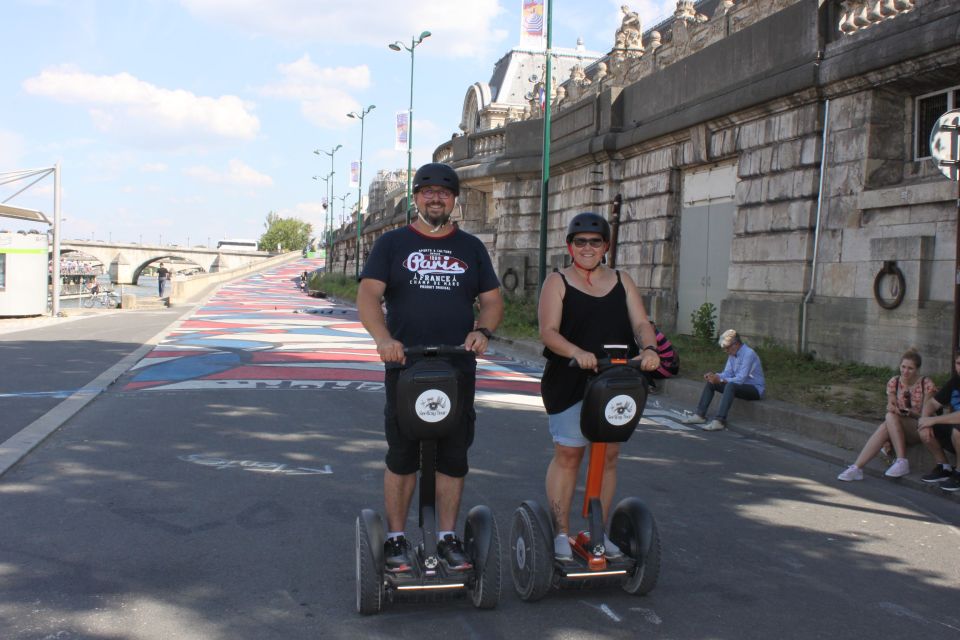
You’ll spend about 20 minutes on the Champs-Élysées. Yes, it’s touristy. That’s also why it’s useful on this tour. This is the classic boulevard where you can get your bearings fast. You’ll see the rhythm of Paris shopping energy and the way the avenue funnels people toward the next major monument.
Segway time works well here because you’re not trapped in stop-and-go walking. You glide, but you still have moments to look around and take photos. Your guide also points out everyday Paris observations—what the city is like now, including its food culture and where people spend time.
Small reality check: the Champs-Élysées can be noisy. One review suggested adding printed info for when it’s hard to hear the guide over street sounds. That’s a fair note. If your French listening is rusty or the street noise is loud, still catch the main ideas and use the photos to fill in the rest later.
Arc de Triomphe: Why Napoleon Wanted This Monument
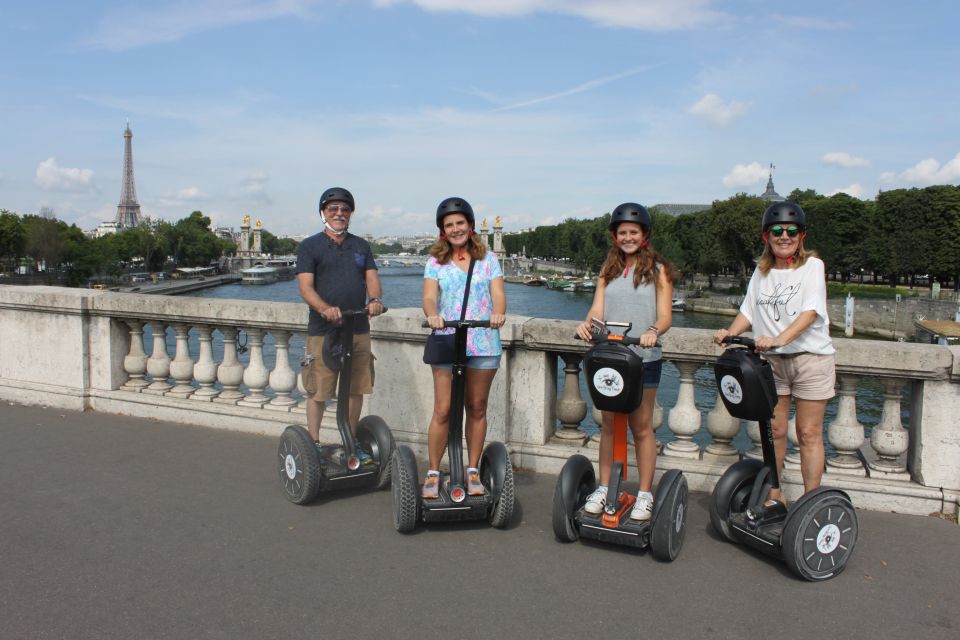
Your route continues toward the Arc de Triomphe, with about 15 minutes set aside for sightseeing. This stop is a classic “big meaning in stone” moment. Napoleon commissioned the Arc in 1806 to commemorate his victories, and your guide’s job here is to help you connect the monument’s size and placement to that intention.
On a Segway, you feel the monument’s scale in a different way. You approach with motion, the avenue opens up, and suddenly the Arc isn’t just a thing you’ve seen in the background of photos—it becomes a focal point that makes the city axis make sense.
If you want the full Arc experience (views from the top), this tour won’t replace that. This is about seeing it in context along a route that also includes the Eiffel Tower payoff.
Champ de Mars and the Eiffel Tower: The Glide-to-Icon Moment
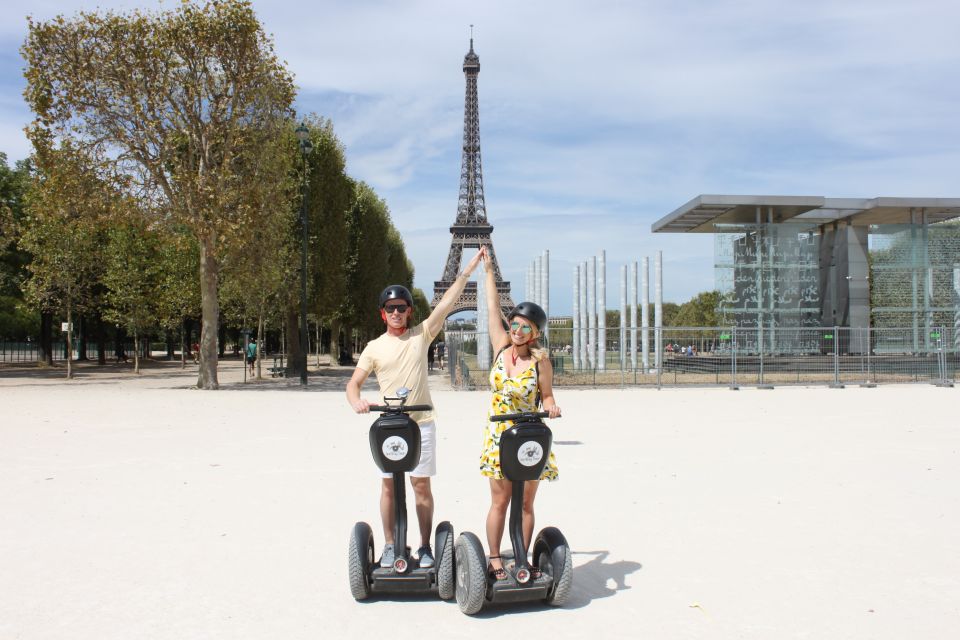
This is the pièce de résistance: you’ll get time at the Eiffel Tower after passing Champ de Mars. Your tour includes a brief sightseeing segment at Champ de Mars (around 5 minutes), then time at the Eiffel Tower (about 15 minutes), plus a short finish around École Militaire (about 15 minutes) before returning.
The big win here is pacing. You’re not arriving at the Eiffel Tower exhausted. You’ve been moving for two hours, getting oriented, and then the tower appears like the endpoint of a carefully designed line through Paris. That “almost there” feeling is real.
The Eiffel Tower time is long enough for good photos and a look around at how the tower sits in the city. It’s not a long, slow, museum-style visit. But it’s enough to feel the scale and capture your version of the moment.
One review specifically mentioned seeing the sparkle later in the evening. If you’re staying nearby after your tour, it can be a fun plan to return for that nighttime magic. Just remember: your Segway tour itself is daylight-view focused.
The 2-Hour Flow: Stops, Safety, and How to Get the Most Out of It
This tour is built around short, efficient stops. That format can be either great or frustrating depending on your travel style.
Here’s why it works for many people:
- You get the big sights in one compact timeline.
- You learn enough to connect what you see with why it matters.
- You’re not stuck in long walking routes between far-apart monuments.
In the reviews, the strongest praise is consistent on two points: safety and clear instruction, especially for first-time riders. People mention getting comfortable quickly, and guides helping them feel steady. Alex and Sasha come up again and again for patient teaching, stopping at key sites, and ensuring everyone stays safe.
What you can do to maximize your experience:
- Wear comfortable shoes even though you’re not doing a full walking day.
- Expect to look up often and to slow down for photos—your guide will build in pauses, but your eyes will do most of the work.
- Bring your phone’s charging cable plan. You’ll want it after Pont Alexandre III and the Champs-Élysées.
Price and Value: Why $70 Can Make Sense Here
At about $70 per person for 2 hours, this isn’t the cheapest way to see Paris—but it’s not random either. You’re paying for:
- A private, guided route through multiple top-tier landmarks
- A Segway experience (equipment plus instruction)
- Helmet and the Segway i2
- A guide who handles timing, safety, and site-to-site transitions
So the value question becomes: are you trying to buy time and reduce friction? If you’re juggling a short visit, Segway time can help you pack in the “Paris highlight set” without spending your whole day commuting between them. If you love a structured overview—especially as a first-timer—this price can feel fair because the tour is doing the planning for you.
If you already love slow travel and you’re the type who wants to linger in one place for two hours, then you might not feel the value. This tour is more “see the icons, get context, move on.”
Who This Tour Fits Best (And Who Should Rethink It)
This experience is a strong match for:
- Adults or older teens who want an efficient, fun way to see Paris highlights
- First-timers who feel overwhelmed by distances
- People who like guided storytelling while still getting their own photos
It’s not recommended for:
- Pregnant women
- Children under 12
- People with mobility impairments
- Anyone over 264 lbs (120 kg)
One more honest consideration: it’s a Segway ride. Even with a practice run and strong instruction, you should feel comfortable standing and balancing. If that’s not you, it’s better to choose a walking tour or a different style of sightseeing.
Should You Book the Paris Private Segway Highlights?
If you want a single, guided “greatest hits” loop—Invalides, Grand Palais, Petit Palais, Pont Alexandre III, Champs-Élysées, Arc de Triomphe, and the Eiffel Tower—this is a solid pick. The reviews strongly suggest guides like Alex and Sasha are patient with beginners, take safety seriously, and keep the tour moving with lots of short, useful stops.
I’d book it if:
- You’re short on time and want maximum sights in 2 hours
- You enjoy learning the why behind what you see
- You want a fun alternative to buses and long walks
I’d pause and reconsider if:
- You need indoor time and museum wandering
- You’re not comfortable with standing/balancing for a ride
- You don’t want to handle a side-street meeting point
FAQ
How long is the Paris private Segway tour?
It lasts 2 hours.
Where do I meet the guide?
Meet at 14 Rue Mathurin Régnier, 75015 Paris, France.
What’s included in the tour?
The tour includes the Segway i2, a helmet, and a live guide.
What languages are offered?
The live tour guide is available in English and French.
Is the tour private?
Yes, it’s a private group.
Who isn’t this tour recommended for?
It’s not recommended for pregnant women, children under 12, people over 264 lbs (120 kg), or people with mobility impairments.