REVIEW · PARIS
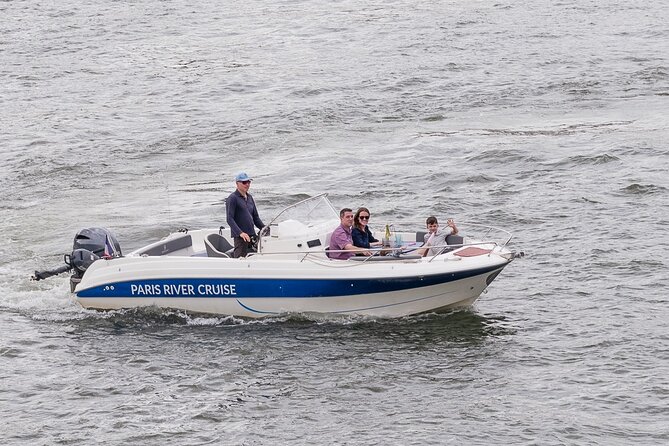
Paris Private Seine River Cruise with your Captain Guide
Book on Viator →Operated by Paris River Cruise · Bookable on Viator
Private Seine time hits differently. This private cruise gives you a small boat, a captain-guide, and a smooth run past the big sights of Paris, with a route that starts in Suresnes and finishes near the Eiffel Tower. If you care about photos, stories, and avoiding the cramped-boat vibe, this is a strong bet.
I like two things most: the up-to-7 group size (it stays calm and personal) and Captain Alexis’s knack for pairing quick facts with great photo moments. One watch-out: there’s no toilet on board, so plan around the facilities at the departure area.
In This Review
- Key highlights you’ll notice right away
- Why a private Seine cruise beats the big dinner boats
- Leaving Suresnes: a calmer start before the center of Paris
- Saint-Germain Island: the quiet lessons behind the scenery
- Seine Musicale and Seguin Island: modern Paris where factories once were
- Statue of Liberty facing the river: the fun history detour
- Eiffel Tower passes: classic views, plus the “timing magic” factor
- Alexandre III Bridge: the bridge that acts like a monument
- Orsay Station (outside the museum): industry to art, rebuilt with style
- Louvre area: the Seine stretches the story from palace to public
- Pont Neuf and the Pont des Arts lock era: older bridges, big opinions
- Île de la Cité and Saint-Louis: the cradle of Paris, in two islands
- Pont Marie and Île Saint-Louis planning: the favorite walking route vibe
- Getting off near the Eiffel Tower: your follow-up plan
- Timing, snacks, and what to pack so the ride stays easy
- Who should book this private Seine cruise with Captain Alexis
- Should you book this private Seine cruise or pick something else?
- FAQ
- What’s the group size for this private Seine cruise?
- How long is the cruise?
- Is there a toilet on the boat?
- What’s included in the price?
- Can I bring drinks or snacks?
- What should I do if the weather is bad?
Key highlights you’ll notice right away
- Private boat for up to 7: you’re not sharing space with dozens of strangers.
- Captain Alexis runs the route with clear, site-by-site storytelling and photo help.
- Classic Paris “greatest hits”: Eiffel Tower, Alexandre III Bridge, Louvre area, Pont Neuf, Île de la Cité.
- A route with variety: quieter river stretches first, then the center of Paris later.
- You can bring your own drinks and snacks, with bottle opener and cups provided.
- Timing matters on the Seine: weather and navigation conditions affect the exact onboard time.
Why a private Seine cruise beats the big dinner boats
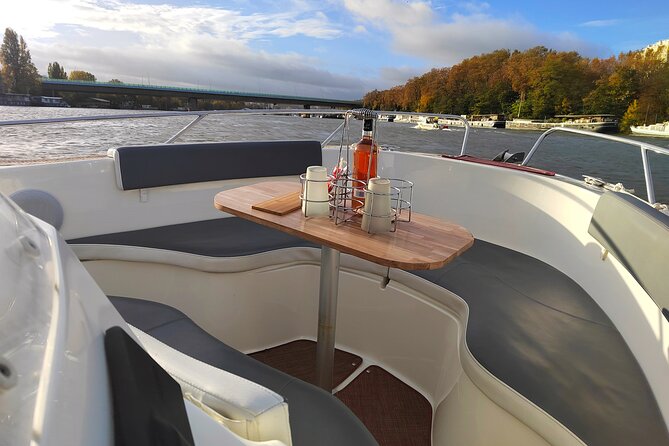
Paris looks different from the water, and the best part is how fast you can get your bearings. With this tour, you’re not stuck craning your neck among a crowd. Instead, your captain-guide can slow down where you need time to look, and speed up when the river traffic allows.
This also feels like a more “Paris-native” way to travel. The itinerary doesn’t just list monuments; it links them to how the river shaped the city: industry, exhibitions, bridges, and the growth of neighborhoods along both banks. If you’ve already walked a lot in Paris, this is a nice break that still moves you through major sights.
Finally, value-wise, the price is per group (up to 7). That makes the math much easier than for tours priced per person on crowded boats. If you’re a couple, a small family, or friends traveling together, you usually come out ahead in comfort.
You can also read our reviews of more boat tours in Paris

Leaving Suresnes: a calmer start before the center of Paris
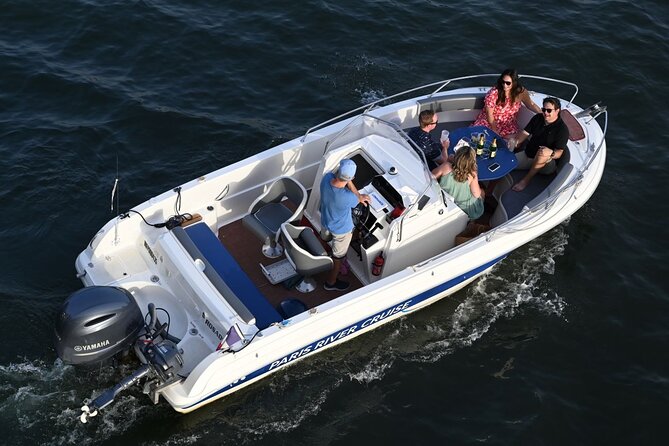
The cruise begins at 5 Quai Marcel Dassault, Suresnes (92150), with check-out from the private port area. From here, you head toward Paris along a stretch that feels less “tour bus” and more local river life.
One practical bonus: this departure area has on-site restaurant toilets before you check out. The boat itself does not have a toilet, so that early bathroom window matters more than you’d think on a 1h45 ride.
You also get the upside of starting west of central Paris: the river gives you a breather before the skyline hits. You’re not immediately elbow-to-elbow with the postcard crowd. Instead, you ease into it with houses lining the water and a bit of nature along the way.
Saint-Germain Island: the quiet lessons behind the scenery
Early on, you follow Saint-Germain Island and its long tug-of-war with change. You’ll pass magnificent riverside houses, but the point of this part of the route is what the land once was—and what it became.
You’ll hear how Saint-Germain’s story isn’t just pretty views. It’s tied to battles against uncontrolled urbanization and industrialization. Then the river corridor shifts from older agricultural land toward modern development, including the construction of the Central Comptoir of Crédit Bonnard et Cie and the Agricultural Pavilion connected to the Universal Exhibition of 1867.
Why this matters for you: when a guide points out what used to exist in a place, the sights stop being random. You start spotting patterns along the Seine—where the city expanded, where it tried to control growth, and where the river became a working corridor.
A small consideration: this portion is calmer and greener, which is great for the vibe. If you’re chasing only the biggest landmarks, you might want to keep your expectations flexible for a short while before the “wow” cluster.
Seine Musicale and Seguin Island: modern Paris where factories once were
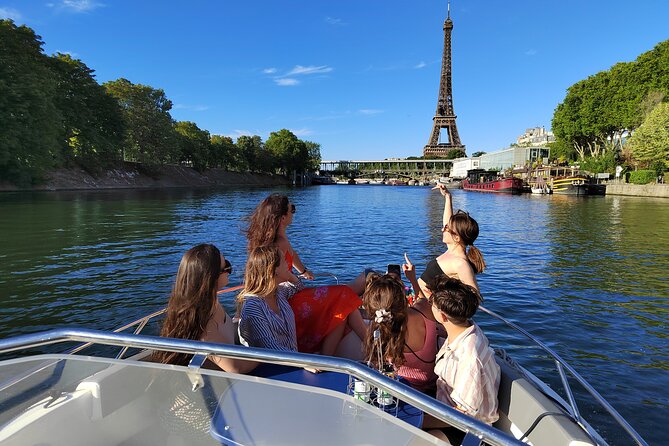
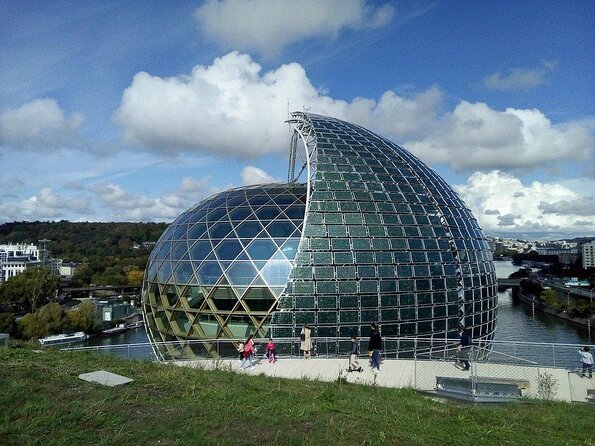
As you continue, you reach Seguin Island (Boulogne-Billancourt) and the site that became the Seine Musicale. This is one of those stops that makes Paris feel like a living city, not a museum.
The background matters: the area is built in place of the former Renault factory on Seguin Island. So when you see the venue and the island setting, you’re really looking at a transformation—industry giving way to culture.
Then the tour rounds the section that feels very “today Paris.” The Seine Musicale is described as preparing to open its doors and balancing cultural offerings in the west of the capital. The biggest room is built for amplified concerts, musicals, and musical theater (with a large capacity for seated and standing audiences). You’re not going to watch a show on the cruise, but you get a sense of the cultural shift—and how the Seine still connects everything.
You’ll also see locals’ house boats on the water. That little detail is worth it. It makes the cruise feel lived-in, not just staged.
Statue of Liberty facing the river: the fun history detour
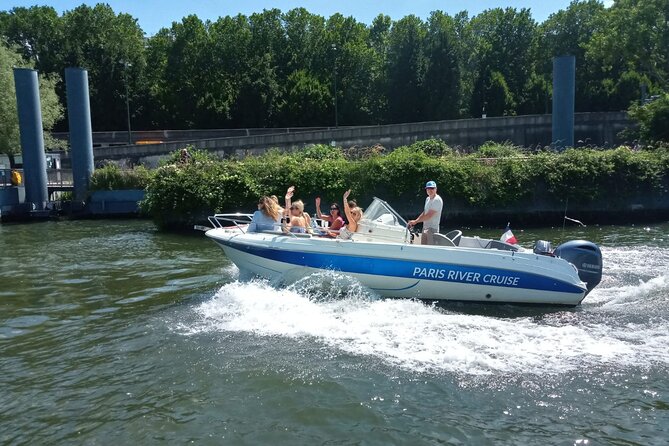
Next comes a curveball: the Statue of Liberty. You’ll pass in front of it, and the story is unusually specific. The statue was inaugurated in 1889 at the Grenelle bridge, originally facing the Eiffel Tower direction. Later, it was moved in 1937 to face New York where the bigger sister stands.
For you, this is a great kind of stop: it’s instantly recognizable, but the context is surprising enough that it sticks. It also keeps the cruise from becoming a straight line of only “Paris icons.” You get a mini history lesson with a wink.
You can also read our reviews of more guided tours in Paris
Eiffel Tower passes: classic views, plus the “timing magic” factor
Yes, you’ll pass the Eiffel Tower. But what makes this tour feel special is how the captain can manage timing so you see it at its best. On past cruises, Captain Alexis has been praised for lining things up so the tower can sparkle more than once, depending on the lighting and the schedule.
On the ground, crowds decide your photos. On the Seine, your captain helps decide the angle and the moment. Even if you’ve seen Eiffel from Trocadéro, this river perspective is different: the tower sits in a framework of bridges and moving water, with the city sliding by behind it.
Practical tip for your planning: if your cruise is close to sunset, dress in layers. The river breeze can change fast, even in summer.
Alexandre III Bridge: the bridge that acts like a monument
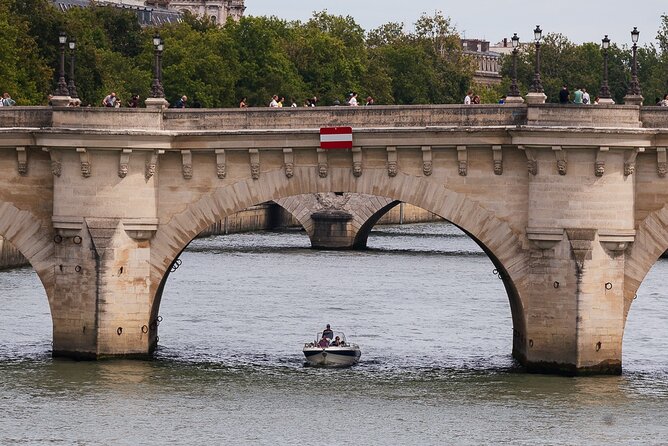
Then you hit one of the most “look at the details” bridges in Paris: Alexandre III Bridge. It’s a cast steel bridge about 160 meters long, decorated in a way that feels like French royalty did the job—because they kind of did.
You’ll see:
- bronze candelabra with multiple branches
- four pillars topped with golden crowns
- Louis XIV–style cast iron decoration
- lion statues at each end
And you’ll go under the bridge, which is where the experience gets more cinematic. When you’re underneath, you see how the bridge owns the space. The Seine becomes a corridor beneath a sculpture.
If you care about photography, this is a prime moment. It’s also a good reminder that Paris isn’t only about buildings. Bridges are architecture too, and this one earns attention.
Orsay Station (outside the museum): industry to art, rebuilt with style
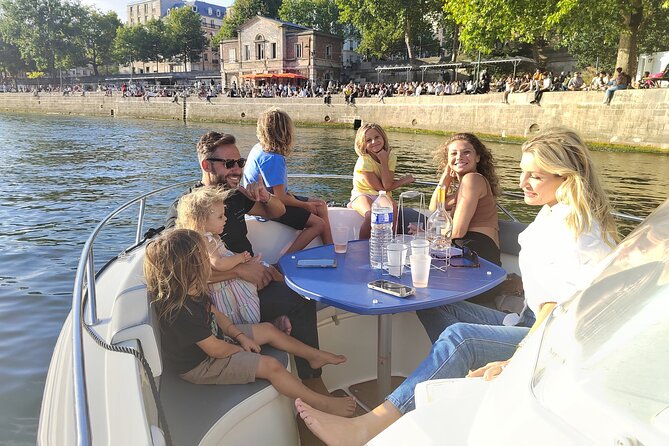
Next up: a museum in a station. You’ll pass in front of Musée d’Orsay, which sits where the former Orsay station was built.
The story here is classic Paris reinvention. Older buildings once became museums, but Orsay started as an industrial building and was converted into a museum. It was built by Victor Laloux in 1900, with a style closer to the Second Empire than Art Nouveau. The station survived the era that might have erased it—then got a new job.
Why you’ll care from the boat: seeing it from the river gives you a “big picture” view of how Paris uses architecture. You can connect what you see on the banks with what you might later explore on land.
And because this is a cruise, you get this context without committing to a museum time slot.
Louvre area: the Seine stretches the story from palace to public
You’ll also pass by the Louvre area. The guide context matters: when the royal court moved to Versailles, the Louvre remained a place for nobles, intellectuals, and artists. Then the French king supported the idea of a museum project, and the French Revolution pushed the Grande Galerie open to the public.
From the water, the Louvre doesn’t feel like a destination you fight for. It feels like a piece of the urban puzzle. You’re not entering yet—you’re clocking its position in the city’s power web.
If you’re planning a museum day during your trip, this cruise helps you decide what you’ll care about once you’re on foot.
Pont Neuf and the Pont des Arts lock era: older bridges, big opinions
Then the cruise moves into the part of the river where time stacks up fast. You’ll see:
- Pont Neuf, the oldest bridge in Paris
- Pont des Arts, famous for the padlocks
Pont Neuf started with a decision in 1577 by King Henry III. The work began the following year with the king laying the first stone in the presence of Catherine de Medici and Louise de Lorraine, and the project continued until 1588.
Pont des Arts is connected to the era of the hanging garden idea. It was built between 1801 and 1804 and was the first metal bridge in Paris, made of cast iron with nine arches. It’s the same bridge that became a social symbol for love via the locks—so you’ll likely get a “this is what people turned it into” kind of moment.
On the boat, you get a rare viewpoint: you see the bridges as functional city links and as cultural landmarks.
Île de la Cité and Saint-Louis: the cradle of Paris, in two islands
This is one of the most meaningful stretches on the whole cruise.
You’ll learn that Île de la Cité is the cradle of Paris, tied to the early core of Lutetia. Over time, fortifications allowed civil, military, and religious powers to take root. After the year 1000, the Capetian kings built a royal palace that later became the current Palace of Justice. Then the bishops established Notre-Dame Cathedral, and the island alone couldn’t handle the growing population—so development spilled to Île Saint-Louis and both banks.
You’ll follow both islands—Cité and Saint-Louis—as you move through the historic heart of the city.
Why this portion is valuable: it’s where Paris stops being “pretty stuff” and becomes “why the city is shaped this way.” You’re seeing the origin point and the spillover plan, all from a moving vantage point.
Pont Marie and Île Saint-Louis planning: the favorite walking route vibe
As the cruise continues near Pont Marie, you get a snapshot of a classic neighborhood layout. The Marie Bridge came from a royal desire in the early 1600s to create a new traffic route between the right bank and the University on the left bank, plus the urban development of previously unused land.
You’ll also hear that Île Saint-Louis originally included two unused islets separated by a channel, tied to canons of Notre-Dame. Those earlier names reflect the lack of urbanization—then the island shifted into planned city living.
Even if you don’t plan to walk those blocks immediately, this section helps you understand why this area looks the way it does and why locals like strolling there.
Getting off near the Eiffel Tower: your follow-up plan
The end point is 2 Port de Javel Haut, 75015 Paris, with a note that you’ll end near Pont de Grenelle (about 950 meters from the Eiffel Tower). The cruise return allows you to get off in Paris near the Eiffel Tower, which is handy if you want a post-cruise walk or a sunset snack.
That drop-off is also useful because it keeps your evening flexible. You’re not stuck far from the main sights. You can roll straight into dinner, a quick walk along the river, or a final Eiffel photo.
Timing, snacks, and what to pack so the ride stays easy
This cruise is about 1 hour 45 minutes, but the real duration can change based on navigation conditions. The boat also has to leave on time, and delays can reduce cruise time.
So here’s how you make it work for you:
- Arrive 15 minutes early so you don’t eat into onboard time.
- Bring drinks and snacks if you like. The tour provides a bottle opener and plastic cups.
- Plan for light wind: the river can feel cool even when the city is hot.
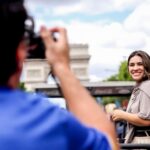
- Use the captain’s photo help. Multiple stops are designed for viewpoint moments, and you’ll get the best results by timing your own shots around what the guide is pointing out.
Also, the boat is described as not accessible to people with reduced mobility. If mobility is a factor for you or someone in your group, this is not the right kind of cruise.
Who should book this private Seine cruise with Captain Alexis
This tour fits best if you want:
- a small-group, private experience
- a photo-friendly route through major landmarks
- a captain who adds context and keeps things fun (Captain Alexis is repeatedly singled out for being friendly and for helping with pictures)
- a calmer alternative to packed boats you pass along the river
It’s especially great for families and friend groups. Many people choose it after seeing how crowded other Seine options can get. Here, the boat stays yours, so kids and teens don’t spend the whole time fighting for a view.
If you’re the kind of traveler who only wants the absolute quickest “top ten” monuments with zero narration, you might find that the historical linking takes a few minutes to build. But if you like understanding what you’re seeing, this route is built for that.
Should you book this private Seine cruise or pick something else?
Book it if your trip includes Paris landmarks but you also want a better way to enjoy them. For the price per group, the trade is simple: you pay more than a mass cruise, but you get time, comfort, and a guide who can focus on your group.
Consider another option if:
- you need a toilet on board (this one doesn’t have one)
- you need full accessibility support (the boat is not accessible for reduced mobility)
- your schedule is tight enough that 1h45 losing a chunk due to navigation would stress you out
If you can be flexible on timing and you’re traveling as a small group, this is one of the best ways to see the Seine without feeling like you’re stuck in a human wave.
FAQ
What’s the group size for this private Seine cruise?
It’s a private tour/activity with a group size of up to 7 people. Only your group participates.
How long is the cruise?
The cruise is about 1 hour 45 minutes, but the duration can depend on navigation conditions.
Is there a toilet on the boat?
No, the boat does not have a toilet on board. There are toilets at the restaurant near the departure location.
What’s included in the price?
The price includes a private captain and guide. It also includes a bottle opener and plastic cups.
Can I bring drinks or snacks?
Yes. You can bring your own drinks and snacks on board.
What should I do if the weather is bad?
The experience is dependent on weather. If it’s canceled due to poor weather, you’ll be offered a different date or a full refund, as stated in the cancellation guidance you’ll see for your booking.