REVIEW · PARIS
Paris: Musee De L’Armee Ticket With Digital Audio Guide
Book on GetYourGuide →Operated by Global Tours And Tickets · Bookable on GetYourGuide
A dome and a battlefield story in one stop. The Musée de l’Armée at Les Invalides connects France’s military past to the present, from ancient armor to modern uniforms, at your own pace. I like how the setting feels special before you even reach the galleries, since this complex was built in the 17th century for war veterans under King Louis XIV.
I also like the practical flexibility of a digital audio guide in multiple languages, so you can spend less time guessing and more time looking closely. The main drawback is that the digital audio experience depends on your phone and headphones, and some people find it tricky to match audio to specific exhibits.
In This Review
- Key highlights to know before you go
- Les Invalides: the real star before you even start museum time
- Entering with your ticket: self-guided flow, best timing, and security reality
- Napoleon’s tomb under the dome: what to watch for in the main memorial space
- Military artifacts across centuries: how to navigate armor, weapons, and uniforms
- Using the digital audio guide: how to make it work (and when to skip it)
- How long to plan: a realistic visit length at the Army Museum
- Pairing your visit with a Seine cruise: check whether it’s actually included
- Price and value: is $35 worth it for this self-guided museum day?
- Who should book this, and who might want a different plan?
- Getting the most out of Les Invalides: small decisions that pay off
- Should you book this Musée de l’Armée ticket with digital audio?
- FAQ
- What is the duration of the Musée de l’Armée ticket with digital audio?
- Where is the meeting point?
- What’s included in the ticket price?
- What is not included?
- Do I need to bring anything?
- Are there limits on bags or who can enter?
- What are the museum opening hours?
- How will I get my tickets and audio guide access?
- Is the museum wheelchair accessible?
- Are there any age or residency discounts?
Key highlights to know before you go

- Napoleon’s tomb under the grand dome: the emotional centerpiece of Les Invalides
- Military artifacts across eras: armor, weapons, and uniforms from ancient to modern warfare
- Digital audio guide, not a live guide: you control pacing and language choice
- A phone-based experience needs prep: bring charged smartphone and headphones
- Self-guided entry into a historic complex: you can linger at your favorite rooms
- Plan for time: a few hours, not a quick walk-through, works best
Les Invalides: the real star before you even start museum time
You’re not just walking into a museum. You’re entering Les Invalides, a historic 17th-century complex that began as a hospital and retirement home for war veterans under King Louis XIV. That context matters because the museum isn’t presented as abstract history. It feels tied to people—those who fought, those who lived with the aftermath, and those remembered through symbols, uniforms, and objects.
The Musée de l’Armée itself covers military history from antiquity to the present, and it’s housed in the same grand complex that visitors associate with Napoleon. Even if your interest is casual, you’ll likely appreciate the sheer range: armor and weapons in one area, uniforms and later developments in another. It’s the kind of museum where you can be drawn in by craftsmanship one moment and by strategy and technology the next.
And yes, you’ll feel Napoleon’s presence from the start. The tomb of Napoleon Bonaparte sits under the dome, turning the architecture into part of the storytelling. It’s hard to explain until you’re there, but the building makes the museum feel more like a memorial than a storehouse.
A few more Paris tours and experiences worth a look



Entering with your ticket: self-guided flow, best timing, and security reality

This is not a guided tour. Your ticket gives you entrance to the Army Museum, and you explore at your own pace. That freedom is great if you like to stop, zoom in on details, and backtrack when something catches your eye.
Museum hours are 10:00 am to 5:30 pm daily, with closures on 1 January, 1 May, and 25 December. There are extended hours on the 1st Friday of the month from 6:00 p.m. to 9:30 p.m., so if you’re trying to avoid peak crowds, it’s worth checking the calendar.
One practical note: in busy seasons, plan for lines at security checkpoints. That can turn a smooth visit into a slow one, especially if you arrive during a late-morning rush. If you want an easier entry, aim for earlier in the day and give yourself breathing room.
You’ll receive your voucher information and a link for the digital audio guide by email about a day before your visit. You can also access tickets quickly by downloading the Global Tickets app. Bring a smartphone that has enough battery for both the ticket and the audio guide.
Napoleon’s tomb under the dome: what to watch for in the main memorial space
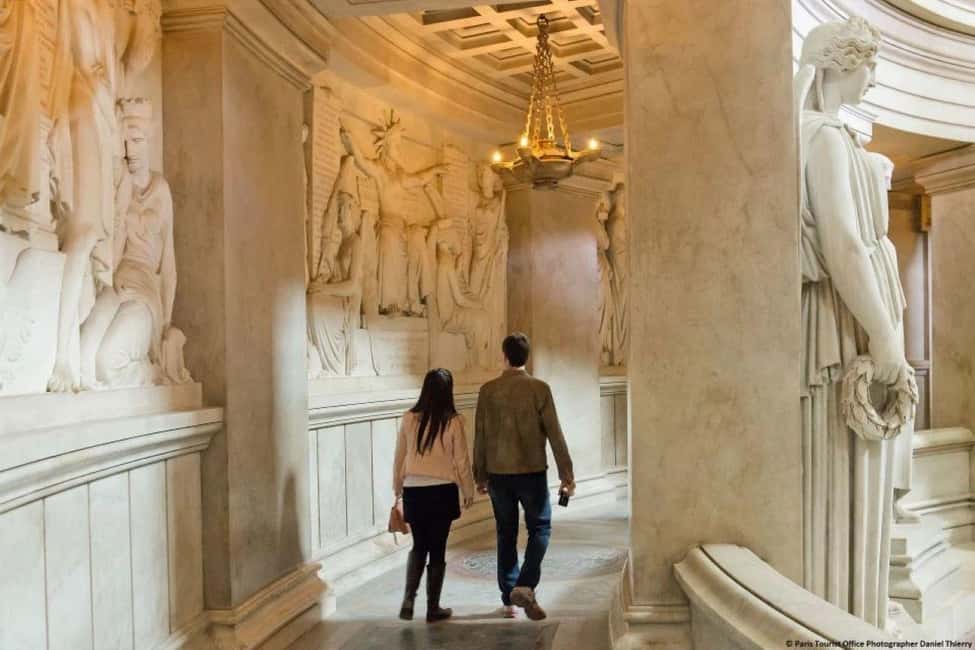
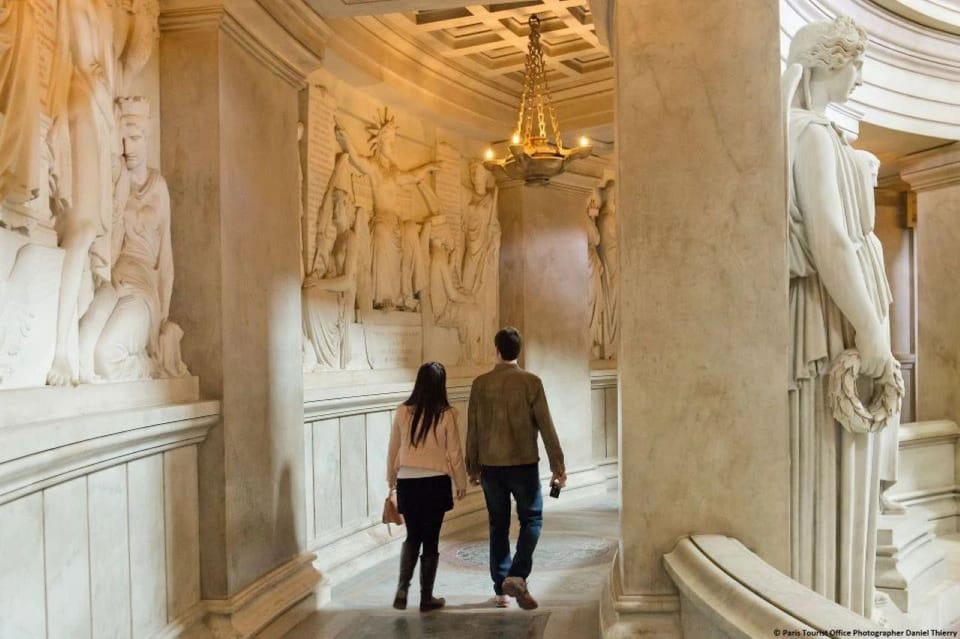
If you only do one thing carefully at the museum, make it your visit to Napoleon’s tomb under the grand dome. It’s the moment where the setting and the collection click into something more personal.
When you get there, slow down. Look up. Notice how the dome and memorial space frame the story. The museum’s other galleries cover many eras, but this is where Napoleon becomes not just a historical figure but a symbol in a specific physical place. Even if you’re not a Napoleonic history nerd, you’ll probably feel the mood change.
Practical tip: don’t treat this like a photo stop that lasts 30 seconds. Build in a few minutes, because you’ll want time just to orient yourself, take in the dome, and then move into the galleries with a clearer sense of what you’re looking for.
Military artifacts across centuries: how to navigate armor, weapons, and uniforms
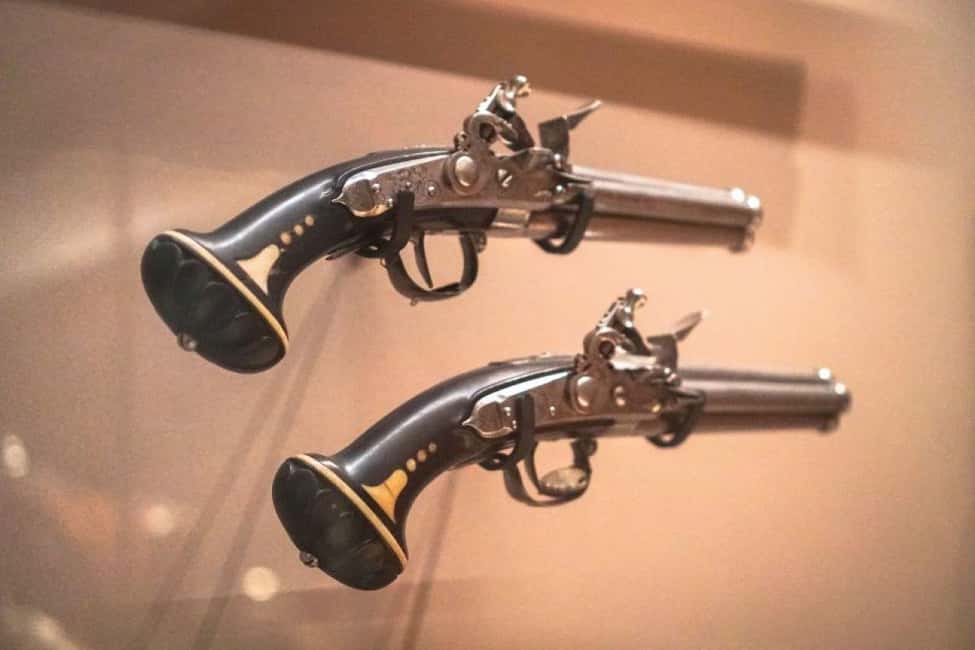
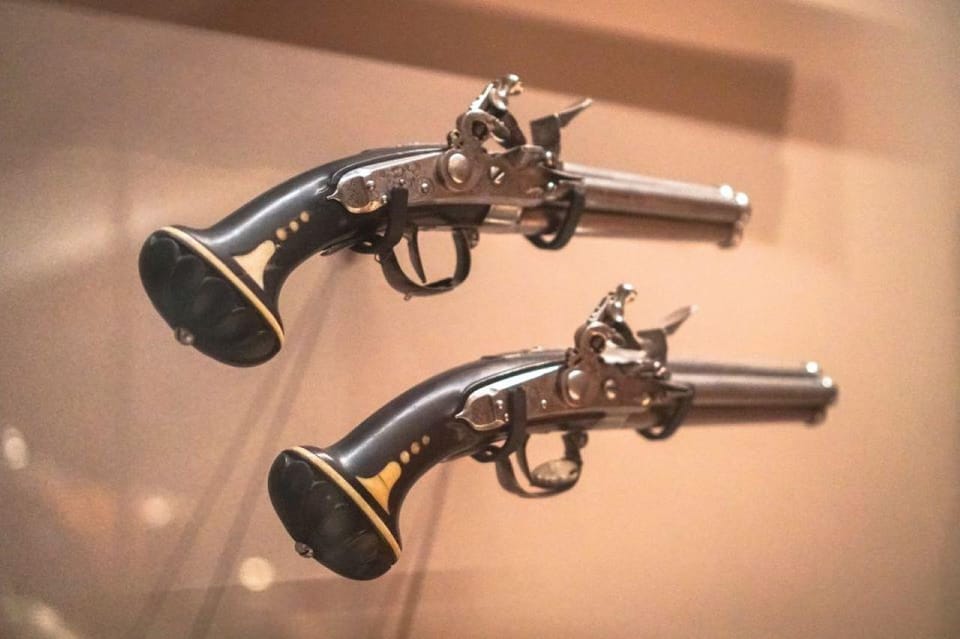
The museum’s core strength is the breadth of its collection. You’ll see exhibits that trace how warfare changed over time, including armor, weapons, uniforms, and related artwork. This is the part that keeps the visit interesting even if you’ve seen one museum object already—because each room tends to show a different approach to fighting, protection, and identity.
Here’s a way to make the experience more rewarding: pick a theme before you start. For example, ask yourself:
- How did protection evolve from earlier armor to later gear?
- What kinds of weapons show the shift from older tactics to more modern warfare?
- How do uniforms reflect organization, rank, and the politics of a period?
Even if you don’t know the technical terms, you can still compare objects visually—shapes, materials, and how each piece is designed for a specific kind of use. That’s where a self-guided visit really shines. You don’t need to follow someone else’s route.
Two more things to keep in mind. First, some exhibits may be loaned out or not on display, so don’t build your plan around finding any one single artifact. Second, the digital audio guide may focus on many key pieces, but temporary exhibitions might not be covered in the app, so you’ll want to use your own eyes in those areas.
Using the digital audio guide: how to make it work (and when to skip it)

The digital audio guide is a big part of what you’re paying for, especially because it’s available in multiple languages. If you want context without committing to a live guide, this is the main way to get it.
But it’s also where your experience can make or break—mainly because it’s phone-based. The ticket includes access links for the audio guide app, but you need headphones and you’ll want a charged smartphone. Internet/Wi‑Fi isn’t listed as included, so assume you should be ready to use your phone without counting on easy Wi‑Fi inside the museum.
Also, there’s an important distinction: the digital audio guide provided is separate from the museum’s own audio guide, which is available for an additional fee. If you’re the type who prefers everything in one official museum app, you might still end up paying more later. If you’re trying to keep costs down, start with the digital guide that comes with your ticket and only upgrade if you feel you really need it.
If you’re worried about the audio matching specific exhibits, plan your approach. A good way to reduce frustration is to move room by room and look for the audio prompts as you go. Some people find a numbered guide/map style helps match what they’re hearing to what they’re seeing. If your app layout supports that, use it—don’t wander hoping the audio will magically line up.
Bottom line: if the audio guide makes the museum clearer for you, it’s excellent value. If it doesn’t, at least you’ve still got access to one of Paris’s strongest military collections and the dome memorial at Les Invalides.
You can also read our reviews of more guided tours in Paris






How long to plan: a realistic visit length at the Army Museum
A quick stop won’t do this museum justice. The collection is large, and the building itself encourages lingering—especially once you’ve seen Napoleon’s tomb and you start noticing how different periods are arranged.
A few hours is the sweet spot for most people. If you like reading labels and checking out artifacts closely, you may naturally stretch the visit further. Think in terms of a relaxed morning or afternoon rather than squeezing it into a 60-minute window.
Also, build in time for the museum complex itself. Les Invalides isn’t just a ticket entrance—it’s a set of spaces with a strong atmosphere, and the layout affects how you move between rooms.
Pairing your visit with a Seine cruise: check whether it’s actually included
Your experience highlights mention a scenic Seine River cruise. That can be a fantastic pairing because Les Invalides sits on the Left Bank, and a cruise gives you a different angle on Paris after you’ve spent time surrounded by history.
However, the included items listed here focus on the Army Museum ticket and the digital audio guide. So before you count on a cruise day plan, check your voucher details or booking confirmation to see whether the cruise is part of your package or simply suggested as an add-on.
If your booking does include the cruise, schedule your museum visit so you’re not rushed at the end. The museum closes at 5:30 pm (with monthly extended evening hours on the 1st Friday), so the timing should work best if you leave enough buffer for getting to the docks and settling in.
Price and value: is $35 worth it for this self-guided museum day?
At about $35 per person, you’re paying for two things: museum admission and access to a digital audio guide application. The value comes down to how you like to travel.
If you enjoy self-guided sightseeing but still want context, this can be good value. You’re not locked into a group schedule, and you can switch languages based on what you need in each gallery. Also, pre-booking can save time when you’re dealing with security lines.
Where value gets weaker is when the audio guide doesn’t match your pace. If you find the phone-based audio experience frustrating—like trouble matching the audio to exact exhibits—you might feel like you paid extra for something you didn’t fully use. In that case, you still have the underlying strength of the museum: Napoleon’s tomb and the full military artifact collection.
Another factor: headphones are not included. Earphones and reliable phone battery can matter more than you expect. If you show up without headphones, you can lose the main benefit of the ticket bundle.
Finally, keep in mind free entry rules. The museum is free for under 18s and for EU citizens under 26, but they still need a ticket from the museum cash desk to enter. If you’re eligible, you may be able to redirect your budget to other parts of your Paris day.
Who should book this, and who might want a different plan?
This is a smart choice if you:
- like history that you can see and compare through artifacts
- want to spend time in one focused museum setting
- enjoy traveling at your own pace with an audio option
- are interested in Napoleon’s memorial space as a centerpiece
It’s less ideal if you:
- want a true guided tour with a person leading the route (this is self-guided)
- dislike using your phone as your main information source
- depend heavily on an audio experience that you can’t troubleshoot quickly
- need to keep large bags with you, since luggage/large bags aren’t allowed
Also note: unaccompanied minors aren’t allowed, so this may not work for every family situation.
Getting the most out of Les Invalides: small decisions that pay off
You’ll get a better day if you treat the museum like a set of choices rather than a checklist.
- Start by deciding what you want most: the dome memorial, the centuries of artifacts, or the audio guide in a specific language.
- Use a phone strategy: charged battery first, headphones ready before you enter.
- Don’t assume everything is on display: some items may be on loan or missing that day.
- Give yourself time to recover between sections. The museum can be mentally heavy in a good way, but breaks keep it enjoyable.
If you do those things, the visit becomes more than seeing objects. It becomes a slow timeline of how societies built armies, equipped them, and memorialized them.
Should you book this Musée de l’Armée ticket with digital audio?
If you want a self-guided museum day with Napoleon’s tomb, a strong military collection, and multilingual audio support, this booking can be a solid use of your time. The price makes sense when you’ll actually use the audio and when you’re comfortable navigating at your own pace.
I’d skip or at least reconsider if you don’t want to rely on your phone, if you don’t have headphones, or if you prefer a museum audio option that’s fully integrated to the exhibits. And if the digital audio guide feels like extra work once you arrive, you’ll still benefit from the museum itself—you’re paying for the entrance to Les Invalides.
If you can handle the basics (battery + headphones + patience at security), this is a very worthwhile Paris stop.
FAQ
What is the duration of the Musée de l’Armée ticket with digital audio?
The activity is listed as 1 day. You explore at your own pace during museum opening hours.
Where is the meeting point?
The address given is the Army Museum, Rue de Grenelle, Paris, France. This is self-guided entry.
What’s included in the ticket price?
Included: entrance ticket to the Army Museum, and digital audioguide application access links with detailed audio commentaries and multilingual support.
What is not included?
Not included: audio devices (earphones and internet/Wi‑Fi). Also, the audioguide may not cover temporary exhibition artworks.
Do I need to bring anything?
Bring a passport or ID card, headphones, and a charged smartphone.
Are there limits on bags or who can enter?
Luggage or large bags are not allowed. Unaccompanied minors are not allowed.
What are the museum opening hours?
Hours are 10:00 am to 5:30 pm daily. The museum is closed on 1 January, 1 May, and 25 December. The 1st Friday of the month has extended hours from 6:00 pm to 9:30 pm.
How will I get my tickets and audio guide access?
You receive information and booking reminders by email about a day before your date. You can access tickets quickly by downloading the Global Tickets app, and you’ll also have ticket access through your GetYourGuide voucher and audio guide link.
Is the museum wheelchair accessible?
Yes. Wheelchair accessibility is available with access at 6 Boulevard des Invalides, with reserved spaces in rear alleys.
Are there any age or residency discounts?
The museum is free for under 18s and EU citizens under 26, but they still need a ticket from the museum cash desk to enter.