REVIEW · PARIS
Paris: Montmartre Private Tour for Families
Book on GetYourGuide →Operated by VISIT · Bookable on GetYourGuide
Montmartre turns a walk into a story. This family tour threads together the neighborhood’s most famous corners with a kid-minded guide and a route that feels manageable on the hill.
I especially like the small-group feel, which keeps the pace calm for children and lets you stop for photos without herding everyone along. The built-in game booklet also gives parents a simple way to keep kids engaged while the guide explains what you’re seeing.
One thing to plan for: the listing says the Sacred Heart visit isn’t included, even though the tour spends guided time at the Sacré-Cœur Basilica area, so check what access you’re expecting.
In This Review
- Key Things That Make This Montmartre Tour Worth Your Time
- Montmartre by Foot: Why It’s a Great Family Neighborhood
- Price and Value: $258 Per Group Up to 10 (What You’re Really Buying)
- How the 2-Hour Walk Fits Real Families (And What to Expect)
- Starting at Place Saint-Pierre: Getting Your Bearings Fast
- Sacré-Cœur Basilica Area: Views, Orientation, and the Biggest First Impression
- Rue du Mont-Cenis and La Maison Rose: Where Montmartre Looks Like a Picture
- Dalida Statue and Square Suzanne Buisson: Small Stops That Add Personality
- The Passe-Muraille Myth: Why the Wall Next Door Matters
- Le Consulat and La Bonne Franquette: The Neighborhood’s Everyday Culture
- Place du Tertre: Artists’ Square and the Moment Everyone Recognizes
- Passage de Abbesses and the Wall of Love: Fun Photos, Real Stories
- Don’t Miss the Montmartre Windmills Detail
- The Guides: How the Best Ones Keep Kids Engaged
- Food, Drinks, and the Sacré-Cœur Access Reality
- Who This Tour Suits Best
- Should You Book This Montmartre Family Tour?
Key Things That Make This Montmartre Tour Worth Your Time
- Family-specialized guide: multiple guide names show up in feedback for staying patient with kids and matching the energy level.
- A real route, not a scavenger hunt: the game booklet supports learning, but the tour is still a guided walk.
- Story stops kids remember: Passe-Muraille myth, Dalida statue, and the Wall of Love are easy to spot and fun to talk about later.
- Time for pictures and questions: the best part is the guide’s pacing, not just the checklist of sights.
- Covers both viewpoints and backstreets: you get the iconic Montmartre look plus quieter lanes that are hard to find alone.
Montmartre by Foot: Why It’s a Great Family Neighborhood
Montmartre has two personalities that work well with families. First, it’s visually “wow” with stairs, viewpoints, and postcard streets. Second, it’s practical for a short visit because the big sights are close enough that a 2-hour plan can make sense.
On this tour, you’re not just shown monuments. You’re guided through a string of recognizable spots and small details that help you understand why the area became the bohemian postcard it is today. And because the guide is specialized for families, the explanations tend to be paced for mixed ages, not adult lecture mode.
If you’ve ever tried to do Montmartre solo with kids, you know the challenge: you reach one famous stop, then you lose your bearings and waste time backtracking. Here, the route is designed to keep you moving forward.
You can also read our reviews of more private tours in Paris



Price and Value: $258 Per Group Up to 10 (What You’re Really Buying)
$258 for a group up to 10 for a 2-hour guided walk can sound “touristy,” but value depends on how you’ll experience it. You’re paying for three things that usually cost families time and energy when you DIY Montmartre:
1) A guide who knows how to work with children, not just how to describe landmarks. Feedback repeatedly highlights guides who stay patient and adjust the pace, including names like Bruno, Leo, Santiago, Gabriel, Claudia, Pedro, Gonzalo/Gonzales, and Marin.
2) A planned route that connects the neighborhood’s main sights and some lesser-noticed corners, so you don’t spend your day hunting streets uphill.
3) A kid-focused activity booklet, which turns “stand here and listen” into something more interactive.
If you have four to six people, this often works out cheaper than renting taxis or paying for multiple separate guides or audio tours. If you’re a group of just two adults, it’s still a good deal when you want the structure and family-friendly pace, but you’ll get the most bang when the group can share the guiding cost.
How the 2-Hour Walk Fits Real Families (And What to Expect)

This is a walking tour, so the “feel” matters as much as the route. The schedule is short, which helps. You’re looking at a compact loop built around key sites, plus lots of quick stops that make kids feel like something is always happening.
The times are designed for short, guided visits rather than long museum-style breaks. You’ll get moments to look, take photos, and ask questions, then move on. If you’ve got younger kids, that pace tends to work better than slow, drawn-out sightseeing.
The itinerary also includes areas with stairs and slopes. That doesn’t mean it’s impossible with strollers, but it does mean you should think ahead about comfort and footwear. If you’re traveling with kids who tire easily, plan for frequent photo pauses and keep expectations realistic for the climb.
Starting at Place Saint-Pierre: Getting Your Bearings Fast

The tour starts at one of two matching options tied to Place Saint-Pierre (the listing shows 12 Pl. Saint-Pierre / 12 Place Saint-Pierre). The meeting point may vary depending on the option booked, so double-check the exact spot you receive.
This matters more than it sounds. Montmartre is famous for getting confusing quickly, and starting at the right place reduces early chaos. It also sets you up for the day’s rhythm: you’re moving toward Sacré-Cœur and then drifting through the neighborhood’s layers of streets, viewpoints, and small landmarks.
If you arrive early, use that time to orient yourselves. A quick look at nearby directions helps kids feel less rushed once the walk starts.
Sacré-Cœur Basilica Area: Views, Orientation, and the Biggest First Impression

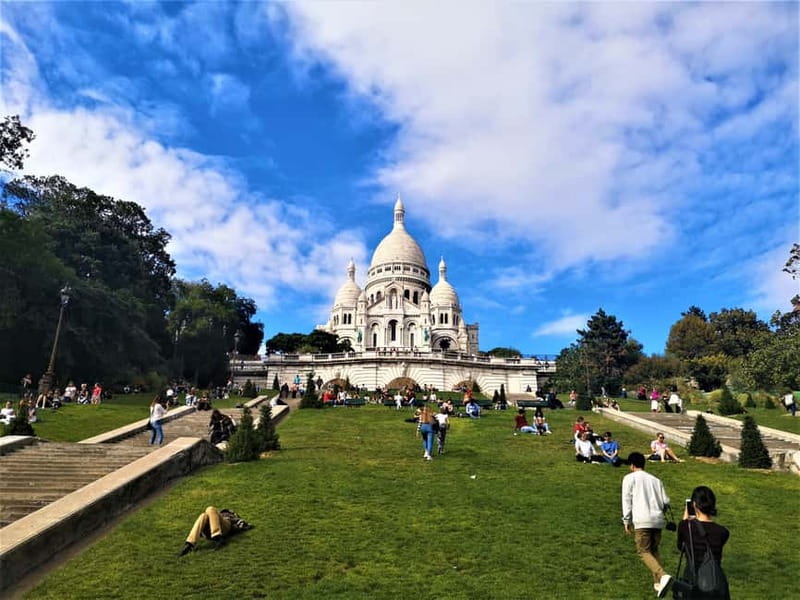
The itinerary includes a guided visit at Sacré-Cœur Basilica for about 20 minutes. This is the moment most families expect: the hilltop atmosphere, dramatic angles, and the “we’re really in Montmartre” feeling.
At the same time, the listing also says that a visit to the Sacred Heart is not included. That’s an important detail. It suggests you may not get the kind of full interior experience some travelers want. You might still see the basilica closely and learn about it, but if you specifically want the full Sacred Heart experience inside, confirm what access is actually part of your booked option.
Practical tip: treat Sacré-Cœur as the photo-and-orientation stop. Let the guide explain what you’re seeing from that height, then move on while your kids are still fresh.






Rue du Mont-Cenis and La Maison Rose: Where Montmartre Looks Like a Picture

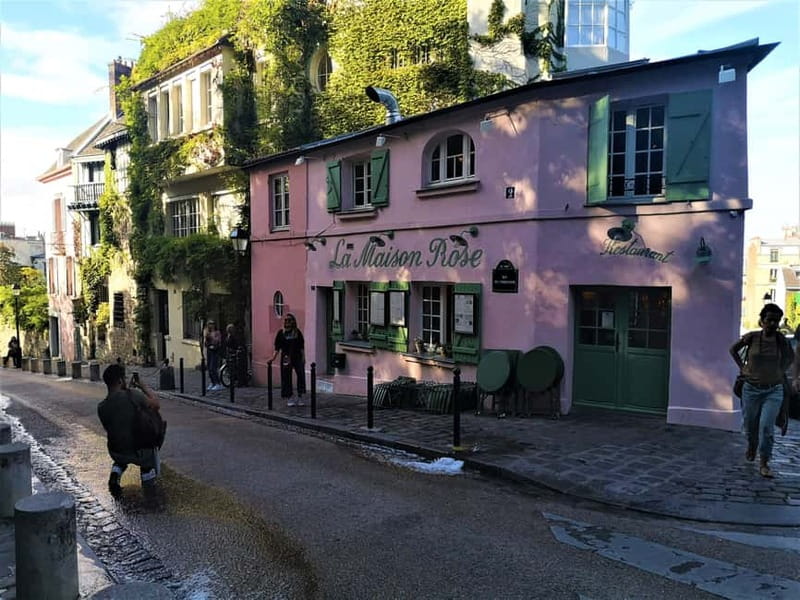
Next up is Rue du Mont-Cenis (about 10 minutes) and La Maison Rose (about 10 minutes).
Rue du Mont-Cenis is one of those streets where the neighborhood vibe hits fast. It’s a place to understand Montmartre as lived-in space rather than just an attraction strip. For families, that’s useful because it makes the next stops feel connected.
La Maison Rose is the quick “yes, we’re in Montmartre” moment. You’ll walk past and get a guided explanation of why this pink façade is part of the neighborhood’s visual identity. The stop is short, but it’s the kind of landmark kids remember because it looks so distinct.
Dalida Statue and Square Suzanne Buisson: Small Stops That Add Personality
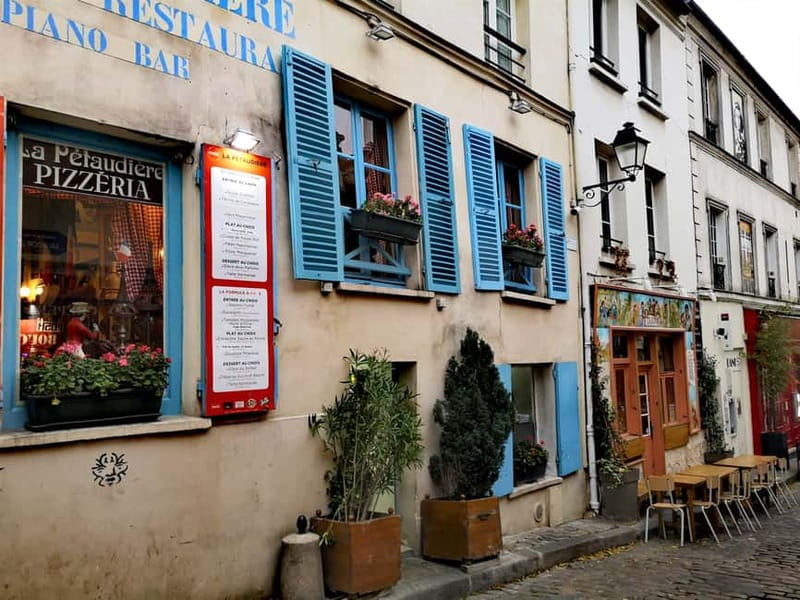
The Dalida statue (about 10 minutes) is brief, but it’s the kind of stop that can spark questions in kids who care about people, not just places. Even without long explanations, a statue gives the group a “character” in the story, and that helps younger travelers follow along.
Then comes Square Suzanne Buisson (about 10 minutes), which shifts the tone. Squares are where families can catch their breath and regroup. A well-timed pause also helps the rest of the route feel less like nonstop walking.
This pairing works because it balances “big attraction energy” with a calmer break. It also reduces the chance that the tour becomes all stairs and no breathing room.
The Passe-Muraille Myth: Why the Wall Next Door Matters

Le Passe-Muraille is listed at about 5 minutes. That short time slot might surprise you, but it makes sense: it’s not a long viewing area. The value comes from the story.
The tour specifically calls out the myth of Passe-Muraille. This is exactly the kind of legend that turns a wall into a conversation. When your guide connects the myth to the location, kids start to understand that Montmartre isn’t just pretty streets. It’s full of local characters and odd little historical moments.
If you like photo stops, you’ll also get a moment where the landmark is easy to locate quickly. Kids tend to enjoy the “look for it, spot it, then move on” rhythm.
Le Consulat and La Bonne Franquette: The Neighborhood’s Everyday Culture
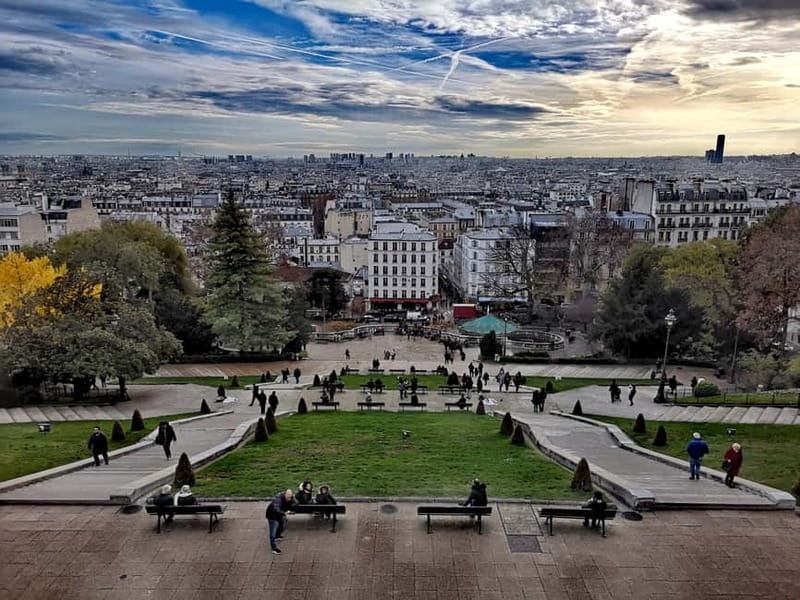
Two more short stops follow: Le Consulat (about 5 minutes) and La Bonne Franquette (about 5 minutes). Even though each one is quick, they’re valuable because they broaden the story beyond famous artists and viewpoints.
These are the kinds of places that help you understand why Montmartre became known for cafes, community, and offbeat creativity. For families, it’s a nice change of pace from statues and major basilica views.
The trade-off: because these stops are brief, they work best when your guide is good at explaining in clear, kid-friendly language. The best guides on this route are the ones who slow down just enough for your children to ask questions and feel included.
Place du Tertre: Artists’ Square and the Moment Everyone Recognizes
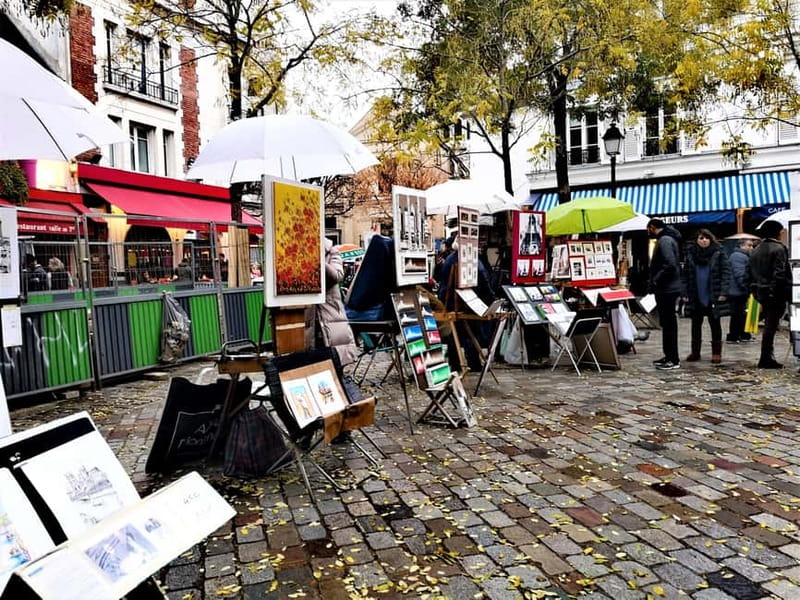
Place du Tertre gets about 10 minutes. This is one of Montmartre’s most recognizable squares, where the visual scene is strong even if you’re not sure what to look for.
What I like about this stop for families is that it’s interactive without being exhausting. If your kids like drawing, painting, or people-watching, this square gives them enough to look at that the time passes quickly.
The guide’s job here is key: they’ll point out what’s worth noticing and help you avoid spending time staring at everything with no clue what you’re seeing.
Passage de Abbesses and the Wall of Love: Fun Photos, Real Stories
Passage de Abbesses (about 5 minutes) and the Wall of Love (about 10 minutes) bring you into another Montmartre layer: hidden or semi-hidden corners that feel special because you found them with help.
Passage de Abbesses is typically the kind of walkway families can appreciate even when the rest of the neighborhood is busy. It’s a shortcut-feeling area with a “we’re going somewhere cool” vibe.
The Wall of Love is where the tour turns playful. A longer stop here is good because you’ll want time to read, look closely, and take photos that don’t feel rushed. Kids often like it because it’s visual and personal rather than purely architectural.
If your family likes sentimental travel details, this is one of the stops that can make Montmartre feel less like a list and more like a memory.
Don’t Miss the Montmartre Windmills Detail
The overall description mentions that the walk includes passing by the last windmills in Paris. That kind of tidbit is easy to gloss over when you’re on your own, but it’s exactly what a good guide pulls into focus.
Even if you only catch part of it, it helps explain Montmartre’s evolution—from working landscape to artistic neighborhood. It also gives kids a “wait, that used to be real” moment, which tends to stick.
The Guides: How the Best Ones Keep Kids Engaged
One of the strongest signals from feedback is that the guide experience drives everything. Names that pop up often include Bruno, Leo, Santiago, Gabriel, Claudia, Pedro, Gonzalo/Gonzales, and Marin.
What stands out isn’t just “good facts.” It’s the tone: patient pacing, clear explanations, and time for questions. Some guides are even described as adjusting the tour style to your family’s pace, and that’s a big deal when you have children who need more frequent attention.
Several comments also mention child-friendly extras such as activity ideas, mini quizzes, or seasonal touches (for example, a themed moment during Halloween in one account). Those may not be guaranteed every day, but they point to the general approach: make the walk feel like it has a purpose beyond sightseeing.
Food, Drinks, and the Sacré-Cœur Access Reality
The tour doesn’t include drinks and food. That means you’ll want to plan a snack strategy, especially for kids who lose patience when they’re hungry.
Also, Sacré-Cœur is the major draw, but remember: the listing says a visit to the Sacred Heart is not included. If you’re hoping for a specific interior experience, confirm what access is part of your tour before you go. On a short 2-hour walk, the guide may prioritize views and exterior orientation rather than a longer interior visit.
Who This Tour Suits Best
This tour fits families who want Montmartre without the stress of figuring out the streets on their own. It’s also a strong choice if you like structured sightseeing that still leaves room for questions and photos.
It tends to work well for kids roughly in the school-age range, based on how often guides are praised for engaging children aged 6 to 13 in different accounts. If your kids are very small, you’ll want to think about stroller comfort and stamina before booking, but the family-focused guide approach can still help.
Should You Book This Montmartre Family Tour?
If your goal is a short, family-friendly introduction to Montmartre that hits the sights kids can name later, I’d book it. The value comes from the guide quality and the way the route connects famous landmarks with lesser-seen corners.
I’d especially book if:
- you want a small group feel instead of a huge crowd experience
- your kids do better with a guided story and a simple activity booklet
- you’d rather walk a planned route than gamble on finding everything yourself
I’d hesitate only if your top priority is a full Sacred Heart interior visit and you’re not comfortable verifying what’s included at Sacré-Cœur. In that case, ask questions before you go so your expectations match the experience.
Overall, this is a smart way to see Montmartre as a real neighborhood, not just a handful of photos on a busy day.