REVIEW · PARIS
Paris by Night Walking Tour: Ghosts, Mysteries and Legends
Book on Viator →Operated by City Wonders Ltd · Bookable on Viator
Paris by Night is the kind of tour that turns postcard streets into something spookier. I like that it’s a small group walk (max 20) led by a local guide, and I really like the specific historical stops—especially the Hotel de Conciergerie and the places tied to major executions. One thing to consider: it’s not a full-on supernatural ghost show; the tone is more history-driven, with legends mixed in.
You’ll meet near the equestrian Statue of Henri IV by Pont Neuf and spend about two hours moving through central Paris after dark. Expect a guided story arc that covers centuries of violence and upheaval, from the French Revolution to the Paris Commune and even Paris under Nazi occupation.
Do bring comfortable shoes. This is a walking tour—one review notes roughly 10,000 steps—and it’s best for adults and older teens, not little kids.
In This Review
- Key things to know before you go
- Entering Paris’s Dark Story Right at Pont Neuf
- The Conciergerie Stop: Marie Antoinette’s Prison Is Real
- Square du Vert-Galant and the Templar at the Stake
- Saint-Germain-l’Auxerrois and the St. Bartholomew’s Massacre
- Île de la Cité: Roman Beginnings Beneath the Seine
- Palais de Justice: Public Punishment, Cheering Crowds, Guillotine Sentences
- Place de l’Hôtel de Ville: Executions From 1310 to 1830
- So Is This a Ghost Tour or a Dark History Walk?
- Price and what $18 gets you (and what it doesn’t)
- Who should book this night walk—and who should skip it?
- Should you book Paris by Night: Ghosts, Mysteries and Legends?
- FAQ
- How much does the Paris by Night walking tour cost?
- How long is the tour?
- Where is the meeting point?
- Where does the tour end?
- Is the tour offered in English?
- How large is the group?
- Is hotel pickup or drop-off included?
- What does the tour include?
- Is there walking involved?
- Can I get a full refund if I cancel?
- What sights and themes are part of the tour?
Key things to know before you go
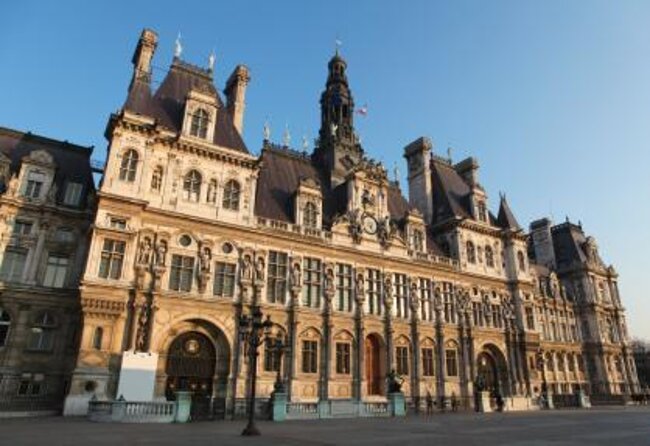
- Meet at Pont Neuf: The tour starts at the Henri IV statue, then heads into the darker core of the city.
- Marie Antoinette’s prison gets screen time: You’ll see the Hotel de Conciergerie tied to her imprisonment.
- St. Bartholomew’s Massacre connection: The walk includes the church of Saint-Germain-l’Auxerrois, linked to 1572.
- Guillotine justice at Palais de Justice: You’ll learn how Revolutionary courts worked—and how public punishment drew crowds.
- Free-to-enter stops: Key sights on the route (like Square du Vert-Galant and Saint-Germain-l’Auxerrois) are described as ticket-free.
- About two hours, group under control: Built for about 20 people or fewer, so you’re not stuck in a megaclass.
Entering Paris’s Dark Story Right at Pont Neuf
The tour begins in central Paris near the equestrian statue of Henri IV at Pont Neuf (15 Pl. du Pont Neuf). This is a smart starting point because Pont Neuf is easy to reach and it quickly places you in the historic center—right where the city’s political drama played out.
After that, the guide steers the group through changing scenes at night—quiet streets, monuments that look different without daytime crowds, and landmarks tied to executions, wars, and major social shocks. The pitch sounds like ghosts and legends, but the backbone is the darker timeline of France, especially when power shifted violently.
This also explains why timing matters. You’ll want to arrive a few minutes early, be ready to walk, and not plan a long dinner afterward. The tour is short enough to be doable on most itineraries, but structured enough that you don’t want to rush the start.
You can also read our reviews of more walking tours in Paris



The Conciergerie Stop: Marie Antoinette’s Prison Is Real
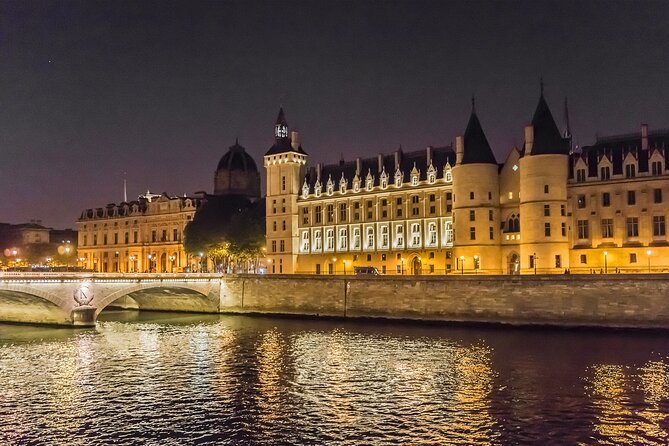
One of the biggest reasons I’d consider this tour is how directly it connects you to a famous prisoner. The route includes the Hotel de Conciergerie area—commonly called the Conciergerie—and it’s pointed out as the place where Marie Antoinette was once imprisoned.
Even if you already know the Marie Antoinette story, seeing where she was held changes the feeling. It turns a name from a textbook into a location you can stand near while the guide explains the chain of events around the Revolution.
If your ideal night includes real places tied to real suffering, this is the part that will likely land hardest. It’s also a good reminder that Paris’s “romance” history and its punishment history are often overlapping, sometimes only a few blocks apart.
Square du Vert-Galant and the Templar at the Stake
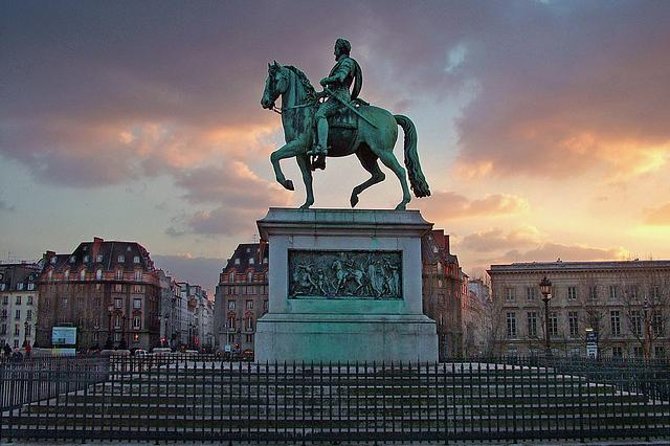
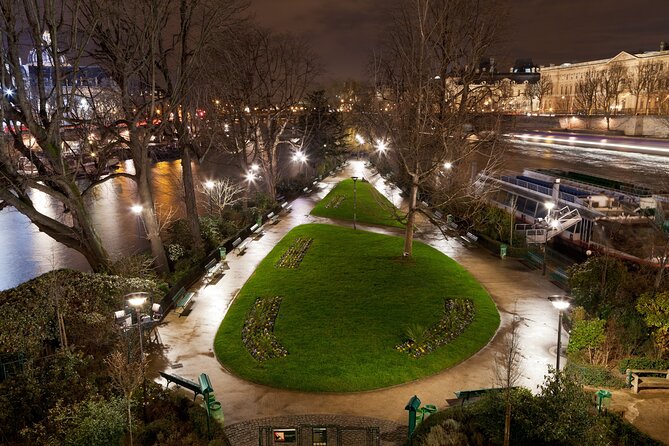
Next you’ll head toward Square du Vert-Galant, a romantic-looking riverside green space created in honor of Henry IV and his mistresses. The twist is that the guide layers it with a much darker scene from the past—when the last Knights Templar was burned at the stake in this area.
This is the kind of stop that makes the tour feel different from the usual Paris highlights. Daytime, Square du Vert-Galant looks like a calm pause. At night, with a guide narrating that fire-and-faith story, it feels like a forgotten chapter resurfacing.
It also helps that the stop is described as ticket-free. You get the story without extra costs or time spent dealing with admissions.
Saint-Germain-l’Auxerrois and the St. Bartholomew’s Massacre
A major stop on the route is Eglise St-Germain l’Auxerrois, described as a 7th-century church. Here, the guide connects the site to the St. Bartholomew’s Day Massacre of 1572 and explains why around 30,000 Huguenots were murdered.
This is where the tour leans fully into the violent history side. The massacre is one of those events that sits at the center of French religious conflict, and the guide uses the church’s role as a physical anchor for the story.
If you like your history grounded in specific places, you’ll probably enjoy this portion. If you’re expecting a light, “spooky but safe” ghost vibe, this chapter may feel heavier than you want. Either way, it’s a meaningful setting for the kind of events the tour claims it will cover.
Île de la Cité: Roman Beginnings Beneath the Seine
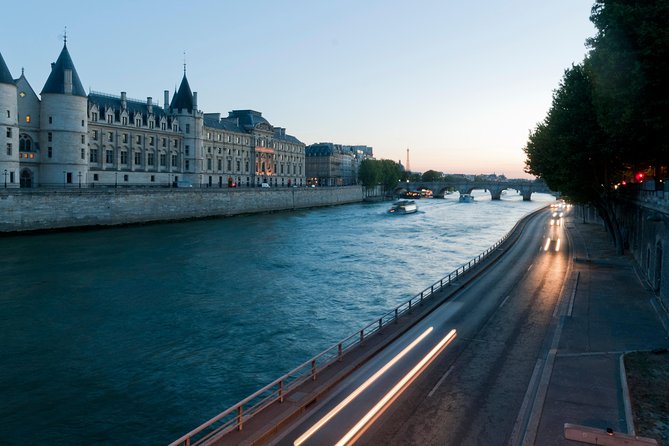
The route also passes the Île de la Cité, the central island in the Seine. The guide notes that in the 4th century it was the site of a Roman governor’s fortress—another reminder that Paris’s core has been strategically important for centuries.
This stop isn’t about theatrics. It’s about perspective. When you hear the Roman-era function of the island, later events in medieval and modern Paris can feel less random. The city’s power struggles didn’t just pop up in the Revolution; they kept finding the same choke points.
At night, the Seine and the island can look almost storybook. That’s exactly why it works: you’re seeing a beautiful setting while the guide reframes it as a long-term stage for authority and conflict.
You can also read our reviews of more evening experiences in Paris






Palais de Justice: Public Punishment, Cheering Crowds, Guillotine Sentences
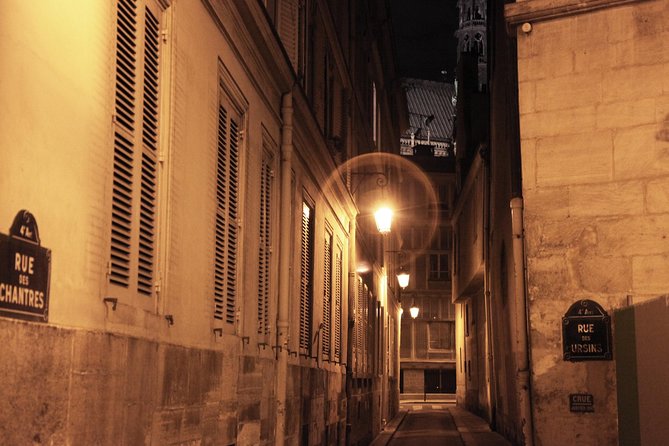
One of the most intense learning moments is around the Palais de Justice de Paris. The tour explains that this is where people were judged during the French Revolution and sentenced to the guillotine. It also emphasizes that these punishments happened in front of cheering audiences, even when the condemned included kings or revolutionaries themselves.
That detail matters. It shifts your understanding from execution as a distant punishment to execution as a form of crowd-driven politics. In other words: this wasn’t only about the condemned—it was about what the crowd was meant to feel.
The guide also brings in the broader “justice as spectacle” idea that shows up repeatedly in violent regimes. So even if you’re not a Revolution specialist, this stop gives you a lens you can use to interpret the rest of the route.
Place de l’Hôtel de Ville: Executions From 1310 to 1830
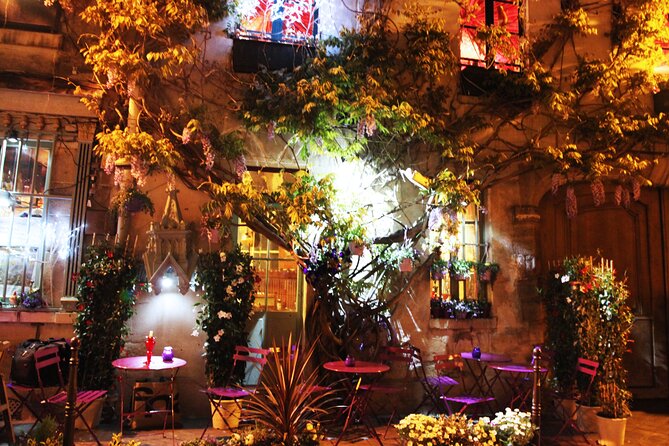
The walk ends near Place de l’Hôtel de Ville (70 Rue de Rivoli area). This is presented as a place used for municipal celebrations—births, marriages, and municipal parties—but also a long-running execution site from 1310 to 1830.
The guide calls out specific executions, including those of Ravaillac and La Brinvilliers. That range of years is the key takeaway: you’re not just hearing one famous event. You’re watching how punishment can stay part of the city’s routine for generations.
It’s also a good spot for the tour to end because the area feels central, connected, and practical for your next move—whether you’re heading back to your hotel or walking to another nighttime viewpoint.
So Is This a Ghost Tour or a Dark History Walk?
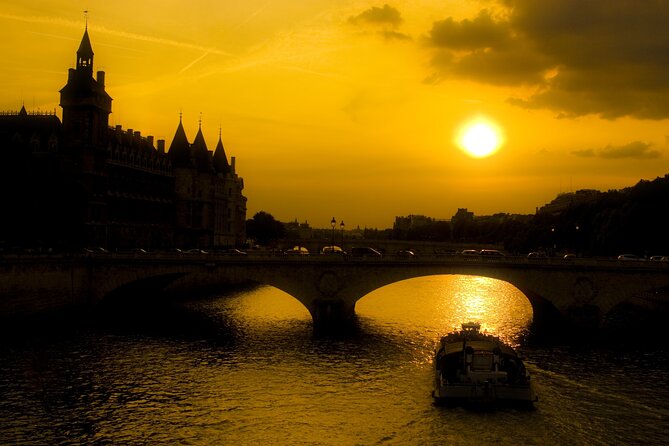
The title promises Ghosts, Mysteries and Legends, but the experience is best understood as darker history with legend threaded through. The tour talks about murders, wars, plagues, the French Revolution, the Paris Commune, and Nazi occupation—so you’ll spend most of the time in political and social events rather than supernatural sightings.
That’s not automatically a bad thing. If you love true-location storytelling—standing near places tied to trials and punishment—this format can feel more eerie than a scripted “boo” approach.
Just don’t expect the whole experience to be supernatural-themed. I’d treat the legends as seasoning, not the main meal. The best match is someone who enjoys the macabre angle of real Paris, with a guide who can keep the mood tense without rushing facts.
Price and what $18 gets you (and what it doesn’t)
At about $18.10 per person and roughly two hours long, this tour is positioned as value-focused. You’re paying for a local guide, a controlled group size (max 20), and a curated route through central landmarks you might not naturally link together on your own.
Here’s the practical side: there’s no hotel pickup or drop-off. So you’re on your own for getting to the start near Pont Neuf and moving from the finish near Place de l’Hôtel de Ville.
For me, that’s part of the value equation. You avoid the cost drag of private transport, and you get a guide who can do the harder work—connecting dates, places, and human stories—while you do the walking.
If you’ve already visited Paris once and feel you know the big Revolutionary sites, you might want to keep expectations tight. The tour’s pitch is “lesser-known stories” and “unconventional destinations,” so it tends to work best when you’re still building your mental map of the city’s darker corners.
Who should book this night walk—and who should skip it?
This is a great choice if you want an evening activity that feels different from standard sightseeing. It’s also a good fit if you like history but prefer it told like a story, with a guide standing right next to the location tied to the events.
It may be less ideal if:
- You want nonstop ghost-style spookiness rather than historical context.
- You’re extremely strict about factual precision and want every detail cross-checked. The tour is built from an itinerary of key sites and narrative choices, so you may find some parts align with what you already know and others may feel more interpretive than academic.
- You’re traveling with young kids. The theme is violence and executions, and that’s not an “easy bedtime” topic.
In short: I’d book this for adults, older teens, and anyone who enjoys dark storytelling on the street.
Should you book Paris by Night: Ghosts, Mysteries and Legends?
I’d say yes if your goal is a short, guided night route through central Paris’s darker chapters, especially with stops tied to Marie Antoinette’s imprisonment, the St. Bartholomew’s Massacre era, and Revolutionary justice. The small-group size and the focus on specific sites make it a solid value at this price.
I’d say no—or at least recalibrate your expectations—if you want a clearly supernatural ghost tour. This is more “history that feels haunted” than a full-on spectral experience. If that sounds like your kind of night in Paris, get your shoes on and go.
FAQ
How much does the Paris by Night walking tour cost?
The price is $18.10 per person.
How long is the tour?
It runs about 2 hours.
Where is the meeting point?
You meet at the Equestrian Statue of Henri IV, 15 Pl. du Pont Neuf, 75001 Paris, France.
Where does the tour end?
The tour ends near Hotel La Ville, 70 Rue de Rivoli, 75004 Paris, France.
Is the tour offered in English?
Yes, it’s offered in English.
How large is the group?
The tour has a maximum of 20 travelers and is described as groups of 20 people or less.
Is hotel pickup or drop-off included?
No. Hotel pickup and drop-off are not included.
What does the tour include?
It includes a local guide.
Is there walking involved?
Yes. It’s a walking tour, and one review notes roughly 10k steps.
Can I get a full refund if I cancel?
Yes, free cancellation is available. You can cancel up to 24 hours in advance for a full refund.
What sights and themes are part of the tour?
You’ll see stops and nearby areas connected with Marie Antoinette at the Hotel de Conciergerie, Square du Vert-Galant and the Templars, Eglise St-Germain l’Auxerrois and the St. Bartholomew’s Day Massacre, the Île de la Cité area, the Palais de Justice, and Place de l’Hôtel de Ville. The tour also covers dark eras including the French Revolution, the Paris Commune, and Nazi occupation.