REVIEW · PARIS
Paris: Guided Bike Tour Like a Local
Book on GetYourGuide →Operated by Bike About Tours · Bookable on GetYourGuide
Paris looks different from a bike seat. I like the way you roll past big landmarks like Notre-Dame de Paris while also getting a real rhythm of neighborhoods like the Latin Quarter; you’ll even stop for a snack and coffee. One watch-out: food and drinks aren’t included, so bring a little cash or card for that break.
I also like the human side of the tour. The English live guides have strong personalities, with names like Jude, Simon, Cedric, Marley, Ryan, and Rachel showing up in recent groups, and they balance stories with time to ride. If you’re not comfortable on a bike, this is still an easier, mostly flat ride, but you’ll want basic balance and confidence.
In This Review
- Key things that make this ride worth it
- Meeting at Le Peloton Café: start like a local cyclist
- Bikes, helmets, and how hard the ride really is
- How the Notre-Dame to Bastille stretch feels on two wheels
- Pantheon and an ancient Roman amphitheater: the city’s timeline on the move
- Marais back streets: where the character shows up
- A Jim Morrison stop: when Paris history includes music lore
- Latin Quarter snack and coffee: a break that feels like a rhythm
- Local recommendations: what to do after your last mile
- Rain or shine: how to plan for weather without losing the day
- Price and value: what $53 buys you in real touring time
- Who this tour fits best (and who might rethink it)
- Should you book this Paris bike tour?
- FAQ
- Where do we meet for the bike tour?
- How long is the tour?
- What is included in the price?
- Are food and drinks included?
- Does the tour run in the rain?
- Is the guide available in English?
Key things that make this ride worth it
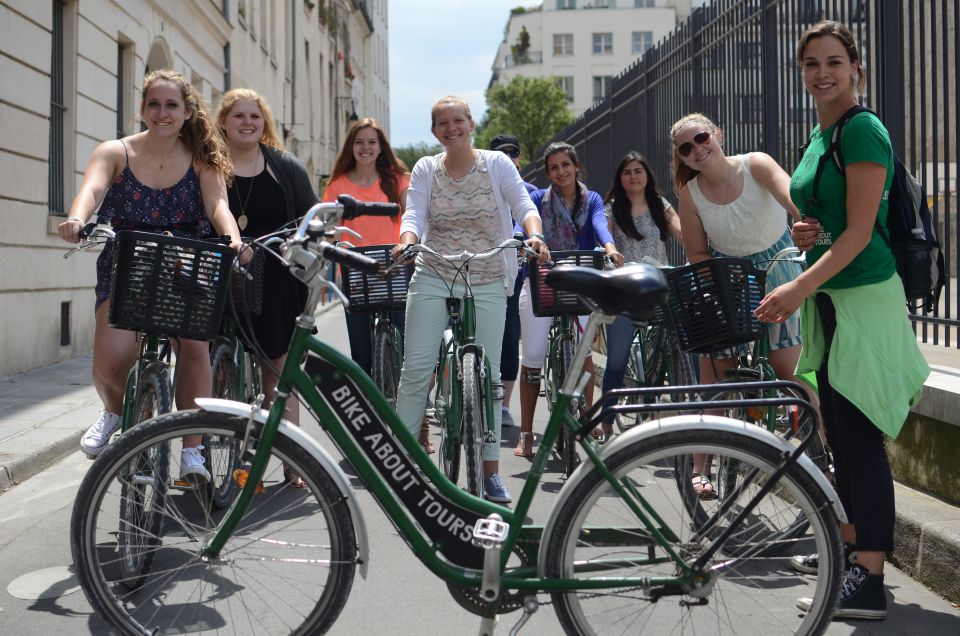
- A 3.5-hour city-center route that mixes famous stops with quieter streets
- Notre-Dame and the Bastille plus other major sights like the Pantheon
- A Latin Quarter snack break on a popular street, with coffee time built in
- A Jim Morrison connection that most first-timers never hear about
- Marais lanes and characteristic streets for a true Paris feel
- English guidance, small-group energy, with examples of groups around 12 riders
Meeting at Le Peloton Café: start like a local cyclist
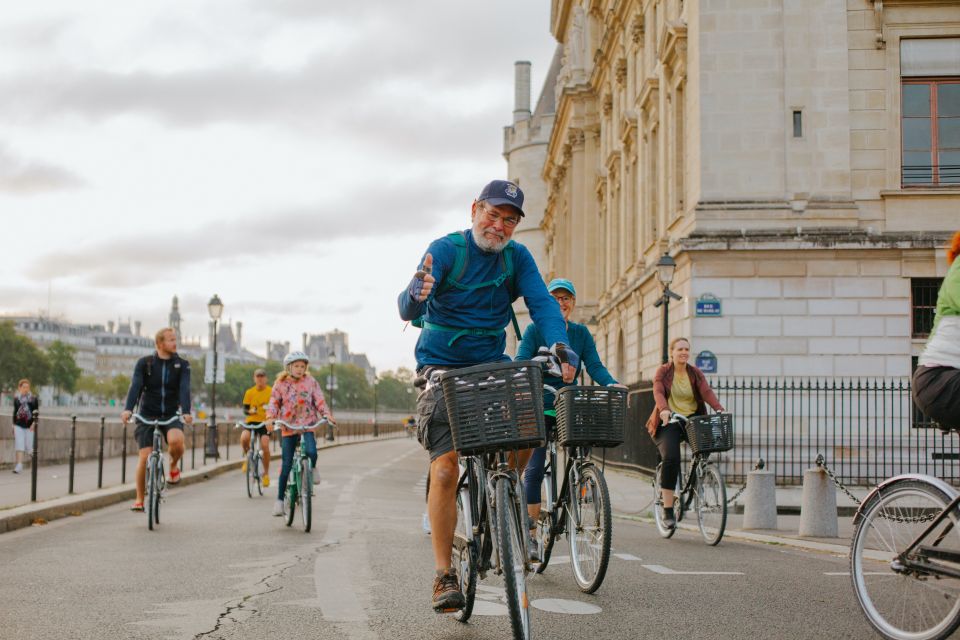
The tour meets at Le Peloton Café, which matters more than it sounds. It’s open from 8h, so you can arrive early, grab coffee, and get your bearings before the group mounts up.
If you’re coming by metro, the provided guidance is simple: from Hotel de Ville, take line 1. From Pont Marie, take line 7. And do plan to arrive about 15 minutes early so the bikes, helmets (if you want one), and instructions can happen without stress.
You can also read our reviews of more cycling tours in Paris



Bikes, helmets, and how hard the ride really is
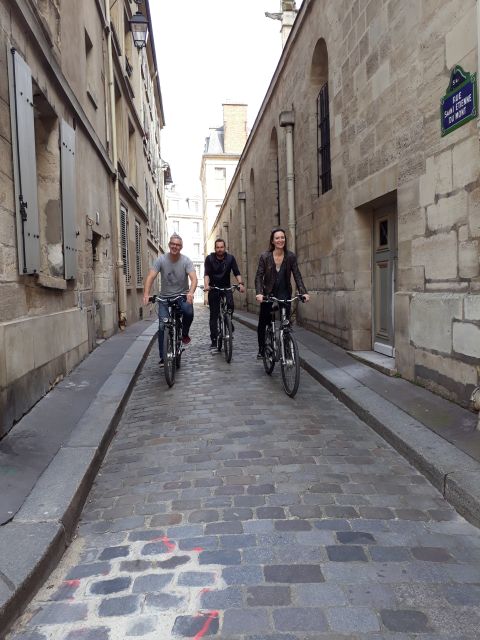
This is a bike tour designed for real city riding, not extreme fitness. Expect a leisurely pace with stops along the way, and you’ll be on a route that’s aimed to be manageable for different comfort levels.
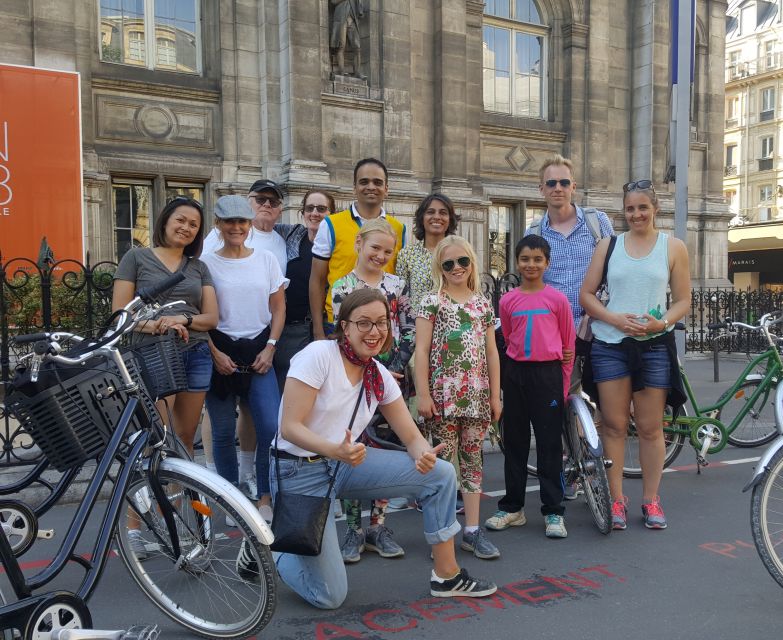
The support details are practical: a bike is included, and a helmet is available but listed as optional. In one family-focused example, a rider noted a bike with a bench for a child, which gives you a clue that the operator tries to make it work for families rather than limiting it to only adults.
Safety-wise, you’re on bike lanes and calmer streets more than long, fast stretches. One review mentioned that car drivers were cautious and that bikes usually have the right of way, but still treat this as normal Paris traffic: keep your eyes up, follow the guide’s signals, and don’t rush turns.
How the Notre-Dame to Bastille stretch feels on two wheels
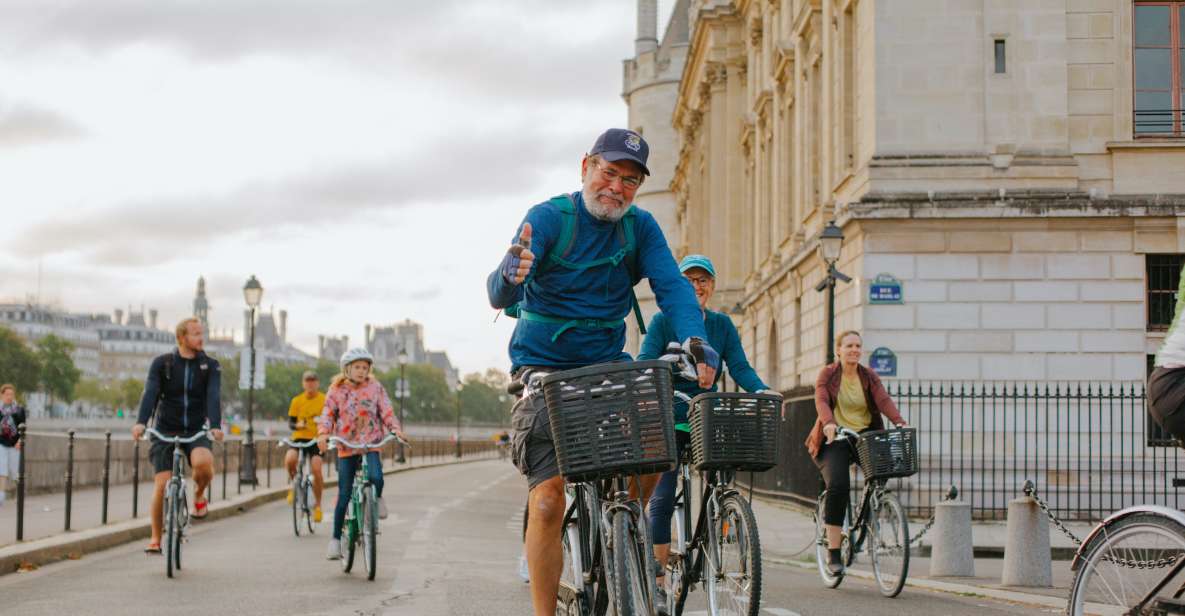
The heart of the tour is built around famous landmarks you can actually experience, not just photograph from the curb. You’ll see Notre-Dame de Paris and its Gothic details, including the gargoyles, while the ride keeps moving so the area doesn’t feel like a single long stop.
From there, the route continues toward the Bastille area. The advantage of biking is that you get multiple viewpoints in a short time, and the guide can connect what you’re seeing to the story of how this part of Paris developed.
The practical benefit: you’re not waiting for group logistics like a bus tour. You’re traveling at human speed, so small street-level details matter—doorways, sightlines, and how neighborhoods transition from monumental to lived-in.
Pantheon and an ancient Roman amphitheater: the city’s timeline on the move
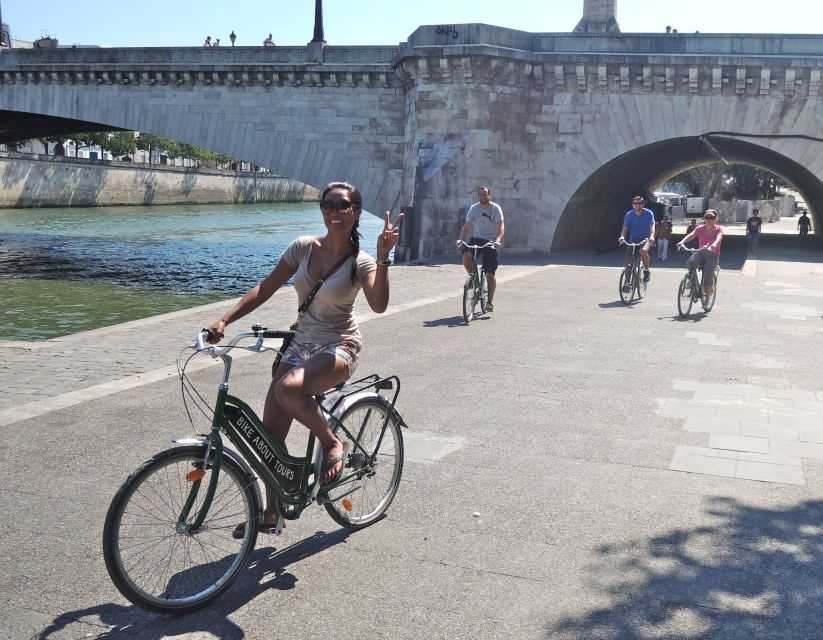
This tour doesn’t stay stuck in the medieval storybook mode. You’ll also encounter the Pantheon and an ancient Roman amphitheater, which helps you see Paris as layers, not a single era.
On a walking tour, these stops can feel like separate boxes. On a bike ride, the transitions between eras land better because you’re moving through the city fabric. You’ll get the sense of how Paris grew from Roman times to modern capital, with the guide pointing out what to notice as you roll past.
The drawback to consider here is pacing for attention spans. There are multiple major sights, and while the ride is meant to be relaxed, you’ll still want to stay mentally present when the guide stops to explain the connections.
Marais back streets: where the character shows up
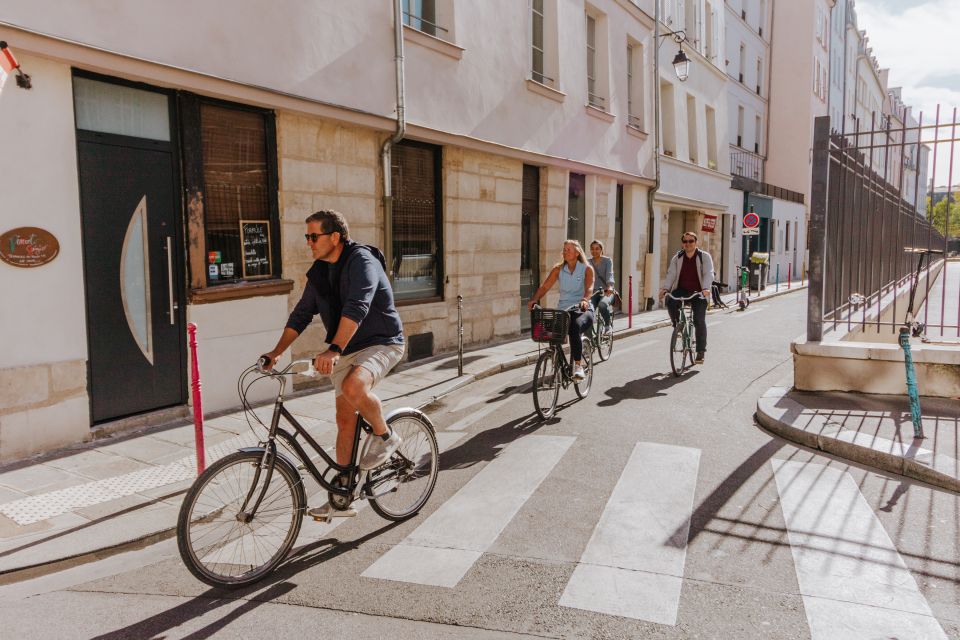
After the headline monuments, the Marais becomes the payoff. This is where the tour turns from landmark-hopping into street-level Paris watching.
You’ll cycle through charming back streets and look at the characteristic lanes that make the Marais feel different from other central neighborhoods. This part is valuable because it helps you understand why people come back to Paris even after they’ve seen the big stuff. The guide’s direction turns random-looking corners into places you can later find again on your own.
One of the clearest signals from recent feedback is that guides focus on the parts you’d miss if you only followed the postcard route. Expect stops with stories that explain the “why,” not just the “what.”
You can also read our reviews of more guided tours in Paris





A Jim Morrison stop: when Paris history includes music lore
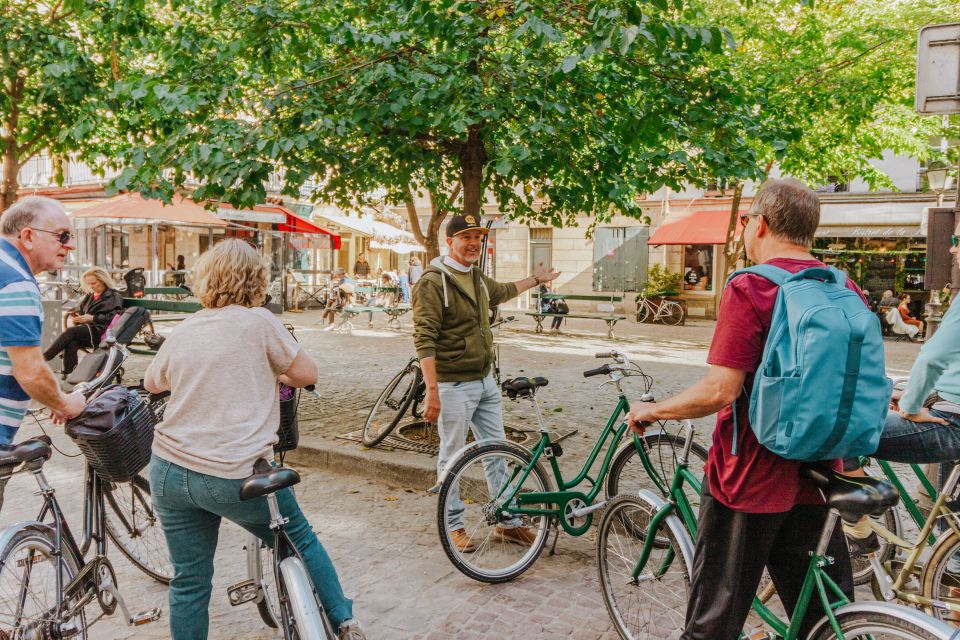
One of the most distinctive highlights is a stop about where Jim Morrison lived. That kind of detail is exactly what makes a local guide useful: the city isn’t only buildings and dates, it’s also people, culture, and unexpected chapters.
This also changes how you experience the street. Instead of looking at a façade as architecture, you start noticing the surrounding context—how the area would have felt, where someone might have walked, and what the neighborhood offers beyond the famous monuments.
If you like pop-culture history, or you simply enjoy learning why certain streets matter to real stories, this is one of the most memorable parts of the route.
Latin Quarter snack and coffee: a break that feels like a rhythm
The tour includes a snack stop at a popular street in the Latin Quarter, plus coffee. That’s built into the experience on purpose, because biking tours work best when you’re not rushing through every stop.
Important practical note: food and drinks aren’t included. The tour sets up the moment, but you’ll pay at the break. Think of it as a chance to try something local while your guide points out what to order or what to notice.
This is also a good moment to reset your energy and check your own comfort. If you’ve been pushing yourself to keep up, this pause helps you get back into the relaxed touring mindset.
Local recommendations: what to do after your last mile
The biggest “after” value in this kind of tour is what you learn for later. The guide provides local recommendations, and that can sharpen your remaining days fast.
You’ll leave with a better sense of where to wander next—especially around the Marais and other central areas you already cycled through. Even if you don’t follow every suggestion, you’ll have a mental map that matches how the city actually feels on foot and on wheels.
For first-timers, that’s huge. For repeat visitors, it can still be useful because you’re getting a guide’s shortcut to the things that aren’t just the most famous.
Rain or shine: how to plan for weather without losing the day
This tour runs rain or shine. Ponchos are available if it’s wet, which reduces the most annoying travel problem: cancelation because of weather.
If rain is in the forecast, wear shoes with grip and keep your belongings simple. Wet streets in Paris can be slippery, even on bike-friendly surfaces, so the goal is steady riding, not speed.
Price and value: what $53 buys you in real touring time
At $53 per person for 210 minutes, you’re paying for guided mobility plus the bike itself. The included items are straightforward: a guide, a bike, and an optional helmet.
That’s a strong value equation for two reasons. First, the guide helps you move efficiently through central Paris in a way that’s harder to replicate on your own day-one navigation. Second, biking covers distance without the fatigue of walking between major sights.
The only recurring cost you should expect is at the snack stop, since food and drinks are not included. If you budget a typical coffee-and-snack amount, the experience stays easy to plan.
Who this tour fits best (and who might rethink it)
This tour is aimed at people who want a local-feeling overview without turning the day into a sprint. It’s described as suitable for all ages and levels of fitness, and the ride is set up at a leisurely pace with stops.
It’s especially good for:
- Families looking for a fun way to cover ground (there are examples of kids enjoying the tour and special bike setups)
- First-time visitors who want monuments plus neighborhood texture
- People who like history stories, but prefer them attached to real streets rather than only plaques
- Anyone who wants to finish the day with a stronger sense of where to explore next
You might consider a different option if you have major bike comfort issues or if you hate city traffic even at a calm pace. This isn’t described as a technical mountain ride, but it still requires you to be comfortable handling a bike for a few hours.
Should you book this Paris bike tour?
I’d book it if you want the sweet spot: major monuments like Notre-Dame and the Pantheon, the Bastille area, a Marais street experience, and a distinctive stop about Jim Morrison—all connected by stories and local recommendations. The timing is long enough to feel like a real day out, but the pace is relaxed enough that you’re not wrecked afterward.
Two quick checks before you click reserve:
1) Are you good with paying for snack and coffee at the Latin Quarter stop since it’s not included?
2) Are you comfortable enough to ride for the duration, even though it’s set up as a mostly easy, leisurely city ride?
If you can answer yes to both, this is a smart way to see Paris with fewer “look but don’t know” moments.
FAQ
Where do we meet for the bike tour?
You meet at Le Peloton Café. The café is open from 8h, so you can come early for coffee or food.
How long is the tour?
The tour lasts 210 minutes.
What is included in the price?
The price includes a guide and a bike. A helmet is optional.
Are food and drinks included?
No. Food and drinks are not included, though there is a snack stop and coffee during the ride.
Does the tour run in the rain?
Yes. The tour runs rain or shine, and ponchos are available if it rains.
Is the guide available in English?
Yes. The live tour guide is provided in English.