REVIEW · PARIS
Paris by Night Tour in a Vintage Open-Top French Car Citroën DS
Book on Viator →Operated by Classic 60's Paris Tours · Bookable on Viator
A night drive in a Citroën DS changes Paris. You get a private, 90-minute ride through central landmarks with Benjamin at the wheel, starting near Place de la Concorde.
I love the open-top views at night—you see monuments grow taller as the lights switch on, and the photos feel way more “Paris” than from inside a closed bus. I also love how Benjamin turns quick stops into stories you’ll actually remember.
One big consideration: this vintage car has no AC, so on hot or humid evenings you’ll feel it (and the top-open design adds some noise).
In This Review
- Key highlights you’ll feel right away
- A vintage Citroën DS after dark: why it works so well
- Meeting at Place de la Concorde and riding for about 1.5 hours
- Arc de Triomphe and Les Invalides: the tour’s dramatic opening
- Champs-Élysées and the Élysée Palace: power in the spotlight
- Eiffel Tower by night: the classic moment (and how you get the best angles)
- Pont Alexandre III and the Grand Palais: gold details and big-city drama
- Place de la Concorde and the Luxor Obelisk: history in one wide square
- Opéra Garnier and Place Vendôme: glamour without the museum ticket
- The Louvre, Musée d’Orsay, and the Seine: art and politics, in motion
- École Militaire and the return to Concorde: finishing with a sense of direction
- Price and value: is $298.37 per group worth it?
- When it’s dark enough: timing tips by season
- Comfort, rules, and small details you should know
- Route changes happen: how to handle Paris traffic realities
- Who this tour is for (and who might prefer something else)
- Should you book the Paris by Night Citroën DS tour?
- FAQ
- How long is the Paris by Night tour in the Citroën DS?
- How much does the tour cost?
- What language is the tour offered in?
- Where do we meet for the tour?
- Is this tour private?
- Does the tour include bottled water?
- Are alcoholic beverages included?
- Is there a requirement about children?
- Does the car have air conditioning?
- Is the tour affected by weather?
Key highlights you’ll feel right away
- Vintage Citroën DS open-top ride with a classic, restored feel
- Private format for up to 4 people, so you’re not squeezed into a crowd
- Guide Benjamin gives clear monument stories and practical photo timing
- High-sight density in 90 minutes, built for first-time orientation and night views
- Route flexibility for real-world changes like road closures
- Bottled water included, plus you can keep the evening relaxed
A vintage Citroën DS after dark: why it works so well
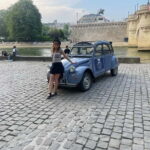
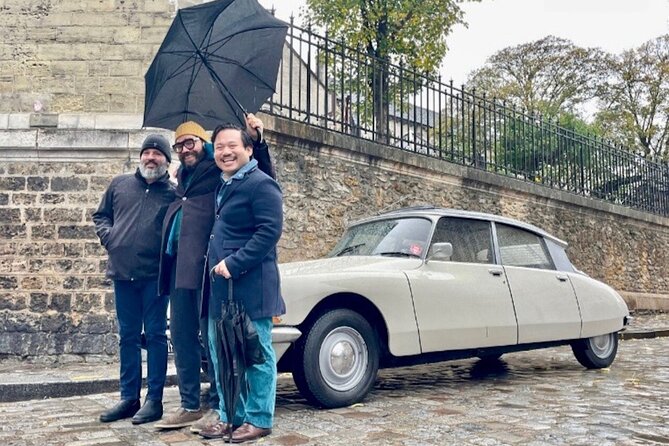
Paris at night can be a little slippery. Street layouts are confusing, landmarks are far apart, and your energy can fade fast. This tour solves that with one smart move: you ride through the center of the city in a vintage open-top Citroën DS, with a driver who handles the traffic while you focus on views and photos.
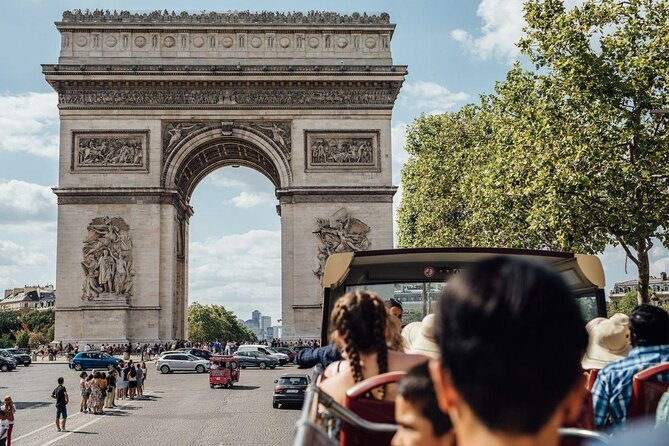
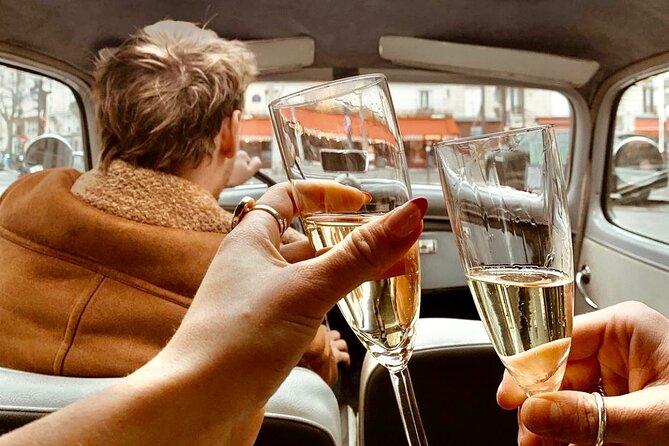
The open roof is the heart of the experience. It changes your sense of scale, especially around the Eiffel Tower area and the grand avenues. Instead of just spotting silhouettes, you catch lighting, reflections, and the way streets look when the city is awake.
And because it’s private for up to four, the ride feels personal. You can ask questions. You can ask for a better view point. You’re not competing with a dozen different voices for the guide’s attention.
You can also read our reviews of more evening experiences in Paris
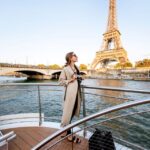
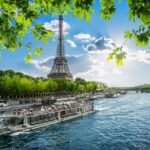
Meeting at Place de la Concorde and riding for about 1.5 hours
The meeting point is 10 Pl. de la Concorde, 75008 Paris. The tour ends back at the meeting point, so you don’t have to worry about transit home or figuring out where you’ll land.
You’ll get a mobile ticket and you can count on the tour running about 1 hour 30 minutes. That time window is perfect for a “big sights first” evening: you cover a lot of ground without feeling like you need to rush a museum schedule.
Two practical perks matter more than you’d think:
- You’re not driving or navigating. Someone else does that work.
- The private setup keeps your evening pace smoother than a hop-on hop-off option.
If you’re traveling with three others, the group price becomes much easier to swallow, since it’s $298.37 per group (up to 4), not per person.
Arc de Triomphe and Les Invalides: the tour’s dramatic opening
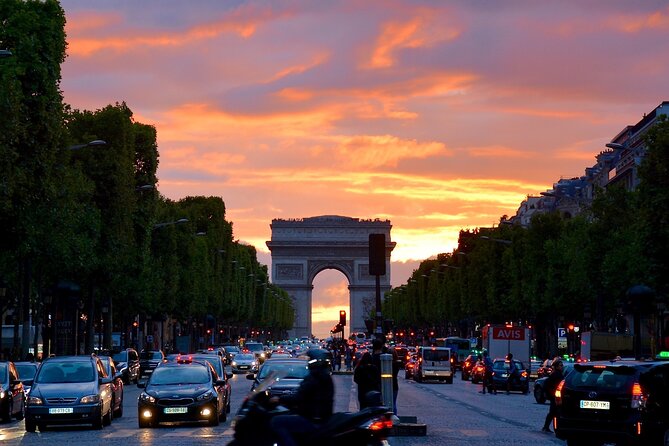
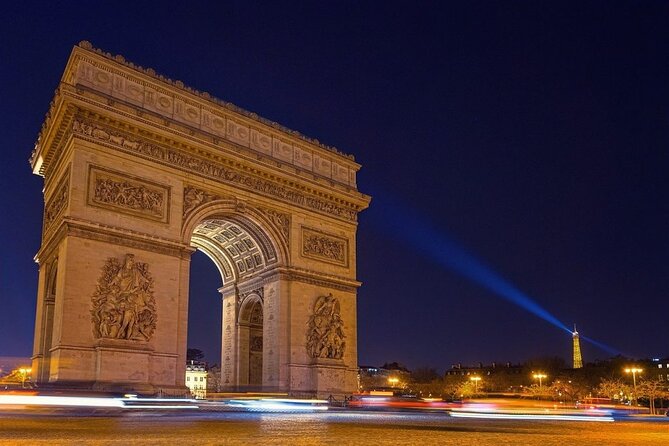
You start with Arc de Triomphe. Even if you’ve seen it in pictures, seeing it from the street level feels different—wide, sculpted, and grand in a way that’s hard to capture from a distance. This is a good first stop because the architecture “sets the rules” for what you’ll see next: France loves monument-scale storytelling.
From there, the route includes Les Invalides, a key military-history landmark crowned by its famous golden dome. Even without going inside, the stop gives context for later Paris themes—power, wars, and how the country remembers its leaders.
What to expect here: short, night-friendly viewing moments rather than a long walking tour. You’ll get the feel for where everything sits.
Watch-outs: because it’s a quick pass, you’ll want to be ready with your phone/camera, not digging for settings after you arrive.
Champs-Élysées and the Élysée Palace: power in the spotlight
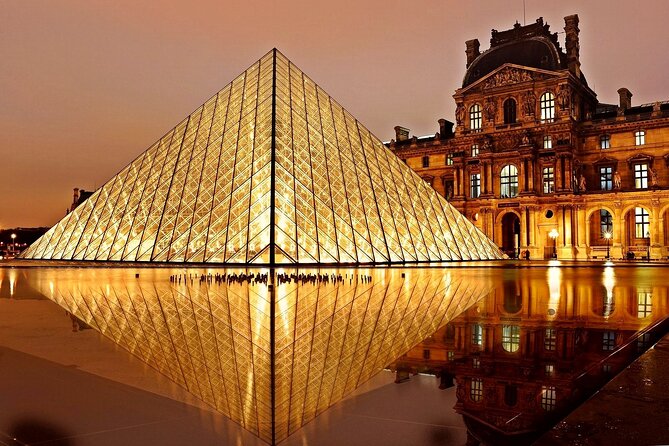
Next up is Champs-Élysées, Paris’s most iconic boulevard. At night it feels like a moving stage: the lights run along the street, storefronts glow, and the avenue becomes a visual guide to the city’s priorities.
The tour also passes by the Élysée Palace, the official residence of the French President. This is one of those spots where it’s easy to say “I saw it,” but hard to understand what it represents—until a good guide connects it to France’s political center.
Benjamin’s strength is pacing the story so it fits the drive. You get enough background to make the buildings meaningful, without turning the ride into a lecture.
Possible drawback here: if you’re hoping for lots of stepping out and exploring on foot, this format may feel too quick. It’s built more for orientation and night views than for deep wandering.
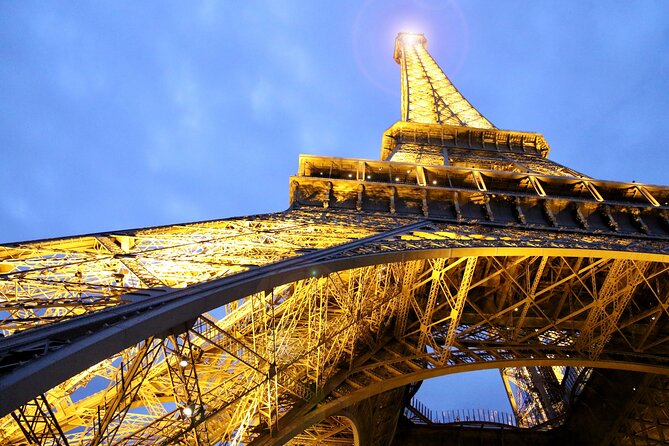
Eiffel Tower by night: the classic moment (and how you get the best angles)
The Eiffel Tower portion is a big deal for a reason. The tour routes near Rue de l’Université and puts you close enough to feel the moment when the tower is lit.
You’re also going to see Eiffel Tower views framed by surrounding streets, not only the tower as a single object. That’s what makes the experience feel like Paris, not just a checklist.
One standout from past guests: Benjamin aims for the right photo spots at the right time, so you don’t just get “a view”—you get a view you can use.
Bring: a steady hand and be ready for quick stops. Your best photo might happen fast when the light hits.
Comfort note: you’ll be in an open-top car. On a chilly night, that’s a plus. On a warm one, it’s a tradeoff.



Pont Alexandre III and the Grand Palais: gold details and big-city drama
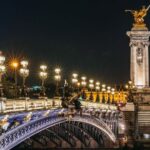
As you continue, you’ll pass Pont Alexandre III, one of the most opulent bridges in the city. At night, the golden elements pop, and the bridge becomes a natural photo frame over the Seine.
After that, the route includes Grand Palais, with its glass-domed look and grand public scale. Next comes Petit Palais, a calmer contrast—an elegant setting that feels more tucked-away once you’re there, but still visible from the drive.
What makes this section valuable: you’re seeing Paris at two extremes—royal-scale monument energy, then a smoother architectural palate that keeps the ride interesting.
Practical tip: keep your camera accessible. With this kind of route density, you don’t want to stop to rummage for gear.
Place de la Concorde and the Luxor Obelisk: history in one wide square
The tour swings to Place de la Concorde, a massive open space that feels grand even before you start reading details. One of the visual anchors is the Luxor Obelisk, an ancient Egyptian monument placed right at the heart of Paris.
This is where the city’s layers show up. Napoleon-era plans and later transformations connect the square to France’s changing relationship with empire and modernity—something a good guide can keep straight while you’re moving.
What you’ll like: the open square gives you a sense of scale after the tighter streets near major attractions.
What to watch for: since it’s a wide square, it can be windy at night. The open top can make that feel stronger.
Opéra Garnier and Place Vendôme: glamour without the museum ticket
As the ride continues, you’ll see Opéra Garnier, famous for its ornate façade and theatrical presence. Even if you never step inside, the building is a message about French arts and spectacle.
Then there’s Place Vendôme, known for luxury storefront energy and the Vendôme Column. It’s the kind of scene that makes sense in motion: the buildings feel designed to be viewed from street level, with traffic and light helping sell the atmosphere.
Best use of your time: enjoy these as “snapshots with context.” You’ll likely want to circle back in daylight later, but tonight is for recognition and mood.
The Louvre, Musée d’Orsay, and the Seine: art and politics, in motion
This part of the tour is where the route starts feeling like a connected story rather than a list of monuments.
You’ll see the Louvre, described as the world’s largest art museum. Even if your real museum visit is still ahead, driving past it gives you a sense of how central it is to Paris’s layout.
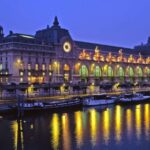
Next comes Musée d’Orsay, housed in a former railway station. That detail matters: the building’s history supports the collections’ vibe, and it looks great in evening light from the outside.
The tour also includes the French National Assembly at Palais Bourbon along the Seine. That contrast—art museums on one side, legislative power on the other—gives you a fuller picture of what Paris is: culture plus governance, all packed into a compact river corridor.
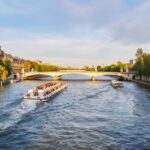
Finally, you’ll drift along the Seine or cross its iconic bridges. This isn’t a long walking segment; it’s a moving viewpoint. That’s exactly the advantage of the car: you see multiple angles without losing your evening to transit.
Photo note: river views often look best when you’re not blocked by other people standing still. The car helps with that.
École Militaire and the return to Concorde: finishing with a sense of direction
As you head toward the end, you’ll pass École Militaire, an 18th-century landmark near the Eiffel Tower area. Finishing with a landmark like this gives you a sense of where you are in the city’s geography.
Then you’re back near where you started: Place de la Concorde. Ending at the meeting point is convenient because it keeps the night simple. No last-minute “where do we go now?” stress.
Price and value: is $298.37 per group worth it?
For many people, this is the deciding question.
At $298.37 per group (up to 4) for about 90 minutes, you’re paying for three things at once:
- a private driver with licensed professionalism and passenger insurance,
- a private guide (Benjamin),
- and the premium experience of a restored vintage open-top Citroën DS.
If you’re coming as a couple, you’re likely splitting the price across two people, which still can feel reasonable compared to paying for separate taxis plus a paid guide plus time wasted trying to time night transport.
If you’re traveling solo, it’s pricier. In that case, think of it as a “make my Paris night easy and unforgettable” purchase, not a budget activity.
My rule of thumb: if you want a simple, high-sight evening without navigating traffic, this is one of the cleaner value options in the city. If you’d rather spend the money on a museum ticket and dinner, you might skip this and do a self-guided night walk.
When it’s dark enough: timing tips by season
Night lighting is not the same year-round, and the tour notes reflect that:
- From November to March, night comes around 5:00–6:00 PM.
- From March to November, night comes after 7:00–8:00 PM.
That matters because this ride is built around night views. If you go too early in winter, you might miss the full lighting effect. If you go too late in spring or summer, you could be driving after the city’s brightest early evening vibe.
If you can choose your time, aim for when you’ll get proper darkness—especially for Eiffel Tower photos and bridge reflections.
Comfort, rules, and small details you should know
A few practical items can make or break the experience for your comfort level:
No AC in a 1972 Citroën DS. On a hot day, this is noticeable. One reviewer called out that it can get loud and hot in summer, and that matches the reality of a vintage open-top car. On cool evenings, though, that same setup can feel like a win.
No personalized pickup. You meet at the exact meeting point (10 Pl. de la Concorde) and you return there. Near public transportation helps, but plan to arrive with a few minutes buffer.
Kids under 10 aren’t allowed. The note says it’s due to no seat belt on the back seats. If you’re traveling with younger children, you’ll need a different option.
Bottled water is included, and alcoholic beverages are not. If you want something else to sip, you’ll need to handle that yourself.
Service animals are allowed, and the tour is generally suitable for most travelers.
Route changes happen: how to handle Paris traffic realities
Paris never stays still. Roadworks, events, and changing traffic can affect routes. The good sign here is that the guide/driver has experience adjusting on the fly—so you’re not stuck staring at a closed road like it’s your problem.
If you’re visiting during big city events (Olympic-era road changes have happened in the past), expect detours and quick adjustments. The upside: you still get the core landmarks, not an abandoned plan.
Who this tour is for (and who might prefer something else)
You’ll likely love this if:
- you want a night-first overview of central Paris,
- you enjoy photo stops more than long walks,
- you like the idea of a private guide who can answer questions while you ride,
- you’re traveling with up to three other people and want shared value.
You might skip it if:
- you strongly prefer museums and indoor time over streets and views,
- you get uncomfortable in warm, open-top conditions,
- you’re traveling with children under 10 who need seat belts in back.
Should you book the Paris by Night Citroën DS tour?
Book it if you want a classic Paris evening with minimal stress: a private driver, a private guide, and a vintage car that turns landmark spotting into a real experience.
Skip it if your priority is deep museum time or you’re sensitive to heat and noise in a car without AC.
If you’re doing Paris for the first time or you want a memorable “kick-off” night, this is one of those choices that makes the rest of your trip easier. You’ll come away knowing where key sites are, and you’ll have night images that actually capture Paris after dark.
FAQ
How long is the Paris by Night tour in the Citroën DS?
It runs for about 1 hour 30 minutes.
How much does the tour cost?
The price is $298.37 per group, up to 4 passengers.
What language is the tour offered in?
The tour is offered in English.
Where do we meet for the tour?
You meet at 10 Pl. de la Concorde, 75008 Paris, France.
Is this tour private?
Yes. It’s a private tour/activity, and only your group participates.
Does the tour include bottled water?
Yes, bottled water is included.
Are alcoholic beverages included?
No, alcoholic beverages are not included.
Is there a requirement about children?
Childs under 10 years old are not allowed because there is no seat belt on the back seats.
Does the car have air conditioning?
The Citroën DS is a vintage 1972 model and does not have AC.
Is the tour affected by weather?
Yes. The experience requires good weather. If it’s canceled due to poor weather, you’ll be offered a different date or a full refund.