REVIEW · PARIS
Paris: Best of Orsay Museum Small Group Tour with Tickets
Book on GetYourGuide →Operated by CONNECTING FRANCE · Bookable on GetYourGuide
The best museum time is the time you actually see art. This small-group Orsay tour pairs skip-the-line tickets with a guided route through the museum’s most important works and the big story of how the building became a fine-arts stop.
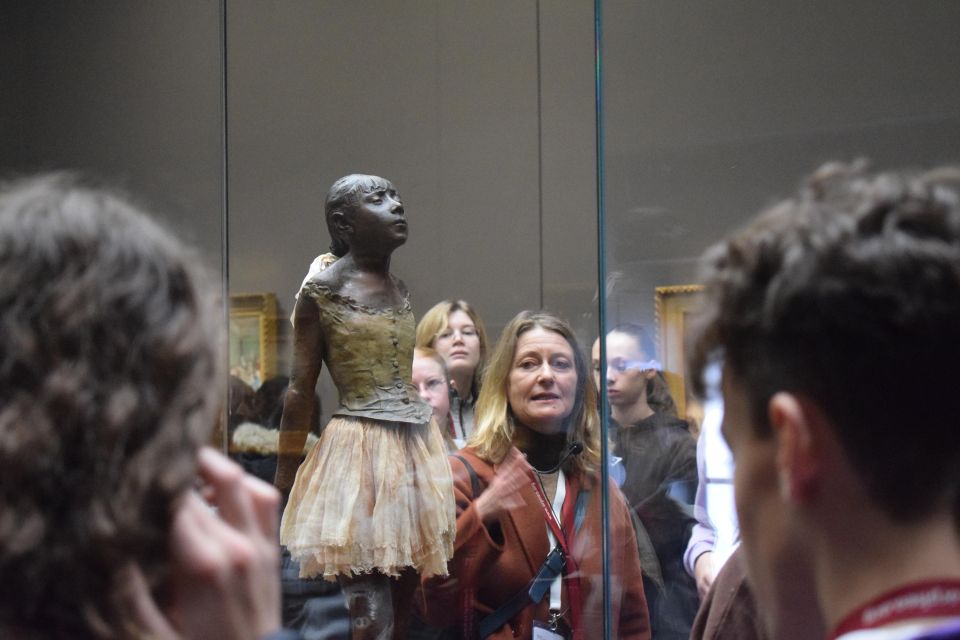
I especially like how the guide turns paintings into clues and conversations, not just labels. You’ll spend time with the Impressionist and post-Impressionist core, from Monet and Renoir to Degas and Van Gogh, while also hearing how politics and artistic movements pushed each other forward.
One thing to plan for: the museum can be crowded, and while the tickets help with entry, the security line can’t be skipped. So if you’re sensitive to noise or tight spaces, this is still doable, but you’ll want a guide’s navigation skills working for you.
In This Review
- Key points at a glance
- Starting at the elephant: meet your guide without stress
- A quick viewpoint moment before the galleries
- Musée d’Orsay inside: why the old station feels like part of the art
- The core route: Impressionism to post-Impressionism, with real context
- Why Manet to Monet feels more logical than you expect
- The standout painting stops, including Renoir’s famous dance scene
- Beyond paintings: Rodin sculpture, Art Nouveau, and even Lady Liberty
- How crowded galleries affect your plan (and how to work with it)
- Price and value: why $102 can be a smart trade for your time
- Who should book this tour
- Should you book the Orsay Best of Orsay small-group tour?
- FAQ
- How long is the Orsay small-group tour?
- Where do we meet the guide?
- Is museum admission included?
- What languages are offered?
- Do the tickets let me skip the security line?
- What do I need to bring?
- Are bags or umbrellas allowed?
- Who is this tour not suitable for?
- Is there free cancellation?
- Which artists and types of art will I see?
Key points at a glance

- Tickets + a guided path so you don’t waste your best museum minutes wandering.
- Impressionist and post-Impressionist hits across the mid-1800s to early-1900s.
- A building story that matters: the old Orsay rail station into a museum.
- Art and politics side-by-side, so you understand why styles changed.
- Rodin sculpture and Art Nouveau touches that many self-guided visits miss.
- Small group or private options that make questions practical, not awkward.
Starting at the elephant: meet your guide without stress
Your tour starts at the museum area, with a clear meeting point that’s easy to spot. Meet in front of the museum by the huge elephant statue, and your guide will be holding a Connecting France sign. The tour also lists a starting location at 1 Rue de la Légion d’Honneur, but in practice you’re looking for that statue landmark first.
This matters because Musée d’Orsay is big and popular. A confident start means you’re inside faster and ready to focus on what you came for: paintings, sculptures, and the larger 19th-century story.
Before you go in, do a quick gear check. The tour info is strict about what you can bring: no luggage or large bags, no backpacks, and no umbrellas. You’ll also want your passport or ID card with you since tickets are personal, and photo ID is required for kids up to 17.
A few more Paris tours and experiences worth a look



A quick viewpoint moment before the galleries
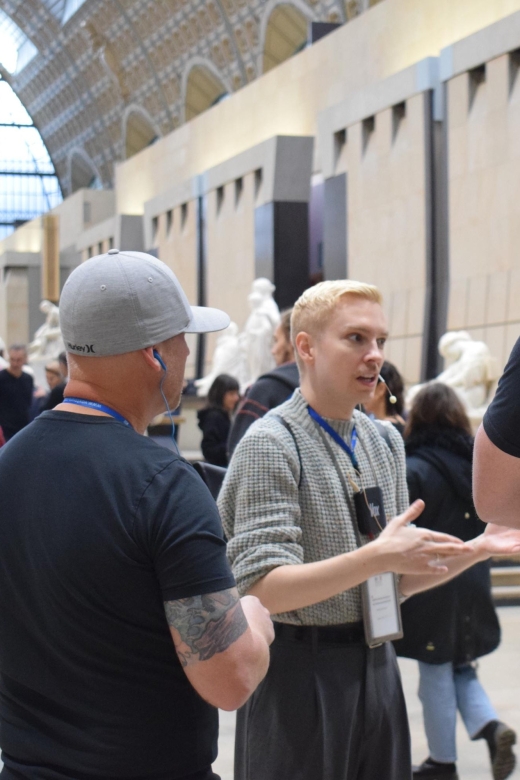
You’ll have a short “view point” stop before entering the main museum route. The exact spot isn’t described in detail, but the purpose is clear: get oriented and set you up for what you’re about to see.
Think of this as the pre-game talk. The Orsay building is not neutral—it’s part of the experience. When you walk from the exterior feel of the old railway setting into the controlled world of gallery light, the museum starts to make sense as a conversion story, not just a container.
This is also where a guide can reset your brain for the art timeline. Orsay covers decades of change, and the Impressionists didn’t fall from the sky fully formed. Starting with a sense of place helps you catch the transitions as the tour moves through styles.
Musée d’Orsay inside: why the old station feels like part of the art
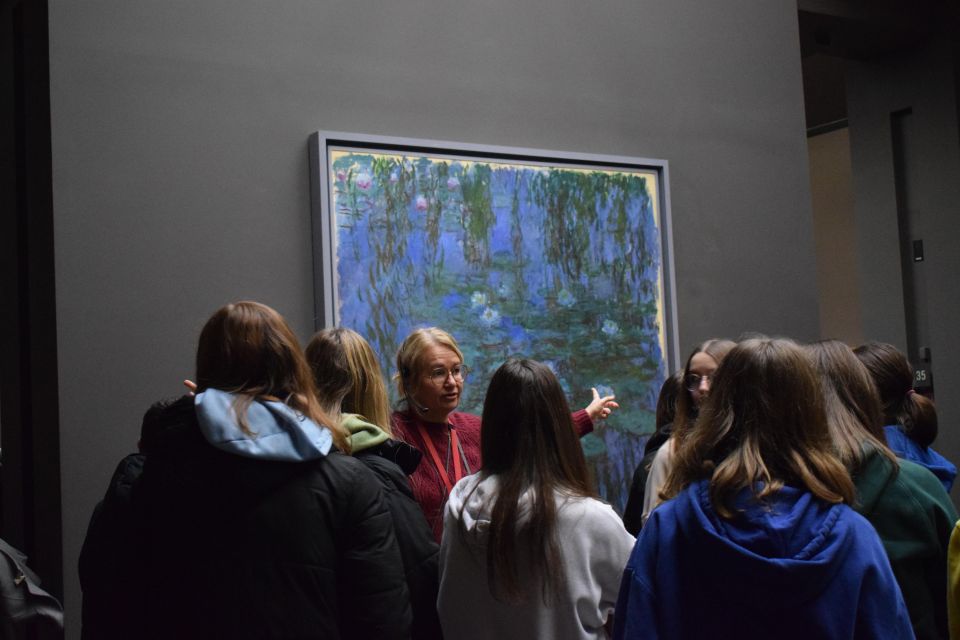
Once you’re inside, you’ll do a guided tour through the museum’s major works for about 2 hours. The building conversion story isn’t a trivia bonus—it’s one of the tour’s themes. You’ll learn how the former Orsay Railway Station became a fine arts museum a few decades ago, and why that matters for understanding the kind of modernity Orsay celebrates.
The museum’s layout can overwhelm you if you go purely on your own. A guided route helps you focus on key rooms and core masterpieces instead of bouncing randomly between popular canvases and the less-famous works that often connect the big ideas.
Also, Orsay has its own rhythm: people cluster in hotspots, then drift. A guide helps you “read” that flow and keep you close to what’s most important as galleries get busy. One practical detail from the tour guidelines: some specific rooms restrict how much you can speak. You’ll be warned by your guide, so treat it like a library whisper zone—listen, look, and let the art do the talking.
The core route: Impressionism to post-Impressionism, with real context
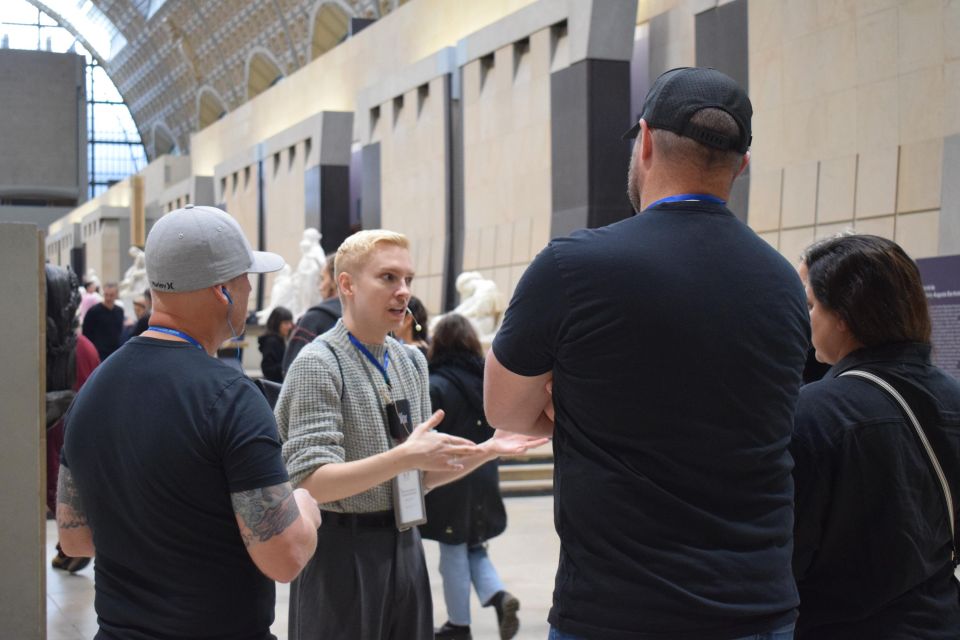
This tour is built around the biggest sweet spot in Orsay: Impressionist and post-Impressionist masterpieces. Expect to see major names like Monet, Renoir, Van Gogh, Degas, and Sisley, plus a bridge from Realism through to the bolder modern styles that followed.
Here’s what I think this approach is really good for: it connects the paintings to the culture that made them possible. You’re not just learning who painted what. You’re learning how new subjects, new ways of seeing, and changing ideas about society shaped what artists tried next.
You’ll also spend time with Realist artists like Manet, described in the tour as a trailblazer for the Impressionists. This is important because it explains why the Impressionists felt like a rebellion. The “rules” of academic painting were strict—then artists loosened the frame. The result is a museum experience that feels like a story of change, not a list of famous works.
As the tour expands into post-Impressionism, you’ll see artists such as Cézanne and Gauguin, plus Matisse and Van Gogh. The guide also covers how techniques and political or artistic movements influenced each other. In plain terms: style didn’t change just because artists got bored. It changed because the world around them was changing.
Why Manet to Monet feels more logical than you expect
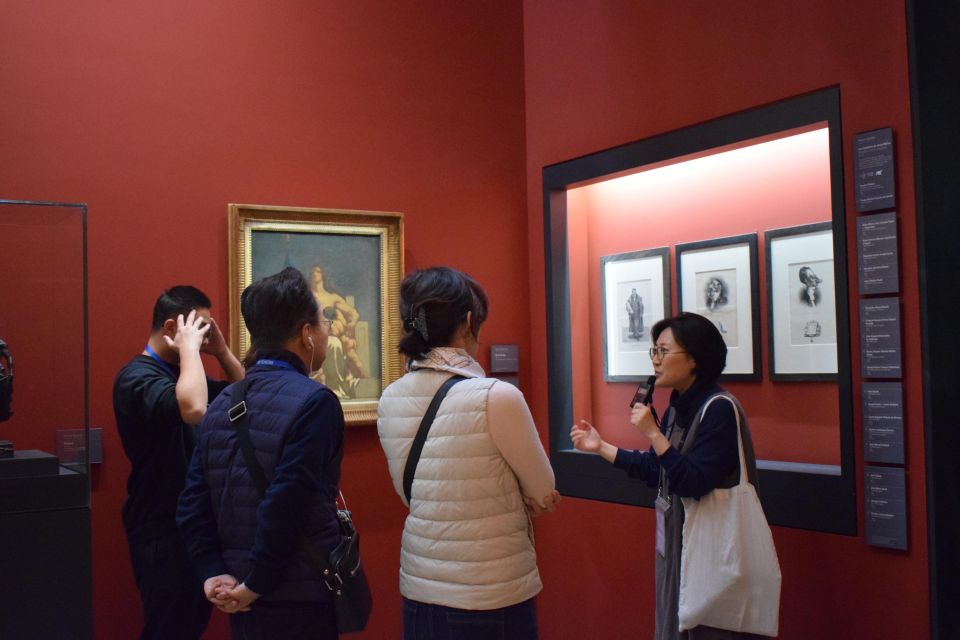
If you’ve ever stood in a museum thinking, I love this but I don’t know why, this tour is designed for that moment. The guide’s storyline tends to start with the academic standards and the Realists who began pushing back. From there, the Impressionists show up as a continuation of that argument.
The payoff is that works stop feeling like isolated masterpieces. You begin to notice the evolution of paint handling, subject choices, and how movement and light get treated. And when you’re shown what to look for—symbols, clues, compositional tricks—you’ll get more out of each stop without needing to decode French art history from scratch.
This is also where small-group format matters. When the group is small, you can ask a question when something clicks—or when it doesn’t. That’s the difference between admiring from afar and actually understanding what you’re seeing.
You can also read our reviews of more museum experiences in Paris
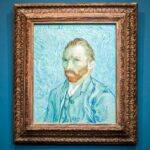




The standout painting stops, including Renoir’s famous dance scene
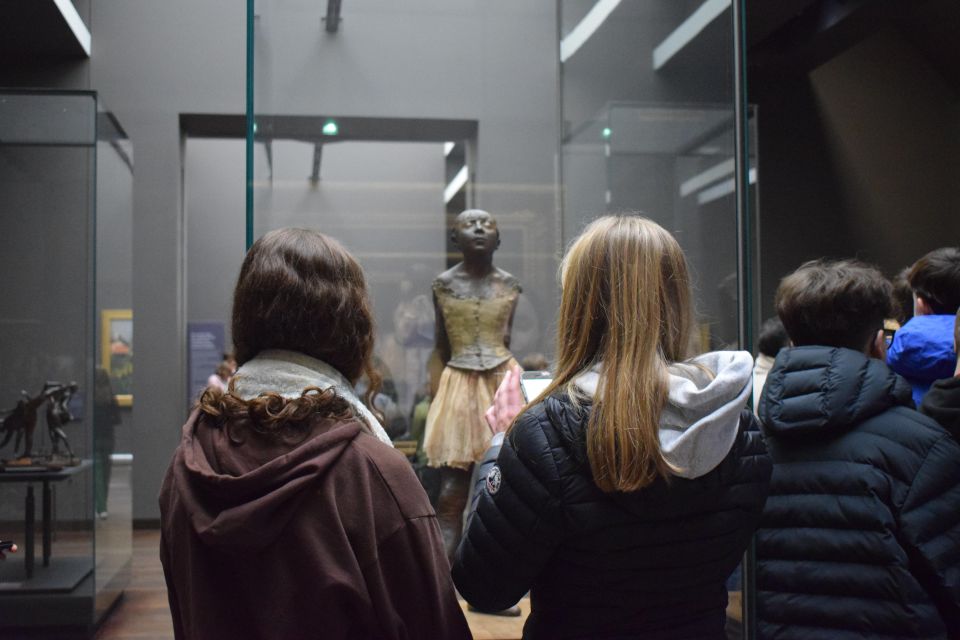
One highlight called out is Renoir’s Dance at Le Moulin de la Galette. It’s the kind of painting that can feel like a poster until you’re taught how to read it as a picture made for a specific moment. With a guide, you’re encouraged to look beyond the surface joy and see how the work organizes faces, light, and movement.
You’ll also see a range of masterpieces spanning from the mid-19th century into the early 20th century. That span is the point. Orsay isn’t only a single “vibe museum.” It’s where modern art’s early language starts taking shape.
And if you’re a detail person, this is where the tour can really pay off. The guide may point out artistic techniques, and you may be shown visual context or extra information on an iPad during certain explanations. If you’ve ever struggled with tiny details from a distance, that kind of support can be genuinely useful.
Beyond paintings: Rodin sculpture, Art Nouveau, and even Lady Liberty
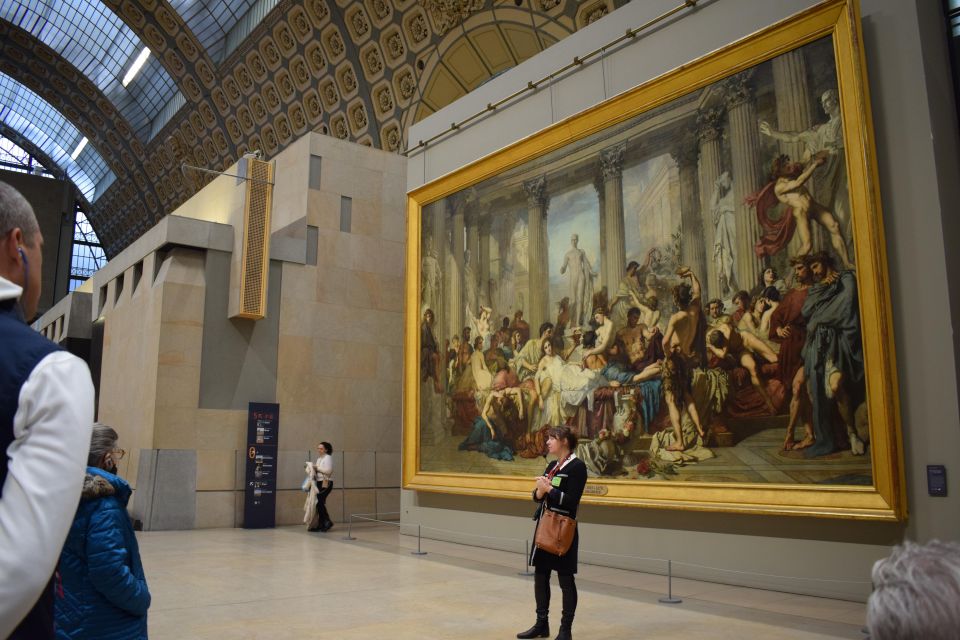
Orsay isn’t just about canvases. This tour also includes room time for sculpture of Rodin and touches of Art Nouveau. That mix helps you get a more complete picture of what “modern” looked like in that era: not only in paint, but also in form, materials, and public taste.
One unusual detail included in the tour description is an original Lady Liberty. It’s the kind of object that breaks up the painting-heavy feel of many museum visits. When you encounter a landmark object like that with a guide’s context, it changes how you interpret the whole collection.
If you’re doing Orsay alongside other Paris classics, this wider set of stops is a big advantage. It turns Orsay into a cultural snapshot of an entire moment, not only a highlight reel.
How crowded galleries affect your plan (and how to work with it)
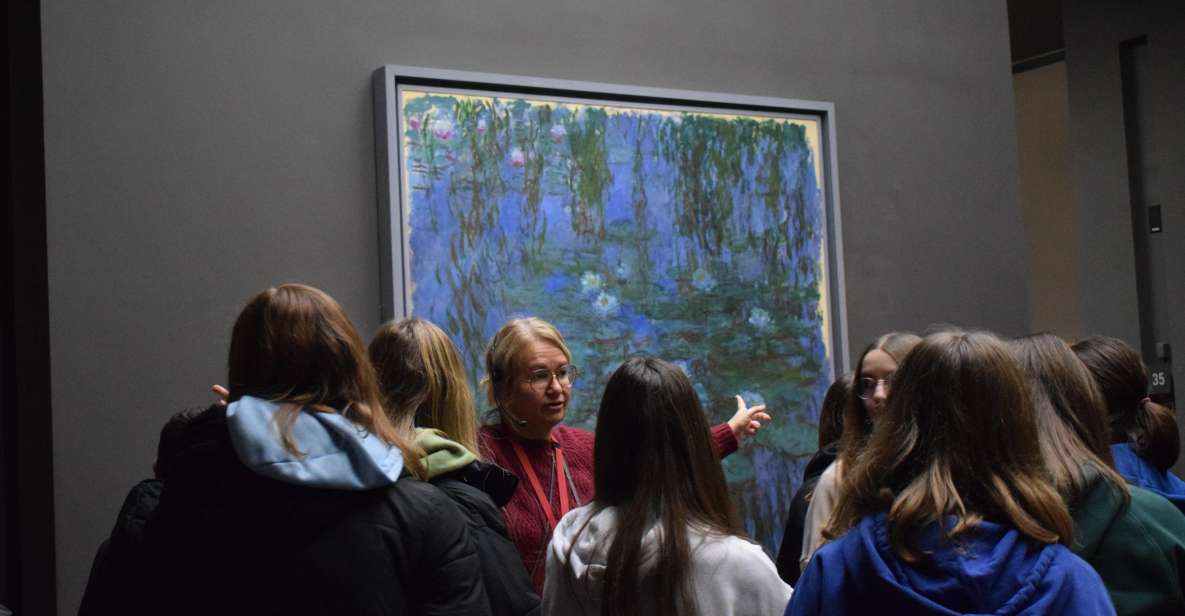
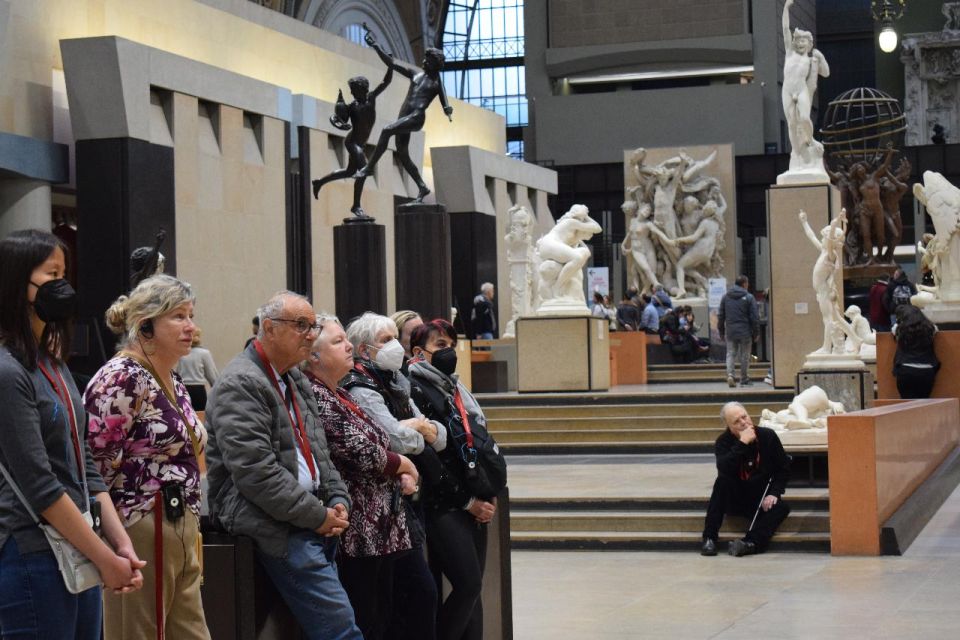
No matter what time you go, Orsay can get tight. The tour can’t erase crowds, but a guided small-group route helps you minimize wasted minutes. Even when the museum is shoulder-to-shoulder, the guide’s job is to keep you close to the most important works and to pace the group so you still get a real look.
One practical note: security lines exist. The tour states tickets allow quick access to the collections, but the security line cannot be skipped. So you should still expect some waiting. The best strategy is to arrive with ID ready, no banned items in your bag, and a calm attitude about lines.
Your 2-hour window also means you should show up ready to focus. Skip the long detours during the tour. Let the guide do the selecting, especially if you want to see the major names and also understand what ties them together.
Price and value: why $102 can be a smart trade for your time
At $102 per person for a 2-hour guided small-group experience with museum tickets, the value depends on what you want from Orsay.
If you go on your own, you can still have a great day—but you’ll spend more time deciding where to go, then you’ll likely hit a few “big names” and miss the connections. This tour’s value is that it does two things at once: it gives you curated time and it gives you context. You’re paying for interpretation, not only entry.
In the real world, that matters. Orsay is large. The collection covers decades. Without help, it’s easy to feel like you saw famous paintings but didn’t absorb the evolution behind them. With a guide, you can walk out understanding why the Realists mattered, why Impressionism looked different, and why post-Impressionism moved toward newer languages.
One more value point: the tour offers private or small groups. When you’re in a smaller group, the experience becomes less about hearing at the back of a crowd and more about asking questions and getting pointed at what to notice next.
Who should book this tour
This is a strong fit if you want:
- A concentrated Orsay experience in 2 hours without feeling scattered
- Clear connections between Realism → Impressionism → post-Impressionism
- Time with the big names, plus supporting stops like Rodin and Art Nouveau
- A guided experience that helps you see symbols, techniques, and the political-art link
It may be a poor fit if you need full mobility access. The tour is not suitable for wheelchair users, and people with mobility impairments can’t be accommodated in the shared semi-private format.
Should you book the Orsay Best of Orsay small-group tour?
Yes—if your priority is seeing Orsay’s greatest works with strong context and walking out feeling like you understand the “why,” not only the “what.” The price becomes easier to justify when you consider that you’re getting tickets plus a structured route through a huge collection.
If you’re the type who likes wandering freely and building your own museum plan, you might skip the guide. But if you want the art to land faster and harder, a small-group format with a guide is a very practical way to make your Orsay time count.
One last tip: bring only what you can carry through museum rules, keep your ID handy, and treat the security line as part of the deal. Then you can focus on the real prize—paintings, sculptures, and the story of a train station transformed into a temple of modern art.
FAQ
How long is the Orsay small-group tour?
The tour duration is 2 hours, with available starting times depending on the day.
Where do we meet the guide?
Meet in front of the Musée d’Orsay by the huge elephant statue. The guide will be holding a Connecting France sign.
Is museum admission included?
Yes. Entrance tickets to the Orsay Museum are included, along with a local guide and a museum tour.
What languages are offered?
Live tour guides are available in English, French, Spanish, Italian, and German.
Do the tickets let me skip the security line?
The tickets provide quick access to collections, but the security line cannot be skipped.
What do I need to bring?
Bring your passport or ID card. Tickets are personal, and all guests up to 17 years old should have their ID card with a photo.
Are bags or umbrellas allowed?
No. Luggage or large bags, backpacks, and umbrellas are not allowed.
Who is this tour not suitable for?
It isn’t suitable for people with mobility impairments, and wheelchair users should not book this tour.
Is there free cancellation?
Yes. You can cancel up to 24 hours in advance for a full refund.
Which artists and types of art will I see?
You’ll focus on Impressionist and post-Impressionist works, including Monet, Renoir, Van Gogh, Degas, Sisley, and also Realist artists like Manet. The tour also includes sculpture by Rodin, Art Nouveau elements, and an original Lady Liberty.