REVIEW · PARIS
Paris: Anzac Day Day Tour to Villers Bretonneux
Book on GetYourGuide →Operated by Paris' TRIP · Bookable on GetYourGuide
Villers-Bretonneux is not a quick Paris side trip. It is a long, solemn day built around the Anzac Day Dawn Service, followed by a circuit of Somme battle sites and memorials. You leave the city before sunrise and spend the day facing the scale of the First World War in northern France.
I like the thoughtful link between Australia and Villers-Bretonneux, especially the Victoria School built with help from Victorian children. I also like the range of stops, from the Adelaide Cemetery to the huge Memorial to the Missing at Thiepval. The main concern is organization: one past departure was delayed by security and paperwork problems, leaving little time to find a place before the service.
In This Review
- Key points to know before booking
- Why this Anzac Day journey matters
- Leaving Paris for Villers-Bretonneux
- The Victoria School and the Australian connection
- The Dawn Service at the Australian National Memorial
- Adelaide Cemetery and the personal cost of war
- Lochnagar Crater at La Boiselle
- Pozières and the Somme battle sites
- Thiepval and the Memorial to the Missing
- Péronne and Mont Saint-Quentin
- Guides, group size, and the pace of the day
- Who should pay $330 for this experience?
- Should you book this Anzac Day tour?
- FAQ
- Where does the tour meet in Paris?
- How long does the tour last?
- What language is the tour conducted in?
- What transport is used?
- Is food included?
- Is the tour wheelchair accessible?
- Can I visit the central tower of the Australian National Memorial?
Key points to know before booking
- Anzac Day begins before sunrise: The service is the central reason for the trip, so expect an early start and a full, tiring day.
- The Victoria School adds a personal connection: Built between 1923 and 1927, it links Australian children with the children of Villers-Bretonneux.
- Lochnagar Crater shows the physical cost of war: The huge crater at La Boiselle is more striking than a simple marker or plaque.
- Thiepval is the emotional high point: The Memorial to the Missing of the Somme commemorates soldiers with no known grave.
- Lunch is not included: Bring food and drinks unless the operator gives you different instructions before departure.
- The central tower may be closed: Technical equipment for the Dawn Service prevents public access during the event.
Why this Anzac Day journey matters
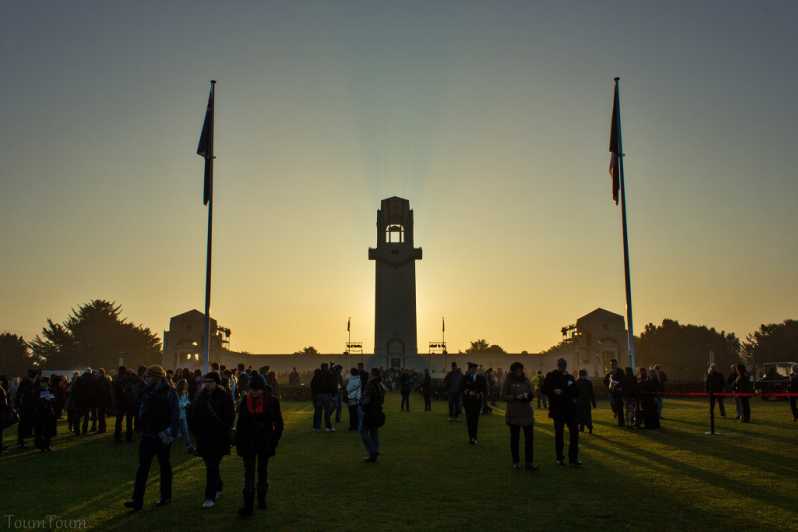
Anzac Day at Villers-Bretonneux gives the day a strong sense of place. Instead of attending a ceremony in a city square, you reach a small French town tied closely to Australian military history. The setting makes the ceremony feel direct and personal.
The experience also gives you more than a single memorial visit. After the service, you continue through the Somme area, seeing cemeteries, battlefield sites, memorials, and the remains of the fighting. You get a clearer idea of how widely the war affected this part of France.
At $330 per person, this is not a cheap day out. You are paying for round-trip transport from Paris, an English-speaking guide, and access to several sites that would be awkward to visit independently in one day. The value is strongest if you want the Dawn Service but do not want to arrange an early transfer, multiple rural stops, and the return journey yourself.
The price does not include food or drinks. That matters because the tour lasts 12 hours, and the timetable around the service may not leave you much freedom to search for lunch. Pack a substantial breakfast, water, and something easy to eat later in the day.
You can also read our reviews of more tours and experiences in Paris.



Leaving Paris for Villers-Bretonneux
The meeting point is in front of the Opera Garnier, close to Opéra Metro station and bus lines 3, 7, and 8. This is a central and recognizable place, but you still need to allow time to find the exact departure point. On a morning built around a dawn ceremony, arriving early is sensible.
Transport depends on the number of people booked. You may ride in a minibus, a 15-seater coach, or a larger coach. That means the feel of the ride can vary. A smaller vehicle may make the group easier to manage, while a larger coach offers more space but can take longer to load and unload.
The journey from Paris is part of the cost and part of the challenge. You will spend many hours on the road, and this is not a relaxed afternoon excursion. Comfortable shoes and warm clothing are strongly recommended, and that advice is worth taking seriously. The service and outdoor memorial visits require you to stand and walk outside, often before the day has warmed up.
An earlier departure had a problem at the Villers-Bretonneux turnoff when security redirected the vehicle because the tour guides did not have the correct paperwork. The delay left the group rushing to find seats before the Dawn Service. That appears to have been an operational failure rather than the normal shape of the outing, but it is a useful warning: this event has strict access and traffic arrangements, and small delays can have a large effect.
The Victoria School and the Australian connection
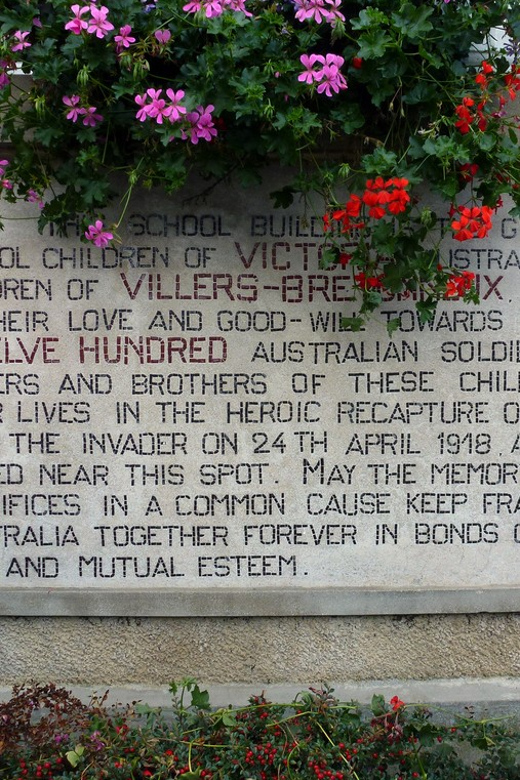
The Victoria School is one of the most distinctive places connected with Villers-Bretonneux. It was built between 1923 and 1927 as a gift from the children of Victoria in Australia to the children of the French town.
That detail gives the visit a human scale. Military memorials can sometimes become a long sequence of names and dates. The school points to the relationship between communities after the fighting ended. It is a reminder that the connection was not only between governments or armies. Children in one country helped children in another country rebuild.
This stop also helps you understand why Villers-Bretonneux carries such importance for Australians. The town is not simply a location on a battlefield map. It became a place of remembrance and friendship, with a lasting link to Australia.
You should expect the day to move at a steady pace. The school is one part of a wider route, so you will not have unlimited time at every stop. If this connection is especially important to you, listen carefully to the guide and keep track of the meeting time.
The Dawn Service at the Australian National Memorial
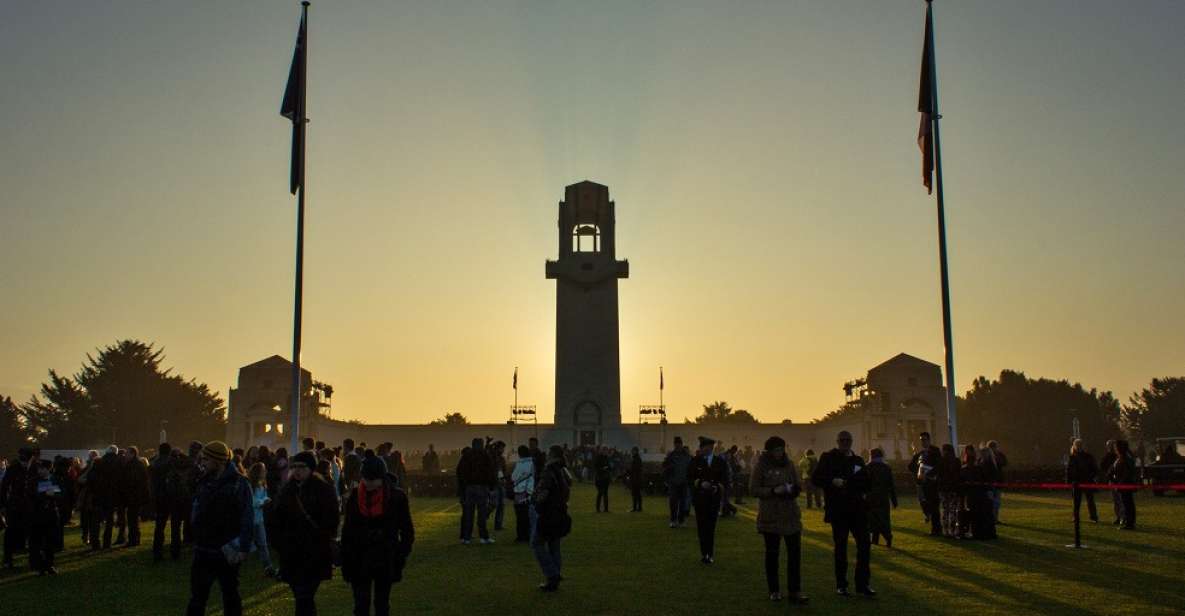
The Dawn Service is the heart of the excursion. You arrive at the Australian National Memorial near Villers-Bretonneux for a ceremony of remembrance attended by people connected with Anzac Day.
The timing makes the experience demanding. You may be standing outside in darkness or cold morning air, and you need warm layers rather than relying on Paris weather. Shoes with good support will help throughout the service and the later cemetery visits.
There is one important restriction. Because technical equipment is installed for the Dawn Service, the central tower of the Australian National Memorial will not be open to the public. You can still attend the ceremony and pay your respects, but do not book this trip expecting access to the tower on the day.
You should also prepare for crowds and security arrangements. The previous delay at the turnoff shows why the departure and arrival plan matters. A late arrival can mean scrambling for a place before the service begins. Once the ceremony ends, the schedule may require you to return to the vehicle quickly, so you may not have much time to study wreaths or linger at the memorial.
That is the biggest practical weakness of this particular day. The service itself is the reason for booking, yet the tight timetable can make the morning feel rushed. If you want long, quiet time at the memorial after the ceremony, an independent visit or an overnight stay in the area may suit you better.
Adelaide Cemetery and the personal cost of war
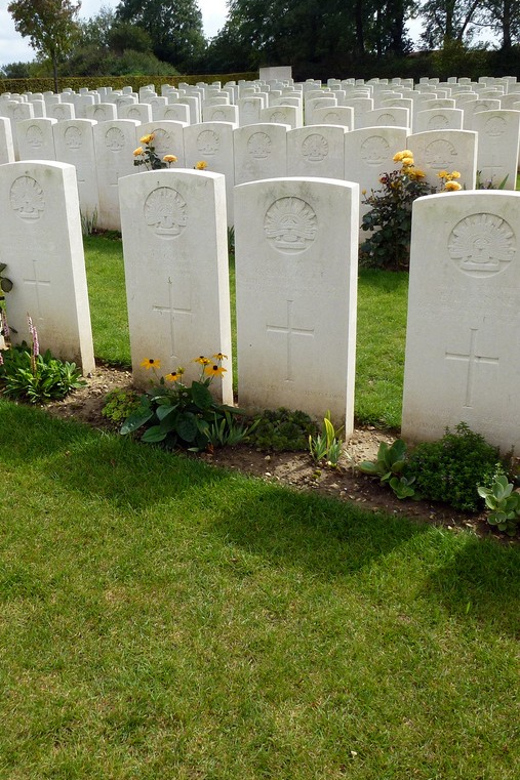
The Adelaide Cemetery offers a quieter setting for remembrance. Here you pay your respects to the fallen soldiers among the graves, rather than only viewing a large monument from a distance.
Cemeteries can make the numbers of the war easier to grasp. A name, a date, and a row of headstones bring the subject down to individual lives. The guide helps connect the site to the wider Somme campaign, while you have the chance to pause and reflect.
The visit is also a good test of the tour’s pace. You are covering several major locations in one day, so time at each place is limited. Keep your expectations realistic. This is a guided overview of important Somme sites, not a long private study visit at each cemetery.





Lochnagar Crater at La Boiselle
At La Boiselle, the Lochnagar Crater offers a physical reminder of the force used in the 1916 fighting. The crater was left by a massive explosion and remains an unmistakable mark on the ground.
This is one of the most memorable stops because it does not depend on a building or an inscription. The shape of the earth shows what artillery and underground mining could do to a battlefield. It gives you a sense of the violence in a way that a timeline alone cannot.
The crater also helps explain why the Somme is filled with memorials and cemeteries. The fighting altered the ground itself, and the remains still shape what you see. Your guide can place La Boiselle within the wider Somme story, making this more than a brief photo stop.
Do not expect a museum-style visit with extensive indoor exhibits. The value is in seeing the site directly, listening to the explanation, and thinking about the scale of the explosion. Warm clothes and firm footwear remain useful here.
Pozières and the Somme battle sites
The route continues to Pozières, another important place in the Somme fighting. Visiting the site gives you a broader view of the campaign, rather than limiting the day to memorial architecture.
Pozières is valuable because it adds context between the formal cemeteries and monuments. You see places associated with the battles themselves, then move on to memorials that record the human cost. That sequence helps you connect the physical battlefield with the names and inscriptions elsewhere.
The tour is particularly useful for first-time visitors to the Somme. You do not need to work out how the sites relate to one another or find rural locations on your own. The English-speaking guide provides the thread that links the stops together.
Still, the number of locations creates pressure. One previous participant felt the stops were rushed and that the group was frequently called back to the coach. You should see this as a broad introduction to the Somme, not a slow archaeological or military study tour.
Thiepval and the Memorial to the Missing
The Memorial to the Missing of the Somme at Thiepval is likely to be one of the day’s most powerful stops. It commemorates soldiers who have no known grave, and its purpose is different from a cemetery filled with marked headstones.
At Thiepval, the absence is the message. A named grave gives a family a place to visit. A memorial to the missing records the names of people whose final resting place was never identified. The scale of the monument reflects the enormous number of men lost in the Somme fighting.
I find this stop especially important for understanding the limits of remembrance. Not every body was recovered, and not every family received a definite answer. The memorial gives those missing soldiers a public place in the story.
You may have only a set amount of time here before moving on. Use the guide’s explanation to orient yourself, then take a quiet moment to read the names or observe the structure. This is not a stop to rush through if you can help it, although the wider itinerary may leave little flexibility.
Péronne and Mont Saint-Quentin
The final major area includes Péronne and the war memorial at Mont Saint-Quentin, overlooking the Somme River. The view gives the day a different quality after the cemeteries and battlefield sites.
Mont Saint-Quentin helps you see the area in geographical terms. Rivers, hills, roads, and towns influenced military movements, and the position above the Somme adds a wider setting to the individual places visited earlier.
Péronne also rounds out the route. By this point, you have seen the Dawn Service, a school built through Australian support, a cemetery, a crater, battlefield sites, and a memorial to the missing. The day becomes a connected account rather than a list of unrelated stops.
The drawback is fatigue. A 12-hour day with an early service and repeated stops can wear you down, especially in cold weather. Bring water and food, stay attentive to the return time, and accept that the final visits may feel more demanding than the first ones.
Guides, group size, and the pace of the day
The tour uses an English-speaking guide, and the commentary is important because many of the sites are open-air locations without a large visitor center. A good explanation turns a field, crater, or cemetery into a place you can understand.
The group may include a second guide or more than one guide, depending on the setup. One recent departure ran smoothly with two friendly and enthusiastic guides, and the bus was described as comfortable. That points to the experience at its best: clear movement between sites, useful explanations, and a vehicle that handles the long day well.
At the same time, the earlier paperwork problem shows why you should keep a little patience. The Dawn Service has special arrangements, and any delay can shorten the time available at later stops. Ask about the day’s food plan before departure if you need certainty, since food and drinks are not included and communication about lunch has not always been clear.
This is a tour where practical preparation improves the experience:
- Wear warm layers that you can adjust during the day.
- Use comfortable shoes suitable for outdoor memorials and cemetery paths.
- Bring breakfast, lunch, snacks, and drinks.
- Arrive early at the Opera Garnier meeting point.
- Check any Australian government registration requirement before the date.
- Keep your schedule open for the full 12 hours.
Who should pay $330 for this experience?
I think the price makes sense for visitors staying in Paris who specifically want to attend the Villers-Bretonneux Dawn Service on Anzac Day. Reaching the ceremony and the remote Somme sites without organized transport would require careful planning, and the tour removes much of that work.
The value is also good if you want a guided introduction to several key places in one day. You get transport, an English-speaking guide, and a route that includes sites far beyond the main memorial. For a first visit, that combination can be more useful than trying to select a few locations yourself.
The price is harder to justify if you want a relaxed day, generous time at each site, or a guaranteed lunch stop. You may also prefer independent travel if the Dawn Service is only a small part of your interest. An overnight stay in the Somme area would likely allow a slower visit, but that is not what this excursion offers.
The tour is not wheelchair accessible and is not suitable for people with mobility impairments. You need to manage a long day of outdoor visits, standing, and walking.
Should you book this Anzac Day tour?
Book it if the Villers-Bretonneux Dawn Service is your main goal and you want the Somme sites arranged into one day from Paris. The Victoria School, Adelaide Cemetery, Lochnagar Crater, Pozières, Thiepval, and Mont Saint-Quentin give the trip real depth, while the English-speaking guide helps explain how the locations fit together.
Book with caution if you need a calm schedule or detailed time at every memorial. The earlier paperwork delay and rushed post-service timing show that Anzac Day logistics can be demanding. Bring your own food, dress for cold weather, and confirm current registration and departure details before you go.
For Australians seeking a practical way to attend the ceremony from Paris, this is a worthwhile but intense choice. For everyone else, it works best as a focused introduction to the Somme, not as a leisurely sightseeing day.
FAQ
Where does the tour meet in Paris?
The meeting point is in front of the Opera Garnier. You can reach it via Opéra Metro station or bus lines 3, 7, and 8.
How long does the tour last?
The tour lasts 12 hours, including round-trip transportation between Paris and the Somme area.
What language is the tour conducted in?
The tour is conducted in English with a live English-speaking guide.
What transport is used?
Transport may be by minibus, 15-seater coach, or larger coach, depending on the number of participants.
Is food included?
No. Food and drinks are not included, so you should bring your own supplies unless you receive other instructions before departure.
Is the tour wheelchair accessible?
No. The tour is not wheelchair accessible and is not suitable for people with mobility impairments.
Can I visit the central tower of the Australian National Memorial?
No. The central tower will not be open to the public during the Dawn Service because technical equipment is installed for the ceremony.