Paris has a talent for turning history into a mood—and this one does it twice. You’ll start in the Gare Saint-Lazare area, then get a guided private look at Palais Garnier’s public rooms and secret backstage spaces linked to the Phantom legend.
What I like most is the backstage access: you’re not just seeing pretty rooms, you’re walking into the Opera’s working world, including stories tied to the underground “lake.” I also love the big visual hits inside Palais Garnier, especially the auditorium decorated with Marc Chagall’s famous fresco and the moment you’re allowed to experience more than the hallway version of the building. One thing to plan for: on busy days, entry flow can feel chaotic, and there can be day-to-day hiccups (including closures mentioned on some dates), so build a little patience into your schedule.
In This Review
- Quick hits before you go
- Gare Saint-Lazare first: architecture and easy Paris connections
- The Saint-Lazare Shopping Pass: where it saves time (and stress)
- Inside Palais Garnier: marble staircase, foyers, and Chagall’s ceiling
- The secret backstage: the underground lake and dancer-linked spaces
- The Phantom thread: opera legend meets real building design
- Timing, lines, and how to plan your 3 hours
- Is it good value? What you’re really getting
- Should you book this Palais Garnier tour with shopping?
- FAQ
- How long is the Palais Garnier private backstage tour with shopping?
- Where does the tour take place?
- What time slots are available?
- Will I receive a mobile ticket?
- When do I get confirmation after booking?
- What is included in the Palais Garnier visit?
- What does the shopping part include?
- Are children allowed?
- Can I cancel or change my booking?
- What’s not included?
Quick hits before you go
- Backstage, not just selfies: underground “lake” stories and dancer-linked spaces like the Foyer de la Danse
- Two tour flavors: Classique or Ghost de l’Opéra, so the emphasis can feel different
- Chagall’s auditorium centerpiece: a famous ceiling that changes the whole room’s mood
- Gare Saint-Lazare shopping built in: more than 80 shops and brands right in/near the station
- Real guide energy: names like Virginie and Priscille Deneux show up in the experience history, and you’ll feel it in the storytelling
Gare Saint-Lazare first: architecture and easy Paris connections
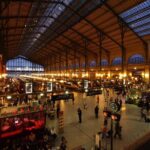
The experience kicks off at Gare Saint-Lazare, one of Paris’s most photogenic train stations. It opened in 1837, and that early-Industrial architecture is part of why artists like Claude Monet and Gustave Caillebotte turned it into a subject. If you care about how cities look when they’re being built, you’ll get a lot from seeing the station up close before you head to the Opera.
The neighborhood around Saint-Lazare also matters. You’re not dropped in a single “tour bubble.” Instead, you’re placed in an area that connects you quickly to other major Paris landmarks—Palais Garnier, Galeries Lafayette, and the Opéra area are all reachable on foot. That’s practical: it helps you plan a smooth Paris day without constant hopping across town.
One more useful detail: you’ll have about an hour at Stop 1, so it’s not a long “wander around.” It’s enough time to get your bearings, notice the station’s exterior and the district’s rhythm, and then move into the shopping component without feeling rushed.
You can also read our reviews of more private tours in Paris


The Saint-Lazare Shopping Pass: where it saves time (and stress)
Stop 1 isn’t only sightseeing. You also get a premium shopping experience tied to Saint-Lazare, with access to a shopping center integrated into the station area. The big draw here is convenience: when your tour includes both culture and a built-in retail break, you lose less time hunting for a pharmacy, a gift, or a small treat.
The shopping center is described as having 80+ shops, restaurants, and services, including brands such as Rituals, Sephora, Uniqlo, and & Other Stories. That lineup is exactly what you want in a city where you can spend hours just trying to find one specific thing.
The included perks are practical too. You’re set up for shopping goodies at Rituals – Saint-Lazare, and you get what’s described as a premium shopping getaway in the Saint-Lazare center. Based on the way people talk about the experience, this portion also helps break up the day emotionally—you get a chance to step out of the grand-architecture headspace and do something concrete (a quick browse, coffee, or picking up a small souvenir) before you return to the Opera world.
Just be realistic about one thing: stations and malls get crowded, especially near peak visiting hours. If you’re sensitive to lines or tight corridors, treat this as an easy browse rather than an errand marathon.
Inside Palais Garnier: marble staircase, foyers, and Chagall’s ceiling
Once you reach Palais Garnier, the tone flips from station energy to Opera-palace drama. The guided visit focuses on the public spaces—this is the part you’ll feel even if you’re not an opera superfan.
You’ll see the grand marble staircase, the Foyer gallery, and gilded lounges. These spaces are designed to impress before a single note plays. The building’s ornament isn’t just decoration; it’s part of the Opera’s social theater. You’re walking through places meant for moments—arrival, display, conversation—long before the curtain.
Then comes one of the main visual anchors: the auditorium decorated with the famous fresco by Marc Chagall. Chagall’s work is often discussed in terms of meaning as much as style, and the experience is set up to connect that artistic choice to the wider Opera story. Even if you don’t personally fall for every artistic look, this ceiling is the sort of thing that changes how you read the room.
The “public” portion lasts about two hours, and it’s not a quick pass-through. You’ll also have access to spaces connected to the Opera’s inner life, like museum areas and collections—enough to understand the building as a living institution rather than a museum shell. One review detail that’s especially helpful for planning: people describe seeing areas like the library that holds ballets/opera records and show posters across the years, plus renderings and the original ceiling context. That’s a nice bonus if you enjoy the behind-the-scenes paperwork side of culture.
The secret backstage: the underground lake and dancer-linked spaces
The real reason to book is backstage access. This is billed as a private tour, and the focus isn’t only on storage rooms or narrow corridors. You’re taken to the Opera’s hidden layers, including the underground “lake,” the Foyer de la Danse (once reserved for the Opera ballerinas), and the mysterious capstan hall.
Why these places matter: they show you how the Opera functions physically. The “lake” story in particular gives the building a spooky, human scale—suddenly you’re picturing workers, mechanics, and water management in the same place where people expect glitter and applause.
The Foyer de la Danse is another smart stop. Even if you don’t know every ballet title, you can feel the intention of the space. It was designed for performers who needed their own route through the building’s social layers. That makes it easier to understand why the Opera’s choreography isn’t only on stage.
You’ll also get story-driven context tied to the building’s legend, including the Phantom thread from Gaston Leroux’s novel. In other words: you’re not just shown a door; you’re told what kinds of moments happened beyond it.
One important practical consideration: backstage access can depend on what’s operational that day. Some people reported issues with closures on certain dates. So keep your expectations flexible—if the auditorium is affected, you’ll still likely get plenty of backstage atmosphere, but you might not get every single viewing moment.
The Phantom thread: opera legend meets real building design
This tour doesn’t treat the Phantom as a marketing gimmick. It uses the building itself as the story engine.
You’ll learn how the legend of the Phantom of the Opera is tied to these walls, popularized through Gaston Leroux’s novel. Then the guide connects that literary myth to the real architecture and opera life that Charles Garnier helped shape. If you love when a story has physical roots, you’ll appreciate how the itinerary is built to make the building feel like a character—not just a backdrop.
There are two tour styles included: Classique or Ghost de l’Opéra. The names suggest that the experience tone may shift—Classique leaning more straightforward with the Opera-house highlights, and Ghost de l’Opéra leaning harder into spooky legend and atmosphere. Either way, you’re learning history, but through spaces, not lectures.
One guide name you may hear is Virginie, who was described as dramatic and funny, with long explanations at each stop. Another standout in the experience stories is Priscille Deneux, praised for architectural expertise and for handling lots of questions. When a guide can link ornament to function and legend to layout, the whole building stops being a pretty façade and starts making sense.
You can also read our reviews of more shopping tours in Paris






Timing, lines, and how to plan your 3 hours
The tour runs for about 3 hours total, and the available time slots are listed as Monday–Sunday: 12:00–14:00 and 17:00–19:00 (for the overall operating window shown). Visits are described as meeting near public transportation, which helps—Paris is easier when you can walk the last bit and avoid cross-city transfers.
Now, the reality check: you’re visiting two high-interest nodes—first a major station area, then one of the city’s top-ticketed buildings. That means queues and crowding can be real, and some people described very disorganized entry flow at times. One even described nearly being turned away due to a cancellation claim before the tour resumed. The takeaway for you is simple: arrive calmly, keep your confirmation ready, and be prepared to wait even if you’re early.
How to make the day smoother:
- Treat the Saint-Lazare shopping stop as your “breather.” Don’t plan to buy everything right before the backstage section.
- Use nearby time to warm up your interest. If you know the basic Phantom idea (who/why the legend sticks), the backstage stories land better.
- If you’re coming in a group or traveling with anyone who gets stressed in crowds, plan extra buffer for entry.
Also note the family suitability rule: visits are prohibited for children under 8. If you’re traveling with younger kids, this one won’t work.
Is it good value? What you’re really getting
Even without seeing the exact price in front of you, I see clear value in the structure. You’re getting a guided Palais Garnier experience focused on public rooms and genuine backstage spaces, plus a built-in shopping add-on in a location that’s otherwise just a station approach.
The “value math” looks like this:
- Palais Garnier access is the main cultural anchor, with high-impact stops like the marble staircase, the Chagall auditorium, and the backstage areas (underground “lake,” Foyer de la Danse, capstan hall).
- The shopping pass turns wasted time into useful time. Instead of hunting for a store near the Opera, you get a station-connected center with brands like Rituals, Sephora, Uniqlo, and & Other Stories.
- The included goodies link to a real brand stop (Rituals), which can make a small purchase feel less random and more planned.
If you love architectural storytelling and you also like practical perks—gifts, skincare, a quick clothing pick—this format fits you. If you hate shopping or you’re only interested in one thing (just the Opera rooms), you might feel the extra retail portion is less essential. But it does function as a time-and-comfort buffer.
The experience is rated at 3.8 across a small set of reviews, so quality seems guide-dependent and sensitive to day-of operations. Still, the best moments described are strong: backstage access, time inside the building’s key spaces, and guides who can make myth and architecture click.
Should you book this Palais Garnier tour with shopping?
Book it if you want a Paris highlight that goes past the front door. The backstage component—especially the underground “lake” world and performer-linked rooms—adds a layer most Palais visits don’t deliver. The shopping pass also makes sense if you’ll actually use it for something small at brands like Rituals or Sephora.
Skip it (or reconsider) if you need ultra-predictable entry with zero waiting. This experience can run into crowd pressure, and day-of openings can affect what you see. If you’re traveling when it’s peak busy, go in with patience and a flexible mindset.
One final tip: pick the tour style—Classique or Ghost de l’Opéra—based on how you want the story to feel. If you’re chasing atmosphere and legend, Ghost may suit you. If you want a cleaner architecture-and-Opera-house approach, Classique is likely the safer bet for tone.
FAQ
How long is the Palais Garnier private backstage tour with shopping?
It’s listed as approximately 3 hours.
Where does the tour take place?
In Paris, France, with stops at Gare Saint-Lazare and Palais Garnier.
What time slots are available?
The hours listed are Monday–Sunday 12:00 PM–2:00 PM and 5:00 PM–7:00 PM, within the operating dates shown (09/08/2025–02/27/2027).
Will I receive a mobile ticket?
Yes, the tour offers a mobile ticket.
When do I get confirmation after booking?
Confirmation is received within 48 hours of booking, subject to availability.
What is included in the Palais Garnier visit?
The included visit is the Palais Garnier tour in either the Classique or Ghost de l’Opéra format, focusing on public spaces plus secret backstage access.
What does the shopping part include?
You get a premium Saint-Lazare shopping experience, including the Saint-Lazare shopping center experience with 80+ shops and a mention of goodies to pick up at Rituals in Saint-Lazare.
Are children allowed?
Visits are prohibited for children under 8.
Can I cancel or change my booking?
No. The experience is non-refundable and cannot be changed for any reason.
What’s not included?
Dinner and all meals are excluded, and private transportation is excluded.