REVIEW · NANTES
Outdoor escape game | Vikings – The Relic of Odin
Book on Viator →Operated by Escape The City · Bookable on Viator
The unusual hook here is a Viking quest played across the streets of central Nantes. You help Ragnar Lodbrok recover Odin’s relic before Sherlock Holmes’ enemy, Moriarty, gets there first. Along the way, you learn about the Vikings who attacked Nantes in the ninth century, their gods, and their runic alphabet.
I like the way the game makes you examine ordinary city details, including clues that may sit above eye level. I also like the freedom of a self-guided format, with a chatbot giving you the mission and help available by phone. The main drawback is that the clues can be exacting, and one poorly understood detail may stop your group cold.
In This Review
- Key points
- Starting at Place du Bouffay with Ragnar’s mission
- Reading Nantes as a giant puzzle board
- Learning about ninth-century Vikings without leaving the city
- How the chatbot and team phones work
- The walking challenge and the two-hour timing
- What happens when a clue goes wrong
- Who will get the most from this Nantes game
- Is $17.74 per person good value?
- Practical preparation before you start
- Cancellation and booking basics
- Should you book Vikings: The Relic of Odin?
- FAQ
- Where does the game start and finish?
- How long does Vikings: The Relic of Odin last?
- What equipment do I need?
- Is this a private activity?
- Can I use public transportation to reach the meeting point?
- What is the cancellation policy?
Key points
- A Viking story in central Nantes: Follow Ragnar Lodbrok and search for Odin’s relic near Place du Bouffay.
- A walking puzzle route: Expect about 1.5 to 2 hours of clues, observation, movement, and code-breaking.
- A digital companion: Start the chat with the chatbot by entering the access code supplied for your game.
- A lesson in Norse culture: The route introduces Viking gods and the runic alphabet while taking you through historic Nantes.
- A team activity with flexible phone use: One charged smartphone with internet access is required per team, though one phone per player is recommended.
- A low-cost private outing: At about $17.74 per person, the value is strongest for couples, families, and small groups who enjoy puzzles.
Starting at Place du Bouffay with Ragnar’s mission
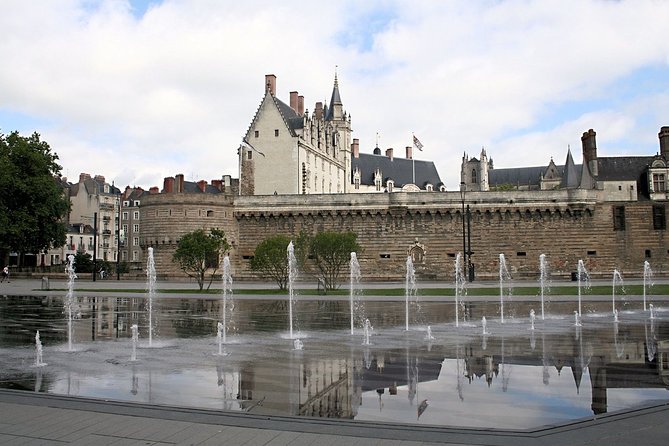
Your adventure begins at Place du Bouffay, in the heart of Nantes. This is both the meeting point and the finish, so you do not need to arrange a second pickup or find your way back from another part of the city.
The game starts digitally rather than with a guide standing in front of you. Open the chat with the chatbot and enter your access code. It then gives you the mission details and sends you out to search for clues.
The story gives the walk a clear purpose. Ragnar Lodbrok needs help finding Odin’s relic before Moriarty, his unlikely rival from the Sherlock Holmes world, takes it. This mix of Norse legend and detective fiction is playful rather than scholarly, but it gives your group a reason to keep moving when a puzzle gets stubborn.
I like this opening because it gets you into the action quickly. You are not sitting through a long briefing. You receive the task, gather your team, and start looking at Nantes with a different purpose.
You can also read our reviews of more tours and experiences in Nantes.



Reading Nantes as a giant puzzle board
The route asks you to observe the city rather than simply pass through it. You walk the streets, inspect your surroundings, search for markings, and use what you see to answer the chatbot’s challenges.
That change in attention is the main value of the experience. A normal city walk tells you where to look. This game makes you look for yourself. You may need to examine a building detail, read a sign, notice a shape, or look upward for information that is easy to miss at street level.
One clue involves a mosaic or ceramic representation of a mythological animal. That wording matters. The challenge is not simply to find any decorative object. You need to match the clue to the correct feature in the city, and a misunderstanding can send the whole group in the wrong direction.
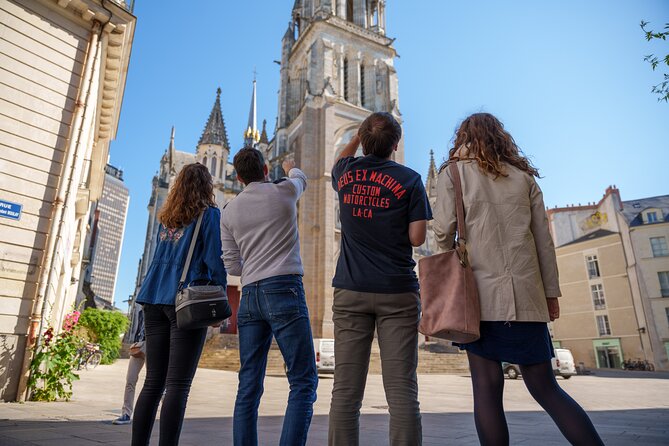
The route also includes a difficult clue connected with a basilica. It has been singled out as one of the hardest steps in the game. If you reach that point, slow down and check the surroundings carefully before guessing. The game offers clues that should let you progress, but you need to use them rather than rush ahead.
A useful rule is to inspect details from several angles. Look up, check the nearby architecture, and read the wording of each prompt closely. One of the best bits of advice from the experience is simple: do not forget to look above you.
Learning about ninth-century Vikings without leaving the city
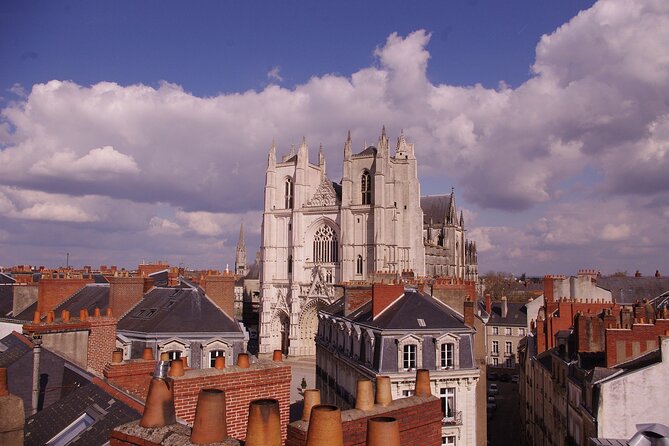
This is not a conventional history tour with a guide explaining every stop. Instead, historical information arrives through the story and the puzzles.
You learn about the Vikings who came to invade Nantes in the ninth century. The game also introduces Norse gods and the runic alphabet. Those subjects give the riddles a stronger theme than a standard city scavenger hunt.
The educational value depends on your group. If you want a detailed lecture on Viking Nantes, this is not the right format. If you enjoy picking up historical facts while solving problems, the subject matter adds welcome depth to the walk.
Runes are especially well suited to an escape game. Their symbols make you slow down and compare shapes, letters, and meanings. The puzzles are not just about speed. They ask you to notice, discuss, and test an idea together.
I like that the route links the past to visible places in present-day Nantes. You are not studying Viking history in an abstract room. You are walking through the city while trying to connect a modern street scene with a story about Norse raiders and divine relics.
How the chatbot and team phones work
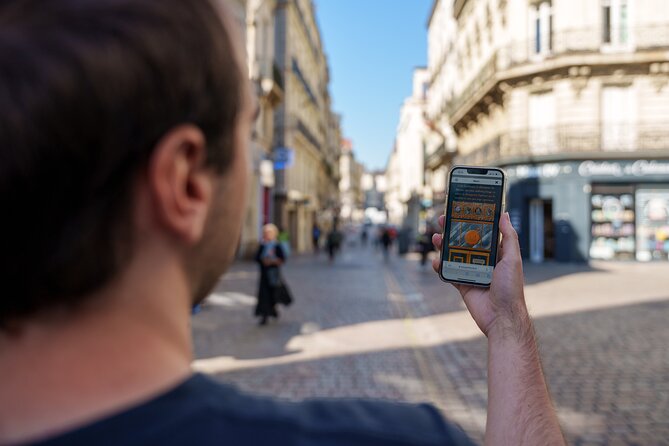
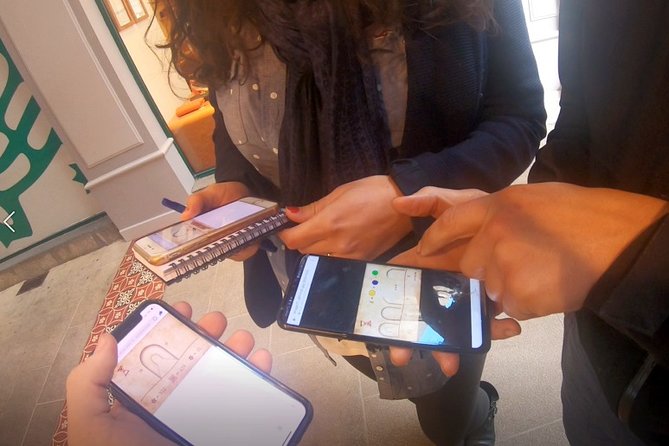
The chatbot is your main game contact. Once you enter the access code, it provides the mission details and guides the next steps. You use your phone to receive information, submit answers, and continue the story.
One smartphone with internet access is mandatory for each team. One phone per player is recommended, but that does not mean every person must stare at a screen for the full game.
The operator recommends about three phones per team for team mode. In practice, your group can decide how to share the digital work. One person can read the prompt while others search the surroundings, or several people can follow along and compare ideas.
This setup is convenient because you can begin at the scheduled time without waiting for a guide. It also creates a possible weakness. Several people have found the phone element too prominent, and some groups have had trouble connecting a second player.
If your group wants a social, screen-light activity, agree on a system before starting. Give one person responsibility for the chatbot, but make sure the rest of the team keeps searching and discussing. The best use of the format is to treat the phone as a tool, not as the whole game.
Bring a fully charged phone and, ideally, a portable battery. Internet access is required, and a dead battery would be a needless way to lose Odin’s relic.
The walking challenge and the two-hour timing
The experience lasts about two hours, though one successful run has been completed in roughly 1.5 hours. Your time will depend on how quickly your group spots the clues and how much help you need.
This is an active city walk, not a seated puzzle session. You should expect to spend the full game on your feet, moving between locations and examining details. Moderate physical fitness is recommended.
Wear comfortable shoes. Bring water, and consider a small snack if your group tends to slow down when hungry. A notebook and pencil are also required equipment for the team, and they are useful for copying symbols, testing combinations, and keeping track of ideas.
The route begins and ends at Place du Bouffay, which makes planning easy. You can reach the starting point by public transportation, and the activity is near transit connections.
The exact route is not supplied in advance, so you should allow enough time for the full two-hour window. Do not schedule a tight museum booking immediately afterward. If your team reaches a difficult clue, you will want a few spare minutes rather than the pressure of watching the clock.



What happens when a clue goes wrong

Escape games are only fun when the challenge feels fair. Here, the clues generally provide a path forward, but the wording can demand careful attention.
A group that stopped early had trouble matching a clue about a mosaic with the feature they found. The operator’s response makes clear that the intended object is a well-hidden mosaic representing a mythological animal, not simply any single ceramic piece. This is a useful warning: if an answer seems to contradict the clue, keep searching rather than forcing a match.
You can contact the operator by phone during the adventure. The phone number is supplied on the team card, and help is available if your group cannot move forward. Use that option sooner rather than later. There is little value in spending 30 minutes repeating the same guess.
The operator also indicates that hints are designed to help teams progress. That should reassure beginners, families, and groups with mixed puzzle skills. You are not expected to solve every step without support.
At the same time, a hint can reduce the satisfaction for people who want a pure test. Decide before starting how much help your team is comfortable taking. Ask for a nudge when everyone is stuck, but keep trying when you are close.
Who will get the most from this Nantes game
This works best for a small private group that enjoys solving problems while walking. Since only your party participates, you can set your own pace and discuss each clue without strangers joining the team.
Families may like the combination of movement, story, and short historical lessons. Younger participants can search for visual details while adults manage the phone or help interpret the wording. The game still requires enough patience to read carefully, so it may not suit children who want a fast race from one point to the next.
Couples and friends get a good reason to explore central Nantes together. The experience rewards communication more than individual brilliance. One person may spot a detail, another may understand the riddle, and a third may enter the answer.
It can also work well for a youth or team-building outing. The activity encourages cohesion, listening, shared decisions, and communication. A group that does not know one another well has a clear common task from the first minute.
You should think twice if your group dislikes smartphones, struggles with ambiguous clues, or wants a guide to explain every landmark. This is a self-guided game first, with history woven into the challenge rather than presented as a full commentary.
Is $17.74 per person good value?
At about $17.74 per person, the price is reasonable for a private two-hour activity, especially when split among a group. You are paying for a structured route, a themed story, digital access, and an outdoor way to see Nantes.
The value is not in transportation, food, admission tickets, or a personal guide. Those are not part of the experience. Your cost covers the game itself, so compare it with what you want from the outing.
I think the price works best when you already plan to walk around central Nantes and want a reason to pay closer attention. You get a city visit and a puzzle activity in one package.
The value drops if your group gives up early. A difficult clue can make the price feel wasted, so prepare properly and use the available phone support. A charged phone, pencil, notebook, and patient team are small safeguards against an avoidable failure.
Group discounts are available, which may improve the cost for larger parties. Because the activity is private, you are also paying for an outing reserved for your own group rather than a shared public tour.
Practical preparation before you start
A little preparation will make this game much more enjoyable.
- Charge at least one smartphone fully and confirm that it has internet access.
- Bring a portable battery if you have one.
- Pack a notebook and pencil for the team.
- Wear shoes suited to a two-hour city walk.
- Carry water and, if useful, a snack.
- Arrive at Place du Bouffay ready to start the chatbot.
- Give the phone to one person while keeping the whole team involved.
- Read each clue literally before interpreting it.
- Search above eye level as well as at street level.
- Call the supplied support number if your group is truly stuck.
The activity is listed as available from noon through midnight every day during its operating period, which gives you plenty of flexibility. Still, daylight may make exterior details easier to spot, especially if your team is new to this type of game.
Service animals are allowed. The activity is near public transportation, and the route returns to its starting point.
Cancellation and booking basics
You receive confirmation when you book, and the activity uses a mobile ticket. You can cancel for a full refund up to 24 hours before the local start time.
Changes or cancellations made less than 24 hours before the start are not accepted for a refund. Keep that deadline in mind if your plans in Nantes are still uncertain.
Should you book Vikings: The Relic of Odin?
Book it if you want to discover Nantes through observation, teamwork, and a playful Viking story. The strongest parts are the citywide format, the runic and mythological theme, the chance to notice details you might otherwise miss, and the freedom of a private self-guided outing.
Go in prepared for a real walking puzzle, not a gentle sightseeing stroll. The basilica clue and the carefully worded object searches can be demanding, and the phone system may not suit a group that wants to put its screens away.
For families, couples, friends, and youth groups, the price is fair and the format offers a useful change from a standard tour. Bring good shoes, a notebook, a pencil, and a backup battery. Most of all, keep looking when the clue seems wrong, and remember to look up.
FAQ
Where does the game start and finish?
It starts at Place du Bouffay, Pl. du Bouffay, 44000 Nantes, France. The activity ends back at the same meeting point.
How long does Vikings: The Relic of Odin last?
The game lasts approximately two hours. A successful outing may take about 1.5 hours, depending on how quickly your group solves the clues.
What equipment do I need?
You need one charged smartphone with internet access per team, although one phone per player is recommended. Bring one notebook and pencil per team. Good shoes, water, and a portable battery are also useful.
Is this a private activity?
Yes. Only your group participates in the activity.
Can I use public transportation to reach the meeting point?
Yes. The starting point at Place du Bouffay is near public transportation.
What is the cancellation policy?
You can cancel at least 24 hours before the local start time for a full refund. Cancellations or changes made less than 24 hours before the start are not accepted for a refund.