REVIEW · PARIS
Montmartre Marvels Small Group Guided Stroll in Bohemian Paris
Book on Viator →Operated by Paris TRIP · Bookable on Viator
Montmartre is Paris at its most storybook-like, but its slopes, stairways, and maze of lanes can make a first visit feel scattered. This small-group morning walk gives you a clear route through the old artists’ quarter, from Anvers to Blanche, with the best hilltop views saved for the start.
I like the group size, capped at 15, because it leaves room to ask questions and hear a guide such as Olivia or Julie without being swallowed by a crowd. I also like the unusual stops: a tiny urban vineyard, Picasso’s former workshop, Dalida’s square, and a donkey named Lolo who once took part in the local art scene.
The main drawback is physical. Cobblestones, stairs, and uphill walking are part of Montmartre’s character, so this is not a gentle flat-city stroll. The tour also costs $107.76 per person, a fair price if you want context and company, but less appealing if you prefer to wander alone or only need directions.
In This Review
- Key points about this Montmartre walk
- Why Montmartre works best with a guide
- Sacré-Coeur and the first climb
- Place du Tertre and Montmartre’s working artists
- Clos Montmartre, the vineyard that survived
- Au Lapin Agile and the story of Lolo
- Dalida, Moulin de la Galette, and the artists’ Montmartre
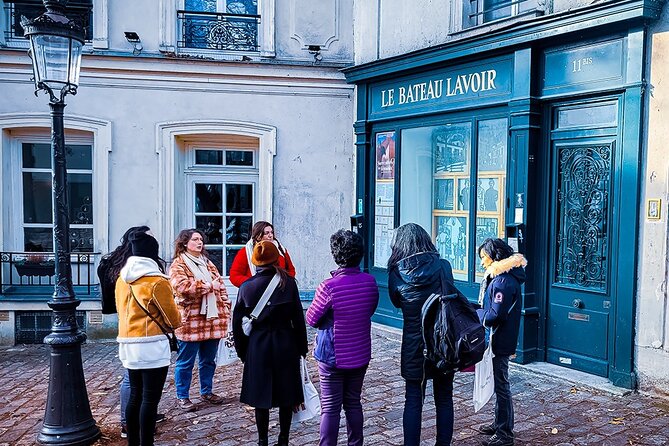
- Le Bateau-Lavoir and Picasso’s early work
- Café des Deux Moulins and the Amélie connection
- Finishing at Moulin Rouge and Blanche
- What $107.76 buys you
- Practical details before you go
- Who should book this walk
- Should you book Montmartre Marvels?
- FAQ
- Where does the Montmartre tour begin?
- Where does the tour end?
- What time does the tour start?
- How long does the experience last?
- How large is the group?
- What language is the tour offered in?
- Is transportation included?
- Is food or drink included?
- Does the price include admission to Sacré-Coeur?
- What level of fitness is needed?
- Can I cancel for a full refund?
Key points about this Montmartre walk
- A compact route with a strong sense of place: In roughly two to two and a half hours, you see the village streets, Sacré-Coeur, Place du Tertre, and the Pigalle edge near Moulin Rouge.
- A morning start at 9:30 a.m.: You finish at Blanche with most of the day still open for museums, lunch, or another Paris neighborhood.
- Guides who make the stories personal: Olivia is praised for her humor, passion, and focus on women artists, while Julie is described as lively and highly familiar with Paris.
- More than the standard postcard stops: The route includes Clos Montmartre, Au Lapin Agile, Place Dalida, Moulin de la Galette, and Le Bateau-Lavoir.
- Panoramic views from Sacré-Coeur: The basilica sits on Paris’s highest point, giving you a broad look across the city.
- A group capped at 15 people: That is small enough for a more relaxed pace and direct questions, though it is still a group tour rather than a private walk.
Why Montmartre works best with a guide
Montmartre looks easy on a map. In practice, its appeal comes from the links between places: artists lived near cabarets, old village customs survived beside tourist cafés, and a vineyard still occupies a patch of land on the hill. A guide helps connect those pieces instead of leaving you with a series of attractive but unrelated streets.
The tour begins at Anvers, at the foot of the hill, and ends near Blanche. That direction matters. You work upward into the old village, then finish closer to the Moulin Rouge and Pigalle, rather than having to retrace your steps.
I would choose this walk early in a Paris stay. It gives you a useful mental map and introduces the district’s tone before you return on your own. The morning schedule also avoids using your whole day, which is helpful when Paris has already filled your notebook with plans.
The certified local guide is central to the value. Olivia’s tours are noted for clear explanations, humor, and a special look at women artists. Julie brings a lively style and a strong feel for Paris. Your exact guide is not guaranteed, so expect the personality to vary, but the format is built around local storytelling rather than a simple list of landmarks.
You can also read our reviews of more guided tours in Paris



Sacré-Coeur and the first climb
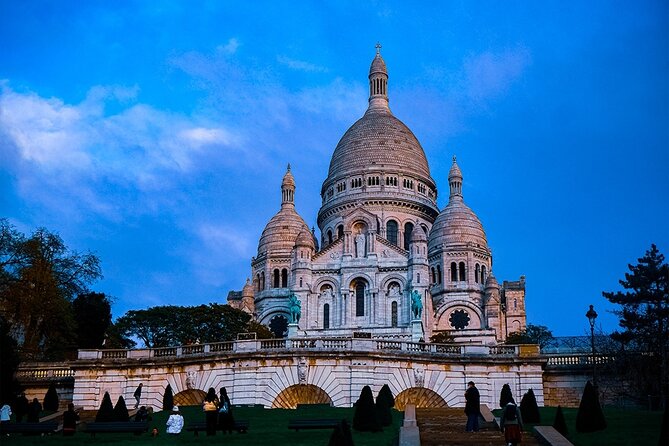
The opening hour is devoted to Montmartre itself, with the guide leading you through the hill’s village-like streets. The climb gives the neighborhood its charm, but it also sets the physical tone. Wear shoes with a firm sole, and expect stairs and uneven cobbles.
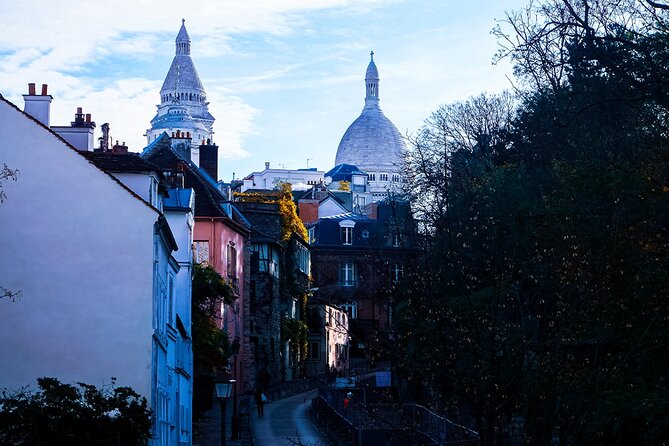
Sacré-Coeur is the visual high point. The white-domed basilica sits on the highest point in Paris, and the open view from above gives you a useful sense of the city’s scale. You can look out across Paris after making your way up, which makes the climb feel purposeful rather than merely tiring.
The scheduled stop is about 15 minutes, and admission is not included. The tour description says the guide introduces you to the basilica, so you should not assume that a full interior visit is part of the walk. If entering Sacré-Coeur matters to you, treat that as a separate plan and check the available time on the day.
This short stop is best for orientation and scenery. It is not designed as a long church visit or a detailed architectural lecture. That suits the tour’s pace, but visitors who want extended time inside the basilica may find the stop brief.
Place du Tertre and Montmartre’s working artists
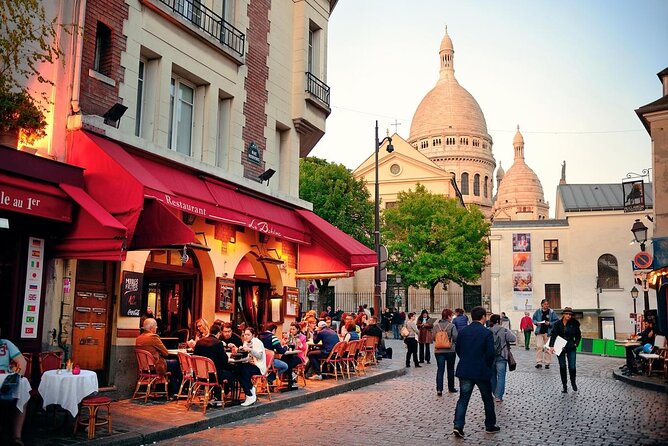
Place du Tertre sits in the historic center of the old village. Its artistic tradition continues through caricaturists and portrait artists, with old restaurants around the square adding to the scene.
This is one of the most recognizable parts of Montmartre, and it can feel busy and commercial. A guide helps you look past the obvious picture-taking. You can learn why this square matters to the district’s artistic identity, while also seeing how a living tourist spot differs from the working artists’ quarter of the past.
The stop lasts about 10 minutes. That is enough for an introduction, but not much time for a portrait, meal, or relaxed browsing. I would save purchases and photos for after the walk, when you are not trying to keep pace with the group.
Clos Montmartre, the vineyard that survived
The Vigne du Clos Montmartre is a small urban vineyard on the slopes of the hill. Established in 1933, it still produces limited amounts of wine and hosts the Fête des Vendanges harvest festival each October.
The five-minute stop is brief, but the vineyard adds something important to the walk. Montmartre is not only cafés, cabarets, and painters. It also preserves a small piece of village agriculture in the middle of Paris.
Do not expect a winery visit or tasting. Food and drinks are not included, and the tour does not list a cellar visit. Think of this as a quick look at one of the district’s more unexpected landmarks, followed by a story about local tradition.
Au Lapin Agile and the story of Lolo
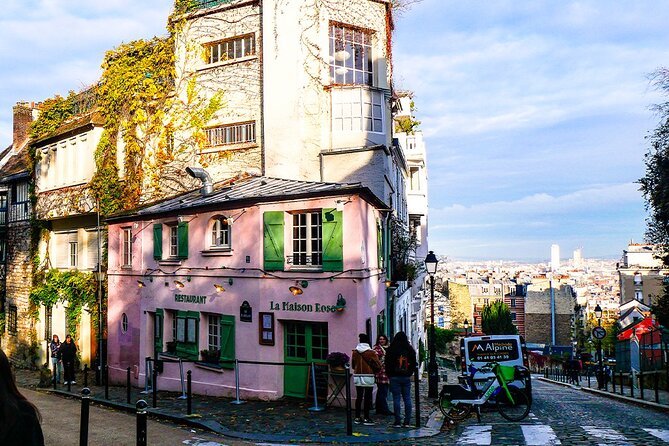
At Au Lapin Agile, the guide explains the old cabaret where artists gathered to discuss art. The stop also brings in the unusual story of Lolo, the donkey-artist, a detail that gives the place a lighter and stranger human touch.
That kind of anecdote is where a guided walk earns its keep. You can photograph a building on your own, but you are less likely to know why it mattered or remember the odd characters connected with it.
The stop takes about 10 minutes. Admission is not listed as included, so plan to view the cabaret from outside during the tour. If you want a performance or interior visit, that would require a separate arrangement.






Dalida, Moulin de la Galette, and the artists’ Montmartre
Place Dalida honors the famous singer who lived in Montmartre and helped shape French music history. The five-minute stop is a compact tribute, but it broadens the story beyond the painters usually associated with the neighborhood.
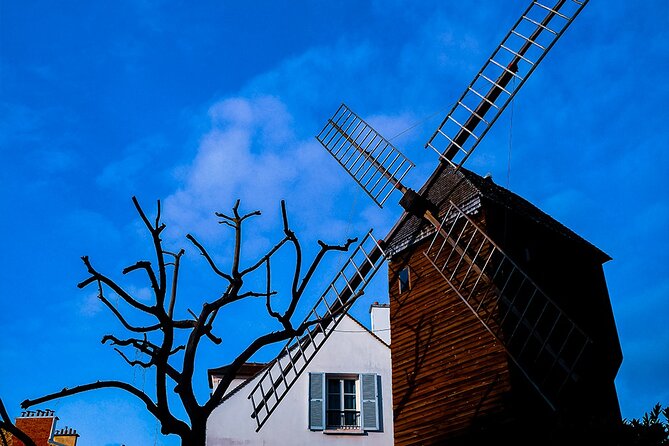
Next comes Moulin de la Galette, one of the last windmills in Montmartre. Renoir immortalized the place in his work, linking the physical site to the impressionist image many people carry of old Montmartre.
The stop is about 10 minutes. You will not have time for a long art lesson, but the guide can connect the windmill, the artists, and the district’s changing identity. This is a good example of the tour’s approach: short visits, useful context, and enough movement to cover ground.
I especially like this stretch because it avoids treating Montmartre as a single artistic stereotype. You get a singer, a cabaret crowd, a vineyard, and a painter’s subject within a few streets. The quarter feels more human when those stories are placed together.
Le Bateau-Lavoir and Picasso’s early work
Le Bateau-Lavoir was one of Montmartre’s major artists’ workshops. Picasso worked here, among others, and painted some of his first cubist works in the building.
The stop lasts about 10 minutes, and admission is not included. Again, this is primarily an exterior point of interest with interpretation from the guide, not a full museum visit.
For art lovers, this may be one of the most meaningful stops. It connects a plain-looking building to a major shift in modern art. For everyone else, the guide’s explanation helps prevent the place from passing as just another old façade.
You should keep expectations in check. The tour gives you the site and its story, not a gallery tour or a detailed study of Picasso’s work. That compact treatment fits the overall route and leaves space for the many other sides of Montmartre.
Café des Deux Moulins and the Amélie connection
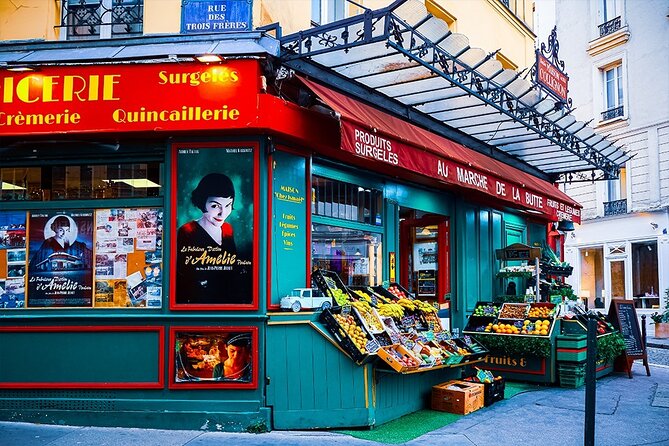
Café des Deux Moulins is known for its appearance in the film Amélie. Fans of the movie will recognize it as a popular stop in the neighborhood.
The scheduled visit is only five minutes, so this is a quick exterior or orientation point rather than a meal break. Food and drinks are not included, and the tour does not promise time to sit inside.
If you love the film, the stop adds a modern layer to the walk. If you have not seen it, the café still fits the district’s café culture, but it may not carry the same weight. I would not choose this tour solely for the movie connection. It is one small part of a route built around many different stories.
Finishing at Moulin Rouge and Blanche
The walk ends near Blanche, close to the famous Moulin Rouge in the Pigalle district. The red windmill is one of Paris’s best-known cabaret symbols and a fitting finish for a tour about Montmartre’s bohemian past.
The cabaret is nearby rather than in the heart of the old village, so the final stop helps connect Montmartre with Pigalle. It also gives you a practical end point for continuing your day in the area.
The scheduled stop is about 10 minutes, and admission is not included. You should not expect a show, interior tour, or reserved entry. The value here is the guide’s explanation and the chance to see the landmark as part of the neighborhood’s wider story.
Ending at Blanche is useful. You can continue exploring Pigalle, stop for lunch, or use public transportation for another part of Paris. Since the walk begins at 9:30 a.m., you still have much of the afternoon available.
What $107.76 buys you
At $107.76 per person, this is not a budget stroll. You are paying for a certified local guide, a small group capped at 15, and a planned route through a district that is easy to explore badly if you miss its connections.
The price makes the most sense if you value explanation, pacing, and questions. It is also useful for a first visit, when you may want someone to handle the route while you focus on the streets and stories.
The value is weaker if you plan to visit only Sacré-Coeur and take photos at Moulin Rouge. Both can be approached without this tour, and admission to the basilica or cabaret is not covered. You are buying interpretation, not entry tickets, meals, or transportation.
I would compare it with the cost of a private guide and the time required to plan your own route. A group of 15 is not intimate in the same way as a one-on-one walk, but it is small enough to feel more personal than a large coach excursion.
Practical details before you go
The meeting point is Anvers, near public transportation, and the tour starts at 9:30 a.m. The finish is at Blanche. Check the exact meeting instructions before leaving your hotel, especially if you are relying on a taxi or ride service.
The walk lasts around two to two and a half hours. The individual stops are short, often five to ten minutes, so the experience keeps moving. You will not have long free periods for shopping, meals, or private sightseeing.
Wear comfortable walking shoes. The route includes cobblestones, stairs, and uphill sections, and the activity calls for a moderate level of physical fitness. I would also avoid carrying anything cumbersome, since you will be walking rather than settling into one place.
The tour is offered in English and includes mobile ticketing. Transport to and from the meeting point is not included, so you handle your own way to Anvers and your onward journey from Blanche.
Free cancellation is available if you cancel at least 24 hours before the local start time. Changes or cancellations inside that window are not accepted for a refund.
Who should book this walk
I would recommend it to first-time Paris visitors who want a guided introduction to Montmartre without giving up an entire day. It also suits art lovers, film fans, and anyone who prefers local stories to a long list of dates.
The walk is a good fit if you enjoy asking questions. A 15-person limit gives you a better chance to interact with the guide, and Olivia’s reported focus on women artists may appeal if you want a broader view of Montmartre’s creative past.
I would be more cautious if you have trouble with stairs or uneven ground. The tour is not described as accessible, and the physical demands are clear. I would also skip it if your main goal is a long interior visit to Sacré-Coeur, a Moulin Rouge show, or a leisurely café meal.
Should you book Montmartre Marvels?
Book this tour if you want Montmartre explained as a neighborhood, not just photographed as a hilltop church and red windmill. The route covers major sights, but its best moments are the smaller stories: the vineyard, Dalida, Lolo, Renoir’s windmill, and the artists who worked at Le Bateau-Lavoir.
At $107.76, the walk needs to deliver more than directions, and its success depends heavily on your guide. Olivia and Julie are both described as lively, warm, and engaging, with Olivia bringing particular energy and a focus on women artists.
My call: book it for a first or second day in Paris if you are comfortable walking uphill and want the rest of your morning free. Skip it if you prefer independent wandering, need a flat route, or want admission-based sightseeing rather than an outdoor history walk.
FAQ
Where does the Montmartre tour begin?
The tour begins at Anvers, 75018 Paris, France.
Where does the tour end?
The walk ends at Blanche, 75018 Paris, France.
What time does the tour start?
The scheduled start time is 9:30 a.m.
How long does the experience last?
The tour lasts approximately two to two and a half hours.
How large is the group?
The maximum group size is 15 travelers.
What language is the tour offered in?
The experience is offered in English.
Is transportation included?
No. Transport to and from the meeting point is not included.
Is food or drink included?
No. Food and drinks are not included.
Does the price include admission to Sacré-Coeur?
Admission to the Sacré-Coeur stop is not included.
What level of fitness is needed?
A moderate level of physical fitness is recommended. The route includes cobblestones, stairs, and uphill walking.
Can I cancel for a full refund?
Yes, if you cancel at least 24 hours before the experience start time. Cancellations or changes made less than 24 hours before the start are not accepted for a refund.