REVIEW · PARIS
Montmartre District Walking Tour in Paris
Book on Viator →Operated by SANDEMANS Tours - Paris · Bookable on Viator
Montmartre at golden hour begs for a walking tour. This is a guided stroll through one of Paris’ most art-soaked neighborhoods, starting at the Moulin Rouge and ending at the Sacré-Cœur. You’ll walk past landmark corners tied to Van Gogh, Picasso, Toulouse-Lautrec, Monet, and more, with story stops like Place du Tertre and Café des Deux Moulins (Amélie).
I especially like how the tour mixes famous names with street-level details. You get to see portrait artists’ square energy at Place du Tertre, then shift to older cabaret vibes at Au Lapin Agile, plus the view-and-architecture payoff at Sacré-Cœur. For the money, the structure is tight too: it’s about 2 to 2.5 hours and keeps you moving, not stuck in one spot.
The main thing to plan for is the walking. Montmartre is famous for its steep hills, and some stops sit on and around slanted streets—so comfortable shoes matter, and you’ll want to arrive on time so you don’t miss the early narration.
In This Review
- Key highlights worth marking on your map
- Getting Your Bearings: a 5:00 pm walk that ends at Sacré-Cœur
- Stop 1: Moulin Rouge backstory at the Montmartre border
- Stop 2: Place du Tertre, plus Picasso and Van Gogh’s magnet pull
- Stop 3: Au Lapin Agile and the cabaret-meets-art idea
- Stop 4: Sacré-Cœur Basilica—Roman Catholic history plus the best view angle
- Stop 5: Dalida at Place Dalida—celebrity culture in Montmartre
- Stop 6: Vigne du Clos Montmartre—Paris’ last authentic vineyard
- Stop 7: Café des Deux Moulins—the Amélie connection
- Stop 8: La Maison Rose—Picasso’s regular hangout lore
- Stop 9: Place Pigalle—Montmartre’s adult nightlife history
- The guides are the product: what you should expect from the storytelling
- Price and value: why $31.44 can feel like a steal
- Timing, walking stamina, and how to make the route easier
- Who should book this Montmartre walk?
- Should you book this Montmartre District Walking Tour?
- FAQ
- What is the tour duration?
- What time does the tour start?
- Where does the tour meet?
- Where does the tour end?
- Is the tour offered in English?
- Do I need to pay for admissions at the stops?
- Are food and drinks included?
- Is there a local guide?
- How big is the group?
- Can kids join for free?
- FAQ (continued)
- Is there free cancellation?
- Can I participate if I’m comfortable walking?
Key highlights worth marking on your map
- Moulin Rouge origin story right at the neighborhood’s edge
- Place du Tertre portraitists + Picasso and Van Gogh connections
- Au Lapin Agile cabaret bar stories, including Picasso and food
- Sacré-Cœur climb with big Paris viewpoints
- Montmartre Vineyard (Paris’ last authentic vineyard) + Dalida’s Place
- Amélie’s Café des Deux Moulins and the Pink House behind Sacré-Cœur
Getting Your Bearings: a 5:00 pm walk that ends at Sacré-Cœur
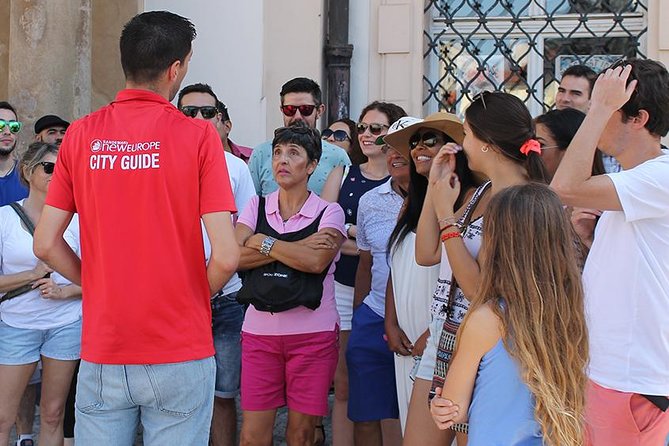
This tour starts at 5:00 pm, which is a smart time for Montmartre. Daylight still helps with photos, but the area already has that late-afternoon Paris energy as people head toward dinner plans and evening shows.
You’ll meet at Sandemans New Paris Tour Montmartre, at 5 Pl. Blanche (75009). From there, you’ll work your way up through Montmartre and finish at Basilique du Sacré-Cœur de Montmartre, at 35 Rue du Chevalier de la Barre (75018). That end point is useful because it’s one of the easiest places to keep exploring after the tour, whether you want more views or just to drift back down.
Group size is capped at 35, and the tour is English with a mobile ticket. In practice, that matters because a smaller group usually means fewer long pauses—good when you’re walking uphill and want the stories to stay flowing.
You can also read our reviews of more walking tours in Paris



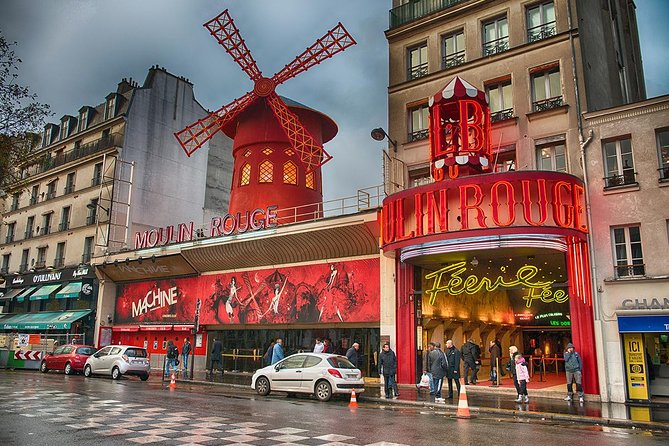
Stop 1: Moulin Rouge backstory at the Montmartre border
You kick things off right where Montmartre starts to feel theatrical: the Moulin Rouge. Here, the guide focuses on how it was created, how it found early success, and the moments that made it a worldwide symbol of Paris nightlife.
Even if you’ve already seen Moulin Rouge photos, I like hearing how the place evolved beyond the postcard version. The guide’s job is basically to translate what you’re looking at—architecture, setting, reputation—into a timeline you can remember.
Tip for this first stop: stand where your guide can see the group and you can hear clearly. The area can get noisy, so it helps to pick a spot that isn’t stuck behind people drifting in and out.
Stop 2: Place du Tertre, plus Picasso and Van Gogh’s magnet pull
Next comes Place du Tertre, the square that’s famous for portraitists, painters, and caricaturists. This is where Montmartre’s artist vibe becomes visible in real time. You’re not just hearing about art culture—you’re watching the neighborhood perform its role.
From there, the tour connects the square energy to major artist gravity. You’ll also hear why Picasso and Van Gogh were drawn to this area, and how other big names—mentioned on this walk include Dali, Monet, and Toulouse-Lautrec—followed the same pull in different eras.
What I find helpful here is that it’s not just name-dropping. The guide ties the artists to why Montmartre worked for them: the atmosphere, the creative buzz, and the mix of everyday streets with stage-like backdrops.
Watch-outs at this stop: Place du Tertre can feel crowded. If sound gets hard to catch, don’t fight for volume—step a little closer, face the guide, and let the route move you along when it’s time.
Stop 3: Au Lapin Agile and the cabaret-meets-art idea
You’ll then head to Au Lapin Agile, a cabaret bar tied to the neighborhood’s legend-making. The standout story here is how Picasso is said to have exchanged paintings for food when he was hanging out in this kind of place.
That detail matters because it changes how you think about “art history.” This wasn’t always museums and masterpieces in clean white rooms. It was artists mixing with nightlife, trading work for help, and building networks through conversation and chance encounters.
Also, cabarets like this don’t just feel old—they feel like they explain Montmartre’s identity. Even if you’re not ordering anything, seeing the setting is like walking inside the neighborhood’s imagination.
Stop 4: Sacré-Cœur Basilica—Roman Catholic history plus the best view angle
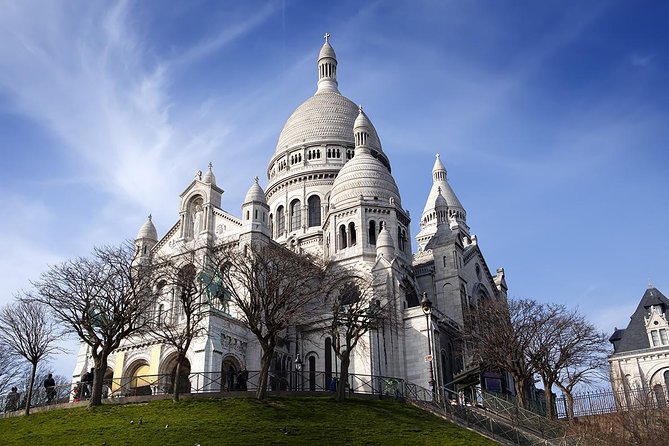
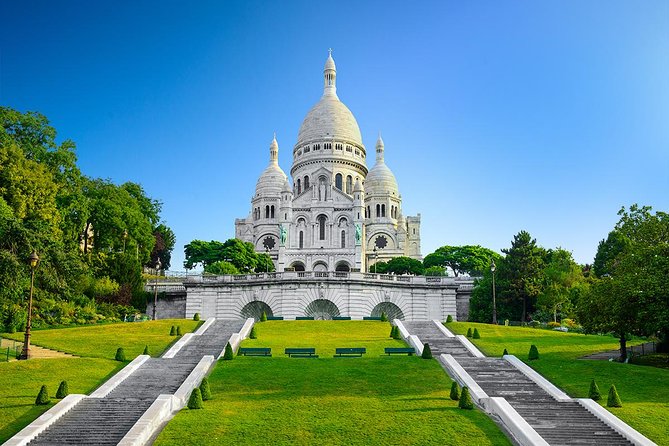
After more winding streets, you reach Basilique du Sacré-Cœur de Montmartre. This is the big visual reward: a striking Roman Catholic basilica and one of the best viewpoints in Paris.
The guide adds context on the basilica’s history and architecture, which is great because it makes your time at the top more than just sightseeing. Instead of only thinking, okay, that’s a famous church, you start noticing why it looks the way it does and why it became such a Montmartre signature.
This stop is also a practical break in the route. You’ve been walking, you get a wider view, and you can take photos that actually show the shape of Paris—not just close-up street corners.
Practical photo note: bring your phone low when you want streets; bring it higher only when you want the skyline. The hill changes what looks good fast.





Stop 5: Dalida at Place Dalida—celebrity culture in Montmartre
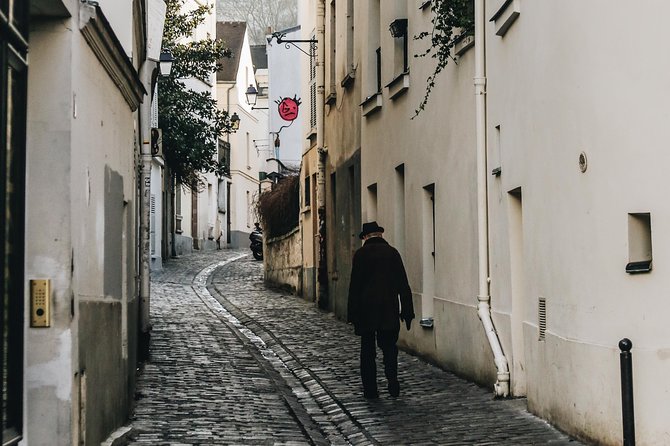
Next is Place Dalida, dedicated to one of Paris’ most famous gay icons. It’s a smaller moment than Sacré-Cœur, but I like including it because it reminds you Montmartre isn’t only about painters and revolution-era stories. It’s also about performers, identity, and cultural memory.
And it fits the neighborhood logic: Montmartre has long been a place where the arts, the stage, and public life overlap.
Stop 6: Vigne du Clos Montmartre—Paris’ last authentic vineyard
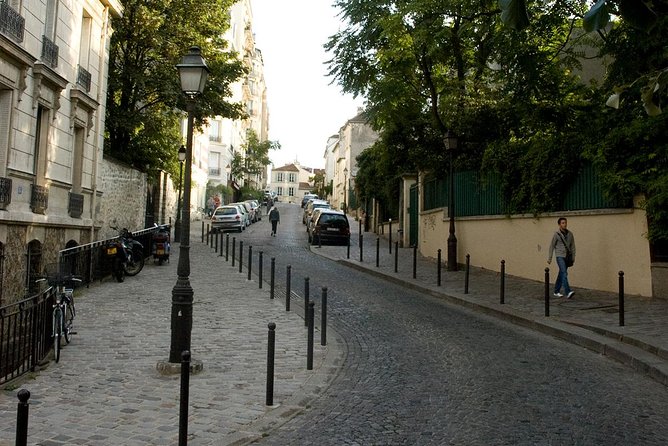
Then you visit Vigne du Clos Montmartre, described as Paris’ last authentic vineyard. This is one of those stops that quietly changes your mental map of Montmartre.
A vineyard here feels almost impossible until you’re standing in it. It’s a reminder that before it became a show-and-photo district, Montmartre had everyday production and local rhythms. The contrast makes the later artist stories feel more grounded.
If you like seeing how a neighborhood keeps traces of the past, this stop will land well. It also breaks the walking pattern with a different kind of space to look at.
Stop 7: Café des Deux Moulins—the Amélie connection
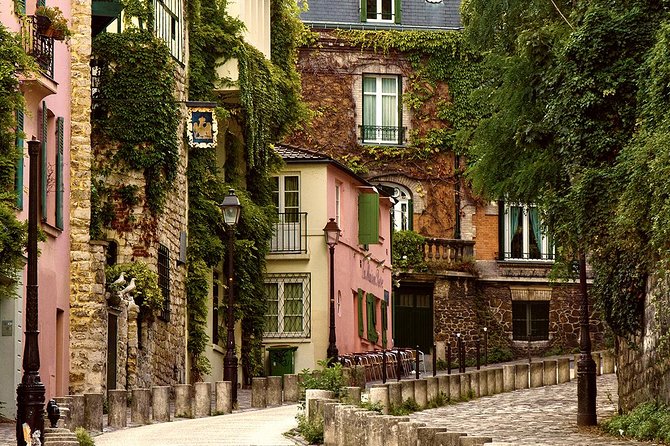
You then reach Café des Deux Moulins, made famous by the movie Amélie. For many people, this is the “I recognize that” moment—so it’s a good stop for keeping interest high.
But it’s also worth listening to the guide rather than just pointing at the sign. Places like this became part of cinematic Paris by capturing a specific mood: neighborhood charm, character doors, and a sense of old routine.
If you’re an Amélie fan, you’ll enjoy how this stop ties film fame back to real street geography. If you’re not, you’ll still get the benefit: a real Paris café setting connected to Montmartre’s broader artistic atmosphere.
Stop 8: La Maison Rose—Picasso’s regular hangout lore

You’ll also see La Maison Rose, the Pink House behind Sacré-Cœur. The tour notes that it was frequented by Picasso and many other artists on a regular basis.
I like this stop because it gives you a physical “where” for the people you’ve heard about all tour. When you’re walking through a district, the most confusing part can be tying names to locations. The Pink House helps solve that.
Even without going inside, you’re looking at a marker of how artists lived among the streets, not just on gallery walls.
Stop 9: Place Pigalle—Montmartre’s adult nightlife history
Finally, you’ll end with Place Pigalle, described on this route as Paris’ Red Light District. It’s the darker, more controversial side of Montmartre’s entertainment story, and it fits the earlier Moulin Rouge opening like a sequel.
This is a good reminder that Montmartre’s reputation has always included nightlife, performers, and the kind of attention that comes with being a place people visit for pleasure as much as for art.
If you’re sensitive to street scenes that may feel adult or crowded, take a quick look, stay with the guide, and keep your focus on hearing the context rather than scanning everything around you.
The guides are the product: what you should expect from the storytelling
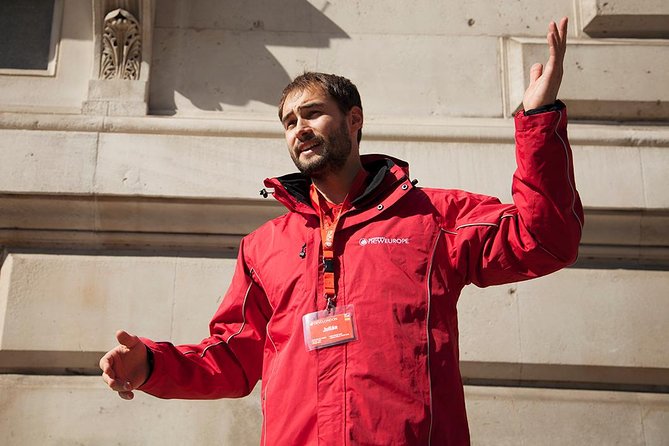
This tour is sold as a walking route, but the real value is the local guide and how they connect the dots. Across the tour experience, the most praised guides show up with a similar skill: they turn static landmarks into stories you can picture.
On this walk, guide names that come up strongly include Alberto (especially for humor and pacing), Dawie and Dawid (for animation, active storytelling, and keeping people engaged), Thom (for an upbeat style that works across ages), and Javi (for entertainment that doesn’t turn the facts into a lecture). You might also see Daniel, Harry, Maria, or Sebastian on other runs.
Here’s what to look for when your guide starts talking:
- Clear explanations that connect artists to place, not just dates
- A pace that keeps the group moving while still giving you time to look
- Humor and small anecdotes that help you remember each stop
- Practical awareness near busy areas (especially around Sacré-Cœur)
One more thing: guides sometimes vary slightly based on what the group needs. The tour is described as lasting about 2 to 2.5 hours, and a guide may adjust stops if the group is moving slowly or if they think there’s a better moment to pause.
Price and value: why $31.44 can feel like a steal
The price is $31.44 per person for about 2 hours (approx.). That’s not a cheap museum ticket, and you’re not buying a long attraction day. You’re paying for something useful: a timed route with a guide who helps you understand what you’re seeing.
What strengthens the value is that the itinerary notes free admission tickets for the listed stops. You’re not paying separate entrance fees just to hear stories. Instead, you’re investing in context and navigation through a neighborhood that’s easy to wander through aimlessly.
Also, the location is great for value. The walk ends at a major landmark (Sacré-Cœur), so you’re not stuck at some random corner afterward. You get a clean start point, a story route, and a natural finish line.
If you’re the type who hates “standing around waiting,” this format usually fits well. It’s packed, with short stops that reset you for the next climb.
Timing, walking stamina, and how to make the route easier
Let’s be honest: Montmartre is uphill. The route includes repeated changes in elevation, and you’ll feel it most if you’re not used to steps or sloped sidewalks.
To make this tour comfortable:
- Wear walking shoes you can move fast in
- Plan water, but note that food and drinks aren’t included
- Bring a layer for wind; the hill can feel cooler late in the day
- Take a slow breath at each stop before photos, so you don’t rush and miss the explanation
If you’re traveling with teens or you just want structure without feeling trapped, this is a solid fit. One of the recurring positives is that the guide keeps the group lively enough for different ages, not only adults who want museum talk.
Who should book this Montmartre walk?
Book it if you want:
- A guided overview of Montmartre’s art and nightlife identity
- A route that connects Moulin Rouge → Place du Tertre → artist stops → Sacré-Cœur
- Amélie and Picasso/Van Gogh touchpoints without spending hours planning
You may want to skip or modify if:
- You strongly dislike uphill walking
- You need a very quiet tour where audio never gets competed with by crowds
- You’re expecting lots of museum time or indoor admissions (this is primarily an outdoors street walk)
Should you book this Montmartre District Walking Tour?
I’d book this if your goal is to get your bearings fast and understand why Montmartre became the Paris symbol for art, performance, and unconventional life. For $31.44, the mix of landmarks (Moulin Rouge, Place du Tertre, Au Lapin Agile, Sacré-Cœur), pop-culture stops (Café des Deux Moulins), and neighborhood markers (Dalida, Place Pigalle, the Pink House) is a strong spread in a short window.
Just plan for the hills and arrive ready to listen. If you show up a bit early, keep your shoes comfortable, and stay close enough to hear the guide, you’ll likely come away with a cleaner mental map of Montmartre and the stories behind it.
FAQ
What is the tour duration?
It runs for about 2 hours, though it may vary based on the guide and group needs.
What time does the tour start?
The start time is 5:00 pm.
Where does the tour meet?
You meet at Sandemans New Paris Tour Montmartre, 5 Pl. Blanche, 75009 Paris.
Where does the tour end?
It finishes at Basilique du Sacré-Cœur de Montmartre, 35 Rue du Chevalier de la Barre, 75018 Paris.
Is the tour offered in English?
Yes, the tour is offered in English.
Do I need to pay for admissions at the stops?
The itinerary notes admission ticket free for the listed stops.
Are food and drinks included?
No. Food and drinks are not included.
Is there a local guide?
Yes. The tour includes a local guide.
How big is the group?
The maximum group size is 35 travelers.
Can kids join for free?
Children up to 13 years old can join for free, and the provider may ask for valid ID for children joining tours.
FAQ (continued)
Is there free cancellation?
Yes. You can cancel for a full refund up to 24 hours in advance of the experience start time.
Can I participate if I’m comfortable walking?
Most travelers can participate, and comfortable walking shoes are recommended.