REVIEW · PARIS
Medieval Paris Private Tour
Book on Viator →Operated by Paris in person · Bookable on Viator
Paris reveals its medieval character best on foot, and this two-hour private walk connects the pieces that are easy to miss on your own. You move from the Cluny Museum and Notre-Dame to the Sorbonne, Saint-Jacques Tower, the Fountain of the Innocents, and the modern Centre Pompidou, with an art historian explaining how each place fits into the city’s past.
I like the chance to ask questions without holding back a group, and I like the way the route links grand monuments with less comfortable details about disease, death, religion, trade, and daily life. Guides such as Amy and Caroline bring different personalities to the walk. The main drawback is that the tour does not include entry to the Cluny Museum or Notre-Dame, and much of the commentary happens outside.
In This Review
- Key points at a glance
- Why this walk makes medieval Paris easier to see
- Starting at the Cluny Museum and the Latin Quarter
- Notre-Dame and the city’s original center
- The Sorbonne and the power of a medieval university
- Saint-Jacques Tower, pilgrims, and flamboyant Gothic design
- The Fountain of the Innocents and hard facts of city life
- Centre Pompidou and medieval ideas in a modern building
- Hôtel de Ville and the medieval city government
- The guide makes the private format worthwhile
- Who gets the best value from two hours
- Should you book the Medieval Paris Private Tour?
- FAQ
- How long does the Medieval Paris Private Tour last?
- Where does the tour begin?
- Where does the tour end?
- Is Notre-Dame visited inside?
- Does the tour include entry to the Cluny Museum?
- Is the tour private?
- How many people can join?
- What does the price include?
Key points at a glance
- Notre-Dame from the outside: Learn why the cathedral matters to the founding of Paris, though interior access is not included.
- A true private format: Your group has the guide to itself, with time for questions and follow-up discussion.
- Seven carefully chosen stops: The route covers medieval institutions, churches, public spaces, and modern architecture.
- Art history with daily life: The Fountain of the Innocents helps explain how beautiful Paris could also be harsh and dangerous.
- A modern twist: Centre Pompidou becomes part of the story, with medieval influences hiding in its design.
- A useful two-hour length: The walk gives you a focused introduction without taking over an entire sightseeing day.
Why this walk makes medieval Paris easier to see
Modern Paris can hide its older self. Haussmann’s broad streets, busy cafés, polished shops, and contemporary buildings often cover the medieval street plan and institutions beneath them. This tour helps you read the city rather than simply look at it.
The route is especially useful if you like architecture but want more than dates and names. The guide explains why Gothic forms developed, how universities shaped Paris, why pilgrims came to certain churches, and how markets and fountains affected ordinary life.
I also like the private arrangement. At $360.48 per group, the price is not cheap for two hours if you are traveling alone or as a couple. For a group of four to six, though, the cost works out much better, and you gain a guide who can adjust the discussion to your interests. The stated price covers a group of up to six, while the booking information also lists a maximum of 10 people per booking, so confirm the exact group limit when you reserve.
The tour is offered in English and begins at 98 Boulevard Saint-Germain in the Latin Quarter. It ends beside the Pompidou Museum, near the Stravinsky Fountain on Rue Saint-Merri. That point-to-point design saves you from retracing your steps and leaves you in a central area with plenty of options afterward.
You can also read our reviews of more private tours in Paris


Starting at the Cluny Museum and the Latin Quarter
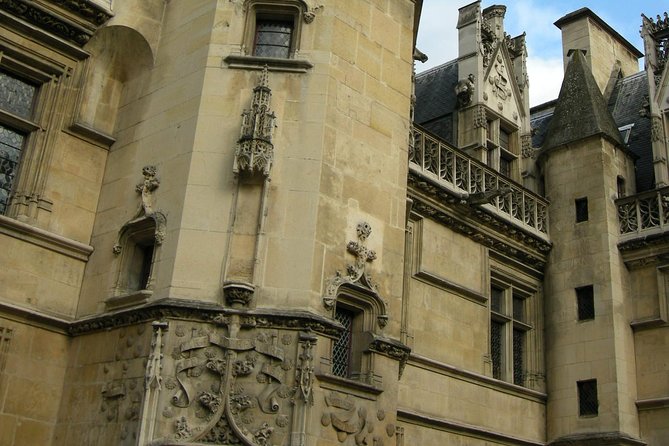
The first stop is the Musée de Cluny, Paris’s medieval museum. You do not go inside during this tour, so the visit is about the building and its setting rather than the museum collection.
That is still a worthwhile beginning. The site helps introduce the way medieval Paris survives in fragments. The guide discusses how the building reflects the medieval period, giving you a visual base for the rest of the walk. If you want to see the museum’s artworks and interiors, you will need to plan a separate visit.
The Latin Quarter adds useful context. Its name is tied to the historic use of Latin in academic life, and the neighborhood remains closely connected with the old University of Paris. The walk encourages you to look for surviving symbols and architectural details rather than expecting one perfectly preserved medieval street.
This is a good part of the tour for asking basic questions. If your knowledge of medieval Paris begins and ends with Notre-Dame, you can use the early minutes to get oriented. If you already know the broad story, the guide can focus more on buildings, art, or city planning.
Notre-Dame and the city’s original center
Notre-Dame is discussed from a distance because the cathedral suffered a fire and is not included as an interior visit. You should set your expectations clearly: this is a history and architecture stop, not a cathedral entry experience.
The location matters. The cathedral sits on the Île de la Cité, the island tied to Paris’s earliest development. The guide explains the site’s importance and the cathedral’s Gothic structure, helping you understand why Notre-Dame became such a powerful symbol of the city.
From outside, you can still study the building’s scale and major forms while hearing about the role of Gothic architecture in medieval Paris. The guide’s commentary is the main value here. You will not receive the full effect of moving through the interior, and anyone hoping to spend time with stained glass or chapels should arrange another visit.
The stop lasts about 20 minutes. That is enough for a focused explanation, but not so long that the tour becomes fixed in one place. It also gives you a useful framework for recognizing Gothic details later at Saint-Jacques Tower and other sites.
The Sorbonne and the power of a medieval university
At La Sorbonne, the guide turns from churches to institutions. The discussion centers on the importance of universities in the medieval period and the particular role Paris played in academic life.
This stop is short, about 10 minutes, but its subject is larger than the clock suggests. Medieval universities were not simply collections of classrooms. They shaped religious debate, professional training, public authority, and the movement of ideas across Europe.
I find this kind of stop valuable because it keeps the tour from becoming a procession of pretty façades. You learn how people and institutions made the city function. The Sorbonne also gives the Latin Quarter a clearer purpose. It was not merely an old neighborhood. It was a place shaped by learning and intellectual life.
The exterior experience may feel less dramatic than Notre-Dame or the Cluny building. That is the tradeoff. You visit a site for its institutional meaning, not only for a striking view.
Saint-Jacques Tower, pilgrims, and flamboyant Gothic design
The Tour Saint-Jacques is one of the route’s strongest visual stops. The tower is associated with pilgrims and also with astrologers and alchemists in Paris. Its flamboyant Gothic style makes it a rewarding place to study the later development of medieval architecture.
The guide uses the tower to connect design with belief and movement. Pilgrimage brought people through Paris, while astrology and alchemy reflect other ways medieval people tried to understand the world. You get a more complicated picture than the familiar idea of a purely religious Middle Ages.
The stop lasts around 15 minutes. That is long enough to discuss the tower’s purpose and details, though it is not a tower visit or climb. The value comes from looking closely while the guide points out why the building matters.
If architecture is your main interest, pay close attention here. The tour is not only about famous names. It is also about the visual language of Gothic Paris, and Saint-Jacques provides one of the clearest examples on the route.






The Fountain of the Innocents and hard facts of city life
The Fountain of the Innocents offers the sharpest change in tone. It is beautiful, but it also opens a discussion about how people actually lived in medieval Paris, including the city’s cruelty and difficult public conditions.
This is where the tour moves beyond kings, cathedrals, and scholars. A fountain can tell you about water, public space, health, ceremony, and the ordinary rhythms of urban life. The guide uses the site to show that medieval Paris was not only an artistic period. It was also crowded, unequal, and dangerous.
I especially like this stop for people who want social history. You are not simply told that the past was different. You are shown how a public monument can reveal practical problems and harsh realities.
The stop takes about 20 minutes, making it one of the longer discussions. That extra time gives the guide room to explain both the monument’s appearance and the conditions around it. It also gives you a pause before the route shifts toward modern Paris.
Centre Pompidou and medieval ideas in a modern building
The Centre Pompidou may seem like an odd stop on a medieval tour. Its design was intended to represent modernity, yet the guide explains how it was influenced by medieval ideas.
This is one of the tour’s more original choices. Instead of treating medieval Paris as a sealed-off period, the discussion asks how later architects and designers looked back to the Middle Ages. The comparison helps you see that historical influence does not always appear as an old-looking façade.
You finish at 26 Rue Saint-Merri, beside the Pompidou Museum and near the Stravinsky Fountain. The stop lasts about 15 minutes. Since the tour does not include entry to the museum, you can decide afterward if you want to visit the modern art collection on your own.
The ending also works well for the practical rhythm of a day in Paris. You are left in a central neighborhood rather than returned to the starting point. From there, you can continue sightseeing, find lunch, or simply stop for a break.
Hôtel de Ville and the medieval city government
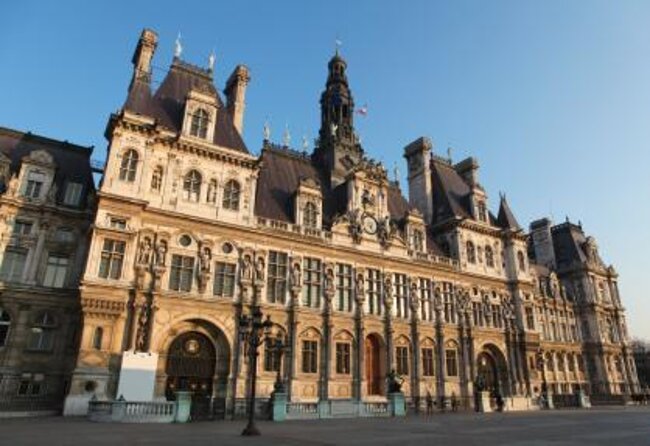
Hôtel de Ville is listed as the final historical stop, even though the walking route ends by Pompidou. The site illustrates the importance of city government in medieval Paris.
The Renaissance façade can mislead you, and that is part of the lesson. The institution connected with this place reaches back into the medieval city, showing that Paris was shaped not only by religious buildings and universities but also by civic administration.
The discussion lasts about 15 minutes. For me, this is a useful counterweight to the cathedral stops. It explains how the city was organized and governed, giving the walk a stronger sense of public life.
You should pay attention to the difference between a building’s visible façade and the age of the institution attached to it. That distinction is one of the tour’s recurring ideas: modern Paris often covers older layers rather than replacing them completely.
The guide makes the private format worthwhile
The guide is an art historian, and that background matters most when you want to ask why a building looks the way it does. The experience is not designed as a fixed lecture. You can ask questions throughout and steer parts of the conversation toward architecture, religion, universities, urban life, or particular dates.
Amy has been praised for making the experience both educational and fun. Caroline is described as pleasant, engaging, and especially good at clarifying misunderstandings about the years 1100 to 1500. Those details suggest that the guide’s style can shape the experience, so if you have a preference or a particular interest, it is sensible to mention it when booking.
One especially useful touch is the kind of local suggestion a good private guide can provide at the end. Caroline pointed out a square on the Île de la Cité where the group could have lunch and a glass of wine, and even explained that pétanque balls could be borrowed from the waiter. That is not a formal part of the tour, but it shows how the final minutes can become practical help for the rest of your day.
The guide does not provide hotel pickup or drop-off. You meet in central Paris, so you need to reach Boulevard Saint-Germain yourself. Wear comfortable shoes and expect a moderate level of walking fitness. Children must be accompanied by an adult.
Who gets the best value from two hours
I would choose this tour for someone who wants a focused introduction to medieval Paris without committing to a full-day program. It suits couples, families, and small groups who enjoy asking questions and prefer a private guide to a set commentary.
It is also a strong choice for repeat visitors. If you have already seen the headline monuments, the route gives you a new way to connect them. Centre Pompidou, Hôtel de Ville, the Latin Quarter, and the Fountain of the Innocents become part of the same long city story.
History fans should enjoy the range. You get architecture, pilgrimage, alchemy, university life, public fountains, city government, and modern design in one short walk. The tour is particularly good at correcting simple ideas about the Middle Ages by showing both artistic achievement and difficult daily conditions.
I would be more cautious if your priority is entering major sights. The Cluny Museum and Notre-Dame are not included inside, and all seven stops are handled as outdoor commentary. You should also compare the group price with your party size. At $360.48, six people share the cost far more comfortably than one or two.
The tour is often reserved about 39 days ahead, so booking early makes sense if you have fixed Paris dates or want a particular guide. Confirmation is normally issued at booking, but reservations made within seven days of travel may take up to 48 hours, subject to availability.
Should you book the Medieval Paris Private Tour?
Book it if you want to understand what you are looking at, not just collect photographs. The route is well chosen, the private format leaves room for questions, and the art historian guide gives the city’s medieval remains a clear thread.
Skip it if you mainly want interior access to Notre-Dame or the Cluny Museum. In that case, you would need separate admission plans. For a small group that values context, personal discussion, and a concentrated two-hour walk, this is a sound use of time and money. Free cancellation is available up to 24 hours before the start time, which gives you some flexibility while planning.
FAQ
How long does the Medieval Paris Private Tour last?
The tour lasts approximately two hours.
Where does the tour begin?
It begins at 98 Boulevard Saint-Germain, 75005 Paris, France.
Where does the tour end?
It ends at 26 Rue Saint-Merri, 75004 Paris, beside the Pompidou Museum near the Stravinsky Fountain.
Is Notre-Dame visited inside?
No. The cathedral suffered a fire and is discussed from afar without an interior visit.
Does the tour include entry to the Cluny Museum?
No. The guide discusses the museum building and its medieval character, but admission inside is not included.
Is the tour private?
Yes. Only your group participates in the activity.
How many people can join?
The listed price is $360.48 per group for up to six people. The additional booking information gives a maximum of 10 people per booking, so confirm the applicable group limit when reserving.
What does the price include?
The price includes a professional art historian guide. Food, drinks, hotel pickup, and hotel drop-off are not included.