REVIEW · MARSEILLE
Marseille : Vieux-Port & Panier Walking Tour
Book on GetYourGuide →Operated by Guydeez Tours · Bookable on GetYourGuide
Marseille reveals itself in layers on this three-hour walk, from the fishing boats and waterfront of the Old Port to the narrow lanes of Le Panier and the sea views around Fort Saint-Jean. I like the private format, which lets you shape the walk around your interests, and the route’s mix of old buildings, street art, museums, and views. The main consideration is pace: six half-hour stops plus walking make this a full outing, and entrance tickets, food, and drinks are not included.
I also like that the guide’s advice can help you plan the rest of your time in Marseille. Sera Kiwan has been praised for attentive guiding and excellent English, while Anthony is noted for small details, including the origin of the wood used for a cathedral door. At $43 per person, the value is strongest for people who want context and personal direction, not simply a quick list of sights.
In This Review
- Key points to know before booking
- From Quai de Rive Neuve into Marseille’s center
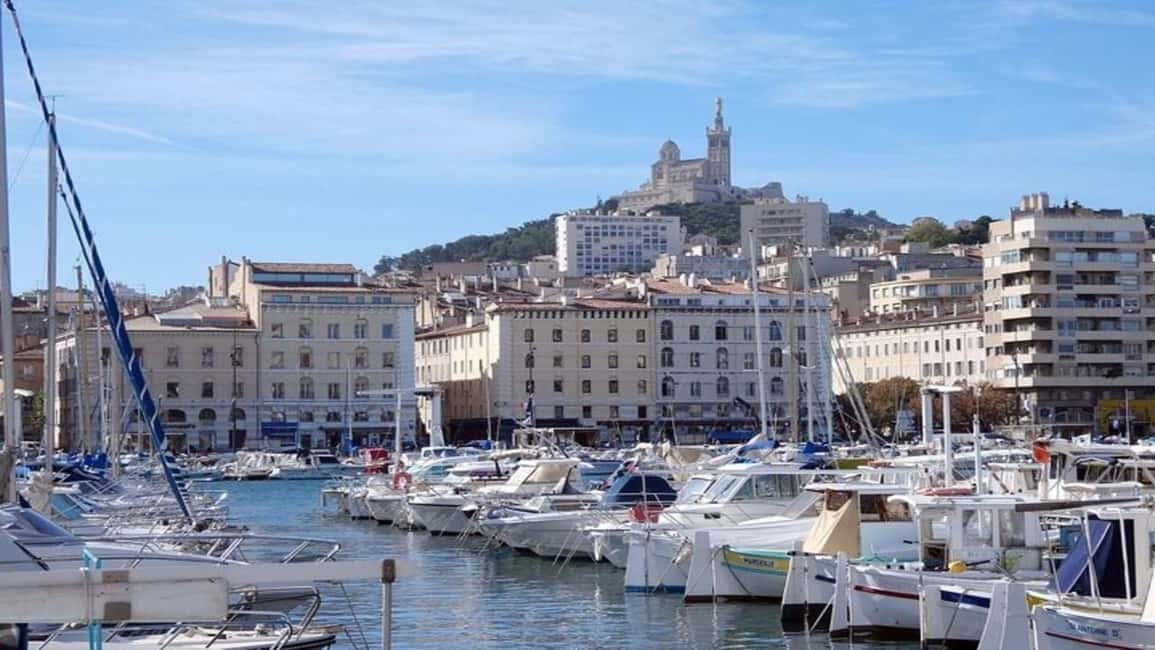
- The Old Port gives you Marseille’s starting point
- Le Panier, where the walk gets more intimate
- La Vieille Charité adds a quiet architectural pause
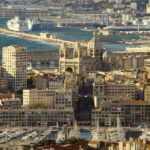
- Marseille Cathedral changes the scale again
- Mucem brings modern Mediterranean culture into the route
- Fort Saint-Jean finishes with open views
- What the private format is really worth
- Guides, languages, and the human factor
- Who will enjoy this Marseille walk most
- Should you book the Vieux-Port and Panier walk?
- FAQ
- How long does the Marseille walking tour last?
- Where does the tour meet?
- Is this a private tour?
- Which sights are included on the route?
- What languages are available?
- Is the tour wheelchair accessible?
- Are food, drinks, and admission tickets included?
Key points to know before booking
- A private three-hour route means no strangers in your group and room to adjust the focus.
- The Old Port to Mucem route covers Marseille’s central historic and cultural core.
- Le Panier offers narrow lanes, street art, and local shops between the larger monuments.
- La Vieille Charité and Marseille Cathedral give the walk architectural variety.
- Fort Saint-Jean provides city and sea views near the end of the outing.
- English, French, and Spanish are available, with walking and public transport included.
From Quai de Rive Neuve into Marseille’s center

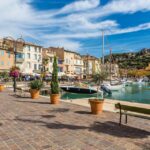
The tour begins at 1 Quai de Rive Neuve, on the south side of the Old Port. This is a sensible meeting point because the waterfront gives you an immediate sense of Marseille’s place as a Mediterranean city. You are not starting in a quiet back street. You begin beside a major public space, with the harbor in front of you and the city rising around it.
Your guide leads the walk through the Old Port, Le Panier, La Vieille Charité, Marseille Cathedral, Mucem, and Fort Saint-Jean. The supplied schedule gives roughly 30 minutes to each principal stop, but the private setup matters here. You can ask for more explanation at one place and less at another, depending on your interests.
That flexibility is useful if you care strongly about architecture, local neighborhoods, museums, photography, or Marseille’s past. It also helps families and groups with mixed interests. A fixed group tour has to keep everyone moving. Here, your guide can respond to your questions and offer suggestions for the rest of your stay.
The route is mainly on foot, with public transport included where needed, except for any separately selected option. Wear shoes suited to city walking. The walk is wheelchair accessible, but you should still be clear with the provider about your needs when booking, since narrow streets and historic areas can require careful routing.
You can also read our reviews of more walking tours in Marseille

The Old Port gives you Marseille’s starting point
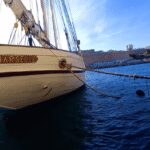
The Old Port is more than a pretty place to begin. Your guide explains its importance in Marseille’s story while you look across the waterfront and follow the movement of the harbor. This opening stop helps you understand the city before you begin threading through its older quarters.
I like starting here because the port gives the tour a clear sense of place. Marseille is not presented as a collection of disconnected monuments. The harbor, old neighborhood, cathedral, fort, and Mediterranean museum connect naturally, and the walk lets you see those links at street level.
You should expect time for sightseeing, photographs, and explanation rather than a long museum visit at the port. If you want a full meal or a drink along the way, plan for that separately. Neither food nor drinks are included, and three hours can pass quickly once you start stopping for views and questions.
Le Panier, where the walk gets more intimate
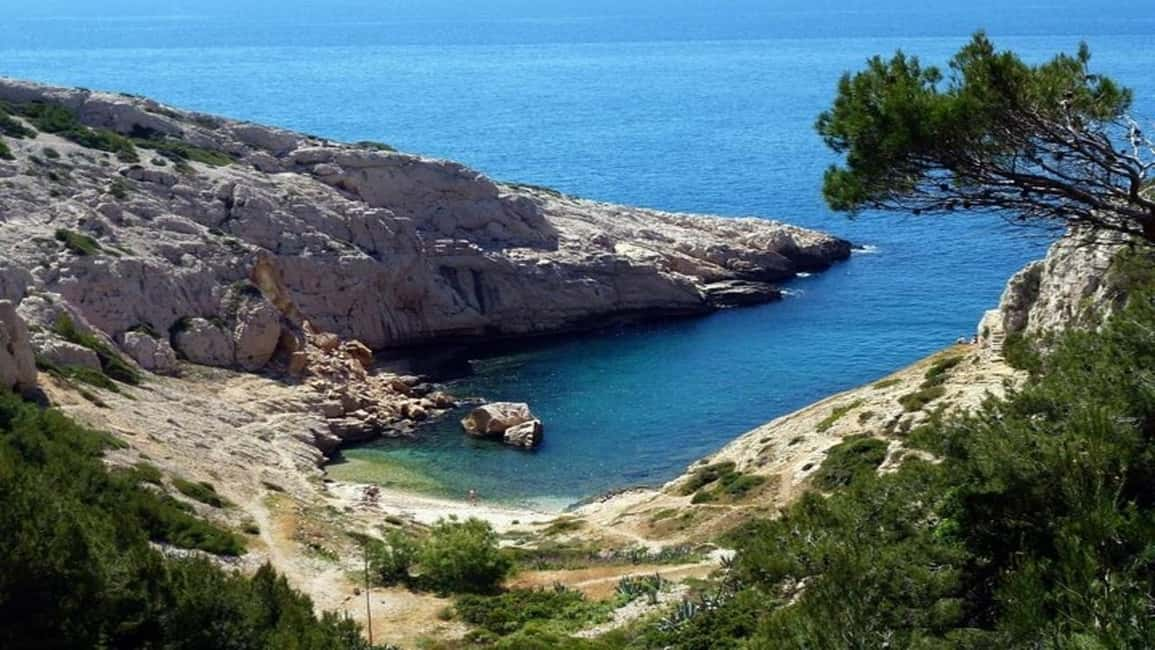
From the broad waterfront, the route turns into Le Panier. This is Marseille’s ancient quarter, known here for its narrow streets, street art, and local shops. The change in scale is one of the pleasures of the tour. You move from an open harbor to a neighborhood where the character comes from doorways, walls, lanes, and smaller businesses.
Your guide can help you read the area rather than simply walk through it. Street art is easy to notice, but a local guide can add useful direction about the parts that interest you and suggest places to return to later. The private format gives you the chance to stop for a photo or ask why a particular street or building matters.
Le Panier is also the part of the route where comfort and pace deserve attention. Narrow streets can mean uneven footing or slower movement, and the route includes several more stops afterward. If you prefer a relaxed walk, tell your guide early. The schedule is a guide, not a race, but the tour still has a lot to cover.
La Vieille Charité adds a quiet architectural pause
The 17th-century La Vieille Charité offers a sharp contrast to the street life of Le Panier. It began as an almshouse and now serves as a cultural center. The building’s former purpose gives the stop social context, while its architecture gives you a chance to pause and look closely.
I like this stop because it adds weight to the neighborhood without turning the walk into a string of famous facades. You learn how a building can change purpose over time, and you see how Marseille has reused an older structure for culture.
The schedule allows about 30 minutes here for a guided visit, sightseeing, and photographs. Do not assume that this means a full tour of every cultural space inside. The experience is built as a walking tour, and the supplied details promise help booking tickets for desired visits, but admission costs themselves are not listed as included. Ask your guide what you can enter during your time and what needs a separate ticket.
Marseille Cathedral changes the scale again

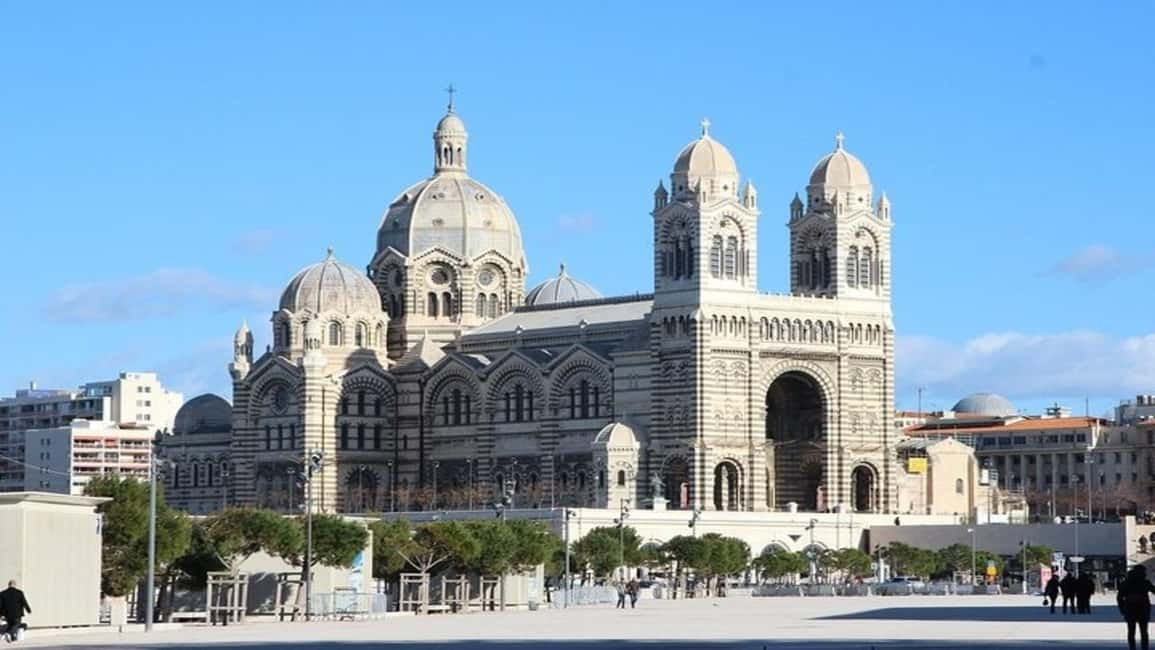
The next major stop is Marseille Cathedral, a striking example of 19th-century architecture. After the close lanes of Le Panier and the courtyard-like feel of La Vieille Charité, the cathedral gives the route a larger architectural statement.
Your guide’s explanation can make the stop more rewarding than a quick photograph. One especially useful detail comes from Anthony’s guiding: he can discuss small points such as where the special wood for a cathedral door was imported. That kind of fact is exactly what you pay for on a private walk. It turns a large building into something specific and memorable.
You have about 30 minutes for a guided visit, sightseeing, and photos. The information provided does not promise a full interior tour or guaranteed entry, so treat this as a guided cathedral stop rather than a formal religious-site admission. If seeing the inside is important to you, ask about access when arranging the tour.






Mucem brings modern Mediterranean culture into the route
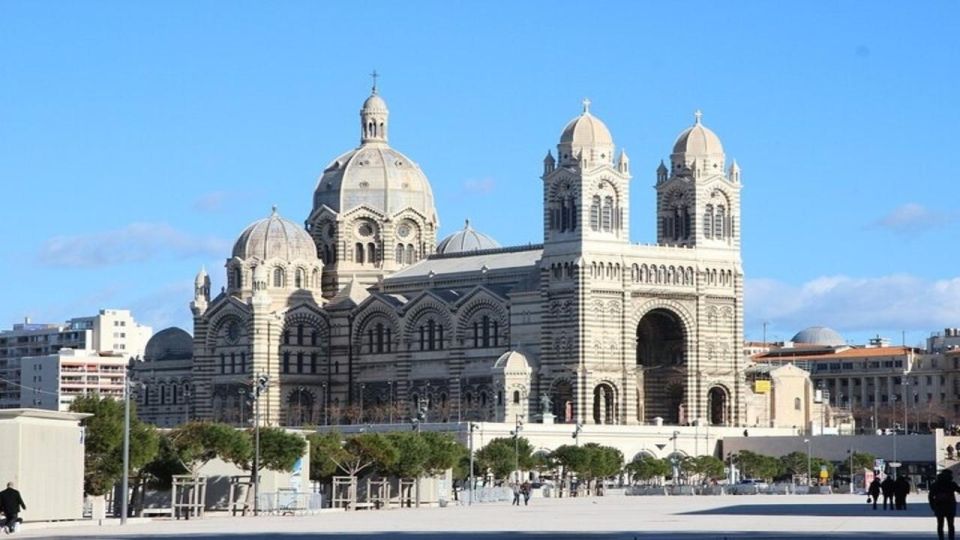
The Museum of European and Mediterranean Civilisations, usually called Mucem, is the tour’s modern cultural counterpoint. The museum is dedicated to Mediterranean culture, and its position near the water connects the subject of the museum with the city outside.
This is a strong choice for a walking route because it widens the story beyond Marseille alone. You have already seen the port and an old neighborhood. At Mucem, your guide can place the city within a broader Mediterranean setting.
The planned stop lasts around 30 minutes and includes a guided visit, sightseeing, and photos. That is enough for orientation and an introduction, not enough for a detailed museum collection visit. If you want to spend hours inside Mucem, make that a separate plan. The tour helps you understand why the museum matters and where it fits into your day.
The provider can help book tickets for visits you want, but the basic price does not include food, drinks, or clearly stated museum admission. Confirm ticket arrangements before you go so you know exactly what the $43 covers.
Fort Saint-Jean finishes with open views
Fort Saint-Jean gives the walk its broadest outlook. The route includes a guided visit, sightseeing, a photo stop, and about 30 minutes around the fort. From here, you get panoramic views of Marseille and the sea, a fitting end after so much time among streets and buildings.
I like ending at a viewpoint rather than returning to another enclosed site. It lets you look back at the city as a whole and gives the tour a natural final moment. Bring your camera, but also leave time to listen. The view is useful because it helps you place the Old Port, the central districts, and the waterfront in relation to one another.
The fort is also a reminder that Marseille’s position by the sea has always mattered. The walk does not ask you to memorize a long timeline. Instead, it uses a few well-chosen places to show how the city’s harbor, defenses, neighborhoods, religious buildings, and cultural institutions fit together.
What the private format is really worth
The price is $43 per person for three hours. That is a fair figure if you want a private guide who adjusts the discussion to your group and gives practical advice for the rest of your visit. A private tour costs more than joining a large walking group, but you are not paying only for the route. You are paying for attention, flexibility, and the chance to ask questions without holding up strangers.
The value is especially clear for a first day in Marseille. A good guide can help you understand where you are, point out places worth returning to, and shape recommendations around what interests you. The experience includes the walking tour and public transport, except where you select another option, and the provider offers help with booking tickets for desired visits.
There are limits. Food and drinks are not included, and the information does not say that museum or other admission fees are covered. The tour also tries to include a lot in three hours. If you want long museum visits, extended shopping time, or a slow café break, this may feel too packed.
Guides, languages, and the human factor
The tour is available in English, French, and Spanish. That gives you a practical choice of language, and the private format means you can ask for clarification as you go.
If you are assigned Sera Kiwan, expect an attentive style focused on what matters to your group, with excellent English. If your guide is Anthony, you may get the sort of precise detail that makes a building linger in your memory, such as the source of the wood used for a cathedral door. Guide assignment can vary, so do not book on the assumption that either person is guaranteed.
This human element is the main reason to choose the tour. The monuments are all accessible independently. The guide’s value comes from connecting them, answering questions, and helping you decide what deserves more of your limited time.
Who will enjoy this Marseille walk most
I would choose this tour for a first visit, a short stay, or a port call when you want a useful introduction without spending a full day indoors. It suits couples, families, and small groups who prefer a private conversation to a large scheduled group.
It is also a good match if your group has different interests. One person can ask about architecture, another about neighborhood life, and another about future activities in Marseille. A customizable route gives the guide room to balance those requests.
You may want another format if you dislike walking, want detailed museum touring, or prefer to spend most of your time eating and shopping. The route is packed with six principal sights, and the price does not cover food, drinks, or clearly specified entry tickets.
At $43, the tour makes the most sense when you use the guide well. Arrive with a few questions, mention any mobility concerns, and say which sights deserve the most time. That turns a standard route into a more useful private orientation.
Should you book the Vieux-Port and Panier walk?
Book it if you want to see Marseille’s central sights in one organized outing and value a guide who can adjust the conversation to you. The Old Port, Le Panier, La Vieille Charité, Marseille Cathedral, Mucem, and Fort Saint-Jean make a strong introduction, with enough variety to keep the walk moving.
Skip it if your priority is a slow museum day or a food-focused visit. You will need to arrange extra time for interiors and pay separately for anything not included. For most first-time visitors, though, the private structure, multilingual guiding, and practical city advice make $43 a sensible way to get your bearings.
FAQ
How long does the Marseille walking tour last?
The tour lasts three hours. Starting times vary, so you need to check availability when booking.
Where does the tour meet?
The meeting point is 1 Quai de Rive Neuve, 13001 Marseille, along the Old Port.
Is this a private tour?
Yes. The group is private and exclusive, with no other participants added to your group.
Which sights are included on the route?
The route includes Fort Saint-Jean, Mucem, Marseille Cathedral, the Old Port of Marseille, Le Panier, and La Vieille Charité.
What languages are available?
Guiding is available in English, French, and Spanish.
Is the tour wheelchair accessible?
Yes, the activity is listed as wheelchair accessible.
Are food, drinks, and admission tickets included?
Food and drinks are not included. The provider offers help booking tickets for desired visits, but admission costs are not stated as part of the basic tour price.