REVIEW · PARIS
Immersive City of Fables – Admission Ticket
Book on GetYourGuide →Operated by CITÉ IMMERSIVE FABLES - PARIS · Bookable on GetYourGuide
Fables turn into rooms you can walk through. This 90-minute ticket in Paris turns Jean de La Fontaine’s famous Fables into a room-by-room performance, with 1000m2 of scenography and a show finale built for your eyes and ears.
What I really like is the way the acting threads everything together, starting with an actor intro in 17th-century attire, and keeping you moving without feeling rushed. I also love the structure: each fable has a clear setting and mood, from garden slyness to full-moon drama.
One consideration: if you’re bringing a very young child, plan for it to be a bit much. A 5-year-old may find parts challenging, even if the experience is playful.
In This Review
- Key points before you go
- A 90-minute walk through La Fontaine in Paris
- Where to start: Galerie Berri-Washington and the green-carpet approach
- La Fontaine’s office: where the story gets its voice
- The Fox Room garden: flattery, courtiers, and the clever den
- The Wolf Room and the Frog Room: night drama and pond play
- The Lion’s Room and the plague lesson: games, scapegoats, and AI animation
- Hall of Dreams finale: the 25-minute 360-degree projection show
- The cast and direction: big names, clear storytelling
- Who should book this (and who should skip it)
- Price and value: is $21 fair for 90 minutes?
- Should you book the Immersive City of Fables ticket?
- FAQ
- How long is the Immersive City of Fables experience?
- Where do we meet for the ticket?
- What languages are available?
- What’s included with admission?
- Is the experience wheelchair accessible?
- What ages is it suitable for?
- Is it suitable for people with epilepsy?
Key points before you go
- A 90-minute ticket that moves room to room with a clear start and a dramatic finale
- 1000m2 of scenography that feels designed, not just decorated
- A star-studded cast including Laurent Stocker as La Fontaine
- Room themes built around specific fables, not vague storytelling
- A 25-minute Hall of Dreams with 360-degree video projections
A 90-minute walk through La Fontaine in Paris
This is a ticketed, timed experience. You’re looking at about 90 minutes total, with multiple themed rooms that pick up different fables and moods. The scale matters: the show uses about 1000m2 of scenography, which helps it feel like you’ve stepped into a whole world, not just watched sets from one spot.
The best part for value is the mix of storytelling and activity. Some rooms are built around theatrical scenes and atmospheres, while others give you games, photo moments, and hands-on bits. If you like literature but don’t want a museum lecture, this format is made for you.
Price-wise, $21 for 90 minutes is reasonable if you compare it to other theater-style experiences in Paris that rely on a seated view. Here, you move. You look around. You get to participate in small ways. That’s the difference.
A few more Paris tours and experiences worth a look



Where to start: Galerie Berri-Washington and the green-carpet approach
You’ll enter from inside Galerie Berri-Washington, at 5 Rue de Berri. Follow the green carpet and water lilies along the pedestrian gallery to find the entrance. It’s a small detail, but it helps you get oriented quickly so you don’t spend your time hunting.
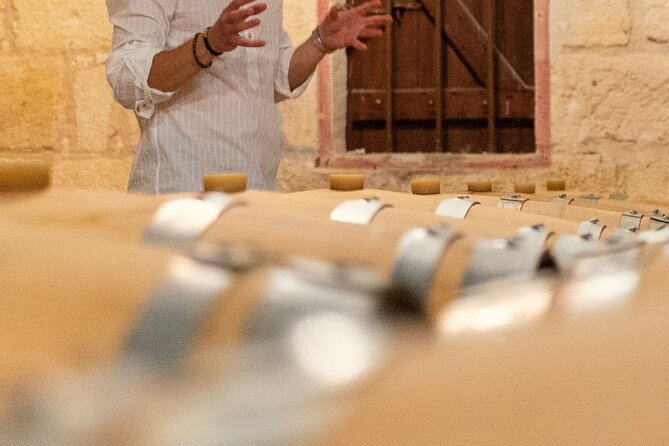
Before you go deep into the rooms, you get an intro led by an actor in 17th-century attire. That intro matters more than you might expect. It sets the tone so the fables feel like a guided performance rather than separate exhibits.
Languages are French and English, but some content is shown in its original language. If you’re traveling with kids or you prefer everything translated, keep that in mind and treat it as part of the atmosphere. For accessibility, it is wheelchair accessible, and it’s designed for all ages (0 to 99).
La Fontaine’s office: where the story gets its voice
The journey begins in La Fontaine’s office, staged as a time jump back to the 17th century. You’re not just seeing a desk or props. The poet is positioned as the person setting the terms for what you’ll experience, including the legacy of his 243 Fables.
This first stop does two smart things. It anchors the show in a specific author, and it prepares you for a format where each room behaves like a chapter. When you move on, you’ll recognize the fable approach faster because you’ve already been told how to read the room.
If you’re a fan of theatrical pacing, you’ll enjoy this. It’s a natural breather before the show starts turning the fables into full scenes.
The Fox Room garden: flattery, courtiers, and the clever den
Next is the Fox Room, built like a 17th-century French garden. Under a tree, you find the staging of The Crow and the Fox, with courtiers and flattery as part of the atmosphere. It’s playful, but it also makes the fable’s point feel current: charm can be a trap.
On the outskirts of the scene, you shift perspective. You discover the Fox’s den and also elements of Jean de La Fontaine’s life. That pairing works well. The fable isn’t floating in the abstract; it’s tied back to the world that produced it.
From a pacing standpoint, this room is a good match for families. It’s visual, easy to follow, and it doesn’t demand constant attention to details to understand what’s happening.
The Wolf Room and the Frog Room: night drama and pond play
Then the mood flips. In the Wolf Room, the setting is a full moon evening at the edge of a forest. The fable The Wolf and the Dog takes center stage, balancing independence with the need for comfort. The atmosphere is the point here: you feel the tension more than you read it.
This room also includes a photo booth, skill games, rich mediation, and collectibles. That’s where the show becomes more than storytelling. You get a chance to interact, test your observation skills, and take something home that doesn’t require you to buy a souvenir after.
After that comes the Frog Room, with a pond filled with water lilies and the watchful eye of Jean de La Fontaine. This is built around the vain frog who wanted to be as big as the ox, plus the fable The Frogs Who Ask for a King. You’ll also be invited to stage yourself at full size, which is exactly the kind of moment kids remember later.
A jukebox of fables with music adds texture, so the experience keeps moving even between the big set pieces. If you love sound as much as staging, you’ll probably linger here.
You can also read our reviews of more city tours in Paris





The Lion’s Room and the plague lesson: games, scapegoats, and AI animation
The Lion’s Room explores The Animals Sick with the Plague. The setup is clever: animals meet via video conference and look for a scapegoat to atone for their misfortunes. It’s a satirical frame that lands quickly because the premise is easy to grasp.
There’s also a fresco of drawings made by visitors. These drawings are then animated using AI, plus there are skill games and other interactive bits. This is one of the best examples of the show’s design philosophy: it asks you to participate, not just observe. Even if you don’t fully process every interactive layer, you’ll feel included.
One practical note: this room is likely to be the most stimulating. If you’re with anyone who gets overstimulated in crowds, keep an eye on them and take small breaks inside the flow of the experience.
Hall of Dreams finale: the 25-minute 360-degree projection show
The last stop is the Dream Room, the Hall of Dreams and the grand finale. It’s a dazzling 25-minute show with 360-degree video projections that envelops you in a timeless experience.
This is the room you point to when you explain the whole ticket to friends. The show’s earlier rooms give you narrative anchors and playful scenes, but the Dream Room is about sensation—light, motion, and scale. It’s where the 1000m2 idea turns into a payoff.
The Dream Room is produced with collaboration involving Ateliers BK, with musical direction by Bon Entendeur. The cast performances throughout make the fables feel theatrical, and the final show ties it all together into something you can’t get from a standard stage adaptation.
The cast and direction: big names, clear storytelling
What makes this work is not just the sets—it’s the people. You’ll see a lineup that includes Laurent Stocker (from the Comédie-Française) as Jean de La Fontaine, plus Alexandre Astier as the Lion, Arielle Dombasle as the Wolf, and Charles Berling as the Fox. Other roles include Felix Junier as the Donkey, Hubert Myon as the Dog, Axelle Saint-Cirel as the Raven, and Marie S’infiltre as the Frog.
That kind of casting has a practical effect: it brings energy and precision to the fables. You feel like you’re inside a performance with actors steering the tone, not just walking past numbered exhibits.
Musical direction is by the Bon Entendeur collective, and the production ties together with Ateliers BK. If you like when performance, sound, and visuals agree on the emotional goal, this should click for you.
Who should book this (and who should skip it)
This experience is built for all ages, from 0 to 99, and it’s wheelchair accessible. The fables are family-friendly in concept, and the rooms include play elements like photo moments, skill games, music, and full-size staging in the Frog Room.
That said, it isn’t automatically perfect for every child. A 5-year-old might find parts difficult, even when the experience is still sympathetic and fun. If you’re bringing little ones, I’d plan for patience and a shorter attention span than adults use for stories.
It’s not suitable for people with epilepsy, since the show uses immersive content and projections. If that affects someone in your group, you’ll want to choose a different kind of outing.
Price and value: is $21 fair for 90 minutes?
At $21 per person for about 90 minutes, this isn’t just a cheap entertainment add-on. The value comes from three places:
- Scale and design: 1000m2 of scenography means you aren’t stuck looking at a single corner.
- Performance content: an actor-led introduction and a professional cast keep the stories coherent.
- A true finale show: the Dream Room is a 25-minute 360-degree projection experience, which alone would cost more elsewhere.
If you’re the type who enjoys theater, storytelling, and hands-on moments, $21 feels fair. If you only want quiet museum-style reading, you might find it too staged and active. But for most people who like creative, literate entertainment, it’s good value.
Should you book the Immersive City of Fables ticket?
Yes, I’d book it if you want a theater-meets-museum experience that treats La Fontaine as living story, not dusty homework. The room-by-room fable format makes it easy to follow, the acting is a strong selling point, and the Hall of Dreams finale is the kind of ending that earns its place.
Skip it if someone in your group has epilepsy or if very young kids in your party struggle with fast-paced, projection-heavy environments.
If your group includes teens, adults, or mixed ages who like playful culture, this is one of those Paris tickets that feels worth your time from minute one to the 360-degree finale.
FAQ
How long is the Immersive City of Fables experience?
The experience lasts about 90 minutes, with the Dream Room finale featuring a 25-minute show.
Where do we meet for the ticket?
You’ll meet inside Galerie Berri-Washington at 5 Rue de Berri. Follow the green carpet and water lilies to the end of the pedestrian gallery.
What languages are available?
The experience is offered in French and English. Some content may be shown in its original language.
What’s included with admission?
Your ticket includes admission and a visit introduced by an actor dressed in 17th-century attire.
Is the experience wheelchair accessible?
Yes, it is wheelchair accessible.
What ages is it suitable for?
It is listed as accessible for ages 0 to 99.
Is it suitable for people with epilepsy?
No, it is not suitable for people with epilepsy.