REVIEW · PARIS
Guided Cruise The Old Paris on Canal Saint Martin
Book on Viator →Operated by France Tourisme · Bookable on Viator
Paris has a quiet side most miss. This guided Canal Saint-Martin cruise turns eastern Paris into something you can actually slow down and watch, with locks, bridges, and a long underground tunnel that changes the mood mid-ride.
I love the live commentary offered in English and French, which gives you context for what you’re seeing instead of just floating past it. I also love the mix of scenery and engineering—tree-lined canal banks, multiple locks, and that rare lift bridge moment over rue de Crimée. One possible drawback: the English narration can be harder to follow for some seats, especially if the sound system isn’t crystal clear on your departure.
In This Review
- Key highlights worth your attention
- Canal Saint-Martin by boat: the slow route to real eastern Paris
- Getting on at Canauxrama: what to know before you arrive
- Port de l’Arsenal to the underground tunnel: the moment Paris goes quiet
- Coming up near Place de la Bastille: underground canal meets city energy
- Écluse du Temple and the lock rhythm: watch the canal do its job
- The tree-lined heart of Canal Saint-Martin: iron bridges, footpaths, and local life
- Écluses des Morts and the Bassin Louis Blanc: a calm pause with a little mystery
- Écluse de la Villette and the rue de Crimée lift bridge: watch the city’s machinery
- Canal de l’Ourcq: the quieter, more authentic side of Paris
- Bassin de la Villette finish: where the canal network opens up
- Price and value: what $38.55 gets you on the water
- Who should book this cruise (and who might not love it)
- Should you book the Old Paris on Canal Saint-Martin cruise?
- FAQ
- FAQ
- How long is the Canal Saint-Martin cruise?
- Where does the cruise start and end?
- Is there live commentary and is it available in English?
- What is included besides the cruise itself?
- Is breakfast included?
- Are there locks and bridges on the itinerary?
- What happens if the weather is poor?
Key highlights worth your attention
- Underground tunnel segment under the city, where light fades and returns through openings above
- Live bilingual guide talk (English/French), so you’re not guessing what a lock or footbridge is doing
- 4 double locks + 2 swing bridges, meaning real action on the water instead of a slow drift
- Bassin Louis Blanc and Bassin de la Villette, two calm-to-local-waterfront vibes that feel like Paris beyond postcards
- Rue de Crimée lift bridge, one of the last operational lifting bridges in Paris (you’ll watch it move over you)
- Onboard bar for drinks you can buy during the cruise
Canal Saint-Martin by boat: the slow route to real eastern Paris
If you picture Paris as only grand boulevards and museum lines, this cruise is a strong antidote. The Canal Saint-Martin runs like a pocket-sized world of its own: narrow, human-scale, and full of bridges, footpaths, and everyday life along the banks.
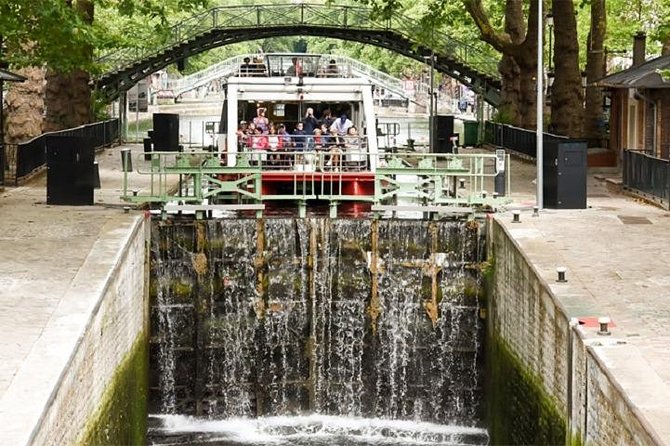
The real payoff is that you get explanations while the scenery changes. That matters because canal infrastructure can look abstract from a walking perspective, but from the water you can literally feel the canal working as it rises and falls through locks and swing bridges.
It’s also a smart choice if you want a break from lots of walking. A 2h30 cruise doesn’t fix everything in Paris, but it gives your feet a rest while you still feel like you’re sightseeing.
You can also read our reviews of more boat tours in Paris

Getting on at Canauxrama: what to know before you arrive
Your start point is Canauxrama, 50 Bd de la Bastille (75012). Your cruise ends at Canauxrama, Bassin de la Villette, 13 Quai de la Loire (75019) near métro Jaurès.
Two practical tips I’d follow:
- Arrive early and give yourself time to find the right berth. Some people have reported that the sign for Canauxrama can be easy to miss from street level, since it may be up high.
- Choose your seating with comfort in mind. Locks mean splash. If you sit where the water hits more directly, you can get misty and wet during some of the operations. That can be fun, but if you hate getting sprayed, aim for a slightly more protected position.
This is offered as a guided experience with a maximum group size of 149. That’s large enough you’ll hear the guide only through the system, so your best strategy is simply to position yourself where you can read faces and catch sound.
Tickets are mobile, so you’ll want your phone charged for check-in.
Port de l’Arsenal to the underground tunnel: the moment Paris goes quiet
The cruise begins at Port de l’Arsenal, a marina that links the Canal Saint-Martin network to the Seine. From the start, you’re not just seeing water—you’re seeing how Paris connects its waterways and neighborhoods.
Then comes the standout atmosphere change: the boat enters the long underground tunnel of the Canal Saint-Martin. This is a vaulted passage beneath the city where daylight fades, then returns through openings above. The effect is surprisingly calm. It feels less like a ride through a city and more like stepping into a working feature of the place.
For photography, it’s a curveball. Low light and reflections can be tricky, so keep expectations realistic. Focus on the tunnel shapes, the shifting light, and the feeling of moving through an actual hidden section of Paris rather than trying to shoot crisp portraits.
Coming up near Place de la Bastille: underground canal meets city energy
When you emerge from the tunnel near Place de la Bastille, you get a sharp contrast: quiet, controlled water underground versus the louder rhythm of a historic square above. This is one of those moments where the cruise makes sense as a story—Paris isn’t just landmarks. It’s layers.
Bastille is a familiar name to many visitors, but viewing it from this angle changes how it lands in your mind. The canal doesn’t sit “next to” the city; it threads through the city and shapes what that city feels like.
Écluse du Temple and the lock rhythm: watch the canal do its job
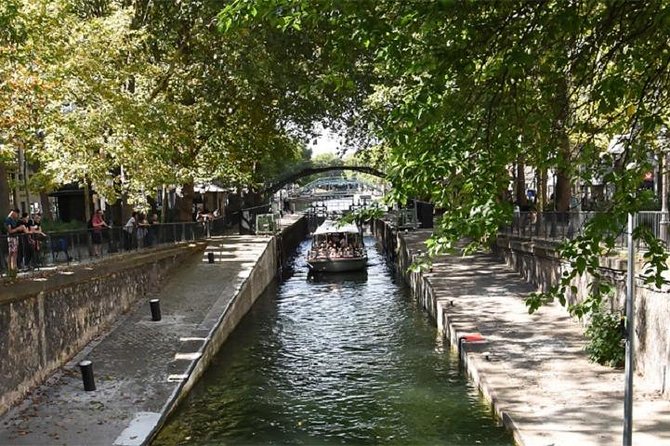
Next up is Écluse du Temple, another key lock on the canal. Here you’ll see the classic canal choreography: the boat enters, the gates work, and the water level shifts slowly enough that you can watch it rather than just feel it.
This is where the cruise earns its keep. A canal cruise without locks can sometimes feel like a scenery loop. But with repeated lock operations, you learn something practical: how the canal manages elevation and keeps different sections of water in sync.
If you’re the type who likes small engineering details, you’ll likely enjoy how steady and methodical it all looks. If you want nonstop action, it’s worth noting that locks take time. Some seats spend more time in partial stop-start moments than you might expect, so manage your mindset: this is about observation.
You can also read our reviews of more guided tours in Paris



The tree-lined heart of Canal Saint-Martin: iron bridges, footpaths, and local life
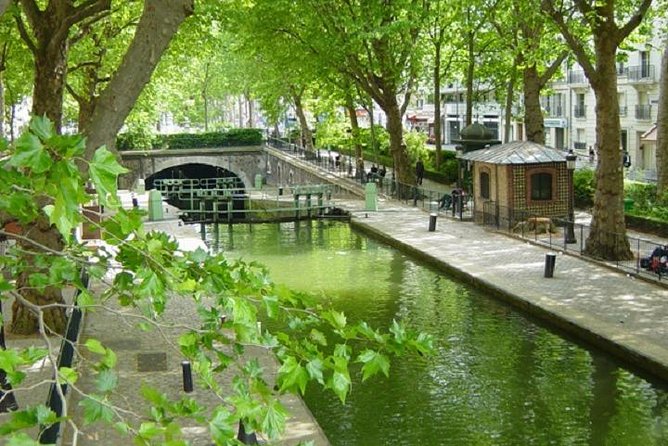
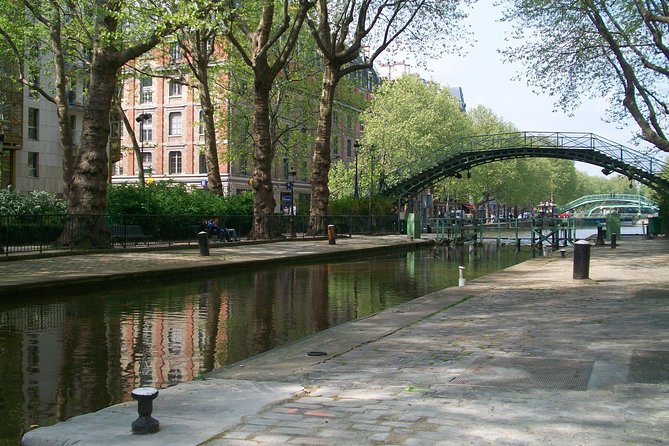
The boat then enters the heart of Canal Saint-Martin—famous for its tree-lined banks, elegant iron footbridges, and the kind of Paris charm that’s loved by locals and shows up in filming.
This is the stretch where the cruise turns into “just look out the window.” You’ll see the canal as a green corridor stitched through neighborhoods. It feels romantic in a low-key way: not postcard-perfect at every angle, but human and lived-in.
One small consideration: some people prefer to hear every word the guide says. If that’s you, try to pick a seat where sound carries well. There’s enough going on visually that it’s easy to lose focus and then miss a key explanation about what you’re seeing.
Écluses des Morts and the Bassin Louis Blanc: a calm pause with a little mystery
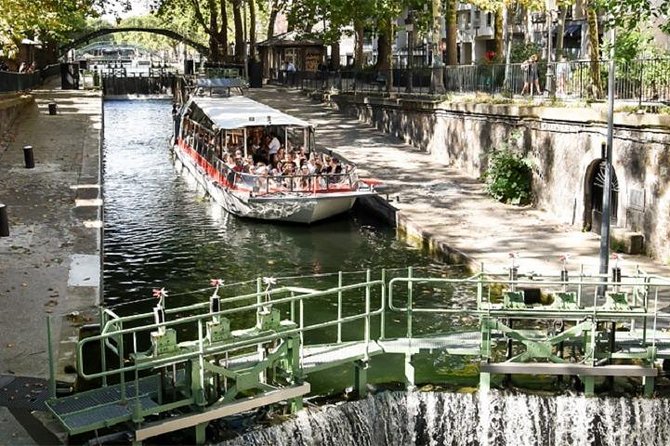
As the route continues, you’ll pass Écluses des Morts, a set of locks whose name hints at a darker slice of the canal’s past. The name alone adds mystery, but the main value is tonal variety—you’re not just seeing pretty banks. You’re seeing how the canal has carried complicated history, too.
After that comes Bassin Louis Blanc, where the canal feels more intimate, blending into the surrounding neighborhood. This is the kind of spot where the water looks like it could be part of the daily routine for people who live nearby.
If you’re traveling with kids, this section can feel less about “big sights” and more about atmosphere. And yes, lock moments can be playful—some families enjoy the splash and the change in water level as a kind of live science show.
Écluse de la Villette and the rue de Crimée lift bridge: watch the city’s machinery
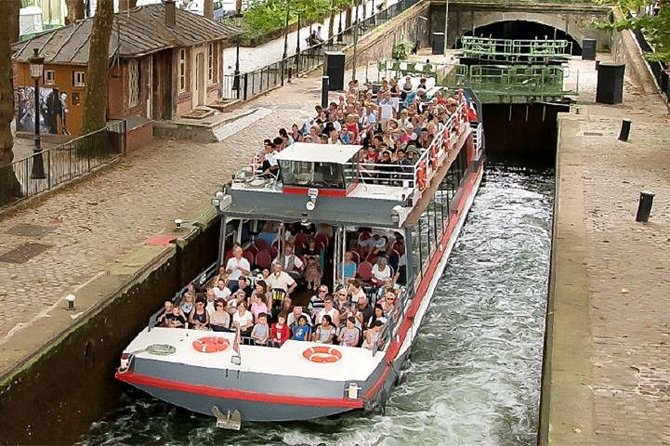
You’ll then experience your first lock of the next major phase: Écluse de la Villette. This gives you another taste of the canal’s control system—again, gates open and close, and the water level gently rises or falls.
Then comes one of the most fascinating sights on the route: sailing beneath the lift bridge of rue de Crimée, one of the last operational lifting bridges in Paris. You’re not watching a statue or a photo line. You’re watching a working piece of industrial heritage respond in real time.
This is also where you might notice the mood of the cruise shift from scenic to mechanical (in a good way). The guide’s narration helps connect what you’re seeing to why it exists—transport needs, water management, and the canal’s relationship with the streets above.
Practical note: if it’s a sunny day, the water glare can be intense around bridges. Sunglasses help.
Canal de l’Ourcq: the quieter, more authentic side of Paris
Toward the end, you’ll cruise along the Canal de l’Ourcq. Historically, it was built to supply Paris with fresh water. Today, you get a quieter, more authentic Paris view: former warehouses, plus modern residential buildings lining the canal.
This stretch is valuable because it broadens your mental map of the city. It shows you that Paris canals aren’t only for leisure in tourist zones. They connect industrial past, everyday neighborhoods, and the ongoing use of waterways.
If you’ve already hit the major museum and monument circuits, this part can feel like a reset. You’re not chasing the next big landmark—you’re seeing a working city edge.
Bassin de la Villette finish: where the canal network opens up
The cruise ends at Bassin de la Villette, one of the largest open water basins in Paris. It’s lively, but still relaxed, and it marks a gateway to the historic canal network.
The vibe is different from the older, narrower sections: you’re moving into a wider basin that feels more like an urban water hub. This ending point also makes sense if you want a simple continuation on foot, since the cruise finishes near métro Jaurès.
If you’re planning your next stop right after the cruise, give yourself a little buffer. Even though the ride is only about 2h30, this area transitions from boat viewing to street movement quickly.
Price and value: what $38.55 gets you on the water
At $38.55 per person for about 2 hours 30 minutes, the value depends on what you want from Paris.
You get:
- Live guided commentary in English/French
- A route that includes 4 double locks and 2 swing bridges
- Passages through the tunnel, tree-lined canal banks, and ending at Bassin de la Villette
- A bar onboard (drinks not included, but available)
- A route that’s designed for “see and learn” rather than just “ride and snap photos”
That’s a solid package for the price because the itinerary isn’t just scenery; it’s also canal mechanics and local waterfront views you can’t easily replicate on a simple walk.
Where the value can feel weaker is if you’re highly focused on hearing every word. Some people find the narration harder to catch depending on sound quality and seating. If you’re the type who needs perfect audio, treat the guide as helpful context, not the only reason to book.
Also note the breakfast detail: breakfast is only included in a specific package called cruise + breakfast, and it’s listed as 1 coffee + 1 croissant. So if you’re already planning a full breakfast elsewhere, you’ll likely prefer skipping that add-on.
Who should book this cruise (and who might not love it)
This cruise is a great match if:
- You want a different side of Paris beyond the river cruise clichés
- You like history that’s visible in daily infrastructure, like locks and lift bridges
- You prefer a calmer pace with a built-in break from walking
- You enjoy small surprises: underground tunnels, slow water rises, and working bridges
You might skip it if:
- You hate situations where the boat must slow down for lock operations
- You need crystal-clear English narration no matter what (since sound clarity can vary with conditions and seating)
- You’re traveling when you expect heavy rain. The experience is stated to require good weather, and if it’s canceled due to weather you’ll be offered a different date or a full refund.
Should you book the Old Paris on Canal Saint-Martin cruise?
I think this is worth booking if your goal is an authentic slice of Paris that isn’t only museum-and-cathedral mode. The strongest reasons to go are the underground tunnel, the repeated lock experience, and the chance to see working infrastructure like rue de Crimée’s lift bridge from the water.
Book it if you can be flexible with where you sit (for audio and splash), and if you’ll enjoy slow observation as part of the fun. Skip it only if you’re expecting a fast, nonstop sightseeing show or you know you’ll be very unhappy if you can’t catch every sentence.
FAQ
FAQ
How long is the Canal Saint-Martin cruise?
The cruise lasts about 2 hours 30 minutes.
Where does the cruise start and end?
It starts at Canauxrama, 50 Bd de la Bastille, 75012 Paris, and ends at Canauxrama, Bassin de la Villette, 13 Quai de la Loire, 75019 Paris (near métro Jaurès).
Is there live commentary and is it available in English?
Yes. The tour includes live commentary, offered in English and French.
What is included besides the cruise itself?
You pass through 4 double locks and 2 swing bridges, and there is a bar onboard. Mobile tickets are used.
Is breakfast included?
Breakfast is only included in the package cruise + breakfast. That package includes 1 coffee and 1 croissant.
Are there locks and bridges on the itinerary?
Yes. The route includes 4 double locks and 2 swing bridges during the 2h30 cruise.
What happens if the weather is poor?
The experience requires good weather. If it’s canceled due to poor weather, you’ll be offered a different date or a full refund.