REVIEW · PARIS
Etretat and Le Havre Private Day Trip from Paris
Book on Viator →Operated by Normandy Melody · Bookable on Viator
Étretat is the star here: its chalk cliffs, sea arches, and old fishing-village setting make it one of Normandy’s most memorable coastal stops. You also get Le Havre’s MuMa museum, where works by Boudin, Monet-era painters, Renoir, Pissarro, Sisley, Degas, Courbet, and Corot connect the coast with French Impressionism.
I like the ease of hotel pickup from Paris and the privacy of traveling only with your own group. I also like the mix of open-air scenery, museum art, and Le Havre’s unusual postwar design. The main drawback is the long day: roughly 10 hours, with much of it spent on the road, and lunch is not included despite the tour summary calling the outing all-inclusive.
- Étretat’s Alabaster Coast: Spend several hours around Normandy’s famous white cliffs and seaside paths.
- MuMa admission included: See one of France’s major Impressionist collections in a modern museum by the sea.
- Private group format: Your party of up to eight travels together in private transportation.
- A full Normandy day from Paris: Pickup begins at 7:30 a.m., with return to your accommodation later that day.
- Art and architecture together: Learn how Le Havre’s light inspired painters and how Auguste Perret rebuilt the city after World War II.
- Check the lunch details: The description refers to a meal and cooking class, but lunch is listed as excluded, so confirm before booking.
In This Review
- Why Étretat Is Worth the Long Ride from Paris
- Three Hours Among the Falaises d’Étretat
- MuMa: Impressionism Beside the Water
- Le Havre’s Unusual Postwar City Center
- The Private Minibus Makes the Schedule Possible
- What the Price Means for a Group of Eight
- The Cooking Class Description Needs Clarification
- Who Will Get the Most from This Normandy Day Trip
- Practical Details Before You Reserve
- Should You Book This Private Étretat and Le Havre Trip?
- FAQ
- How long does the tour last?
- What time does the tour begin?
- Is hotel pickup included?
- How many people can join the private tour?
- Is transportation included?
- Is admission to MuMa included?
- Is lunch included?
- Can I cancel for a full refund?
Why Étretat Is Worth the Long Ride from Paris
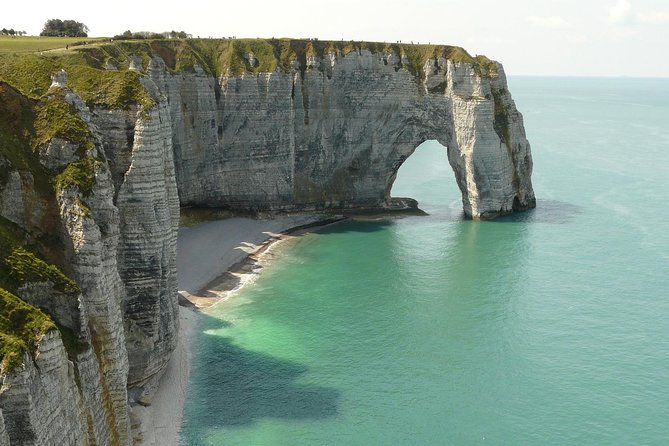
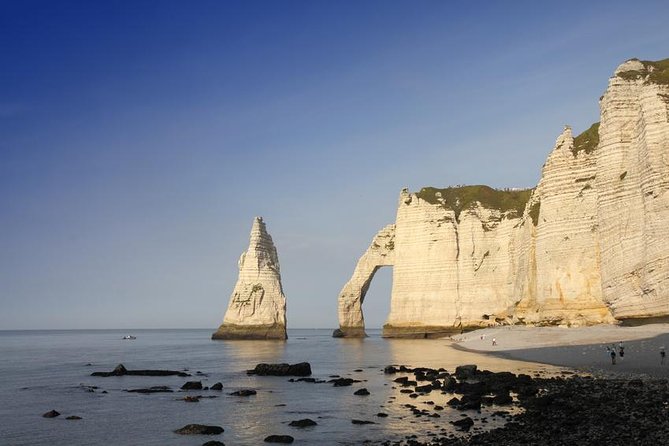
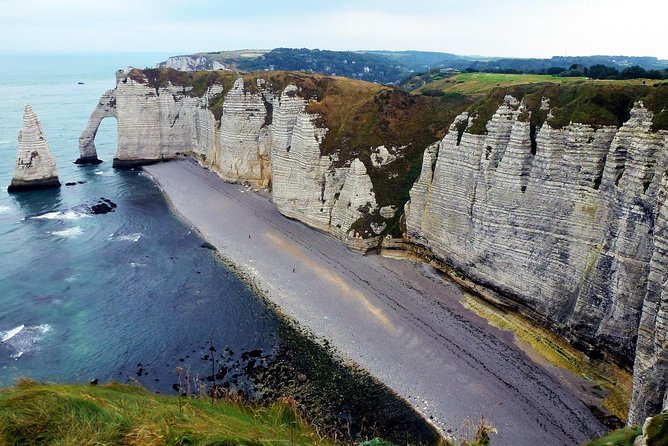
The trip’s central reward is Étretat, a small resort town on Normandy’s Alabaster Coast. The coast gets its name from its pale chalk cliffs, which rise sharply above the water and are cut by natural arches. The sight is bold rather than delicate: white rock, green slopes, gray-blue water, and a broad sky.
Étretat was once a fishing village. Its popularity grew in the 19th century as sea bathing became fashionable, the railway arrived, and writers and artists began spending time here. The town’s villas and former resort character still frame the shore, but the cliffs remain the reason to come.
You should expect about three hours at Étretat and the nearby cliffs. That gives you enough time to walk, pause for views, and see the town without reducing the visit to a quick photograph. The exact walking route is not specified, so ask your guide how much uphill walking is planned and which viewpoints fit the day’s weather.
The cliffs are a natural setting, not a museum exhibit. Paths may feel exposed, and the tour requires a moderate level of fitness. Wear practical shoes and bring a rain layer. Normandy weather can change quickly, and the view is most enjoyable when you are prepared to spend time outside rather than racing back to the minibus.
The sea wall and cliff paths also explain why Étretat attracted painters such as Claude Monet, Gustave Courbet, and Auguste Renoir. Your guide can help you look at the view as an artist might: not just as a pretty scene, but as a study in changing light, rock, water, and sky.
Three Hours Among the Falaises d’Étretat
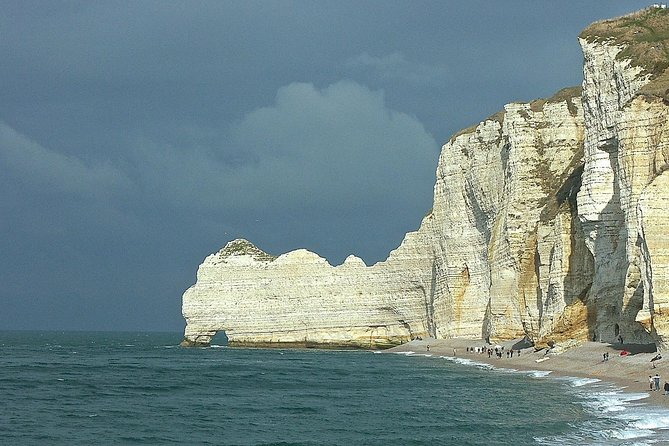
The most famous formations are the cliffs and arches around Étretat. They are often called the Falaises d’Étretat, and they form the visual center of the visit. Depending on the route and conditions, you might see the curved openings from the shore or climb toward higher viewpoints.
The town itself is compact enough to pair naturally with the coast. You can use part of your time for a seaside walk and part for exploring the resort streets. The schedule lists several Étretat-related stops, including the cliffs, the Côte d’Albâtre, and the town of Étretat. These are best understood as different parts of one coastal visit, not separate attractions requiring repeated transfers.
That matters because the day is not built around many short photo stops. You have a concentrated block of time in one place. I prefer that arrangement for Étretat, since the cliffs deserve more than a hurried roadside glance.
The setting has a strong literary and artistic connection. The novelist Alphonse Karr helped popularize Étretat as a seaside destination in the 19th century, and the town became known for its walks, villas, and casino. Your guide is expected to add local stories and explain how the coast shaped the work of artists and writers.
One caution: a three-hour coastal stop can feel short if you want a long hike, a slow meal, and museum-style sightseeing all at once. This is a scenic introduction rather than a full hiking day. If your main goal is walking the cliffs, ask how much free time you will have away from the group.
You can also read our reviews of more private tours in Paris


MuMa: Impressionism Beside the Water
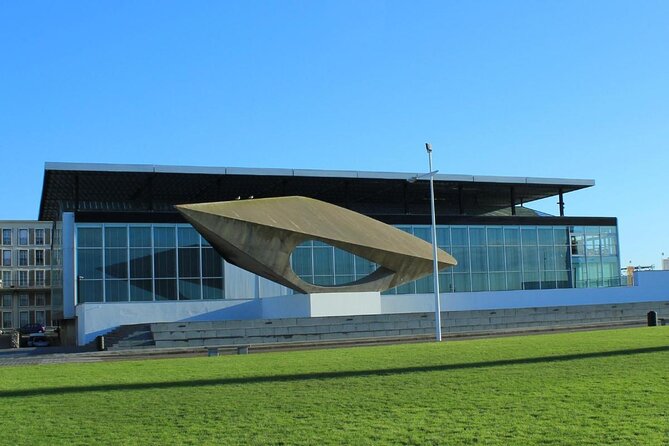
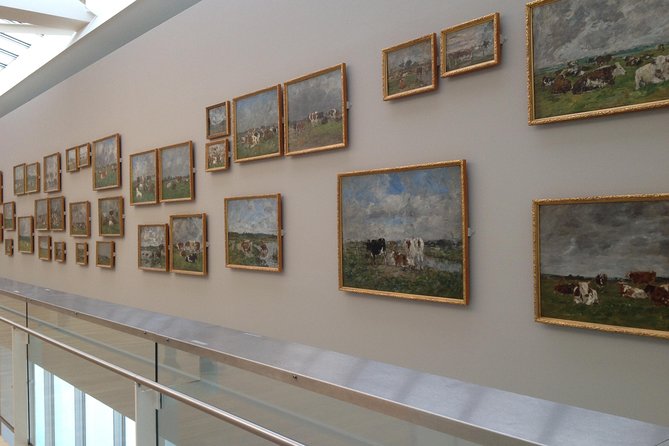
The Musée d’art moderne André Malraux, usually called MuMa, is the other major reason to choose this outing. Admission is included, and the planned visit lasts about one hour. The museum sits by the sea and focuses strongly on light, an ideal subject in a city that inspired generations of painters.
The collection includes works associated with Eugène Boudin, Pierre-Auguste Renoir, Camille Pissarro, Alfred Sisley, Edgar Degas, Gustave Courbet, and Jean-Baptiste-Camille Corot. This is a useful stop after Étretat because you have just seen the kind of coastline and changing weather that shaped so much 19th-century painting.
An hour is enough for a focused visit, but not enough to study every room at length. I would treat MuMa as a well-chosen introduction to Le Havre’s art rather than the sole purpose of the day. If you already know the museum and want a longer visit, the fixed schedule may feel limiting.
The museum also gives the guide a chance to connect local geography with art. Le Havre’s light was important to Claude Monet, who painted Impression, Sunrise here in 1872. That painting gave the Impressionist movement its name. The connection is simple but valuable: you are not seeing unrelated art in a city museum. You are looking at work linked to the coast outside.
Le Havre’s Unusual Postwar City Center
Le Havre may surprise you. Unlike the old stone towns many people expect in Normandy, much of the city center was rebuilt after World War II under architect Auguste Perret. Its reconstruction earned UNESCO World Heritage status, and the result is a planned modern city of concrete, geometry, broad streets, and carefully controlled proportions.
The tour allows about an hour to see Le Havre beyond the museum. That is enough for an introduction to the rebuilt center and its architectural story. It is not enough for an exhaustive city tour, so listen for the larger idea: Le Havre is a port city shaped by trade, war, rebuilding, and modern design.
This contrast makes the itinerary stronger. Étretat offers cliffs and a traditional resort town. Le Havre offers a working port, modern architecture, and art tied to light. You get two very different versions of the Normandy coast in one day.
Le Havre developed as a major port for raw materials and passenger transport during the 19th century. Its role as a port also helps explain the city’s outward-looking character and its relationship with painters. The sea is not simply a scenic backdrop here. It is part of the city’s work, identity, and visual character.
I would not book this trip if your only interest is medieval Normandy. Le Havre’s appeal is more modern and architectural. If you enjoy seeing how a city was rebuilt and how that rebuilding changed its appearance, the stop adds real value.
The Private Minibus Makes the Schedule Possible
Pickup is offered directly from your Paris hotel or accommodation at 7:30 a.m. That early start is necessary. Étretat is far enough from Paris that a coastal day trip requires a long driving window, especially when Le Havre is added.
The journey follows the Seine toward its estuary and includes a striking bridge crossing, according to the route description. Even the drive helps set up the day, moving from Paris to the river mouth and then out to the coast. Still, you should be comfortable spending several hours in private transportation.
The vehicle is a private minibus for your group, with a licensed professional driver-guide. The group limit is eight people. That is a useful size for a day with several transitions: you do not need to gather a large party each time you leave a museum or viewpoint, and you can ask questions as you go.
A private tour also gives you more control than a standard coach excursion. The guide may be able to adjust the pace within the available schedule, though the listed stops and driving distances leave limited room for major changes. Traffic can affect the timing, and the start or return may shift because of local road conditions.
No guide’s personal name is provided, so you cannot choose a named specialist in advance. The guide is described as licensed, professional, friendly, and informative. At booking, ask who will lead your departure if having a particular language or subject focus matters to you.
What the Price Means for a Group of Eight
The listed price is $2,442.54 per group, with up to eight people. At full capacity, that works out to about $305 per person. For a couple, the same private-group price becomes roughly $1,221 per person, which is a major difference.
The cost covers private transportation, hotel pickup and drop-off, the driver-guide, and admission to MuMa. You are paying for door-to-door service and a full private day, not simply entry to a single attraction. That can be useful when you want to reach Étretat without arranging trains, buses, and local transport on your own.
The value is strongest for a family or group of friends that can fill most of the eight seats. A group of six to eight people shares the fixed price and gains the comfort of staying together. For two people, a public excursion or a train-based plan may cost less, though it would not offer the same private vehicle and direct pickup.
Lunch is the one important pricing issue. The overview describes lunch and a French Impressionist-inspired cooking class, but the detailed inclusions say lunch is not included, and the stop list does not clearly identify a cooking class. Ask the provider to confirm whether a meal or class is part of your exact booking, and plan your budget accordingly.
A few more Paris tours and experiences worth a look






The Cooking Class Description Needs Clarification
The experience is presented as including a cooking class inspired by a French Impressionist artist, yet that activity is not clearly placed in the listed itinerary. The formal inclusions name museum admission, transportation, the private group, and the driver-guide, but not lunch.
That inconsistency is easy to resolve before payment. Ask whether the cooking class is offered on every departure, whether it replaces free time in Étretat or Le Havre, and whether food costs are separate. Also provide any dietary requirements when booking, as requested in the tour information.
One related description refers to a delicious meal by the sea, but you should not rely on that wording as a guarantee. Treat lunch as extra until the provider confirms otherwise. This is especially important on a 10-hour day, when you will want to know exactly when and where you can eat.
Who Will Get the Most from This Normandy Day Trip
I would recommend this tour to you if you have limited time in Paris but want one substantial day outside the capital. It is particularly suitable for families, couples traveling with friends, and small groups that value a private vehicle and hotel pickup.
It also fits people who want more than scenery. Étretat supplies the memorable coastal views, while MuMa and Le Havre explain the area’s connection to painting, port life, and modern architecture. The combination gives the day a clear theme instead of a string of unrelated stops.
You should be comfortable with an early start, a long round trip, and moderate walking. The tour is not designed as a relaxed village day with hours for shopping or lingering over lunch. Its strength is the range of experiences packed into one outing.
I would choose another plan if you want to stay entirely in historic old towns, spend most of the day hiking, or avoid a high private-tour cost for a small party. Étretat can also deserve more time than a single day allows, especially if you want extensive cliff walks.
Practical Details Before You Reserve
Confirmation is provided at booking, and children must be accompanied by an adult. The activity is private, so only your own party participates.
The start time is 7:30 a.m. Pickup and return to your accommodation are included. Traffic may change the timing, so avoid scheduling a tight evening commitment in Paris.
Bring comfortable walking shoes and clothing suited to coastal weather. The physical requirement is moderate, and the itinerary includes outdoor walking around cliffs and the seaside.
Cancellation is free up to 24 hours before the start time for a full refund. Changes or cancellations made within 24 hours are not accepted for a refund, with cut-off times based on local time.
Should You Book This Private Étretat and Le Havre Trip?
Book it if your group can share the fixed price and you want a simple, well-shaped day from Paris. The best parts are the long Étretat visit, the private minibus, MuMa’s excellent art connection, and the chance to see Le Havre’s distinctive UNESCO-listed rebuild.
Before booking, get a clear answer about lunch and the cooking class. That is the one gap in the published details. If the meal matters to you, confirm its price, location, and timing in writing.
For a full group, this is a practical way to combine the Alabaster Coast, Impressionist art, and modern Le Havre in one day. For one or two people, the cost is harder to justify, but the hotel pickup and private schedule may still be worth it if convenience matters more than saving money.
FAQ
How long does the tour last?
The day lasts approximately 10 hours, including pickup from and return to your Paris accommodation.
What time does the tour begin?
The scheduled start time is 7:30 a.m.
Is hotel pickup included?
Yes. Pickup and drop-off from your accommodation or hotel in Paris are included.
How many people can join the private tour?
The private group can include up to eight people. Only your group participates.
Is transportation included?
Yes. Private transportation by minibus is included, along with a licensed professional driver-guide.
Is admission to MuMa included?
Yes. Admission to the Musée d’art moderne André Malraux is included, with about one hour planned for the visit.
Is lunch included?
The detailed inclusions state that lunch is not included. Because another description refers to a meal and cooking class, confirm the exact arrangements with the provider before booking.
Can I cancel for a full refund?
Yes. You can cancel at least 24 hours before the start time for a full refund. Cancellations or changes made less than 24 hours in advance are not accepted for a refund.