REVIEW · PARIS
Eiffel Tower Reserved Access with Photoshoot stops
Book on GetYourGuide →Operated by CITY CRUSH · Bookable on GetYourGuide
Two hours can change your Eiffel photos. I love the photo-first walk with city viewpoints over the Seine, and I love having time-stamped reserved access to the Eiffel Tower. The main drawback to watch for: this experience lives or dies by the guide’s timing and attention, so arrive early and be ready to confirm you’re with the right person.
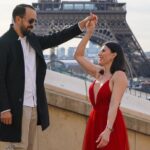
You’ll start near the Seine at 7 rue de la Manutention, then cross Passerelle Debilly for a classic Iron Lady angle. After that, the route keeps rolling along the riverfront—through the area near Quai Branly—to set you up with more tower sightings before you ever reach the forecourt.
At the monument, you’ll get a guided visit up to the second floor or the top (depending on the option you chose), then you can explore the rest at your own pace. One more practical thing: there’s no professional photographer and no hotel transfer, so you’ll be doing the camera work yourself.
In This Review
- Key highlights and what matters in real life
- The 2-hour rhythm: how this tour actually delivers value
- Where to meet on the Seine (and why location affects your whole start)
- Passerelle Debilly to Quai Branly: the photo-first walk that sets you up
- Rue de l’Université and the “one more angle” problem
- Forecourt and Eiffel Tower gardens: where your lower-level shots get better
- Reserved access: what you should expect when you go up
- The guide factor: how to protect your experience
- Free time after the guided portion: how to use it well
- Price and value: is $53 per person worth it?
- Who this tour fits best
- Should you book this Eiffel Tower reserved access tour?
- FAQ
- FAQ
- Where is the meeting point for the tour?
- How long is the tour?
- Is this tour guided?
- What does reserved access mean here?
- Will I go to the second floor or the top?
- Are photo stops included?
- Do I get a professional photographer?
- Is hotel transfer included?
- Is free cancellation available?
Key highlights and what matters in real life

- Reserved, time-stamped Eiffel Tower tickets to reduce uncertainty at entry
- Photo stops before you go inside, so you’re not stuck taking pictures only after lines
- Walk through the Eiffel Tower district with a guide who knows where to stand
- Guided time from higher floors where viewpoints and orientation get explained
- Free time after your guide portion to move at your own speed
- English live guide in a compact 2-hour format
The 2-hour rhythm: how this tour actually delivers value
This is built like a tight photo-and-access plan. You spend the first part outside, walking short distances and hitting multiple viewpoint moments around the Eiffel Tower area. Then you switch gears: you go to your reserved time slot, and you use the guided portion where the “what am I looking at?” questions matter most.
That structure is the value. If you show up and only rely on whatever view you stumble into, you can still have a great time—but you’ll waste time figuring things out. Here, you get someone steering you toward effective angles early, and helping you interpret the tower’s viewpoints from above.
The time commitment is also realistic. Two hours isn’t enough to “do everything” at the Eiffel Tower, but it’s plenty to get the big photo moments, get up with reserved access, and then decide what you want to linger on afterward.
You can also read our reviews of more photography tours in Paris



Where to meet on the Seine (and why location affects your whole start)

Your meeting point is 7 rue de la Manutention, in front of the stairs. That’s not a random detail. Meeting in the right place keeps the first leg smooth, especially because the tour starts with a walk that quickly gets you to the Seine crossings.
Plan to arrive early enough to look around without stress. In at least some cases, guides can be late or hard to coordinate by phone once groups spread out. If you’re early, you can calmly identify your group and get started before you lose momentum.
Tip: bring your confirmation info and keep your phone charged. With a time-stamped experience like this, small delays at the start can snowball into an awkward wait later.
Passerelle Debilly to Quai Branly: the photo-first walk that sets you up
The tour begins by crossing Passerelle Debilly, a small bridge over the Seine. This matters because bridges are where you often get a “different” angle—framed sightlines instead of the straight-on view most people default to.
Next you head toward the Quai Branly area and cross Rue de l’Université. This is a real advantage for your photos. Rue de l’Université runs parallel to the Seine and has notable buildings along it, which means you can frame the Eiffel Tower while the background looks intentional, not like a wall of crowds.
Here’s the practical takeaway: you’re not just walking. You’re repositioning. The guide is using the city’s geometry—river bends, street lines, and building edges—to help you compose pictures before you reach the forecourt.
Rue de l’Université and the “one more angle” problem
A lot of Eiffel Tower tours stop after one or two shots and call it done. This one keeps moving to a second viewing setup along Rue de l’Université.
Why you’ll care: when you get to the monument area, you’ll usually face denser foot traffic. The more good angles you collect before that, the less you’ll feel trapped waiting for the right moment later.
Also, a word about expectations. You are doing several photo stops in a short window. If you love long pauses and slow photography, two hours will feel quick. But if you like efficient sightseeing with a “we’ll stop here, stand there” approach, this part of the tour is a strong match.
Forecourt and Eiffel Tower gardens: where your lower-level shots get better
After your street-and-bridge photo segment, you’ll reach the Eiffel Tower forecourt. Then you’ll take a few photos in the Eiffel Tower gardens before heading up.
Those gardens are more than decoration for this experience. Lower-level shots can look flatter if you’re only capturing from the main entry area. Here, the garden moment is meant to give you something a bit more natural and less chaotic than a sidewalk corner.
One consideration: this portion is brief. You’re taking photos, then moving fast toward your reserved access. If your priority is slow wandering and lots of garden time, you’ll likely want to leave extra time for the tower later on your own.






Reserved access: what you should expect when you go up
The heart of the value is the ticket setup. You get time-stamped Eiffel Tower tickets with reserved access, and your guide gets you to the monument quickly after the photo portion.
Depending on your option, you’ll go to either the second floor or the top for a guided tour. From those higher viewpoints, the guide explains the monument’s history and helps you interpret the views you can see from above.
That “interpret the viewpoints” piece is where guided time actually pays off. From street level, the Eiffel Tower is dramatic, but it can be hard to understand what you’re seeing. Up high, orientation matters—so having someone point out how to look around saves you from spending the experience guessing.
Possible timing hiccup to know about: in some cases, there can be a mismatch with exact ticket time, which may mean waiting briefly while other groups pass. If that happens, keep your attitude flexible. Reserved access tends to reduce friction, but it doesn’t guarantee zero waiting every time.
The guide factor: how to protect your experience
This is the part that can make the difference between a great trip and a frustrating one.
The tour is designed around a real live guide experience. You should expect the guide to guide—not just drop the group at the tower and disappear. If anything feels off—like you can’t clearly identify the guide, or the interaction is extremely brief—don’t just shrug and hope it improves. Ask questions right away and clarify where your group is supposed to go next.
Also, consider timing. Some experience accounts include delays where the guide showed up close to twenty minutes late, which naturally makes a paid experience feel more expensive for the time you get. My advice is simple: show up early, and treat “late start” as something to manage immediately, not something to endure silently.
Free time after the guided portion: how to use it well
After your guided tour up high, you’re free to visit the rest of the Eiffel Tower at your own pace.
That free time is where you can tailor the experience. If you loved one view direction, you can return to it without asking for permission. If you want to take pictures again at a different angle, you can do that without rushing through someone else’s schedule.
But don’t treat it like free time with unlimited patience. Your ticket plan is tied to a time slot, and the tower can get crowded. Use your guided time to learn where to look, then use your independent time to practice looking.
If you’re choosing a time-of-day, there’s a smart clue from real experiences: later in the day can mean smoother elevator flow and fewer crowds. If your schedule allows it, that’s often a good bet.
Price and value: is $53 per person worth it?
At $53 per person for a 2-hour experience, you’re paying for three things:
1) reserved, time-stamped access
2) a guided walk with multiple photo stops
3) guided time up high to interpret viewpoints
If you only want to buy an Eiffel Tower ticket and take your own photos, you can likely do it for less. But you’ll lose the structured photo route and the explanation component that helps you turn “cool view” into “I know what I’m seeing.”
For me, this tour is worth it if:
- you care about photography angles and want the stops planned for you
- you’d rather not spend your time testing locations on the fly
- you want a guided orientation from the higher floors
It’s less worth it if:
- you prefer long, unstructured wandering without time pressure
- you’re traveling with a flexible group and don’t mind doing Eiffel logistics yourself
- you’re hoping for a professional photographer (you won’t get one)
Who this tour fits best
This experience fits best for travelers who want the Eiffel Tower, but don’t want to treat the day like a scavenger hunt. It’s also a good match if you want an English live guide and a clear, time-limited plan that still gives you freedom afterward.
It’s less ideal if you’re the kind of person who wants everything slow and detailed the entire time. The tour moves quickly between viewpoints, and the guided portion is meant to be efficient.
Should you book this Eiffel Tower reserved access tour?
I’d book it if you want photo stops plus reserved entry and you’ll actually use the guided help up high. It’s a practical way to get the Eiffel Tower experience without wasting your limited time.
I’d think twice if you’re extremely sensitive to delays or you expect a very personal, always-on guide for the full two hours. Keep your expectations realistic: it’s a compact tour with a guided segment and then independent exploration. If you show up early, verify your guide at the start, and plan to be flexible about minor timing shifts, you’ll be far more likely to feel you got your money’s worth.
FAQ
FAQ
Where is the meeting point for the tour?
You meet at 7 rue de la Manutention, in front of the stairs.
How long is the tour?
The tour lasts about 2 hours.
Is this tour guided?
Yes, it includes a live tour guide in English.
What does reserved access mean here?
You receive time-stamped Eiffel Tower tickets with reserved access, so entry is scheduled rather than purely walk-up.
Will I go to the second floor or the top?
That depends on the option you choose. The guided tour goes to the second floor or the top.
Are photo stops included?
Yes. There are several photo stops during the walk before you reach the monument.
Do I get a professional photographer?
No. A professional photographer is not included.
Is hotel transfer included?
No. Transfer from your hotel is not included.
Is free cancellation available?
Yes. You can cancel up to 24 hours in advance for a full refund.