REVIEW · PARIS
Discover the Marais (:) An Outdoor Detective Adventure
Book on GetYourGuide →Operated by From Paris with Fun · Bookable on GetYourGuide
The best thing about this Marais walk is that it gives you a reason to look closely. Instead of simply following a guide from one sight to the next, you use a booklet to solve clues at churches, squares, mansions, and street corners. I like the mix of open-air sightseeing and escape-game puzzles, and I like that the route covers several sides of the Marais, from Place des Vosges to Rue des Rosiers and the district’s gay quarter.
The main caution is that this is not a formal, expert-led history tour. The guide has researched the riddles and local stories, but the activity is built around play rather than a lecture. Some puzzles can be tricky, and children under eight may need adult help with the roadbook. If you want a detailed architectural talk, choose a traditional walking tour instead.
In This Review
- Key points at a glance
- Why this Marais game works better than a standard walk
- Starting at Saint-Paul Saint-Louis Church
- Place des Vosges and the Marais mansions
- Rue des Rosiers and the Jewish quarter
- The Marais gay district and the final clue
- How difficult are the riddles?
- Timing, group pace, and practical comfort
- Is $35 a fair price?
- Who should book this Marais adventure?
- Should you book Discover the Marais?
- FAQ
- Where does the Marais detective walk begin?
- Where does the tour finish?
- How long does the activity last?
- Is the tour suitable for children?
- What languages are available?
- What should I bring, and what is not allowed?
Key points at a glance
- A detective game across the Marais: Follow clues from Saint-Paul Saint-Louis Church to the Georges Pompidou Museum.
- A booklet you actually use: Each roadbook includes historical notes, cultural information, and riddles to solve at major sights.
- A route with real variety: See Place des Vosges, 17th-century private mansions, the Jewish quarter, and the Marais gay district.
- A small-group pace: The walk takes about two to two and a half hours, with the group moving at the slowest team’s speed.
- Best for curious families and puzzle fans: Children eight and older can usually take part on their own, while younger children need help reading.
- A guide who helps without taking over: Marion is available to explain clues, share local tips, and keep the investigation moving.
Why this Marais game works better than a standard walk
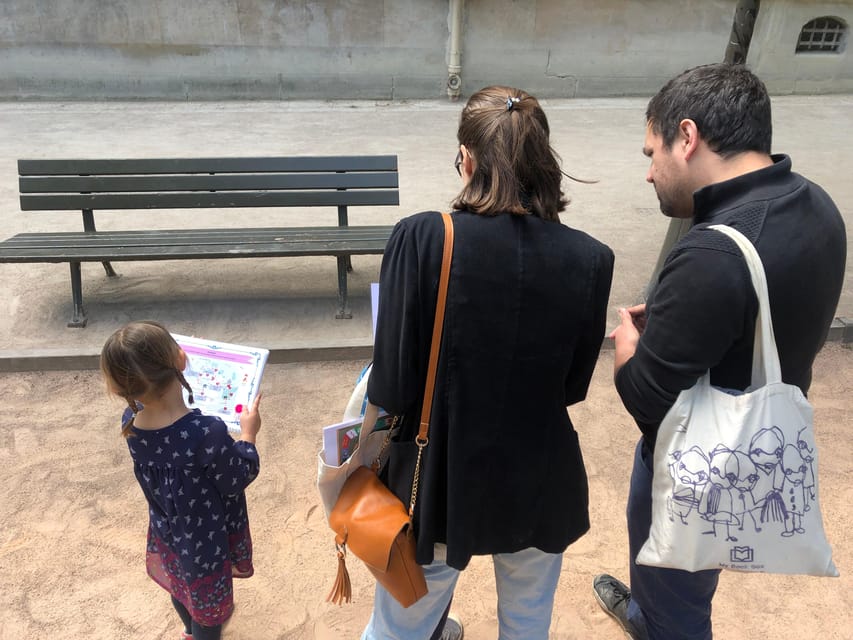
The Marais is one of Paris’s easiest districts to enjoy on foot, but it can also feel like a collection of disconnected sights if you do not know what you are looking at. This activity gives the neighborhood a simple storyline: you are investigating a mystery while moving through the streets.
That format changes your attention. You may pause at a monument to solve a riddle, scan a facade for a detail, or compare an architectural feature with a clue in your booklet. The guide still provides background and anecdotes, but the group is not expected to stand silently while one person talks.
I especially like this setup for families and friends who lose interest during a conventional two-hour walk. The booklet gives everyone a job. One person may read the historical note, another may search for the answer, and a third may keep an eye on the route.
The activity is also flexible in spirit. You can listen closely to the guide, focus on the puzzle, or do a bit of both. That matters in a district as busy as the Marais, where stopping for a long talk on every corner can make a short walk feel slow.
Still, keep your expectations in check. The guides are not presented as professional historians, and the tour’s main purpose is discovery through play. You will learn useful stories and facts, but this is not the best choice if you want a fully researched architectural survey or a chronological account of Paris.
You can also read our reviews of more tours and experiences in Paris.



Starting at Saint-Paul Saint-Louis Church
The investigation begins near Métro Saint-Paul, at Paroisse Saint-Paul Saint-Louis, 97 Rue Saint-Antoine. The church provides a strong opening point because it is easy to recognize and places you directly on the edge of the Marais.
Your first puzzle starts here. That is a smart choice for the game because the group can learn how the roadbook works before the route becomes more complicated. You will receive the basic idea of looking, reading, and connecting a clue to the place in front of you.
The church is also useful as a first lesson in the area’s character. You are not beginning in an anonymous meeting spot, but at a major local landmark with a clear visual identity. The first five minutes are listed as a short sightseeing stop, so do not expect an extended church visit or a long interior presentation.
Meeting details can vary with the option you book, so check your confirmation carefully. Comfortable shoes are important. You will cover the route on foot, and the fun depends on being able to stop, think, and move without worrying about sore feet.
Place des Vosges and the Marais mansions
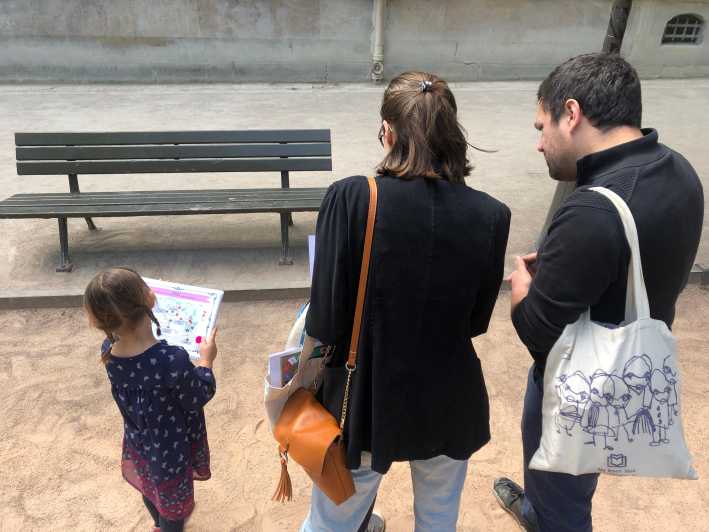
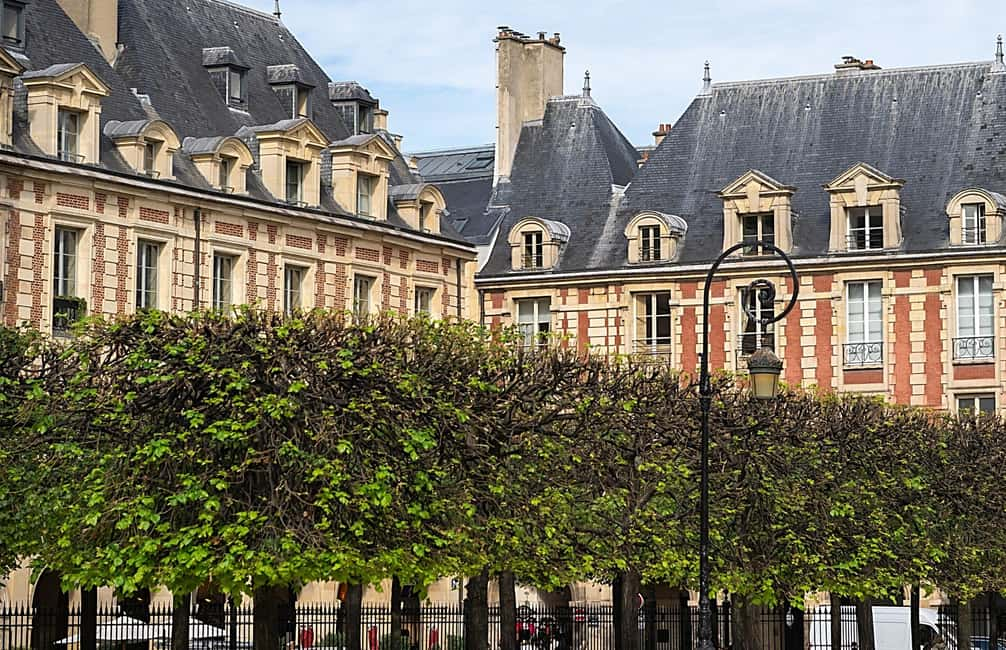
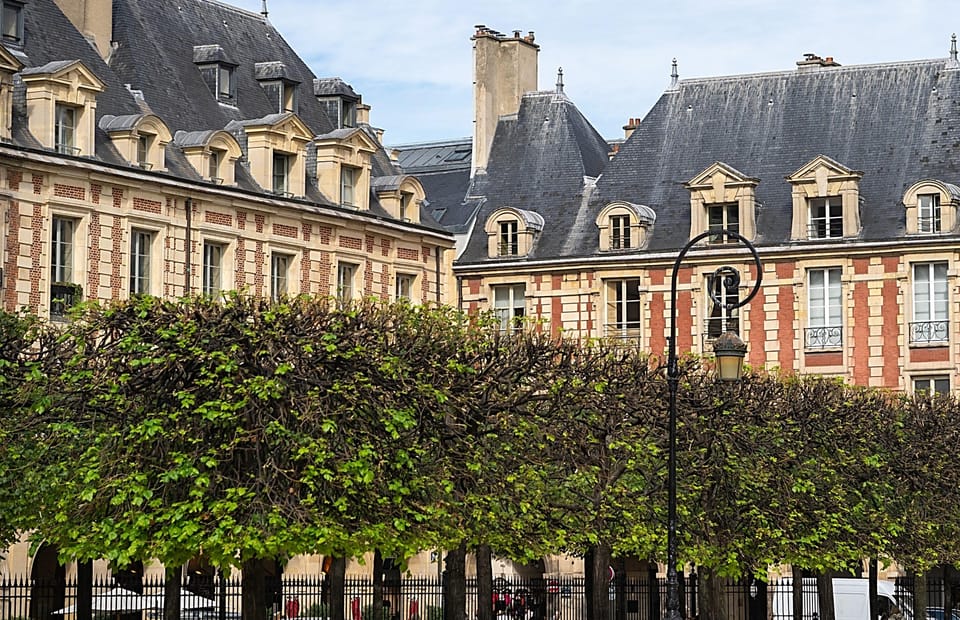
From Saint-Paul, the route continues to Place des Vosges, one of the Marais’s most recognizable squares. You pass through the square for about 20 minutes, giving the puzzle enough time to work without turning the stop into a long formal lesson.
Place des Vosges is a good setting for a detective activity because its regular layout and surrounding buildings offer plenty to inspect. The square also helps you understand why the Marais feels different from many other parts of Paris. Its streets and facades carry a more intimate, historic character than the grand avenues of central Paris.
The walk then brings you past the Carnavalet Museum. You spend roughly 15 minutes in this part of the route. The museum is devoted to the history of Paris, so its setting fits the tour’s booklet-based approach particularly well, even though the activity does not include a museum visit.
After that, you continue through the district’s 17th-century private mansions. These former townhouses are one of the Marais’s defining features. They are easy to miss if you are rushing from one major attraction to another, which is exactly why a clue-based walk can be useful here.
The itinerary describes one additional stop as a lesser-known place, with about 20 minutes of walking. Since the exact location is not specified, you should treat this section as part of the route rather than a promised named attraction. The value comes from watching for details between the headline sights.
Rue des Rosiers and the Jewish quarter
The route next reaches Rue des Rosiers, in the historic Jewish quarter. You have about 20 minutes here for walking, passing through, and free time.
This is one of the most useful parts of the activity because it shows how the Marais is shaped by different communities and styles. The neighborhood is not only about old stone mansions and elegant squares. It also has a strong Jewish identity, reflected in its streets, shops, food culture, and long connection to Parisian life.
The booklet keeps the stop active. Rather than treating Rue des Rosiers as a quick photo point, the investigation asks you to connect what you see with the information and riddles in front of you. The guide can help when a clue proves stubborn.
Give yourself a little patience here. The group may stop in the street to compare answers, and the area can be lively. That is part of the experience, but it means this is not a fast, straight-line walk. The pace is shaped by the investigation and by the people in your group.
You should also separate the activity from any food plan. Snacks and drinks are not included. Rue des Rosiers is a natural place to eat on your own before or after the walk, but this tour does not promise a tasting or a food stop.
The Marais gay district and the final clue
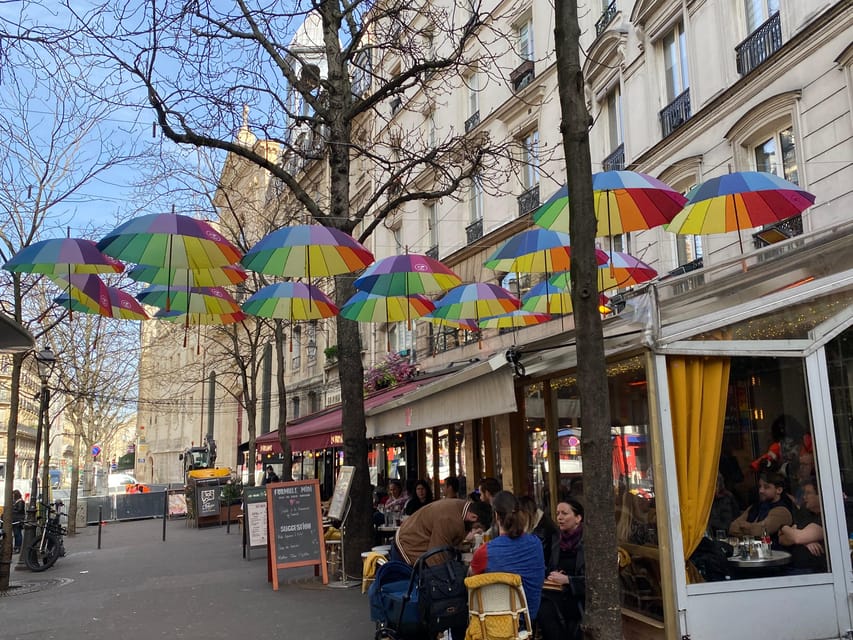
The investigation then moves toward the Marais gay district. This adds another layer to the neighborhood’s identity and keeps the route from becoming a simple parade of historic buildings.
The Marais is known for the way different communities, eras, and styles sit close together. The walk’s route reflects that mix. You begin with a church, continue through royal-era planning and private mansions, pass through the Jewish quarter, and then reach a part of the district known for its LGBTQ+ life.
The material provided does not list a separate named monument or a specific activity in this section, so the focus is on walking and solving rather than on one major stop. That can be a plus if you want to see how the area feels as a whole. It can be a drawback if you prefer every part of a tour to have a clearly announced attraction.
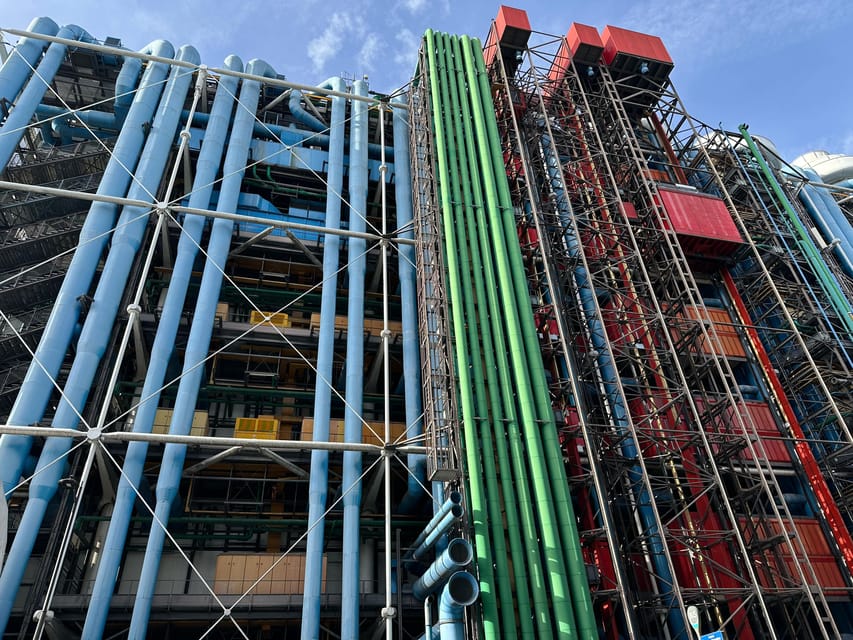
Your investigation ends at the Georges Pompidou Museum, with the final drop-off at Fontaine Stravinsky, 1 Place Igor Stravinsky. The fountain gives the route a clear endpoint near the museum and provides a natural place to compare answers and finish the mystery.
The tour is not an admission visit to the Pompidou Museum. You are seeing the area around the final point, not receiving museum entry. If you want to go inside, plan that separately and check the museum’s opening arrangements for your date.





How difficult are the riddles?
The puzzles are not merely decoration. They are the engine of the experience. The roadbook includes a cultural and historical page, followed by a riddle connected to the monument or place you are visiting.
One useful feature is that the historical material remains in the booklet even if the guide gets caught up in the game. That gives you something to read and keeps the activity from depending entirely on a spoken explanation.
The clues can be genuinely challenging. That is good news for puzzle lovers, but it may frustrate anyone expecting a simple scavenger hunt with obvious answers. The guide is available to offer help, so you are not abandoned when your team gets stuck.
I would treat the puzzles as a shared activity rather than a test. You do not need to be the fastest person in the group. Look carefully, read the cultural notes, and ask for a nudge when needed. The point is to make the street itself part of the puzzle.
Private group bookings can also be arranged as a competition for team-building events. The available information does not specify the exact scoring system or group limits, so ask for those details if you are booking for colleagues or a large party.
Timing, group pace, and practical comfort
The advertised duration is two hours, but the walk can take between two and two and a half hours. The difference depends on how quickly the group walks and how long it takes to solve the riddles.
That extra half hour matters if you have a tight reservation afterward. I would leave a comfortable gap before lunch, a museum entry, or a train. The activity is designed to adjust to the slowest team, especially when families with children are present.
The small-group format should make the game easier to manage. A large crowd would make it harder for everyone to read the booklet, examine a detail, or hear the guide’s hints. The exact group size is not stated, so do not assume a private experience unless you book the entire tour.
The tour is listed as wheelchair accessible, but the route takes place outdoors on city streets and includes stops in busy public areas. If you use a wheelchair, confirm the meeting option and route details before booking, especially if street conditions are important to your comfort.
Leave large luggage at your accommodation. Bags and luggage are not allowed on the activity. Bring comfortable shoes, a curious attitude, and enough time to stop without rushing.
French and English tours are available. The guide can assist in either language, but because the game depends on reading clues and understanding short historical notes, choose the language in which you are most comfortable solving word-based puzzles.
Is $35 a fair price?
At $35 per person, the experience costs more than simply walking through the Marais with a guidebook or map. You are paying for the guide, the prepared game booklets, the route design, and the structure that turns sightseeing into a group activity.
The value is strongest when you would otherwise book both a walking tour and a family-friendly activity. Here, the two functions are combined. You get a guided route through important parts of the Marais, plus a set of puzzles that gives the walk a clear purpose.
The price is less attractive if you mainly want a serious history talk. Since the guides are open about not being professional tour guides, you should compare this with the right alternatives. A specialist Marais historian may offer more depth on architecture, politics, religion, or social history, though without the detective format.
I would also consider the age of your group. Children eight and older are the intended audience because they need to read the roadbook. Children under six do not pay, but younger children may need adults to solve the clues for them. For a family with several children who enjoy puzzles, the price may feel worthwhile. For toddlers who will not take part, it may be better to choose a simpler walk.
The tour has free cancellation up to 24 hours before the start, and you can reserve now and pay later. Those policies make it easier to fit into a changing Paris schedule, though you should still check the exact conditions attached to your booking.
Who should book this Marais adventure?
I would choose this activity for you if you enjoy finding details, working with other people, and learning while moving. It suits families with reading-age children, couples who want something more active than a lecture, and friends who like a little friendly competition.
It is also a good first activity in the Marais. The route introduces major sights and several communities without asking you to spend a full day inside one museum. You finish with a better sense of how the district’s parts connect.
You may prefer another tour if you want a slow, highly detailed account of Parisian history. You should also think twice if you dislike riddles, need a tightly timed schedule, or would rather explore at your own speed. A self-guided version is available on request, but you would lose some of the guide’s help and local conversation.
Marion’s role is part guide, part game master. She can explain the clues, add local information, and offer Paris tips when you ask. That personal help is especially useful when a puzzle is difficult or when your group wants more context than the booklet provides.
Should you book Discover the Marais?
Book it if you want the Marais to feel like a place you are actively reading rather than simply passing through. The route covers Saint-Paul Saint-Louis Church, Place des Vosges, the Carnavalet Museum area, private mansions, Rue des Rosiers, the Jewish quarter, the Marais gay district, and the Pompidou Museum area in about two hours.
The strongest reason to go is the format. You get a small-group walking tour with a roadbook, historical notes, and puzzles that can hold a child’s attention while giving adults a reason to inspect the streets more carefully.
Skip it if your priority is expert-level history or a completely relaxed stroll. For everyone else, especially families and puzzle fans, $35 buys a lively, focused introduction to one of Paris’s most varied districts.
FAQ
Where does the Marais detective walk begin?
The main meeting point is Paroisse Saint-Paul Saint-Louis at 97 Rue Saint-Antoine, near Métro Saint-Paul. The meeting point may vary depending on the option booked, so check your booking details.
Where does the tour finish?
The investigation finishes near the Georges Pompidou Museum. The listed drop-off point is Fontaine Stravinsky at 1 Place Igor Stravinsky.
How long does the activity last?
The advertised duration is two hours. It can take between two and two and a half hours, depending on walking time and how long the group needs to solve the riddles.
Is the tour suitable for children?
The activity is recommended for children aged eight and older because they need to read the roadbook. Younger children may join, but adults will need to help them. Children under six do not pay.
What languages are available?
The live tour guide is available in French and English.
What should I bring, and what is not allowed?
Bring comfortable shoes. Luggage and large bags are not allowed. Snacks and drinks are not included, so plan those separately.