REVIEW · PARIS
Discover Paris’ Marché d’Aligre: 2-Hour Market Tour
Book on GetYourGuide →Operated by Meeting the French · Bookable on GetYourGuide
Marché d’Aligre gives you a close look at everyday Paris, not just the postcard version. In two hours, you move through the covered Marché Couvert Beauvau, the outdoor street market, and a nearby flea market, with tastings that can include bakery goods, cheese, bread, coffee, and other specialties.
I like the small groups of eight or fewer, which make it easier to ask questions and keep up in tight market aisles. I also like the chance to try food while learning how Parisians shop, rather than simply walking past stalls and taking photographs. The main caution is value: at $129 per person, this is a fairly costly two-hour outing, and the flea market may feel modest if you expect a large antiques fair.
In This Review
- Key points at a glance
- Why Marché d’Aligre feels different from a standard Paris market
- Meeting at rue du Faubourg Saint-Antoine
- Inside Marché Couvert Beauvau
- Outdoor stalls and North African food culture
- Specialty tastings that make the visit worthwhile
- The flea market: worth seeing, but keep expectations modest
- What the small group changes
- Is $129 a good value for two hours?
- Who should book Marché d’Aligre?
- Final call on this Marché d’Aligre tour
- FAQ
- How long does the Marché d’Aligre tour last?
- What languages are available?
- How large is the group?
- Where is the meeting point?
- Which metro station is closest?
- Are food and drink included?
- Is transportation included?
Key points at a glance
- Three market areas in two hours: See the covered Marché Couvert Beauvau, the outdoor street market, and the connecting flea market.
- Food is part of the tour: Tastings of specialty foods and mint tea at a corner café are included.
- A rare covered market setting: Learn about Beauvau as one of the last 20 surviving examples of Paris covered passages.
- Useful local guidance: Past guides Christine and Caroline received especially warm praise for practical Paris tips and lively explanations.
- Small-group format: No more than eight people means a more personal visit than a large walking tour.
- Easy metro access: Meet at 100, rue du Faubourg Saint-Antoine, near Ledru-Rollin station, exit 2.
Why Marché d’Aligre feels different from a standard Paris market
Paris has famous food markets, but Marché d’Aligre has a less polished, more mixed character. The market sits along rue du Faubourg Saint-Antoine, beside shops and businesses with strong North African connections. That combination gives the area a broader food culture than a market focused only on traditional French produce.
You will see a covered market and an outdoor street market in the same visit. That matters because the two spaces have different moods. The covered section gives you a more permanent setting, while the outdoor stalls make the market feel tied to the street and the surrounding neighborhood.
I like this kind of place for a first or second day in Paris. You are not only looking at old buildings. You are watching people buy ingredients, comparing food stalls, and learning how the market fits into local life. The experience is less about ticking off a landmark and more about understanding a neighborhood through what is sold there.
The tour also gives you context for the covered market itself. Marché Couvert Beauvau is described as one of the last 20 remaining examples of les passages couverts, the covered passages once found behind Paris’s grand boulevards. That detail adds a useful architectural and historical layer to what might otherwise be a simple food stop.
You can also read our reviews of more shopping tours in Paris


Meeting at rue du Faubourg Saint-Antoine
The meeting point is 100, rue du Faubourg Saint-Antoine, in the 12th arrondissement. The closest metro stop is Ledru-Rollin, using exit 2. Transportation is not included, so you need to reach the meeting point on your own.
This is a practical location for anyone staying in central Paris or arriving by metro. Give yourself enough time to find the correct exit and meeting point. Paris metro exits can put you on different sides of a busy street, and starting a short tour late can mean missing the guide’s introduction.
The tour lasts two hours, so the opening explanation matters. A good guide can quickly show you how the market is arranged and explain what you are seeing before the visit becomes a series of disconnected food samples. Past guides named Christine and Caroline were praised for doing just that. Christine was also appreciated for giving additional Paris suggestions that visitors could use after the tour.
Guide assignments can change, so you should not book on the assumption that one particular person will lead your visit. The confirmed guide speaks English or French, and the small group limit gives you a better chance to communicate clearly than you would have on a large group walk.
Inside Marché Couvert Beauvau
The covered Marché Couvert Beauvau is the architectural anchor of the visit. Its importance is not only the food inside. It is also part of the remaining network of covered Paris market and passage spaces that once offered shelter behind the city’s major boulevards.
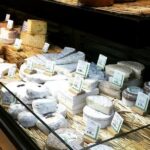
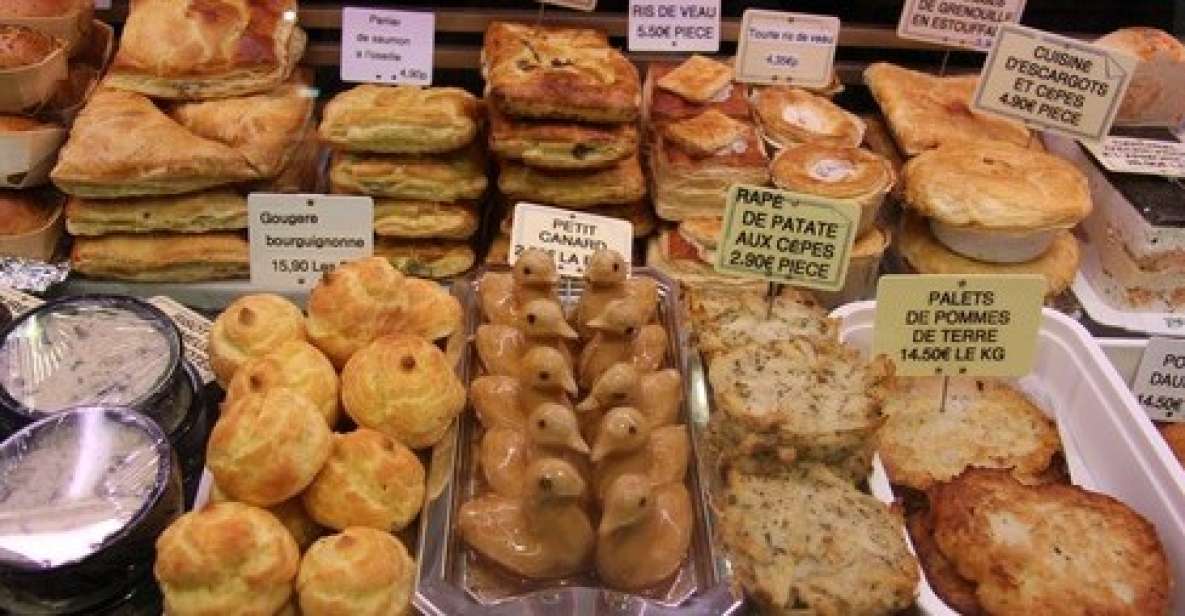
Inside, you can expect rows of food stalls and specialty products. The listed examples include tapenades, spices, flowers, and coffee. These are the kinds of products that reward explanation. A guide can tell you how a tapenade is used, point out unfamiliar spices, and help you notice the difference between a stall aimed at daily shopping and one aimed at specialty purchases.
I find a covered market most useful when you are willing to slow down. Look at labels, watch the stallholders, and ask why one product costs more than another. You may not leave with a full understanding of French food culture after two hours, but you will have a better sense of how ingredients are presented and sold.
The enclosed setting also makes this part of the tour less dependent on weather than the outdoor market. Still, the aisles may feel close when the market is busy. A group of eight is helpful here, but you should expect to walk at a steady pace and pause where space allows.
Outdoor stalls and North African food culture
The outdoor street market gives the tour its strongest neighborhood feel. It borders shops with North African connections, adding another layer to the food and shopping culture around Marché d’Aligre. This is one reason the market is more interesting than a narrowly French food display.
The outdoor section lets you compare the temporary street stalls with the permanent covered vendors. You may find different produce, prepared foods, spices, or household items, although the exact mix can change. The important point is that the tour puts these spaces together, so you can see how several food traditions share one Paris neighborhood.
A guide is especially useful here because a market can be visually noisy. Without context, you might notice color and movement but miss the practical details. The guide can help explain what is fresh, what is seasonal, and how local shoppers use the goods. The available information does not promise a fixed list of tastings, so think of the food stops as a guided introduction rather than a guaranteed menu.
Past food examples are appealing and specific. One visit included a warm croissant from a bakery, coffee, a baguette with truffle cheese, and a conversation with a butcher. Those examples come from an earlier visit, so you should not assume every tour includes the same products. They do show the kind of experience the tour aims to provide: small tastes tied to places where people actually buy food.
Specialty tastings that make the visit worthwhile
The tastings are included in the price, along with mint tea at a corner café. That inclusion helps explain the cost, though it does not automatically make $129 a bargain. You are paying for the guide’s time, the small group, the interpretation, and the food, not simply admission to a market.
I would treat the tastings as a way to learn, not as a substitute for lunch. The tour is only two hours, and the portions are intended to let you sample several things. If you arrive hungry, you may still want a proper meal afterward.
The food stops can also make the tour more memorable. A baguette or croissant tastes different when you know where it came from and how it fits into the market. One especially praised visit included truffle cheese, described as a Christmas-season cheese. That kind of detail is useful because it connects a taste to French custom rather than presenting it as a random sample.
Mint tea at a corner café adds a pause to the walking. It also fits the surrounding North African influence. You get a chance to sit, ask questions, and compare what you have seen so far. The café stop is included, but transportation and other purchases are not, so bring a payment method if you want to buy extra food or flea-market items.
A few more Paris tours and experiences worth a look



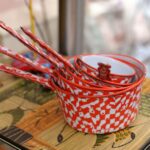

The flea market: worth seeing, but keep expectations modest
The market visit ends or continues with the connecting flea market, where you can look for unusual and unexpected finds. This is a fun change of pace after the food stalls. Instead of buying ingredients, you are looking at objects whose value may be practical, decorative, or simply strange.
I would keep the flea market in proportion. It is part of the route, but it is not presented as a major antiques destination. One four-star assessment found it interesting but not exceptional. If flea markets are your main reason for booking, you may want a more specialized Paris option.
For most people, the flea market works best as a short final stop. You can browse without pressure, ask the guide about objects that catch your eye, and enjoy the contrast with the organized food stalls. The appeal is the possibility of a curious find, not a promise that you will discover a valuable antique.
This section also helps the tour avoid feeling like a long tasting session. You shift from food and architecture to local commerce and secondhand goods. That variety is useful in a compact two-hour experience.
What the small group changes
The maximum group size is eight. That is one of the strongest practical features of the tour. Markets are not easy places for large groups. Wide sidewalks give way to narrow aisles, voices compete with street noise, and it is easy to lose the guide while stopping to inspect a stall.
With eight people or fewer, you should have a better chance to hear explanations and ask about products. The guide can also keep the group moving without turning the experience into a rigid march. Past comments singled out the feeling of walking around Paris with a friend, which is exactly the advantage a small group can offer when the guide is personable.
Do not confuse small-group size with a private tour. You will still share the guide and tastings with other people. The format is intimate, but the experience remains a scheduled group activity.
The two-hour length is sensible for a market introduction. It gives you enough time to see the main sections without exhausting the food theme. If you want to shop, sit for a long café break, or make multiple purchases, you will need extra time before or after the tour.
Is $129 a good value for two hours?
At $129 per person, this is not a cheap way to visit Marché d’Aligre. You can walk through a market independently for far less, especially if your main goal is browsing. The price makes more sense if you want explanations in English or French, included tastings, mint tea, and a guide who can connect the market to Parisian life.
The cost is easier to justify for a first visit to Paris, particularly if you are unsure how to approach a French market. The guide can help you understand what you are seeing and may suggest other places to visit afterward. Christine was specifically praised for sharing useful Paris tips beyond the market itself.
The value is weaker for experienced market shoppers who prefer to wander alone. It is also weaker if you are mainly interested in a large flea market. The food and covered-market sections are the heart of the experience, while the flea market is an extra.
You can reduce the financial risk by using the reserve-now, pay-later option and the free cancellation policy. You may cancel up to 24 hours in advance for a full refund. Those policies do not change the price, but they help if your Paris schedule is still shifting.
Who should book Marché d’Aligre?
I would recommend this tour to you if you want a short, guided introduction to everyday Paris and enjoy tasting food along the way. It suits first-time visitors, couples, solo visitors, and anyone who likes markets but wants help understanding what is on display.
It is also a good choice if you want an experience with more local texture than a major monument tour. You will not get grand views or famous artworks. You will get stalls, ingredients, neighborhood connections, and a glimpse of how shopping works in this corner of Paris.
Families may appreciate the food samples and changing scenery, but the tour still requires walking through market spaces at a group pace. If you have limited time, the two-hour format fits neatly into a morning or afternoon.
I would skip it if you want a full meal, a dedicated cooking class, or a large flea-market hunt. I would also think twice if $129 feels high for a short activity and you are comfortable exploring markets without help.
Final call on this Marché d’Aligre tour
Book it if your priority is food, neighborhood atmosphere, and useful local explanation in a small group. The covered Beauvau market, outdoor stalls, specialty tastings, and mint tea give the visit a clear shape, while past guides such as Christine and Caroline show how much the guide can affect the experience.
Skip it if you only want to browse independently or if the flea market is your main goal. The food-market side is the stronger part, and the price is best justified when you value the guide’s insight and the included tastings. For the right person, this is a friendly way to spend two hours seeing Paris as a place where people shop, eat, and meet, not only as a collection of monuments.
FAQ
How long does the Marché d’Aligre tour last?
The tour lasts two hours.
What languages are available?
The live guide speaks English or French.
How large is the group?
The tour is limited to a maximum of eight participants.
Where is the meeting point?
Meet at 100, rue du Faubourg Saint-Antoine, 75012 Paris.
Which metro station is closest?
The nearest station is Ledru-Rollin, using exit 2.
Are food and drink included?
Yes. Tastings of specialty foods and mint tea at a corner café are included.
Is transportation included?
No. You are responsible for getting to and from the meeting point.