REVIEW · PARIS
Devour Paris Food Tour : Montmartre Like a Local
Book on Viator →Operated by Devour France Food Tours · Bookable on Viator
Montmartre tastes better with a guide. I love the 10 food tastings that move through pastry, savory dishes, cheese, and lunch, and I like the Sacré-Cœur viewpoint that rewards the walking. One possible drawback: you’re climbing the hill, so wear shoes you trust on steep streets and stairs.
This is an English-led, small-group walk (max 10 people) designed to show you what locals actually do for food in Montmartre, not just what’s on post-it museum lists. Plan on about 3 hours 30 minutes, starting at 10:30 am near metro Blanche and ending in the same neighborhood near Rue Muller—no hotel pickup required.
In This Review
- Key things to know before you go
- Montmartre Food Tour: Why 10:30 am Works So Well
- Small-Group Format: The Real Reason You’ll Enjoy This Tour
- Stop-by-Stop Tastings: What You’ll Eat (and Why It Fits Montmartre)
- Stop 1: Boris – Boulangerie (Croissant, breakfast energy)
- Stop 2: Maison Arnaud Larher Caulaincourt (Chocolate + pastry)
- Stop 3: L’Étoile de Montmartre (Aveyron savory pancake / herb-style bite)
- Stop 4: Sacré-Cœur & the hill walk (views + history walk, no ticket fee)
- Stop 5: Fromagerie Flocon (Seasonal cheese board)
- Stop 6: Les naturistes – la cave (Two glasses of natural wine)
- Stop 7: L’Été en Pente Douce (Quiche lunch for the finish)
- Sacré-Cœur Portion: Views, Not a Grind
- Price and Value: Does $119.77 Make Sense?
- Pacing, Shoes, and Real Montmartre Energy
- Food and Diet Options: What’s Possible (and What Might Not)
- Getting the Most Out of It: How to Leave with More Than Full
- Should You Book This Montmartre Food Tour?
- FAQ
- How long is the Devour Paris Food Tour: Montmartre Like a Local?
- How much does the tour cost?
- How many food tastings are included?
- Are natural wines included?
- Is the tour in English?
- How big is the group?
- Where do I meet the tour?
- Where does the tour end?
- Is the tour mostly walking?
- What dietary restrictions can the tour accommodate?
Key things to know before you go
- Small group pace (max 10) keeps the guide’s attention on you, not a crowd.
- 10 tastings plus 2 natural wines mean you can treat this as your food-heavy plan for the morning/early lunch.
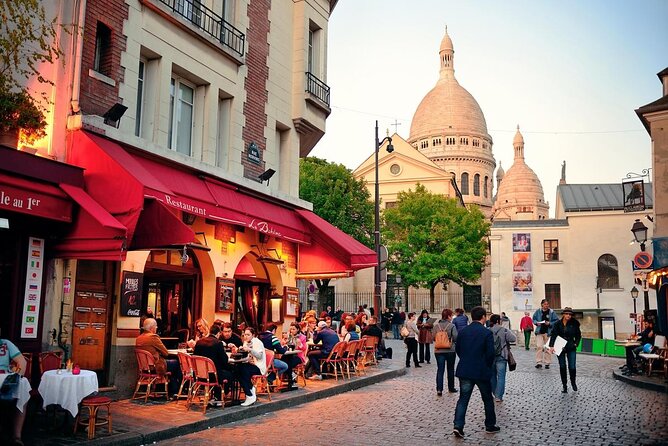
- Montmartre back-street routing helps you see more of the neighborhood than the main photo lanes.
- A mix of classic and regional French specialties shows how French food changes from one neighborhood to another.
- Diet options exist, but replacements may vary by stop, and vegan isn’t recommended.
Montmartre Food Tour: Why 10:30 am Works So Well
Montmartre is fun in the morning because the neighborhood hasn’t fully turned into a postcard factory yet. Starting at 10:30 am also lines up nicely with a classic French rhythm: start with pastry and coffee-adjacent bites, then shift into savory, cheese, and a proper meal feeling by the end.
This also helps with value. You’re not just paying for a walk with a few snacks. The day is built around frequent taste stops, including bread-and-butter French breakfast style at a boulangerie, then a sweet stop, then savory, then cheese, then wine, then a warm lunch item.
And yes, you’ll do some walking uphill. Even with a guided route, Montmartre’s slope is part of the deal. If you want the neighborhood without the climb, this is the one part I’d reconsider.
You can also read our reviews of more food & drink experiences in Paris



Small-Group Format: The Real Reason You’ll Enjoy This Tour
Capped at 10 people, this tour feels like you’re out with a friend who knows the neighborhood, not stuck in a line with a megaphone. The guide can slow down for questions, explain what to look for at each place, and steer you toward practical recommendations you can use after the tour.
The guide experience seems to be a big part of why people rate this so highly. Names that come up again and again include Sam, Davide, Arturo, Vanessa, Juan, Thom, Arnold, Emily, and Ingrid. Across guides, the common thread is engagement: stories that connect the food to Montmartre, and advice on how to find good places once you’re back on your own.
One more practical perk: when something changes at a venue, a small group format makes it easier for the guide to pivot without turning your afternoon into chaos.
Stop-by-Stop Tastings: What You’ll Eat (and Why It Fits Montmartre)
This tour is designed like a mini tour of French eating—from buttery pastry to regional savory plates to a cheese stop that actually teaches you what you’re tasting.
Stop 1: Boris – Boulangerie (Croissant, breakfast energy)
You start on the north side of the hill at Boris – Boulangerie, a traditional spot that’s served the locals for generations. Expect a classic flaky croissant as your first bite.
Why this stop matters: if you only eat a croissant once in Paris, start here. A good boulangerie croissant isn’t just tasty—it teaches you what French breakfast pastry is supposed to taste like: layered, buttery, not overly sweet.
Stop 2: Maison Arnaud Larher Caulaincourt (Chocolate + pastry)
Next is Maison Arnaud Larher Caulaincourt, a family-run patisserie with deep Montmartre roots. You’ll sample a selection of their signature chocolates plus a pastry.
This is the tour’s sweet checkpoint. It also helps you understand how Montmartre pastry can lean both traditional and “small craft” at the same time—less factory mass-market, more specialty.
A few more Paris tours and experiences worth a look






Stop 3: L’Étoile de Montmartre (Aveyron savory pancake / herb-style bite)
Then you head to L’Étoile de Montmartre, a bistro-style stop inspired by the taverns you’d find in historic Montmartre. Here you try a classic savory pancake from Aveyron, tied to the region of three passionate owners.
If you’ve heard Montmartre mentioned only for art and views, this is where the tour corrects that. It shows you how far French food travels even when you stay in one neighborhood. Aveyron-style herb flavors (often linked with farçous-style herbs) are a perfect contrast to all that pastry sweetness.
Stop 4: Sacré-Cœur & the hill walk (views + history walk, no ticket fee)
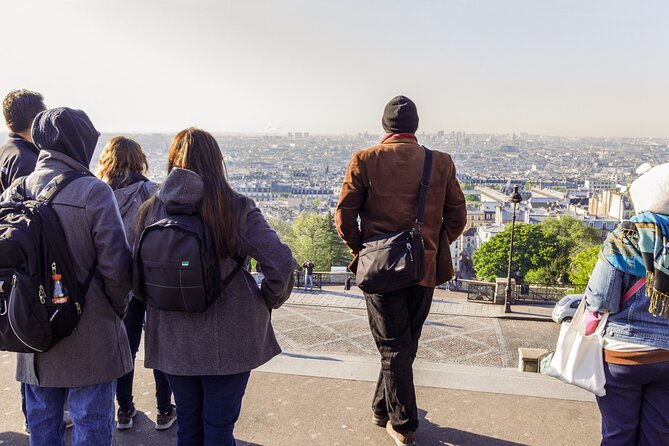
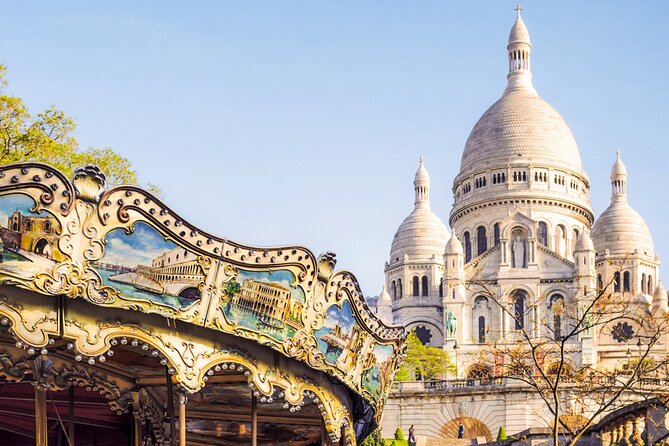
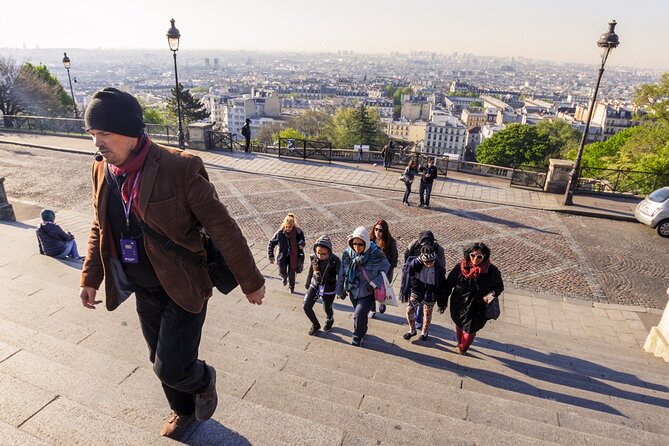
From food into scenery: the tour includes a guided walk up toward Sacré-Cœur. You’ll get pointed out sights along the way (including Moulin Rouge) and learn how the area has been shaped over time.
When you reach the top, you get one of the biggest rewards in Paris: a wide view over the city.
This stop is labeled as admission free in the tour info, so your money is staying focused on the walking guide and the experience, not extra gate fees.
A quick reality check: a good chunk of your “difficulty” level comes from this segment. It’s listed as a moderate walking tour, but Montmartre’s grade is real.
Stop 5: Fromagerie Flocon (Seasonal cheese board)
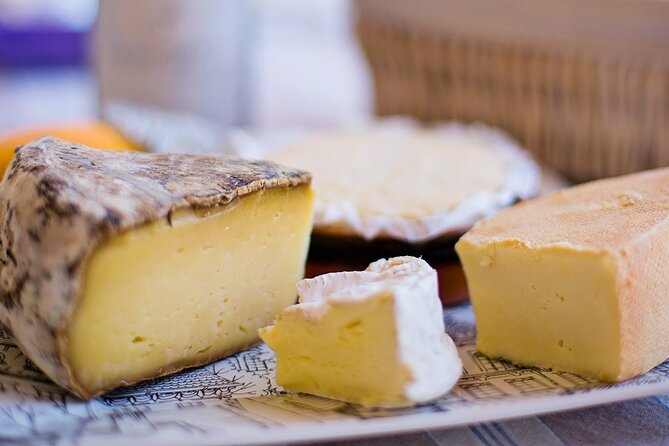
Next up is cheese at Fromagerie Flocon (anciennement Fromagerie Racines). You’ll sample a cheeseboard with a variety of seasonal cheeses plus the shop’s favorites.
This is one of the most educational stops, because cheese in France is not one flavor—it’s a whole range of textures and styles. The tour gives you a chance to taste multiple types in a way that’s easier than trying to build your own board on the fly.
Stop 6: Les naturistes – la cave (Two glasses of natural wine)
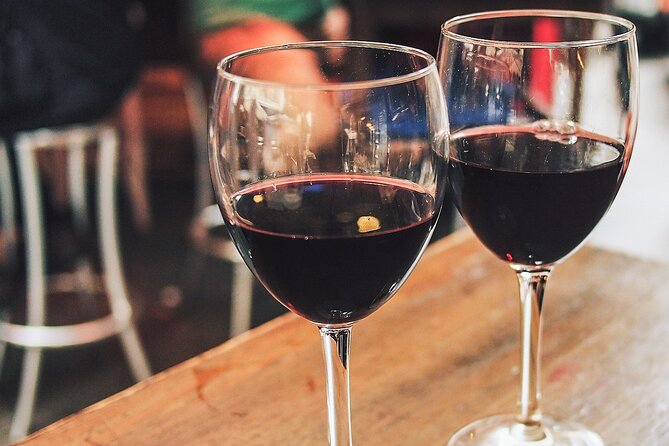
Now the tour shifts into wine at Les naturistes – la cave, where you sip two glasses of natural wine. It’s run by owner Vincent, and the wines are handpicked from small producers in the French countryside.
This is a smart pairing after the cheese. Natural wine can be intense (in a good way), and cheese helps you understand what kind of acidity, funk, or fruit-forward flavor the wine is bringing.
If you’re doing non-alcohol options, the tour notes that there are alternatives available, but replacements may not happen at every stop—so it helps to message them early.
Stop 7: L’Été en Pente Douce (Quiche lunch for the finish)
To wrap it up, you get a warm bistro-style lunch feeling at L’Été en Pente Douce. You’ll eat a quiche with sun vegetables, with the stop lasting long enough to feel like a meal rather than one last bite.
The Aveyron herb bite + quiche combo also works well. You start with pastry, move to savory herbs and regional identity, then finish with a classic French comfort dish.
And based on the tour’s structure, you’ll likely not need a heavy dinner afterward. More than one guide-style highlight in the feedback circles around coming away full.
Sacré-Cœur Portion: Views, Not a Grind
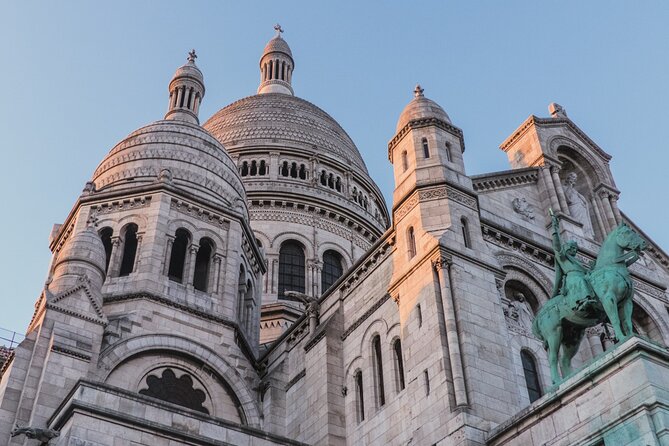
Sacré-Cœur is the moment where Montmartre stops being “just charming” and becomes cinematic. The guide portion here includes both the walk and the explanation, with Moulin Rouge mentioned along the way and a chance to soak in the view once you’re up.
This is valuable for two reasons:
- You get context for why the area looks the way it does, without turning it into a museum day.
- The climb feels more worth it when you know what you’re looking at.
If your goal is only the selfie view, you could do it independently. If your goal is the why behind the hill and the way the neighborhood’s identity ties to food, this guided segment pulls its weight.
Price and Value: Does $119.77 Make Sense?
Let’s do the math in real-world terms.
You’re paying $119.77 per person for:
- 10 tastings (across pastry, chocolate, savory, cheese, and a warm meal item)
- 2 natural wines
- A private group guide experience capped at 10 people
Most of the stops include admission tickets (the tour notes this for multiple tastings), and the experience is built around food consumption rather than a long sightseeing-only walk.
So the value question becomes: can you eat your way through 10 tastings and two wine pours on your own at comparable quality and with comparable guidance? In Montmartre, quality varies fast street to street. Paying for a guide is often cheaper than paying for a string of “this was fine” meals that don’t quite hit.
Is it still worth it if you’re a picky eater? Maybe not as much. The tour includes set tastings, and while most dishes are popular French staples, not every plate will match every palate. If you know you only like a narrow range of foods, you might want to consider a more flexible tour style.
Pacing, Shoes, and Real Montmartre Energy
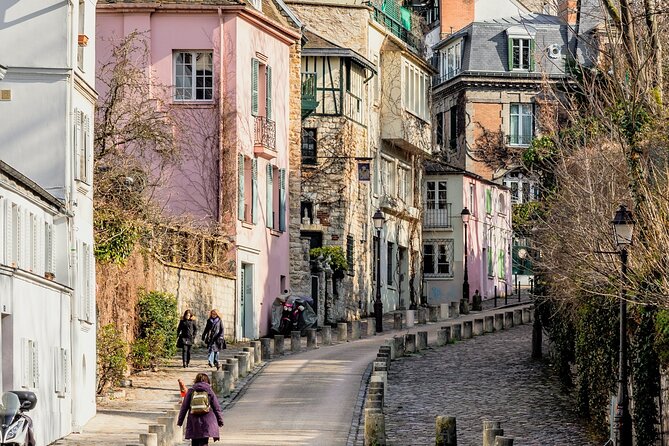
This is a walking tour meant for people able to walk at a moderate pace. But Montmartre comes with an asterisk: it’s steep.
Even when the route is designed to be manageable, you’ll still feel the hill in your calves. Some people with mobility tools found the climb daunting, even though they felt it was worth it. If you use a cane or walker, I’d treat this as a “consider carefully” category and ask the operator what the route adjustments are in your case.
For everyone else, pack simple:
- Wear comfortable shoes with grip
- Bring a light layer if it’s breezy near the basilica area
- Pace yourself on the ascent so the view at the top doesn’t feel like a sprint
Also, there’s no hotel pickup. You’re meeting near 40 Av. Junot, 75018, close to metro Blanche, so arrive a few minutes early so you don’t start stressed.
Food and Diet Options: What’s Possible (and What Might Not)
The tour says it’s adaptable for:
- Vegetarians
- Pescatarians
- Non-alcoholic options
- Pregnant women
- People with dietary restrictions who contact the team before joining
But it also notes two important limitations:
- You may not have a replacement food option at every stop.
- The tour is not recommended for vegans.
So if you have a dietary restriction, don’t assume every tasting can swap smoothly. Send your needs ahead of time and ask how substitutions work for pastry, cheese, and quiche-style stops.
If your restriction is mild (like skipping alcohol or avoiding a specific ingredient), you’re often in better shape. If you’re avoiding most animal products, this likely won’t match.
Getting the Most Out of It: How to Leave with More Than Full
Here’s how you turn this tour into a Montmartre advantage, not just a meal:
- Ask your guide how to spot quality fast. Many guides bring practical “how to choose” advice, not just brand names.
- Take notes on your favorite stop. When you later hunt for the same flavor, you’ll remember the style you liked.
- Treat the cheese and wine stops as a learning moment. Even if you don’t become a sommelier, you’ll learn what you like—especially when cheese meets wine.
- Plan lunch timing around this. The finish includes a hearty quiche stop, so eating another heavy meal right afterward is unnecessary.
- Do the tour earlier in your trip. Multiple guides’ tips are meant to be used again the same day and next day.
And one more thing: because this is a set schedule, you’ll want to start hungry, then hydrate as needed. Natural wine plus walking is a combo that can sneak up on you.
Should You Book This Montmartre Food Tour?
I’d book it if:
- You want a food-first Montmartre plan that takes the guesswork out of where to eat
- You like guided context alongside tastings, especially at places like Fromagerie Flocon and Les naturistes
- You’re comfortable with a steep walking day and want the Sacré-Cœur view experience tied to the climb
I’d think twice if:
- You have trouble walking uphill or on stairs
- You’re vegan (the tour isn’t recommended for it)
- You’re on a tight schedule and can’t handle a fixed run of tastings
My bottom line: for many people, the best part is not one dish, but the rhythm—croissant to chocolate, savory regional herbs to cheese, then natural wine, then warm quiche—wrapped in a small group walk that helps you see Montmartre like someone who lives there.
FAQ
How long is the Devour Paris Food Tour: Montmartre Like a Local?
It runs about 3 hours 30 minutes.
How much does the tour cost?
The price is $119.77 per person.
How many food tastings are included?
The tour includes 10 food tastings.
Are natural wines included?
Yes. You’ll have 2 natural wine tastings (two glasses).
Is the tour in English?
Yes, it’s offered in English.
How big is the group?
The tour is capped at a maximum of 10 people.
Where do I meet the tour?
The start point is 40 Av. Junot, 75018 Paris, near metro Blanche.
Where does the tour end?
It ends on Rue Muller, 75018 Paris.
Is the tour mostly walking?
Yes. It’s a walking tour and you should be able to walk at a moderate pace without difficulty.
What dietary restrictions can the tour accommodate?
The tour is adaptable for vegetarians, pescatarians, non-alcoholic options, and pregnant women. It notes that you may not have a replacement food option at every stop, and it is not recommended for vegans.