REVIEW · MARSEILLE
Découverte du plus vieux quartier de France : Le Panier
Book on GetYourGuide →Operated by South Trip Travel · Bookable on GetYourGuide
Marseille’s oldest streets can be surprisingly easy to enjoy. This tour strings together major sights and smaller, street-level moments in Le Panier, then finishes with big views over the Old Port. I especially like the mix of story and real neighborhood energy, plus the way the guide can adjust the pace and details to your group.
Two things I really like are the photo-friendly stops (hello, Fort Saint-Jean) and the chance to pause for a local bakery tasting instead of treating food as a side quest. One drawback to plan for: it involves about 2.5 hours of walking over uneven streets, so it’s not the best fit if your legs or mobility are limited.
In short, this is a compact, well-paced walk through layers of Marseille—Greek-era beginnings, monastery-turned-culture, and port life—without dragging you through an all-day marathon.
In This Review
- Key Highlights You’ll Feel on This Walk
- Entering Le Panier: Why This Oldest Quarter Matters
- Meeting Point and the Walking Reality (It’s More Than “2 Hours”)
- Old Port and La Canebière: Start Where Marseille Breathes
- Jardin des Vestiges and La Vieille Charité: Ancient Origins Meet Local Use
- Le Panier’s Colorful Alleys: Small Stops, Big Atmosphere
- A Local Bakery Taste: Quick Flavor, No Time Wasted
- Fort Saint-Jean: The View That Makes You Go Quiet
- Old Port Again, But With a Different Lens
- Cathedral La Major and the Napoleonic New Port Finish
- Value and Price: What $53 Buys You (and Why It’s Fair)
- Who This Tour Fits Best (and Who Should Skip It)
- What Kind of Guide Experience You Should Expect
- Should You Book This Le Panier and Old Port Tour?
- FAQ
- How long is the tour, and how much walking is involved?
- Where does the tour start?
- What main sights are included?
- Is there a food stop?
- Do you provide transportation?
- What languages is the live guide available in?
- Is it wheelchair-accessible?
- Can I cancel for a full refund?
Key Highlights You’ll Feel on This Walk

Le Panier on foot through colorful, oldest-district alleys with plenty of stops to take photos.
Fort Saint-Jean viewpoint for panoramic views of the Old Port, islands, and the Mediterranean.
Greek and Roman origins at Jardin des Vestiges, plus La Vieille Charité’s monastery-to-cultural shift.
Bakery time built in so you get a taste of local flavors without planning your own detour.
Guide flexibility with real Q and A time and content tuned to your group’s interests.
Transit included via ticketed public buses for part of the route.
Entering Le Panier: Why This Oldest Quarter Matters

Le Panier is the kind of neighborhood that makes you slow down, even if you usually walk fast. It’s Marseille’s oldest district, and the street plan still feels like a living patchwork of eras. You’re not just looking at landmarks—you’re moving through the city’s memory, block by block.
What I like about this format is that the tour doesn’t treat Le Panier like a backdrop. It connects the street-level color to the wider story of Marseille—its ancient roots and the way the city has kept re-inventing itself around its harbor.
You’ll also notice how Le Panier works for photos. The alleys, corners, and small squares are exactly where you’ll catch Marseille looking textured, not tourist-finished. If you want “real streets” in your camera roll, this is one of the best places on the trip.
You can also read our reviews of more tours and experiences in Marseille.



Meeting Point and the Walking Reality (It’s More Than “2 Hours”)

The tour meets in front of La Samaritaine Café. From there, you’ll start with a quick orientation moment toward the Calanques and Château d’If area, then begin your walk through Le Panier.
The official duration is 2 hours, but there’s a key detail to keep in mind: the route involves about 2.5 hours of walking. That means you should wear shoes you trust on uneven streets, and you should expect a steady walking pace for the day’s time block.
This is also a private group, which tends to make the flow easier. If someone needs an extra minute for photos or questions, the guide can usually work it in—especially since the tour can be tailored as far as possible.
Bottom line: this is a great walking tour, but it’s still a walking tour.
Old Port and La Canebière: Start Where Marseille Breathes

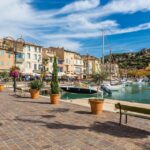
You begin at the Old Port, Marseille’s beating heart for roughly 2,600 years. Even if you’ve seen harbors before, this one has a “you’re entering the city’s working center” feeling. You can almost imagine the footsteps from centuries ago lining the waterfront.
From there, the route includes La Canebière, Marseille’s most famous avenue. This is where the city’s grandeur shows up—cafés, history, and the sense of a place built around movement. It’s a good warm-up stretch because it helps you understand how Marseille looks when you’re not yet deep in the older side streets.
If you’re the type who likes context before you go exploring, this opening section is for you. You’ll get your bearings fast, so Le Panier later feels less random and more like a logical next chapter.
Jardin des Vestiges and La Vieille Charité: Ancient Origins Meet Local Use

Next up, you’ll step back toward ancient Massalia at the Jardin des Vestiges, where Greek and Roman ruins point to Marseille’s beginnings. You don’t need a degree in archaeology to appreciate this stop. The value here is how the tour uses a small space to explain a big origin story.
Then you’ll move toward La Vieille Charité, a former monastery turned cultural site. This is one of those places where Marseille’s layers show up in a very human way: sacred architecture repurposed for modern life.
I like that the tour doesn’t just name the sites. It keeps connecting what you see to why it matters—how Marseille survived, transformed, and kept reusing its most meaningful buildings.
If you’re someone who enjoys architecture and “why this building is here” questions, this is where your attention will naturally sharpen.
Le Panier’s Colorful Alleys: Small Stops, Big Atmosphere

This is the heart of the experience: Le Panier itself. You’ll wander the oldest quarter through narrow streets that feel like they still belong to locals, not just postcards. The pace is slow enough to look up, not only ahead at the next corner.
One of the most praised parts of the tour experience is how the guide works in small stops—local shops, smaller streets, and places you’d probably miss if you were just following a checklist. That’s where the “feel” of the neighborhood comes through.
For photos, think beyond the obvious. The best angles often come from turning a corner, stepping half a pace into a doorway line, and letting the alley curve do the work. The tour’s timing gives you chances to pause at photogenic points without turning it into a frantic scavenger hunt.
If you want Marseille to feel like a living neighborhood instead of an open-air museum, this section delivers.






A Local Bakery Taste: Quick Flavor, No Time Wasted

Food is built into the walk, with a stop at a local bakery for a regional food tasting (around 15 minutes). This is smart. You’re not committing to a long lunch plan, and you still get a real bite of the area.
I like this approach because it respects the tour’s schedule. You can taste something local, ask a couple of questions, then keep moving while your appetite matches the day.
Since lunch isn’t included, you’re still free to decide what you want afterward. But this tasting helps you get oriented to Marseille flavors right away, which makes the rest of your meal choices feel more intentional later.
Fort Saint-Jean: The View That Makes You Go Quiet

After Le Panier, the tour moves toward Fort Saint-Jean. You’ll climb this historic fortress and then enjoy panoramic views over the Old Port, the islands, and the bright line of the Mediterranean.
This is the kind of stop that changes how the whole city “clicks.” From up here, the harbor geometry makes sense, the water looks layered, and Marseille stops feeling like a grid of streets. It becomes a city built around sea access and sightlines.
The tour includes time for a photo stop plus sightseeing (about 40 minutes here). That’s enough time to settle into the view without feeling rushed back down the hill.
If you care about photos, go into this stop expecting the best shots to come from turning slowly and letting the sun angle change the water reflections. The fortress gives you multiple angles, not just one.
Old Port Again, But With a Different Lens

You’ll return to the Old Port for about 30 minutes. Doing the waterfront after Fort Saint-Jean gives you a new perspective.
From the top, you understand the layout. From street level, you understand the vibe: movement, boats, the working rhythm of a real port—not just a scenery backdrop.
This is also a good moment to do quick re-check photos. If you missed a shot earlier, you can refine it here while the atmosphere is fresh.
Cathedral La Major and the Napoleonic New Port Finish
The tour ends at 1 Pl. de la Major, near Cathedral La Major. You’ll see Marseille’s largest cathedral, a striking blend of Romanesque and Byzantine styles with a sea-facing presence.
This part matters because it ties your walk to the port’s modern face. Marseille isn’t frozen in time, and the route makes that clear by moving from ancient and medieval layers into the 19th-century port story.
The highlights also include the Napoleonic New Port, tied to 19th-century docks and today’s active port district. This is a fitting finish: you finish where history keeps functioning.
Value and Price: What $53 Buys You (and Why It’s Fair)
The price is about $53 per person for a 2-hour tour (with around 2.5 hours of walking). On paper, it looks like a short window. In practice, you’re getting a tight route that covers multiple major sites plus a neighborhood segment.
What makes the value feel solid is that the package includes:
- Tour leading and sightseeing
- Ticketed public bus transport for part of the route
- A guide who can adjust the content to your group
Also, food isn’t included, so you’re not paying for a lunch you might not even want. Instead, you get a tasting to sample the local flavor and then you decide how to handle the rest of your day.
If you’ve only got a limited chunk of time in Marseille, this is the kind of price-to-time ratio that makes sense.
Who This Tour Fits Best (and Who Should Skip It)
This works best for you if you like walking tours that balance big-picture context with street-level detail. If you want both famous stops and the kind of small detours that feel local, you’ll appreciate the way the route is designed.
It also makes sense if you care about photo opportunities. The fortress viewpoint and the Le Panier streets give you variety without stretching the day.
One clear limitation: it’s not suitable for wheelchair users. With uneven streets and a long walking commitment, that’s a practical reality to respect.
What Kind of Guide Experience You Should Expect
A big reason people rate this tour highly is the guide experience itself. Guides like Florent and Félix are described as passionate about Marseille, with the ability to answer questions and make the stories feel relevant.
I like that the tour doesn’t stay locked into a script. The content can be adapted depending on your profile, so you might get crisp historical points when you want them, plus quieter anecdotes when you’d rather hear how daily life shaped the city.
That flexibility is exactly what makes a short tour feel satisfying. You don’t just watch and move on—you understand what you’re seeing and why it matters to Marseille today.
Should You Book This Le Panier and Old Port Tour?
You should book if you want an efficient way to experience Marseille’s layers: Old Port energy, ancient origins, Monastery-to-culture reuse, and Le Panier’s alley mood—all with real photo spots and a quick bakery tasting.
Skip it if you can’t handle around 2.5 hours of walking on uneven terrain. In that case, you’ll get more comfort and less stress from a shorter, flatter alternative.
If your goal is to leave Marseille with stronger street-level understanding (not just a list of sites), this is a smart choice.
FAQ
How long is the tour, and how much walking is involved?
The duration is listed as 2 hours, but the route involves about 2.5 hours of walking.
Where does the tour start?
The meeting point is in front of La Samaritaine Café.
What main sights are included?
You’ll visit Le Panier, La Vieille Charité, Fort Saint-Jean, the Old Port of Marseille, and you’ll finish near Cathedral La Major (1 Pl. de la Major).
Is there a food stop?
Yes. There’s a local bakery stop for a regional food tasting lasting about 15 minutes. Lunch is not included.
Do you provide transportation?
The tour includes ticket public buses, with part of the route covered by transport.
What languages is the live guide available in?
The live tour guide is available in English, French, and Spanish.
Is it wheelchair-accessible?
No, the tour is not suitable for wheelchair users.
Can I cancel for a full refund?
You can cancel up to 24 hours in advance for a full refund.