REVIEW · STRASBOURG
Cruise on the RHINE and visit of Strasbourg by private boat
Book on Viator →Operated by Alsace Bateau Privatisé · Bookable on Viator
Strasbourg from a boat feels instantly smarter. This private outing mixes famous sights with on-water views, plus a long break at Kehl and Offendorf for real life on the river. I especially like that it’s small-group private (up to 9) and that the route is built around both Strasbourg’s canals and Rhine engineering. One thing to keep in mind: this day depends on good weather, so you’ll want to pack for cool breezes and be flexible.
You get a guided, story-led cruise through the Ill and Rhine zones, hitting the cathedral area, the Petite France quarter, and the European institutions districts. In the best reviews, guides like Cédric and Nathalie are praised for linking architecture to the bigger history, not just reciting facts. The main drawback is simple: you can’t turn this into a full, slow-walk museum day—this is a moving sightseeing day, with only short time at a few key spots.
In This Review
- Key Highlights at a Glance
- Why This Strasbourg-and-Rhine Private Boat Day Works
- Price and Logistics: What You’re Really Paying For
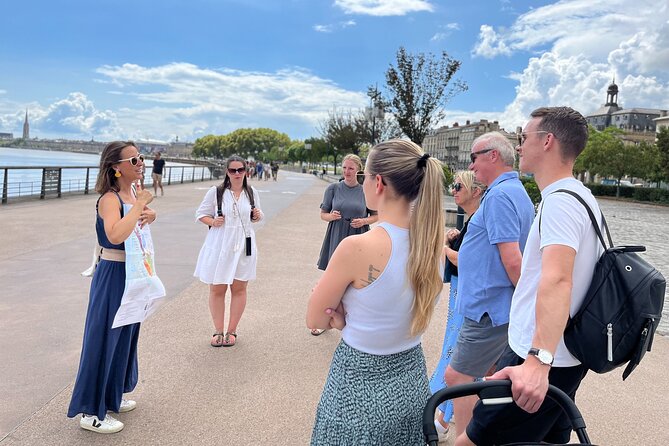
- Meet at Quai des Belges, Then Let the River Set the Tempo
- The Route: Cathedral Views, Petite France Canals, and European Institutions
- La Petite France and the Notre-Dame Cathedral Pass (brief, but memorable)
- City center Kehl (the lunch break you’ll appreciate)
- Back to Petite France: half-timbered charm and a dam-terrace view
- Pont Couverts (covered bridges and fortified towers)
- European Parliament and human-rights landmarks (civic Strasbourg from the water)
- Museum frontage and historic churches—without turning the day into museum hopping
- Jardin des Deux Rives (a calm crossing moment)
- Tour Elithis Danube and the eco-district vibe
- Passage309 and a look at river engineering (40 minutes)
- Palais Rohan (palatial power)
- Musée Historique and Musée Alsacien (history and identity, from the outside)
- Barrage Vauban and the Grande Ecluse terrace (the views make sense)
- Parc de l’Orangerie bypass (scenery break)
- Port of Offendorf and Musée de la Batellerie area (1 hour)
- Offendorf (3 hours of water time on your schedule)
- Captains and Guides: Why the Human Touch Matters Here
- What the Boat Day Feels Like in Real Life (Comfort, Pace, and Views)
- Practical Tips Before You Go
- Who Should Book This Private Boat Tour
- Should You Book It?
- FAQ
- How long is the cruise and Strasbourg private boat experience?
- What is the group size for this private tour?
- Is pickup available, or do I need to start at Quai des Belges?
- Is the tour offered in English?
- Where is the meeting point?
- What happens if the weather is poor?
Key Highlights at a Glance

- Private small-boat pace with a group limited to up to 9
- Story-driven guidance from captains/guides like Cédric and Nathalie
- Photo-rich stops such as Petite France, Ponts Couverts, and Barrage Vauban
- European institutions in view (European Parliament and human-rights sites)
- Rhine works you can actually see including Passage309 and France’s biggest river lock
- Time to slow down later at Offendorf with swimming and water activities
Why This Strasbourg-and-Rhine Private Boat Day Works

Strasbourg is one of those cities where the river is basically the main character. You’ll see it from the water instead of trying to piece it together street by street. And because this is a private tour, the pace is more personal than the big-group, schedule-stacked options.
I also like the mix of “pretty” and “why it’s here.” Petite France and the covered bridges are postcard-perfect, but you also get engineering and civic landmarks too: European institutions, locks, and the Vauban dam area. That balance is what makes the day feel more like a guided experience than a checklist.
Price-wise, it’s sold per group (up to 9), not per person. At $2,526.15 total, that can be good value if you’re traveling as a family or a small set of friends who want a private day without paying for individual tickets and separate transfers.
You can also read our reviews of more boat tours in Strasbourg

Price and Logistics: What You’re Really Paying For
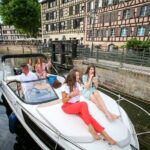
The headline number is $2,526.15 per group, for about 8 hours. When you do the math at the maximum group size, that’s roughly $280 per person—before you even think about meals you might buy on your own.
Where the value shows up is in how much you cover without the usual friction:
- You get on-water transit between major districts.
- You get short timed looks at key areas (think 10–40 minutes), rather than long, tiring loops.
- You get a captain/guide who explains what you’re seeing and connects the dots.
You should also understand the “private boat” format. This isn’t a giant cruise ship with coaches to ferry you back to the city center. One review made the contrast clear: this is a small local boat day around Strasbourg, so expect close access and a city-centered route.
Meet at Quai des Belges, Then Let the River Set the Tempo

Your starting point is 98 Quai des Belges, 67000 Strasbourg, right where the river life is visible. The experience offers pickup if you coordinate your departure in advance, so if you’re arriving by train or staying slightly outside the center, that flexibility matters.
You’ll also use a mobile ticket, and the tour is offered in English. Service animals are allowed, and the tour is set up so that most travelers can participate—though you should still plan for time on and around docks and uneven waterfront paths.
Then the day starts to click: instead of “Where do I go next?” you’re just watching the city slide by, with stops used as photo breaks and orientation points.
The Route: Cathedral Views, Petite France Canals, and European Institutions

Here’s the spine of the itinerary—how it feels as a real day rather than a list.
La Petite France and the Notre-Dame Cathedral Pass (brief, but memorable)
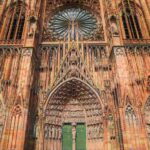
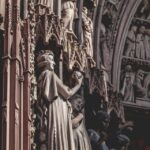
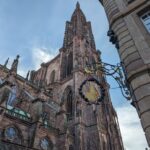
You begin with a passage in front of the Notre-Dame de Strasbourg cathedral area. Even when you only get about a minute, seeing a Gothic landmark from the water changes the scale fast. You also get a quick sense of how the cathedral zone anchors the city.
You can also read our reviews of more private tours in Strasbourg
City center Kehl (the lunch break you’ll appreciate)
Next comes Kehl, where you can have lunch at a restaurant at the port, with about 1 hour 30 minutes there. If you want a more relaxed meal break (instead of rushing between sights), this is one of the smartest parts of the day. It gives you time to eat without turning the rest of the cruise into a stress sprint.
Back to Petite France: half-timbered charm and a dam-terrace view
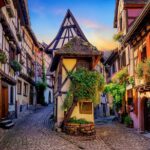
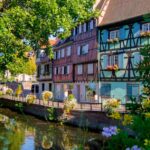
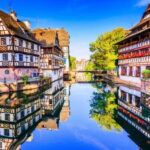
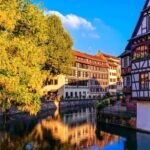
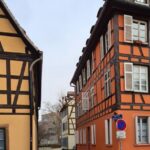
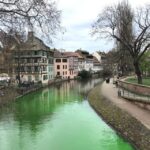
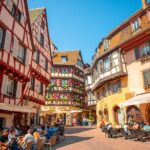
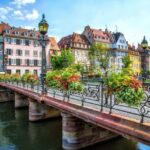
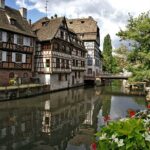
You get another La Petite France stop for about 20 minutes. This is the quarter known for cobbled streets, canals, and preserved half-timbered houses like the Maison des Tanneurs (built in 1572). The time window is short, but it’s enough for a few good photos and to feel the neighborhood energy.
You’ll also get a terrace viewpoint connected to the Vauban dam / lock bridge area for panoramic city angles. That’s an underrated payoff: you see how the city’s old defenses and today’s canals share the same geography.
Pont Couverts (covered bridges and fortified towers)
Then comes Pont Couverts, with about 10 minutes. These covered bridges span the Ill through Petite France, and the fortified towers along the bridges are historic monuments. Even if you’re not a hardcore architecture person, covered bridges make a city feel more “staged” for walking—so the water view helps you understand the layout you’ll later recognize on foot.
European Parliament and human-rights landmarks (civic Strasbourg from the water)
After the older quarter, the vibe shifts to Europe’s modern centers. You’ll have a chance to see the European Parliament, the European Court of Human Rights, and the Council of Europe, plus additional passes such as the Cour Européenne des Droits de l’Homme palace.
These stops are brief (a few minutes), so think of them as orientation and sightline moments. The value is that the boat puts you in the right place to understand how Strasbourg balances old canals with modern international institutions.
Museum frontage and historic churches—without turning the day into museum hopping
You’ll pass by Musée d’Art Moderne et Contemporain for about a minute, then glide past Eglise Saint-Paul, a former Protestant garrison church built at the end of the 19th century. You also pass more European-zone civic architecture near the human-rights sites.
This is a good setup if you want cultural grounding but not a schedule packed with ticketed museum time. You’ll see key exteriors and then move on.
Jardin des Deux Rives (a calm crossing moment)
Next, you pass by Le Jardin des Deux Rives, with about 5 minutes. It’s a gentle pause that helps the day feel less like only “running from landmark to landmark.” From the water, riverside gardens also give you breathing room for photos without pushing your legs to work harder.
Tour Elithis Danube and the eco-district vibe
You’ll also pass the Elithis Danube Tower, described as a positive energy housing tower in the Danube eco-district. It’s another quick glimpse, but it helps the day stay balanced: you’re not just viewing heritage; you’re seeing Strasbourg’s current approach to housing and sustainability too.
Passage309 and a look at river engineering (40 minutes)
One of the most interesting parts is Passage309, tied to fish pass work in Gambsheim and a passage through the largest river lock in France. You get about 40 minutes, which is long enough to actually watch the operational rhythm and understand why this kind of infrastructure matters.
This is one of those segments that turns a “pretty river cruise” into something more thoughtful. If you like how cities function—water management, navigation, and wildlife passage—this stop will feel like a payoff.
Palais Rohan (palatial power)
You’ll pass Palais Rohan, which served as the residence of the four cardinals of Rohan and later became the town hall plus imperial and royal palace. With only about 2 minutes, it’s more of a visual spotlight than a deep visit, but it’s an effective moment for understanding Strasbourg’s power structure over time.
Musée Historique and Musée Alsacien (history and identity, from the outside)
You’ll pass Musée Historique de la Ville de Strasbourg and the Musée Alsacien as well. The historical museum focuses on the city’s past from the Middle Ages through the creation of European institutions, while the Alsatian museum reflects regional identity. Since these are short passes, you’re not meant to “do museums” here—just catch the location and context as you move.
Barrage Vauban and the Grande Ecluse terrace (the views make sense)
Near the covered bridges, you’ll get to see Barrage Vauban / Grande Ecluse, built around 1690. The big point here isn’t just the name—it’s the idea that this structure could flood the southern front of the city if needed. You also get access to a panoramic terrace view with about 10 minutes, which ties together how the city’s canals, defenses, and river movement fit into one plan.
Parc de l’Orangerie bypass (scenery break)
You’ll bypass the Parc de l’Orangerie on three sides for about 15 minutes. It’s not presented as an in-depth park stop, but the timing functions like a palate cleanser between sightseeing zones.
Port of Offendorf and Musée de la Batellerie area (1 hour)
Then you reach the port of Offendorf area. You’ll pass Musée de la Batellerie, get about 1 hour around the port zone, and the itinerary notes options like a restaurant and water activities. This is the start of the day’s “slow down” phase.
Offendorf (3 hours of water time on your schedule)
Finally, you get about 3 hours in Offendorf with swimming, paddle, restaurant options, and just plain time to hang out. This is where the day becomes yours. You’re no longer stuck watching every minute of the clock. If the weather is pleasant, Offendorf can be the highlight because it turns the river view into actual river recreation.
One review even highlighted the vibe as calm and relaxing, with a change of scenery away from the rush of the streets.
Captains and Guides: Why the Human Touch Matters Here

This is the kind of tour where the guide makes the difference between seeing buildings and understanding them.
In the praise you’ll see names like Nathalie and Cédric. The strongest feedback points to guides who:
- explain architecture details you might otherwise walk right past,
- connect history, culture, and design into a single story,
- answer questions with more depth than the usual tour patter.
The captain side is part of the charm too. Cédric, in particular, gets credit for making people comfortable on a cozy small boat—even with less-than-perfect weather. One family mentioned being seated at the front when conditions allowed, plus chilled drinks and a charcuterie board experience. That’s not something to demand, but it gives you a sense of the warm, hosted style you can expect from this operator when conditions cooperate.
What the Boat Day Feels Like in Real Life (Comfort, Pace, and Views)

You’re not on a huge floating hotel. You’re on a small boat, so the experience feels closer and more personal. That also means the timing matters: some stops are quick passes, so you’ll want to keep your phone/camera ready and not over-plan long photo sessions every time.
The pace is built around short windows at key photo points and longer time where it matters—especially for food and the Offendorf break. If you like your sightseeing with room to breathe, that structure works well.
Also, note the tone of the reviews: humor shows up. When your guide adds lightness while explaining serious topics (like locks, civic buildings, and European institutions), the day feels easier to remember later.
Practical Tips Before You Go

A few practical things will make this smoother:
- Dress for river wind. Even on a mild day, you can feel cooler on open water.
- Plan for short viewing windows. Have your essentials ready so you can move quickly at brief stops like cathedral pass, museums frontage, and European district sights.
- Bring swim-suitable items if you can. Offendorf is a major water-time chunk, with swimming and paddle options called out.
- Expect weather to steer the day. This experience requires good weather. If conditions don’t cooperate, the operator should switch to a different date or offer a refund.
Who Should Book This Private Boat Tour

This is a great fit if:
- you want a private day with a small group (up to 9),
- you’d rather see Strasbourg by water than doing nonstop walking,
- you like the mix of heritage + modern Europe + river engineering,
- you want a long break to eat and relax at ports like Kehl and Offendorf.
It’s also a good choice for families and mixed-age groups because part of the day is inherently easy—watching the city go by—then you can choose how much you do during the longer port windows.
Should You Book It?
I’d book this if you’re aiming for a day that feels local: Strasbourg’s canals, Petite France’s half-timber charm, covered bridges, and then a real shift into Rhine and river infrastructure. The private format is a strong value play when you’re traveling with a group of friends or family who can share the cost.
Skip it only if you specifically need long museum interiors and lots of time on foot between sights. This is a river-led itinerary with short stops, not a slow walking tour where you linger for hours in each place.
If you want a guided, on-water day that connects what you see to why it matters, this one is worth your time—and with guides like Cédric and Nathalie, the explanations tend to land.
FAQ
How long is the cruise and Strasbourg private boat experience?
It’s listed at about 8 hours.
What is the group size for this private tour?
It’s a private experience for your group, with up to 9 people per group.
Is pickup available, or do I need to start at Quai des Belges?
Pickup is offered. The provider notes that everything is possible—just call to organize your departure.
Is the tour offered in English?
Yes, it’s offered in English.
Where is the meeting point?
The start point is 98 Quai des Belges, 67000 Strasbourg, France, and the tour ends back at the meeting point.
What happens if the weather is poor?
This experience requires good weather. If it’s canceled due to poor weather, you’ll be offered a different date or a full refund.