REVIEW · PARIS
Champagne Private Wine Day Trip with Lunch and Wine Tastings
Book on Viator →Operated by My Winedays - Wine Passport · Bookable on Viator
Champagne is better with a driver and a plan. This full-day private trip turns Paris-time into eight tastings across two Champagne houses, with breakfast croissant and lunch paired with bubbles. I also love how the day mixes big-name stops (like Reims) with smaller, hands-on visits where the people behind the wine can actually explain what’s happening in the glass. One drawback to consider: the schedule starts early, and the cave cellars can feel cold and damp—bring a jacket.
You’re not bouncing around with a pile of strangers. You get private door-to-door transfers, a guided tasting route, and the option to adjust winery visits. Depending on timing, you may also see sights like Reims Cathedral and Hautvillers, including Dom Pérignon’s tomb—just know that timing can change what’s possible in a single day.
In This Review
- Key points to know before you go
- Why this private Champagne day trip from Paris works so well
- Meeting at 7:30: easy pickup, real time saved
- Reims stop: getting the big picture before you taste
- Champagne-Ardenne scenery breaks: small pause, useful reset
- Epernay: lunch with Champagne pairing that anchors the day
- Visiting Hautvillers and Dom Pérignon’s tomb (when timing allows)
- The second producer stop: family-run energy vs cooperative structure
- Eight tastings: how to taste smarter without getting overwhelmed
- Cold caves and smart packing: the comfort factor
- Price and value: what you’re paying for at $1,100+ per person
- Who should book this tour (and who should skip it)
- Should you book this Champagne private wine day trip?
- FAQ
- FAQ
- How long is the Champagne private day trip from Paris?
- What time does the tour start?
- Do you get hotel pickup and drop-off?
- What’s included for food and wine?
- How many Champagne houses do you visit?
- Do you always see Reims Cathedral or Hautvillers and Dom Pérignon’s tomb?
- Can you change which wineries you visit?
- Is there an age requirement for drinking?
- What should I bring for the cellars?
- What’s the cancellation policy?
Key points to know before you go

- Eight Champagne tastings with structured guidance, not just random pours
- Two Champagne houses plus an additional family-run estate or cooperative stop
- Breakfast croissant and a three-course lunch with Champagne pairing
- Door-to-door private transfer in an air-conditioned car or minivan
- Optional Reims Cathedral and Hautvillers/Dom Pérignon depending on the day’s timing
- Bring a jacket for cave visits that can run around 45°F / 10°C
Why this private Champagne day trip from Paris works so well

If you’ve ever tried to do Champagne on your own, you know the headache: train times, taxis, appointment windows, and the awkward question of where to go next once you’re already in a region. This kind of private day trip fixes the problem by turning the whole day into a guided loop.
The value here isn’t only the tastings (though eight is a lot). It’s the way the experience is paced: you get breakfast, then you taste, then you eat with pairing, then you taste again—so you’re not just zigzagging through wine stops on an empty stomach. And because it’s private, your guide can tailor questions and keep the day from feeling rushed.
You can also read our reviews of more private tours in Paris
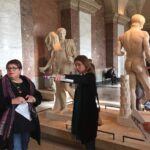


Meeting at 7:30: easy pickup, real time saved

The day kicks off at 7:30 am, which is early, but it’s also the reason you can fit multiple areas of Champagne into one go. You’ll get hotel pickup and drop-off in a private air-conditioned car or minivan, which means you avoid the worst part of day trips: waiting, transfers, and trying to herd yourself through a rail station.
I like this setup for one practical reason: it keeps your energy for the tastings and lunch. You don’t burn hours figuring out local transport, and you don’t waste time standing in lines with a pocket full of tickets and no plan.
You should also note the minimum drinking age is 18, so make sure everyone in your group meets that requirement.
Reims stop: getting the big picture before you taste
Reims is one of the key Champagne cities, and it makes sense as an early stop. Starting there gives you context fast: you’ll be introduced to a famous Champagne house, with guided visit time designed to connect what you’re seeing to what you’ll taste later.
You’re scheduled for about 1 hour 30 minutes at the first stop, and admission is free for this experience. That matters because it keeps the day feeling streamlined; you’re not suddenly paying extra or scrambling to manage entry costs.
What I’d watch for on this stop is how your guide frames Champagne production and style. If you’re new to Champagne, you’ll want those basics before the tasting portion starts in earnest. Even if you’ve had Champagne before, it helps to hear the logic behind how different houses aim for different flavors and textures.
Depending on timing, you may also have a chance to see Reims Cathedral, which is an impressive landmark in its own right. If it’s on the schedule, it adds a sense of place beyond wine.
Champagne-Ardenne scenery breaks: small pause, useful reset

Between Champagne regions, there’s a bit of moving time, and the itinerary includes a scenic stop area in Champagne-Ardenne. You’re given a shorter window (about 20 minutes)—not enough to plan a separate outing, but enough to stretch and reset.
This kind of pause is surprisingly important for a wine-focused day. When you’re tasting multiple wines, you’ll notice the difference between feeling rushed and feeling steady. Use the time to breathe, check your jacket, and make sure you’re comfortable for what’s next.
Epernay: lunch with Champagne pairing that anchors the day

Epernay is where the day starts to feel like a full immersion into Champagne culture—not just tastings in rooms. Your visit here includes about 2 hours with lunch and a Champagne pairing.
This is the part I think most people underestimate. A three-course lunch paired with Champagne isn’t only about eating well (though it should be). It’s about learning how food choices shape what you taste. Your guide can help you connect the pairing to flavor balance—acidity against richness, bubbles cutting through heavier bites, and so on.
One practical tip: eat steadily. If you go too fast through lunch, you’ll burn your attention on the next tasting stops instead of actually tasting the pairing experience. Take your time, sip between bites, and let your palate catch up.
The day’s pace also gives you a nice rhythm: croissant breakfast in the morning, tastings and visits mid-day, then lunch before the final producer visit.
You can also read our reviews of more wine tours in Paris



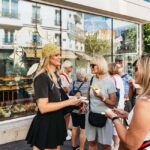

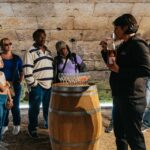
Visiting Hautvillers and Dom Pérignon’s tomb (when timing allows)

A highlight you might catch—depending on how the schedule flows—is a stop in Hautvillers, along with a visit to Dom Pérignon’s tomb. Dom Pérignon is a name you’ve probably heard, but seeing the spot in context makes it feel more real and less like trivia.
It’s also a good contrast to the production-focused stops. Champagne cellars and houses can be technical; Hautvillers brings a human story element to the day. If you get this added time, it’s worth slowing down and listening to what your guide explains, because it can help you understand the tradition behind the wine.
If it doesn’t fit on your day, don’t panic. You still get the core Champagne learning through the house visits and the structured tastings.
The second producer stop: family-run energy vs cooperative structure

After Epernay, the tour includes another stop in the Champagne-Ardenne area—about 1 hour 15 minutes—to visit a family-run estate or a cooperative. This is a key part of why the day feels varied.
Large Champagne houses can be polished and impressive, but small producers (or cooperatives) often show a different side: how wine is made through specific vineyards, local knowledge, and a more personal scale. If your day includes a family-run producer, you’ll likely get more of that behind-the-scenes feel.
For example, one run of this experience I learned about included lunch at Julien Chopin, and the lunch was prepared by Lea at her Champagne house. That kind of personal touch is the reason I like the second stop: it can bring the day from impressive to genuinely memorable.
Eight tastings: how to taste smarter without getting overwhelmed

Eight tastings is a lot. That doesn’t automatically mean you’ll get more out of it—what matters is how you approach the pours.
Here’s what helps:
- Take notes in your head, not on your phone. Write nothing and you’ll miss comparisons. Just remember one word per wine: crisp, creamy, dry, bright, etc.
- Sip, then pause. Don’t rush to the next glass. Give yourself a few seconds so you can notice acidity, texture, and finish.
- Use the lunch pairing as a checkpoint. After lunch, you’ll often taste with more clarity because you’ve reset your palate.
Your guide is central here. The experience is built around a guided visit of two Champagne houses, plus tastings designed to teach you what you’re actually experiencing. Guides can also be a big part of the fun, and it’s clear from real-world experiences that the tone matters. On one day, a guide named Simone was highlighted as fantastic, and another experience featured Chloé, described as fun and special for a family.
You don’t need to be a wine expert. You just need to show up curious and ready to learn in small steps.
Cold caves and smart packing: the comfort factor
Champagne cellars are beautiful, but they’re not comfortable. You should plan for caves and wine cellars that are usually quite cold and damp (about 45°F / 10°C). Even in summer, this can catch you off guard.
Bring a jacket you’ll actually wear. If you’re the type who starts shedding layers once you’re warm, you’ll want to keep at least a light layer handy for the cellars.
Also, because the tour is private, your guide can help with timing and pacing, but you still shouldn’t treat the day like a casual stroll. Plan for walking through cellar spaces, standing during tastings, and sitting for lunch afterward.
Price and value: what you’re paying for at $1,100+ per person
At $1,100.56 per person, this isn’t a “cheap day trip.” But I’d judge value based on what’s bundled and what’s removed.
You’re paying for:
- Private door-to-door transportation (time and hassle saved)
- Guided visits at two Champagne houses
- Eight tastings across the day
- Breakfast (fresh croissant)
- Lunch with Champagne pairing
- Optional cultural stops like Reims Cathedral or Hautvillers/Dom Pérignon depending on timing
If you tried to piece it together yourself—transport, tickets, reservations, and a tasting guide—costs can add up fast, and coordination becomes the hidden tax. This tour sells you time and clarity: you know when you’re tasting, where you’re going, and how the day is structured.
That said, it’s most worth it if you want the full Champagne education plus a comfortable, guided experience—rather than a casual, on-your-own tasting afternoon.
Who should book this tour (and who should skip it)
This trip is best for you if:
- You want a structured, guided Champagne day rather than trying to manage timing on your own
- You care about tasting with context, not just buying bottles at the end
- You want door-to-door convenience from Paris
- Your group appreciates good food paired with wine
You might want to think twice if:
- You dislike early mornings (7:30 am start)
- You’re extremely sensitive to cold and don’t plan to bring a jacket
- Your group isn’t interested in tasting multiple styles (eight tastings is the point of the day)
If you’re going as a family, note the minimum drinking age is 18 and the child rate applies only when sharing with two paying adults.
Should you book this Champagne private wine day trip?
I’d book it if you want Champagne turned into a comfortable, guided day where you learn while you taste. The big win is the structure: breakfast, guided house visits, eight tastings, and a lunch pairing that anchors the whole experience.
Before you hit confirm, decide if you like an itinerary that moves through multiple stops in one day. If you do, you’ll likely love how the day builds from city history in Reims to vineyard culture and producer variety, ending with the kind of Champagne knowledge that makes your next bottle-shopping experience much easier.
FAQ
FAQ
How long is the Champagne private day trip from Paris?
It runs for about 12 hours.
What time does the tour start?
The start time is 7:30 am.
Do you get hotel pickup and drop-off?
Yes. You’ll have hotel pickup and drop-off in a private air-conditioned car or minivan.
What’s included for food and wine?
You’ll get a fresh croissant for breakfast, 8 Champagne tastings, and a three-course lunch with a Champagne pairing.
How many Champagne houses do you visit?
You’ll have a guided visit of 2 Champagne houses.
Do you always see Reims Cathedral or Hautvillers and Dom Pérignon’s tomb?
Not always. Those stops depend on timing during the day.
Can you change which wineries you visit?
Yes. You can request changes to the visited wineries, and it may affect the price. Contact the provider to arrange special visits.
Is there an age requirement for drinking?
Yes. The minimum drinking age is 18.
What should I bring for the cellars?
Bring a jacket. Caves and wine cellars are usually cold and damp, around 45°F / 10°C.
What’s the cancellation policy?
You can cancel for a full refund up to 24 hours in advance of the experience’s start time.