REVIEW · PARIS
Bubbles and Bites: Viator’s Perfect Champagne Pairing Formula
Book on Viator →Operated by Dilettantes · Bookable on Viator
Three 80 ml pours, French food pairings, and a wine cave in Saint-Germain-des-Prés make this a neat way to spend an evening in Paris. You taste three hand-selected Champagnes while learning how grapes, soil, and production methods shape the drink in your glass.
I like the tiny group size, capped at six, and the fact that every tasting and food pairing is covered in the $91.92 price. I also like the chance to try small-batch Champagnes that may feel more distinctive than a familiar supermarket bottle. The main drawback is that the teaching may depend heavily on who is handling the session, so the experience could feel less polished if the host is distracted.
In This Review
- Key points at a glance
- Three Champagnes in a Saint-Germain wine cave
- What you actually taste: 240 ml across three pours
- How the Champagne lesson works
- Cheese, terrine, and pastries are part of the lesson
- Why the $91.92 price may make sense
- Prepare your senses before you arrive
- Who will enjoy this format most
- Practical details that affect your evening
- Should you book Dilettantes Champagne tasting?
- FAQ
- How long does the Champagne tasting last?
- How many Champagnes are included?
- How much Champagne is served?
- Is food included?
- Where does the tasting begin?
- Where does the activity end?
- What is the minimum age?
- How large is the group?
- Can I cancel or change my booking?
Key points at a glance
- Three 80 ml Champagne pours: Enough to compare styles without turning the tasting into a long drinking session.
- French pairings included: Cheese, terrine, and pastries give you a useful lesson in how food changes Champagne.
- Saint-Germain-des-Prés setting: The tasting takes place at a romantic wine cave on 22 Rue de Savoie.
- Maximum of six people: A small room can make questions and conversation easier.
- Strict scent rules: Skip perfume, aftershave, lipstick, gum, coffee, soft drinks, and toothbrushing immediately before the tasting.
- Non-refundable booking: Choose your time carefully, since cancellations and amendments do not result in a refund.
Three Champagnes in a Saint-Germain wine cave
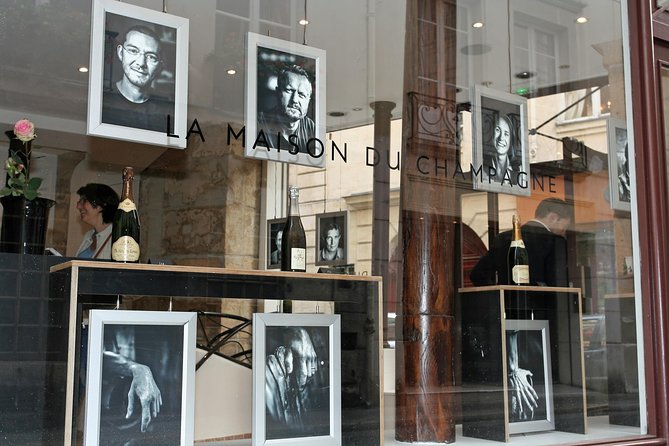
This experience begins at 22 Rue de Savoie, 75006 Paris, in the Saint-Germain-des-Prés neighborhood. You make your own way there, with public transportation nearby, and the activity ends at the same meeting point.
The setting matters. A wine cave gives the tasting a more intimate feel than a busy bar or a large commercial shop. You are there to pay attention to aroma, texture, and finish, not simply to order a glass and move on.
The group limit is six people. That is one of the strongest features here. A small room makes it easier to hear the host, ask about a bottle, and compare notes with the people beside you. It can also feel almost private when the group is not full. One account described only two people in the room, which created a particularly romantic atmosphere.
You need to arrive 10 minutes before the scheduled start. Do not treat that as optional. The tasting depends on a prompt opening, and late arrivals can interrupt the first explanation and the sensory work that follows.
You can also read our reviews of more wine tours in Paris


What you actually taste: 240 ml across three pours
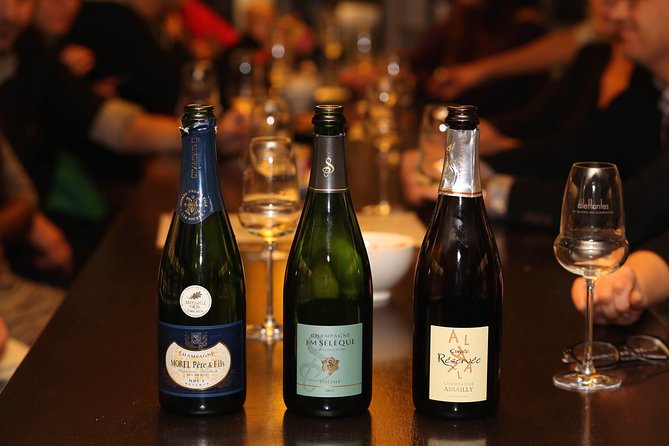
The included tasting consists of three small glasses, each 80 ml. That adds up to 240 ml, a little more than two standard 100 ml restaurant pours, though the exact comparison depends on how a restaurant serves wine.
The smaller glasses are useful for a guided tasting. You get enough Champagne to study each one, but not so much that the event becomes mainly about drinking. The point is comparison. A host can direct your attention to differences in aroma, acidity, bubbles, and finish, then show how those differences connect to the grapes and the place where the wine was made.
The three selections are described as hand-selected for quality and authenticity. The available details do not name the bottles, producers, or grape varieties, so you should not book expecting a fixed menu of famous labels. That uncertainty can work in your favor if you enjoy discovering lesser-known bottles, but it may disappoint you if you want a precise list before paying.
You are also told that the tasting covers three different varietals of Champagne. In practical terms, the useful question is not simply which bottle you prefer. Ask what makes each one different. Is the character linked to the grape, the production method, the village, or the soil? The session is intended to explain those factors rather than leave you with three disconnected samples.
How the Champagne lesson works
The educational part centers on terroir and Champagne production. Terroir is a short word for a large idea: the combination of soil, climate, site, and local growing conditions that can affect a wine’s character.
You do not need a technical background to enjoy this. The activity is designed for wine lovers of all levels, including people who know little more than the difference between a toast and a cork flying across the room. The small format should give you room to ask basic questions without feeling out of place.
A good tasting host will connect each pour to something you can notice. You might be asked to compare the smell before tasting, the feel of the bubbles, the balance of acidity, and the flavor left behind. The food then gives you another way to test the wine.
The teaching quality is the main variable. One particularly poor account described the shop attendant upstairs also pouring the Champagne, with attention divided by other duties. That person felt the group learned very little. I would take this as a practical warning rather than a reason to dismiss the experience: the room and format are strong, but the session is only as good as the host’s focus and preparation on the day.
Cheese, terrine, and pastries are part of the lesson
The food pairing includes French cheese, terrine, and pastries. These are not just snacks to fill the table. They help you notice why Champagne works so well with food.
Cheese can make a wine seem rounder or soften the impression of acidity. Terrine brings savory, fatty flavors that can make the bubbles feel especially refreshing. Pastries create a different contrast, allowing you to see how the same Champagne behaves beside a sweeter or more delicate bite.
The supplied information does not specify the exact cheeses, terrine, pastries, serving sizes, or whether dietary substitutions are available. If you have allergies, dietary restrictions, or strong dislikes, ask the provider before booking. Do not assume that a French food pairing can be changed on request.
I like that the food is included rather than left as an extra purchase. At $91.92 per person, the price covers three pours and the pairings, so you can judge the value as a complete tasting rather than adding up separate drinks afterward.
Why the $91.92 price may make sense
The cost is not cheap for 90 minutes. You are paying about $61 per hour before considering the value of the food, instruction, setting, and small group. The description also refers to a session lasting two hours, while the headline duration is approximately one hour and 30 minutes. Plan for about 90 minutes, but keep some flexibility in your evening in case the tasting runs longer.
The price makes better sense if you want more than Champagne alone. Three small pours in a standard bar could cost less or more depending on the bottles, but you would not necessarily get a lesson about terroir, food pairing, or production. Here, the added value is the setting and the chance to compare wines in a structured way.
It is also a reasonable choice for a special date. The Saint-Germain location, wine cave, small group, and food create a more personal evening than a large organized tasting. You can purchase additional Champagne after the class if one of the bottles catches your attention.
The value is weaker if you want a filling meal, a long tour, or a guaranteed expert lecture. This is a focused tasting, not dinner and not a visit to the Champagne region. You should come for the comparison and atmosphere, not for quantity.




Prepare your senses before you arrive
The scent rules are unusually strict, but they have a practical reason. Smell shapes much of what you taste, and perfume or aftershave can affect the whole room. The provider reserves the right to refuse entry if your fragrance disturbs the group, with no refund.
Before leaving for the tasting, follow these instructions:
- Do not wear perfume or aftershave.
- Do not wear lipstick.
- Do not chew gum.
- Do not brush your teeth immediately before arriving.
- Do not drink coffee, soft drinks, or another strong-flavored drink beforehand.
The warning about brushing your teeth may sound fussy, but toothpaste can leave a sharp, minty coating that makes wine seem more bitter and acidic. The same problem can come from coffee or strongly flavored drinks.
This is also a good reason not to rush straight from a large meal or a cocktail stop. The instructions are aimed at protecting the tasting, and they apply to everyone in the small room. Arrive with a fairly clean palate and an open mind.
Who will enjoy this format most
I would recommend this experience to a couple looking for a romantic Paris activity, especially if you want something quieter than a crowded evening venue. It also fits a small group of friends who enjoy food and wine but do not want a full-day excursion.
It suits beginners because the tasting is tutored and the group is small. You do not need to know Champagne vocabulary before you arrive. In fact, beginners may gain the most from tasting three selections side by side.
It also suits people who already drink Champagne and want to try bottles described as small-batch and unique to the Paris area. The exact producers are not given in advance, so the appeal is discovery rather than checking a famous name off a list.
I would be more cautious if you are looking for a formal wine-school lesson with a named specialist, detailed bottle information in advance, or a guaranteed level of instruction. The available feedback includes one very positive account of a tour through Champagne regions and grape varieties, but also one account in which the host seemed preoccupied and offered little teaching. That range suggests you should keep your expectations sensible.
Practical details that affect your evening
The activity uses a mobile ticket, so you should have your booking information ready on your phone. Confirmation is sent within 48 hours of booking, subject to availability.
The minimum age is 18. The activity is near public transportation, and most people can participate. No transportation to or from the meeting point is included, so allow time to reach Rue de Savoie on your own.
The end point is the start point. That makes planning easier: you can continue into Saint-Germain-des-Prés afterward without arranging a separate pickup. The information does not specify a hotel transfer, accessibility arrangements, or a food substitution policy, so contact the provider if any of those details matter to you.
The booking terms deserve attention. The experience is non-refundable and cannot be changed for any reason. If your Paris schedule is uncertain, this is not a flexible reservation to make early and adjust later. Book only when you are confident about the date and time.
Should you book Dilettantes Champagne tasting?
Book it if you want a short, polished-feeling Paris activity built around three Champagnes, French bites, and a quiet wine-cave setting. The maximum of six people is a real advantage, and the all-in price is easier to justify for a date or a special evening than for a casual glass of wine.
Think twice if you need a guaranteed star instructor, a fixed bottle list, a full meal, or flexible cancellation. The strongest accounts praise the fantastic Champagne, small-batch character, food, atmosphere, and tour through regions and grapes. The weak point is inconsistent instruction when the host is distracted.
For the best chance of enjoying it, arrive early, follow the scent rules, and treat the tasting as a compact introduction rather than a grand Champagne education. If that sounds like the right scale for your Paris plans, this is a worthwhile way to spend an hour and a half in Saint-Germain-des-Prés.
FAQ
How long does the Champagne tasting last?
The listed duration is approximately 1 hour and 30 minutes. The experience description also refers to a session lasting two hours, so allow some flexibility around the 90-minute estimate.
How many Champagnes are included?
Three different Champagnes are included in the tasting.
How much Champagne is served?
You receive three small glasses, with 80 ml in each glass.
Is food included?
Yes. Food pairings are included, with French nibbles such as cheese, terrine, and pastries.
Where does the tasting begin?
The meeting point is 22 Rue de Savoie, 75006 Paris, France, in the Saint-Germain-des-Prés neighborhood.
Where does the activity end?
The activity ends back at the meeting point.
What is the minimum age?
You must be at least 18 years old to participate.
How large is the group?
The activity has a maximum of six participants.
Can I cancel or change my booking?
No. The experience is non-refundable and cannot be changed for any reason.