REVIEW · PARIS
All of Paris Tour in a Vintage Open-Top French Car Citroen DS
Book on Viator →Operated by Classic 60's Paris Tours · Bookable on Viator
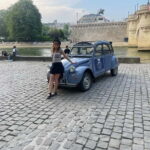
Riding a vintage Citroën DS is a time warp. I love how Benjamin keeps your attention on the details that make Paris click, and I also love the private pace with hotel pickup so you don’t waste your trip lining up. One thing to consider: this is a fast-moving highlights ride, so it’s built for photos and views more than long museum time.
The big payoff here is mixing famous landmarks with smart local context, all while you’re comfortably seated with heating even if the weather turns. The tone is calm, organized, and personal, with a professional driver behind the wheel. If you want to park yourself inside major sites for hours, you’ll likely want to pair this with a separate museum or cathedral plan.
Key points at a glance
- Private attention from Benjamin in a small group capped at 4 people
- Open-top vintage Citroën DS with heating and comfortable seating for a short day of sightseeing
- Hotel pickup and drop-off across most central areas, with clearly defined limits
- Arc de Triomphe thrill moment from the 12-lane roundabout, plus multiple classic photo viewpoints
- Quick-hit stops across both banks of the Seine, including Île de la Cité, the Louvre area, Saint-Germain, and Montmartre
- Bottled water included, with no alcohol served as part of the experience
In This Review
- The vintage Citroën DS effect: comfort plus old-world style
- Hotel pickup, drop-off, and best time to go
- From Champs-Élysées to Arc de Triomphe: the Paris postcard start
- The golden bridges and the Louvre area: crossing the Seine by car
- Île de la Cité and Notre-Dame: the fastest way to get oriented on the river’s spine
- The Left Bank: Latin Quarter stops that help you understand Paris after the icons
- Montmartre time: getting the hilltop feeling without losing the day
- Palais-Royal and the government core: Paris that feels powerful, not just pretty
- Price and value: what $478.90 really buys you
- Comfort and weather tips for an open-top ride
- Who should book this Citroën DS tour, and who might not
- Should you book All of Paris in a Vintage Open-Top Citroën DS?
- FAQ
- How many people can be in a group?
- Is hotel pickup included, and where does pickup work?
- How long is the tour, and what time should I book?
- Is the vintage car comfortable for cooler weather?
- Are children allowed on the tour?
- What if the weather is bad or I need to cancel?
The vintage Citroën DS effect: comfort plus old-world style

This tour is all about the feeling of cruising Paris in a classic Citroën DS—open-top, photo-ready, and the kind of car that makes people look twice. The comfort is practical, not just pretty: you’re in heated seating with plenty of legroom, so you’re not instantly miserable if the morning is cool or the evening gets breezy.
Because it’s private, you’re not stuck watching other groups shuffle at the curb. You get space to ask questions, point at a building you want explained, and stop for that one extra photo angle. And yes, the driving matters here: the professional driver keeps things smooth in a city that can feel chaotic.
Hotel pickup, drop-off, and best time to go

If you’re staying centrally, pickup is a huge quality-of-life upgrade. The tour offers hotel pickup and drop-off to locations of your choice inside Paris, with exclusions for certain arrondissements and a few common areas. Pickup is not offered in the 3rd, 4th, 10th, 11th, 12th, 19th, and 20th arrondissements, and drop-off/pickup isn’t available for Le Marais, Bastille, République, and Gare du Nord.
When you want an anchor point for meeting, the pickup options include meeting in front of Hôtel Crillon (10 place de la Concorde, 75008) or in front of the Panthéon (Place du Panthéon, 75005). Best schedules run between 10AM and 4PM to reduce traffic stress, which is a big deal for a 3-hour route.
You can also read our reviews of more tours and experiences in Paris.



From Champs-Élysées to Arc de Triomphe: the Paris postcard start

You kick things off along the Champs-Élysées, with about 10 minutes to take it in. This isn’t just a shopping boulevard moment. Your guide frames what you’re seeing as part of Paris’s grand, ceremonial style, so it reads like a planned showpiece rather than a street you just pass through.
Next comes a quick look at the Grand Palais for around 5 minutes. Even when you’re not going inside, the glass-domed structure and scale hit hard from the outside. It’s a classic stop that helps you “read” the city in layers: monarchy-era power nearby modern-era ambition.
Then you reach Place de la Concorde (around 5 minutes). This square matters because it sits at the intersection of eras, and it’s also where you’ll spot the Luxor Obelisk—an easy landmark to orient to later when you’re walking on your own.
The tour keeps rolling toward Les Invalides (time not specified in the stop list), and this is the kind of stop that gives you a “Paris isn’t only about romance” moment. From there, you’ll hit the main event: the Arc de Triomphe area, where the tour’s thrill detail is the 12-lane roundabout ride. It’s a fun, adrenaline-tinged experience that also teaches you how Paris moves—big monuments, then big traffic choreography. You get about 10 minutes at the Arc to snap photos and take in the sculpted grandeur.
Practical tip: if you’re sensitive to sound or motion, aim for the middle of the seats and plan to keep your phone strap tight. The Arc roundabout moment is memorable precisely because it’s real driving, not staged sightseeing.
The golden bridges and the Louvre area: crossing the Seine by car

After the Arc, you’ll travel toward Pont Alexandre III (about 5 minutes). This bridge is all about decoration and perspective. The golden sculptural details are the point, but what’s equally useful is how it sets you up for “Seine thinking”—you start noticing alignments between landmarks and where you’d want to walk later.
You’ll also pass by or stop near the Opéra Garnier area (time not specified in the list). The façade is dramatic even from a distance, and your guide can help you connect it to Paris’s culture-and-performance identity, not just its looks.
Then the route swings through Place Vendôme (about 5 minutes). This is a quick luxury-style stop, but it’s useful for a different reason: it’s one of the best reminders that Paris’s most iconic sights aren’t all free-standing monuments. Some are built as composed city spaces.
From there, you move to the Eiffel Tower area (about 15 minutes). You get enough time for photos and a short “stand back and understand the scale” moment from nearby streets. The tour description focuses on Rue de l’Université for the street atmosphere steps from the tower—townhouses, cafés, and the feeling of being close without being trapped in the biggest crowd.
If you’ve never set eyes on Paris from multiple angles, this is where your brain starts building a map. The Eiffel moment helps you understand why later landmarks like the Louvre and Notre-Dame feel like they sit in a real geographic system.
You’ll also get a brief stop by the Louvre Museum area (about 5 minutes). This is not a museum visit. It’s a viewpoint-and-orientation stop—enough to recognize the glass pyramid from the right perspective and to decide whether you’ll come back later for a timed ticket.
Île de la Cité and Notre-Dame: the fastest way to get oriented on the river’s spine

Next is Île de la Cité, with Notre-Dame de Paris called out for about 15 minutes. This is one of the best “first-time Paris orientation” stops because you’re looking at the heart of the old city layout, with the Seine shaping street life around it.
Sainte-Chapelle is also included in the route (listed with its stained-glass reputation and stop time not specified in the itinerary block where it appears). Even if you don’t go inside, knowing it’s tucked on this island makes the area click as a Gothic highlight cluster.
A few more short photo stops support the river theme. You’ll also reach Pont Neuf (about 5 minutes), Paris’s oldest standing bridge, which is perfect for catching how the Seine frames neighborhoods on both sides.
Practical consideration: because these are time-limited stops, you’ll get views rather than lengthy immersion. If you want a deeper cathedral experience, plan to revisit after this so you’re not trying to split your attention between narration and taking in details.
The Left Bank: Latin Quarter stops that help you understand Paris after the icons

Once you’re past the big monument zone, the tour shifts into Paris’s everyday-brain territory: bookshops, cafés, churches, and university corners. The itinerary includes the Latin Quarter, where you’ll see Saint-Sulpice Church and the Jardin du Luxembourg (both highlighted as stops; time not consistently listed, but they’re key moments in the route).
This is where I like the guide’s approach most. Benjamin doesn’t just say what a building is. He ties it to how people have lived here and why Paris feels intellectual and social at the same time. You’re also getting landmarks like the Panthéon and the Académie Française referenced in the tour flow, which helps you place them in a bigger story about French culture and language.
The route also calls out literature landmarks and writer associations, including Shakespeare and Company and Ernest Hemingway’s Paris apartment in the Latin Quarter. You’re not touring apartments for long, but getting to the exact area where that Paris-writing energy happened makes your later reading and museum visits feel more grounded.
You’ll also pass the Hôtel-style and café-style streets of Saint-Germain, with stops like Rue de Buci and landmarks such as Les Deux Magots and Le Café de Flore. Even if you’re not going in, seeing these streets at street level gives you a better sense of where to wander on your own afterward.




Montmartre time: getting the hilltop feeling without losing the day

Montmartre usually eats time, with hills, steps, and crowd flow. This tour does it differently: you get key viewpoints and outside glimpses, then you move on before the day slips away.
The itinerary includes Moulin Rouge (about 5 minutes) and Pigalle (time not specified), which work as a quick Belle Époque-style nightlife intro. From there, you’ll transition toward the artist streets that define Montmartre’s charm.
Stops include Rue Lepic, La Maison Rose, and Rue de l’Abreuvoir—all excellent for the “I recognize this street from photos and films” feeling. You’ll also see classic Montmartre signposts like the Mur des Je t’aime (about 10 minutes) and a series of church-and-hill moments.
The highlight is Basilique du Sacré-Cœur de Montmartre (about 15 minutes), with Montmartre itself also listed around 15 minutes. This is where you get the view payoff: the city opens beneath you and you finally understand the city’s layers from above.
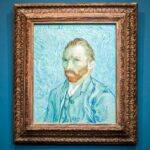
Other Montmartre points listed include Le Café de Flore and Les Deux Magots in Saint-Germain (not Montmartre, but part of the wider route), plus church stops like Saint-Pierre de Montmartre (about 15 minutes). You’ll also see references to Le Moulin de la Galette, and the homes associated with artists like Van Gogh and Renoir. In practice, this works because you’re seeing the neighborhood context around those spots rather than trying to cram a separate museum plan into your itinerary.
Palais-Royal and the government core: Paris that feels powerful, not just pretty

One of the quieter strengths of this tour is that it doesn’t only play the romance card. You’ll also sweep through Palais-Royal (about 15 minutes), including the Colonnes de Buren area. This garden-and-arcade space is a nice breather from larger boulevards, and it’s a great place to notice how Paris can feel both formal and relaxed.
The route also includes Galerie Vivienne (listed under Palais-Royal stops), a passageway you can appreciate even from a short stop because it shows off Paris’s architecture obsession with small-scale design.
Other included institutional and ceremonial landmarks cover the power structure of the city: the French Senate at Palais du Luxembourg, the French National Assembly at Palais Bourbon, and the Élysée Palace (French President’s house) are all referenced as part of the drive-by/brief-stop sequence. You’ll also see Place des Victoires, and church landmarks near the Panthéon like Saint-Étienne-du-Mont appear later in the itinerary.
The practical value: seeing these areas by car gives you the bigger map of where power and culture sit in Paris. Later, when you walk, you’ll feel like you already know the city’s logic.
Price and value: what $478.90 really buys you

At $478.90 per group (up to 4 people) for about 3 hours, this isn’t the cheapest way to see Paris. But it can be good value because it’s a true private setup: you’re paying for your own driver, your own guide, and a car experience that’s hard to replicate on public transport.
If you book with a full group of four, the cost per person drops sharply. If you’re traveling as two, you might feel the pinch a bit more—but you’re also buying convenience: pickup, route planning, fewer navigation headaches, and drop-off at your chosen location (with the pickup/drop-off area limits mentioned).
The included extras help justify the price. You get bottled water, heating and comfortable seating, and a guide who’s there for your group only. Since the car is open-top, you’re also getting a different kind of photo experience than a standard taxi or bus.
Comfort and weather tips for an open-top ride
This experience requires good weather. That matters because even with heating, an open-top ride is still affected by wind and rain.
Pack like you’re going for a fall evening even if it’s sunny: a light jacket, layers, and something to protect your ears and hands from breeze. The seats have heating and legroom, so comfort isn’t an issue once you’re properly dressed.
Also, aim for photos early in the stop windows. The tour is built for multiple quick moments, so if you spend too long at one curb, you’ll feel rushed later.
Who should book this Citroën DS tour, and who might not
This tour is a strong fit if you want a high-coverage highlights run without the stress of navigating between neighborhoods. It’s also ideal for first-time visitors who need a map built in their head fast—Champs-Élysées, Arc de Triomphe, Louvre area, Île de la Cité, Saint-Germain, and Montmartre all appear in the route.
It’s also a good choice if you care about a personable guide. Benjamin’s style shows up in the tour experience: patient, full of city context, and focused on making the day feel smooth even for mixed ages in the group (as long as the age rules fit).
Skip it if you’re hoping for long museum time or deep inside-the-site visits. This is designed for brief exterior moments and viewpoint time. Also note the age rule: children under 10 aren’t allowed due to no seat belt on the back seats.
Should you book All of Paris in a Vintage Open-Top Citroën DS?
I’d book it if you want Paris to feel personal from the start—big monuments, the Seine’s key points, and the neighborhoods that make the city more than a list of stops. The price makes more sense when you fill the car with up to four people, because you’re paying for a private guide plus a classic car experience.
If your top priority is museum tickets or cathedral interiors for hours, plan this as your “get oriented” day and schedule deeper time elsewhere. This tour works best when you treat it like a guided route map, then use what you learned to choose where to linger next.
FAQ
How many people can be in a group?
This is a private tour/activity, with up to 4 people per group.
Is hotel pickup included, and where does pickup work?
Hotel pickup and drop-off are offered for locations inside the city of Paris, but not in the 3rd, 4th, 10th, 11th, 12th, 19th, and 20th arrondissements. Pickup/drop-off also isn’t available for Le Marais, Bastille, République, and Gare du Nord.
How long is the tour, and what time should I book?
The tour lasts about 3 hours. The best schedules are between 10AM and 4PM to help avoid traffic jams.
Is the vintage car comfortable for cooler weather?
Yes. The car has heating and comfortable seats with plenty of legroom, and there’s bottled water included.
Are children allowed on the tour?
Children under 10 years old are not allowed due to no seat belt on the back seats.
What if the weather is bad or I need to cancel?
The experience requires good weather. If it’s canceled due to poor weather, you’ll be offered a different date or a full refund. You can cancel for a full refund up to 24 hours in advance.