REVIEW · PARIS
Wine and cheese tasting in Bastille
Book on Viator →Operated by Le Vin qui Parle · Bookable on Viator
The most useful part of this Bastille-area tasting is the pairing lesson: you sample three French wines with two or three cheeses and learn why certain flavors work together. Camille guides the session in English, using a map of France to connect each bottle with its region and grape.
I like the small group of no more than eight, which leaves room for questions and conversation. I also like that the experience is built for learning without making wine feel like a school subject. The main consideration is its short length: at about 90 minutes, this is an introduction rather than a full tour of French wine.
In This Review
- Key points at a glance
- Starting at 30 Rue Faidherbe in the Bastille area
- Three wines, two or three cheeses, and fresh baguette
- Learning French wine by region
- Camille’s map-based approach
- Why the cheese pairing matters
- What the $46.13 price includes
- Who will get the most from this tasting
- Practical timing and booking advice
- The best reason to book, and the best reason to skip it
- FAQ
- Where does the wine and cheese tasting meet?
- What time does the activity start?
- How long does the tasting last?
- How many wines and cheeses are included?
- Is the experience offered in English?
- What is the cancellation policy?
Key points at a glance
- Three wines, several French cheeses: Taste three wines alongside two or three cheeses and fresh baguette.
- A map-based lesson: Camille explains where the wines come from, helping you connect regional names with flavor.
- English-speaking hosts: Camille and Loïc welcome you to a relaxed conversation about wine, food, France, and your own country.
- Small group setting: The maximum is eight people, a good size for questions and personal attention.
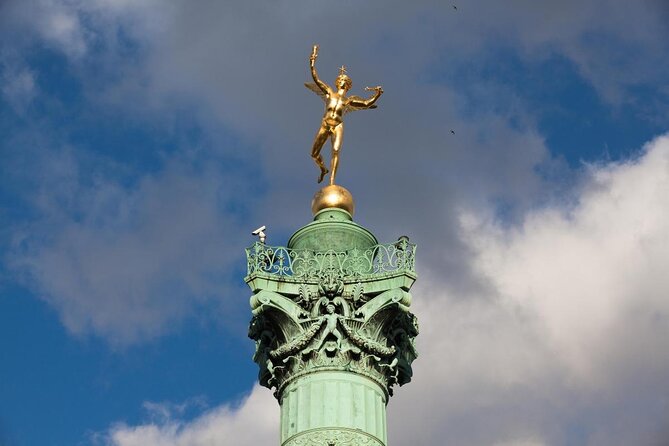
- Easy Bastille meeting point: Start and finish at 30 Rue Faidherbe in Paris’s 11th arrondissement.
- A practical souvenir: Wine is available to buy, so you can take home a bottle you actually enjoyed.
Starting at 30 Rue Faidherbe in the Bastille area
You meet at 30 Rue Faidherbe at 3:30 pm. The address is in Paris’s 11th arrondissement, close to the Bastille area and near public transportation, so you can reach it without arranging a special transfer.
The experience begins and ends at the same place. That matters in Paris, where a short activity can fit neatly between sightseeing plans. You could schedule it after exploring Bastille, before dinner, or as a mid-afternoon pause before an evening walk.
Give yourself enough time to find the address. The provided meeting information does not include a detailed landmark or room description, so checking your route before leaving is sensible. A mobile ticket is accepted, and confirmation arrives when you book.
The 3:30 pm start also works well for a first or second day in Paris. It gives you a gentle introduction to French wine before you begin ordering bottles or choosing wine with dinner. If you already know French wine, the timing makes it a pleasant break rather than a major block in your day.
You can also read our reviews of more food & drink experiences in Paris

Three wines, two or three cheeses, and fresh baguette
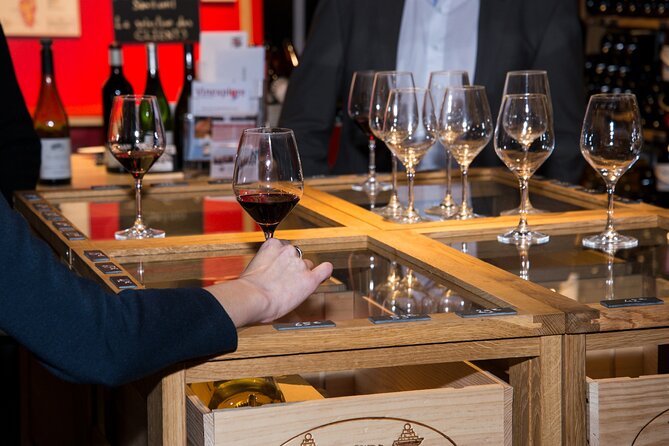
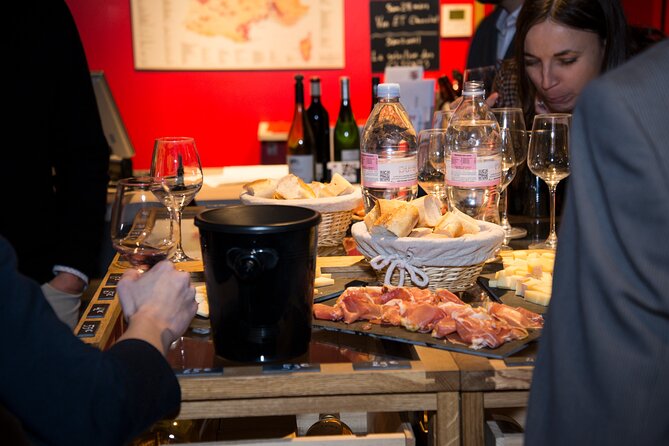
The tasting centers on three French wines paired with two or three French cheeses. Fresh baguette is served with the cheese. The exact bottles are not fixed in the information provided, so you should expect a selection rather than a named set of vintages.
That flexibility can be useful. French wine is not one single style, and a good introduction should show contrast. The tasting has included a very dry white, a distinctive rosé, and a red. Those examples give you a sense of the range you might encounter, but they should not be treated as a guaranteed menu for every session.
The food is simple, which is appropriate here. Cheese and bread are not filler. They give you a way to test how wine changes with salt, cream, acidity, and texture. A wine that seems sharp on its own can feel rounder with cheese. A red that tastes heavy by itself may work better with a firmer, stronger cheese.
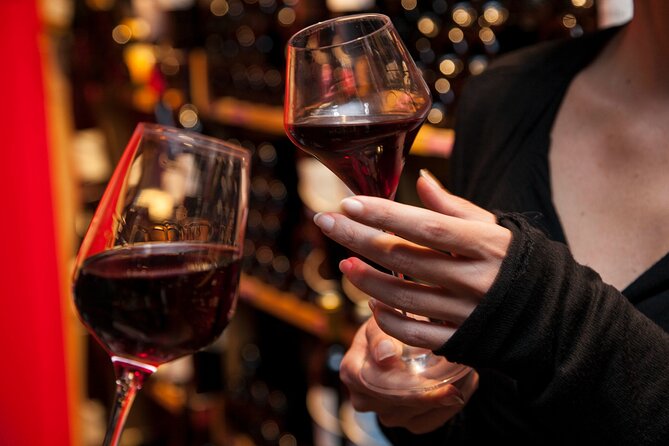
You are not simply drinking three glasses in sequence. The point is to notice the difference between tasting wine alone and tasting it with food. That makes this especially useful if you usually choose wine by label, price, or color and want a few better tools.
The sample food menu lists two French cheeses and fresh baguette. The main description allows for two or three cheeses, so the number may vary. If you have dietary restrictions, ask before booking because the available information does not specify alternatives.
Learning French wine by region
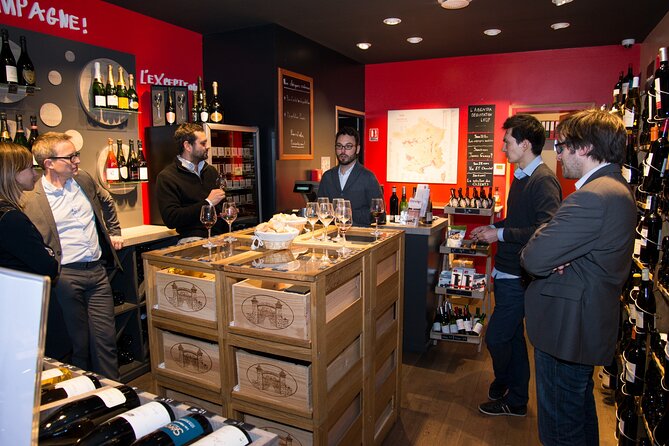
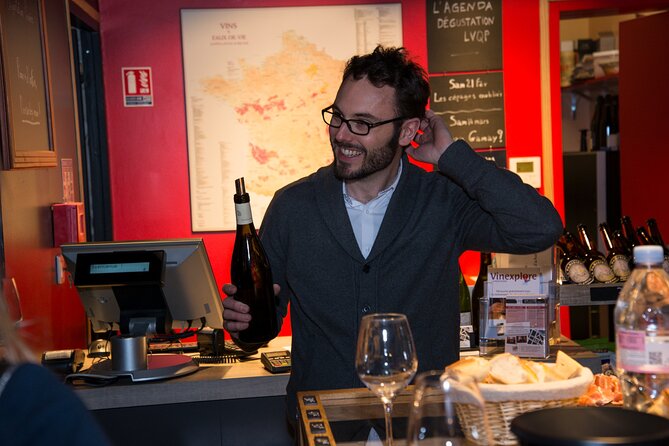
Camille uses a map of France to show where the wines and grapes come from. This is one of the most useful parts of the experience because French bottles often emphasize place more than grape variety.
You may see how a wine’s origin affects its name, style, and reputation. Even a basic map helps you begin sorting the country’s wine regions in your mind instead of treating every French label as a puzzle. You can ask about the region of production, the grape, and the characteristics that shape the wine.
The lesson also covers how to taste and appreciate wine. That does not mean you need special vocabulary or a trained palate. You can start with ordinary observations: Is the wine dry or sweet? Light or full? Sharp, soft, fruity, earthy, or floral? The hosts aim to make those questions approachable.
This is a good setup for beginners. One person arrived knowing little about wine and left with a clearer grasp of the basics. That is the right level for someone who wants confidence without a long lecture.
It also works for experienced wine tasters. A visitor from San Francisco who had attended tastings before still found value in learning the French approach. The difference is not necessarily that one method is right and another is wrong. French wine culture often asks you to think first about region, food, and balance. That gives familiar tasting habits a new angle.
Camille’s map-based approach
Camille is the main guide highlighted in the tasting. She speaks English well and combines explanation with conversation. Her use of a map gives the session a visual anchor, while the wine and cheese keep the lesson practical.
Her role is not just to pour glasses. She explains the origin, production region, and characteristics of each wine, then connects those points to what you are drinking. That approach helps you remember the wine after the tasting ends.
The atmosphere is meant to be social. You can talk about wine, food, France, or your own country. Loïc is also associated with the experience, and the hosts welcome an exchange rather than delivering a one-way speech.
That personal tone matters in a small tasting. With up to eight people, you are likely to have more room for questions than in a large commercial session. You can ask why a wine tastes dry, what makes a rosé different from one you know at home, or which bottle might suit a meal.
The session is not designed as a formal certification class. If you want technical details about soil, vintages, appellation rules, or advanced cellar practice, the description does not promise that level of study. Think of it as a lively first lesson with enough substance to improve your next glass.
Why the cheese pairing matters
The cheese is the bridge between the classroom and the table. French wine is often enjoyed with food, and pairing gives you a practical way to understand balance rather than memorizing rules.
You may notice that cheese can soften acidity or make a wine seem fruitier. The baguette also helps reset your palate between combinations. These small details make the 90-minute format feel like a meal-related experience rather than a set of unrelated samples.
The pairing is also useful for dinner planning. After tasting three wines with cheese, you will have a better idea of what you prefer with a casual meal. You may find that you like a crisp white, an unusual rosé, or a fuller red. That information can guide your choices at a wine shop or restaurant later in your trip.
Do not expect a large meal. The listed menu is French cheese and baguette, not a multi-course lunch or dinner. If you are hungry, eat beforehand or plan a meal afterward. The tasting is best treated as a generous snack and lesson.
You can also read our reviews of more wine tours in Paris



What the $46.13 price includes
At $46.13 per person, the cost is reasonable if you value instruction, a small group, and several wine and cheese pairings. You are paying for three wines, French cheeses, bread, and about 90 minutes with an English-speaking host.
The value is strongest for beginners and curious food lovers. A well-led tasting can save you from buying bottles you do not enjoy, and one of the sessions even led participants to purchase all three wines they sampled. Buying wine is optional, but the chance to taste before choosing is useful.
The price is less attractive if you are looking only for a drink. Paris has many places where you can order wine for less, especially if you do not need an explanation of French regions and tasting methods. This experience earns its price through the guided comparison and the chance to ask questions.
The small group also improves the value. A maximum of eight is intimate enough for conversation without requiring a private booking. Still, group chemistry can affect any social tasting. If you prefer complete privacy or a highly formal presentation, this may not be your ideal format.
Who will get the most from this tasting
I would recommend it most strongly to:
- First-time visitors who want a friendly introduction to French wine
- People who feel unsure when reading French wine labels
- Couples and friends looking for a short food experience before dinner
- Experienced tasters who want to compare French habits with those at home
- Anyone who likes conversation as much as instruction
It suits a mixed group well because the subject can be explained at different levels. Beginners can learn the basics, while experienced tasters can ask more specific questions about grapes, regions, and style.
Families should note that the activity is centered on wine. Service animals are allowed, but no other child-focused details are provided. If someone in your party does not drink wine, check with the provider before booking because the available information does not confirm non-alcoholic substitutions.
Practical timing and booking advice
Plan for roughly 90 minutes. The tasting starts at 3:30 pm and ends back at the meeting point, so you can arrange another activity afterward without crossing the city.
Keep your post-tasting plans nearby or allow travel time. The address is convenient for public transportation, but the experience itself does not include transport around Paris. You are responsible for getting to and from 30 Rue Faidherbe.
Free cancellation is available if you cancel at least 24 hours before the local start time. Inside that window, the payment is not refunded, and changes are not accepted. That policy is worth noting if your Paris schedule is still shifting.
The experience is offered in English. Confirmation arrives at booking, and the mobile ticket makes it easy to keep the details on your phone. Because the group is capped at eight, booking ahead is sensible if the 3:30 pm time fits your plans.
The best reason to book, and the best reason to skip it
Book this tasting if you want to understand French wine through place, food, and conversation, not just collect three pours. Camille’s map, the cheese pairings, and the English explanations give you a clear starting point, while the small group leaves room for questions.
Skip it if you want a full meal, a long winery visit, or a fixed list of famous bottles. You will not tour vineyards from Paris, and the menu is limited to wine, cheese, and baguette.
For most visitors, the strongest case is its balance of time and substance. In 90 minutes, you can taste three different styles, learn how French regions fit together, and leave with a better idea of what to order next. If you find a bottle you love, you may even take it home.
FAQ
Where does the wine and cheese tasting meet?
It meets at 30 Rue Faidherbe, 75011 Paris, France.
What time does the activity start?
The scheduled start time is 3:30 pm.
How long does the tasting last?
The experience lasts approximately 1 hour and 30 minutes.
How many wines and cheeses are included?
You taste three different wines with two or three different French cheeses. Fresh baguette is also served.
Is the experience offered in English?
Yes. The tasting is offered in English, and Camille is described as an English-speaking wine guide.
What is the cancellation policy?
You can cancel at least 24 hours before the local start time for a full refund. Cancellations or changes made less than 24 hours before the start are not accepted and are not refunded.